
The Geopolitical Context And The Birth Of The Peace Movement In A Torn World
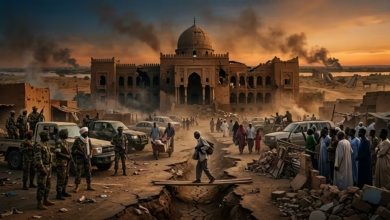
The Book “Muhammad: Prophet Of Peace Amid The Clash Of Empires” By Juan Cole, Published By Nation Books In New York In 2018, Presents A Radical And Deep Rereading Of Early Islamic History. The Author Offers A Vision Completely Different From Traditional Orientalist Narratives, Dismantling The Stereotypes That Linked Islam In Its Beginnings To War, To Present Instead A Precise Analysis Highlighting How This Religion Emerged As A Reformist Movement Seeking Peace Amidst A Grinding World War. This War Erupted In The Seventh Century CE Between The Roman And Iranian Sassanid Empires, And Was Characterized By Unparalleled Brutality That Lasted For Nearly Three Continuous Decades. Imperial Armies Marched Bloodily Across The Near East, The Fertile Crescent, And Asia Minor, Reaching The Balkans, Leaving Behind Massive Destruction.
The Quranic Text Clearly Illustrates That This Violent Conflict Between The Rival Emperors, Whom Contemporaries Called “The Eyes Of The Earth,” Formed An Essential Context That Cannot Be Ignored To Understand Prophet Muhammad’s Mission. However, Historians Have Only Recently Begun To Explore The Prophet’s Life And Thought Through This Broad Geopolitical Framework. This Work Argues That Early Islam Was A Movement Steeped In The Values Of Peacemaking, As A Direct Reaction To The Massacres Left By That Long War And The Accompanying Sectarian Religious Conflicts. Subsequent Historical Conflicts Between Christians And Muslims, Starting From The Crusades Down To The Colonial Era, Led Writers Of European Descent To Focus On The Duality Of War And Islam, Resulting In The Almost Complete Neglect Of The Peaceful And Cooperative Dimension.
This Extensive Research Emphasizes That The Holy Quran Strongly Stresses Freedom Of Conscience And Tolerance For Enemies, And Categorically Forbids Unjustified Aggressive Wars. It Also Promises Salvation To All Righteous Monotheists, Not Limiting That To The Followers Of Prophet Muhammad Alone. The Deep Misunderstanding Of These Principles Resulted From Multiple Causes, Including The Imperial Ideologies That Emerged Later In The Byzantine And Abbasid Empires, As Well As The Failure To Read The Quranic Text In Comparison To The Roman And Iranian Texts Contemporary To It, A Procedure That Allows A Deeper Understanding Of Its Values And Concerns In The Context Of Its Era.
The Iranian Invasion Of Roman Territories Starting In 603 CE Posed A Direct Threat To The Independence Of Western Arabia, The Region That Prophet Muhammad Took As His Base. Contemporaries Considered The Sassanid Invasion Of Jerusalem In 614 A Horrific Event With An Apocalyptic Character, Provoking A Deep Spiritual Response In The Prophet. A Careful Reading Of The Quran Reveals That The Severe Distress From The Massacres Witnessed In That Era Prompted Prophet Muhammad To Spend The First Half Of His Prophetic Career (Between 610 And 622) Envisioning An Alternative Society Firmly Founded On Peace Practices. The Quran Repeatedly Directs Believers To “Repel Evil With Good,” Forgive Their Persecutors, And Wish Peace For Those Who Harass Them. These Verses Coincided With The Outbreak Of Bitter Conflicts Between Christians, Jews, Zoroastrians, And Remnants Of Pagans, Who Engaged As Parties In The Raging Clash Of Empires Around Them.
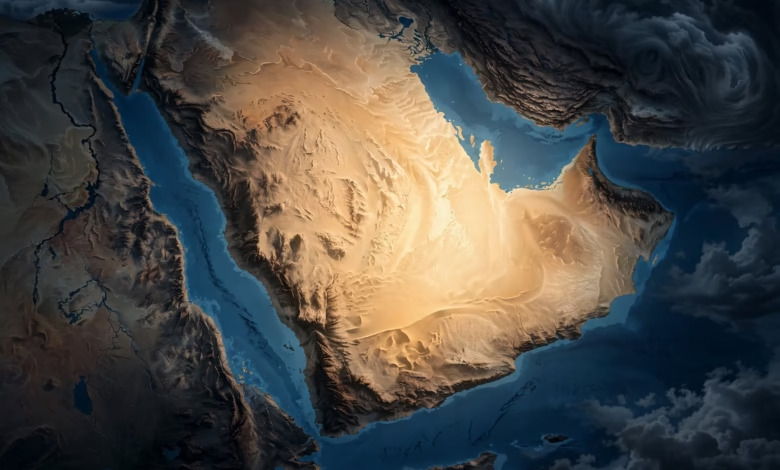
In This Turbulent Context, Prophet Muhammad Grew Up In The City Of Mecca, A Sanctuary City And Safe Haven In Western Arabia, Representing A Zone Of Peace Amidst Warring Tribes. His Clan, Banu Hashim, Assumed The Responsibility Of Caring For The Kaaba, A Cube-Shaped Shrine Dedicated To The Supreme God, Where They Maintained Harmony And Peace In The Region Throughout The Year. The Quraysh Tribe Relied For Its Livelihood On This Sacred Shrine And The Aura Of Peace It Cast Over The Coastal Tihamah Region Bordering The Red Sea. The Meccans Organized Trade Journeys And Established Fairs That Attracted Merchants From All Over The Region, In A Neighborhood Bordered By The Roman Empire To The North And The Sassanid Empire To The South And East.
Prophet Muhammad Lived As An Orphan, And Perhaps Viewed Peace And Conflict Through The Lens Of His Difficult Start In Life. Traditions Indicate That His Father Abdullah Died Of A Fever In Yathrib (Later Medina) While Returning From A Trade Journey To Gaza, While His Mother Was Pregnant With Him. In That “Year Of The Elephant,” Around 567 CE, Mecca Repelled An Invasion Coming From Yemen. When He Reached The Age Of Six, His Mother Aminah Died During The Return Journey From Visiting Relatives In Yathrib, Leaving The Child An Orphan Of Both Parents. His Grandfather Abd Al-Muttalib, The Chief Of Banu Hashim, Took Over His Care, Enjoying A Prestigious Social Status As The Guardian Of The Sacred Zamzam Well That He Rediscovered, Which Provided Water For Pilgrims Coming To Mecca.
Despite Their Social Status As Guardians Of The Kaaba, Banu Hashim Lacked The Wealth And Power Possessed By Some Other Clans. The Orphan Muhammad Suffered Some Humiliation Being The Lowest-Ranking Member Of His Clan, Working As A Shepherd For His Grandfather, And Enduring Harassment From His Uncles And Cousins Due To His Lack Of A Father To Protect Him. Tales Recount How His Uncles Tried To Expel Him From His Grandfather’s Rug In Front Of The Kaaba, Before Abd Al-Muttalib Intervened To Stop Them. Later, The Holy Quran Would Refer To The Necessity Of Feeding The Orphan And The Needy, In A Reflection Of This Early Experience. After His Grandfather’s Death, Muhammad Moved To The Care Of His Uncle Abu Talib, Who Became The New Leader Of Banu Hashim.
When He Reached Twenty-Five, An Opportunity Arose For Muhammad To Change His Life When His Uncle Abu Talib Nominated Him To Manage The Trade Caravan Belonging To Khadija Bint Khuwaylid, The Wealthiest Of Mecca’s Merchants And Its Most Prominent Widow. Khadija Possessed Massive Commercial Capital Reaching Perhaps Half Of What The Rest Of The City’s Merchants Possessed Combined. After Meeting Him And Ascertaining His Honesty, She Entrusted Him With Double The Goods She Entrusted To Others, And Sent Her Servant Maysarah With Him.
The Caravan Set Off On A Perilous Journey Across The Turbulent World Of The Late Sixth Century, Perhaps In August Of 592 CE. The People Of Mecca Bade Them Farewell In A Festive Atmosphere, While Muhammad And The Other Merchants Wore White Robes Indicating Their Status As Peaceful Merchant-Priests, Sending A Clear Message To Hostile Tribes That They Travel Between Sanctuaries Under The Protection Of God The Creator, Harboring No Warlike Intentions. Banu Hashim Enjoyed A Special Advantage In This Regard Thanks To Their Role As Guardians Of The Kaaba, A Role Respected Even By Harsh Rural Tribesmen.
The Caravan Stopped At The Date-Palm-Filled Oasis Of Yathrib, Where They Supplied Themselves With Fresh Water And Dates Before Setting Off North On A Harsh Journey Across The Arid Desert. The Ruler Of Yathrib At That Time Was A Vassal Of The Sassanid Empire From The Khazraj Tribe, But The Meccans Maintained Their Strict Neutrality Between Iran And The Romans. Muhammad Visited His Relatives In The City, As His Great-Grandmother, Salma, Was A Khazraji Woman From Banu Al-Najjar.
The Travelers Faced Massive Challenges During Their Journey, From Scorching Temperatures And Sandstorms To The Possibility Of Encountering Bandits. Arab Society Consisted Of Tribes And Clans That Sometimes Engaged In Raids On Others’ Flocks. The Trade Route From Mecca To The Roman Arab Lands Flourished In The Last Third Of The Sixth Century, Partly Due To The Extraordinary Prosperity Of The Transjordan Region In That Era, And Partly Due To The Iranian Invasion Of Yemen In The Early 570s, Making Overland Trade More Profitable After The Sassanids Controlled The Bab Al-Mandab Strait.
These Meccan Trade Journeys Relied On A Precise Knowledge Of The Rugged Countryside Terrain, The Locations Of Wells, And The Positioning Of Gangs. As A Descendant Of Banu Hashim, Specialized In Conflict Resolution And Peacekeeping, Muhammad Found Himself Compelled To Negotiate With Local Tribes To Secure The Caravan’s Passage. The Meccans Relied On A Network Of Informal Alliances And Treaties With Most Of The Tribes Of The Hejaz And Transjordan, Allowing Their Caravans To Pass Safely. The Quran Later Referred To This Network Of Treaty Obligations As A Divine Blessing That Allowed Quraysh The Winter And Summer Journeys.
With This Calm Approach Prioritizing Peace And Avoiding Conflict, The Young Prophet Built His Experience In A World Teeming With Turmoil, As The Features Of His Peaceful Vision Began To Form Amidst A World Knowing Only The Language Of The Sword, Awaiting The Revelation That Would Overtake The Balances Of History.
Journeys To The Levant, Hilf Al-Fudul, And The Premonitions Of Revelation In A Materialistic World
The Meccan Caravan Led By The Young Muhammad Bypassed The Desert’s Harshness, Finally Reaching The Outskirts Of The Levant, Specifically The Thriving Commercial Centers On The Borders Of The Eastern Roman (Byzantine) Empire. In Cities Like Bosra And Gaza, The Gates Of A World Completely Different From The Geographical Isolation Of The Arabian Peninsula Opened Before His Eyes. These Border Cities Bustled With Activity And Fell Under The Influence Of The Ghassanids, The Arab Allies Of The Romans, Who Formed A Protective Shield For The Empire Against Bedouin Attacks And Persian Sassanid Influence. In Those Crowded Markets, Exchange Was Not Limited To Material Goods Like Silk, Spices, And Perfumes, But Extended To Include A Deep Blending Of Ideas, Cultures, And Beliefs.
Muhammad Observed This Massive Human Diversity With His Sensitive Intuition. He Met Merchants From Various Ethnicities And Interacted With Christian Communities Of Multiple Sects, Judaism, And Other Beliefs That Coexisted – And Sometimes Clashed – Under The Empire’s Umbrella. Historical Narratives Speak Of Encounters Bringing Him Together With Christian Monks, Such As The Monk Bahira, Details Which, Although Surrounded By A Halo Of Myth, Reflect An Indisputable Historical Truth: The Young Prophet Absorbed A Deep Understanding Of The Great Monotheistic Traditions Of His Time, And Closely Observed The Ascetic Spirituality That Rejects Violence And Calls For Contemplation And Tolerance, Values That Would Later Find Their Echo In The Core Of His Message.
After A Remarkable Commercial Success, The Caravan Returned To Mecca Loaded With Doubled Profits. This Success Was Not Merely A Material Victory, But A Proof Of Muhammad’s Competence And Integrity, Earning Him The Title “Al-Amin” (The Trustworthy). Khadija Bint Khuwaylid, That Resolute And Intelligent Woman, Admired His Honesty And Lofty Morals, So She Took The Initiative To Break Social Norms And Proposed Marriage To Him. This Marriage Formed A Fundamental Turning Point In His Life; It Provided Him With Emotional And Material Stability, Rescuing Him From The Harshness Of Orphanhood And Economic Dependency, To Become A Partner To One Of The Most Important Commercial Figures In Mecca.
However, This Material Stability Did Not Extinguish The Spark Of Spiritual And Social Anxiety Burning Within Him. While Mecca Was Growing Richer Thanks To Trade, The Class Gap Was Widening Alarmingly. Materialism Overwhelmed The Masters Of Quraysh, And The Old Tribal Values That Guaranteed The Protection Of The Weak And Needy Retreated. Greed, Exploitation Of Orphans, And Ignoring The Poor Became Daily Phenomena Paining Muhammad’s Heart, Who Never Forgot The Bitterness Of His Childhood.
In This Tense Internal Context, A Highly Significant Event Emerged, Clearly Showing Muhammad’s Innate Inclination Towards Justice And Peace: His Participation In “Hilf Al-Fudul” (The League Of The Virtuous). Some Clans Of Quraysh Called Upon Each Other To Pledge That They Would Not Find Anyone Wronged In Mecca Without Standing With Them Until Their Wrong Was Righted. Muhammad Was Among The Most Enthusiastic About This Alliance, And Remained Proud Of His Participation In It Even After Prophethood, Considering It A Pact For Social Peace And The Protection Of Human Rights In A Society That Mostly Resorted To The Power Of Tribalism And The Sword. Juan Cole Sees In This Alliance Early Evidence That Islam Did Not Arise In A Vacuum, But Was Born From The Womb Of Social Suffering And A Genuine Desire To Establish The Foundations Of A Peaceful Society That Rejects Injustice And Bullying.
As Muhammad Approached The Age Of Forty, In The Late First Decade Of The Seventh Century CE, The Pace Of Geopolitical Events In The World Began To Accelerate Towards Disaster. Emperor Phocas Usurped The Throne Of Byzantium In Blood, Giving Khosrow II, The Persian Sassanid Emperor, A Pretext To Launch A Fierce War And Invade Roman Territories In The East. The Echoes Of This Devastating World War Reached Mecca, And The News Of Massacres And The Destruction Of Cities Began To Strike Terror Into Hearts.
Amidst This Global Noise From The Clashing Of Swords, And The Local Noise From The Greed Of Merchants And The Clamor Of Idols, Muhammad Chose Isolation. He Gradually Began To Withdraw From The Crowds Of Mecca To The Cave Of Hira In The Mountain Of Light, Seeking Tranquility And Contemplation. He Would Spend Numerous Nights In Deep Silence, Reflecting On The Universe, And Searching For A Higher Meaning Transcending The Absurdity Of Human Conflicts And The Excessive Materialism Of His People. He Did Not Know That This Quiet Isolation Was Preparation For A Cosmic Event That Would Overtake The Balances Of History.
On One Of The Nights Of The Month Of Ramadan In The Year 610 CE, While The Outside World Was Drowning In A Swamp Of Blood And Darkness, The Silence Of The Cave Was Suddenly Pierced, And The First Words Of Revelation Began To Form, Which Would Not Call For Carrying A Sword, But For Reading And Enlightenment.
Peaceful Resistance In Mecca And Challenging The Class System
In The Stillness Of The Cave Of Hira, Far From The Clamor Of Meccan Caravans And The Din Of Drawn Swords In The Battlefields Between The Romans And Persians, The Defining Moment Manifested. The First Revelation Descending Upon Prophet Muhammad In 610 CE Was Not A Call To Take Up Arms Or A Declaration Of War, But A Decisive Call To Knowledge And Enlightenment: “Read.” This Cosmic Beginning, As Juan Cole Analyzes It, Did Not Come From A Vacuum, But Was A Divine Response To A Crisis-Ridden Global Reality Drowning In The Darkness Of Ignorance And Bloodshed. The Revelation Established From The Very First Moment A New Approach Relying On Argument And The Word, Rejecting The Tools Of The Era That Knew Only The Language Of Brute Force, And Founding A Spiritual Movement That Would Seek To Consolidate Peace Amidst The Chaos Of Warring Empires.
During The Meccan Phase, Which Lasted For Twelve Years, The Revealed Quranic Verses Focused On Building A Doctrine Centered Around Absolute Monotheism And Social Justice. The Quran Was Slowly, Yet Steadily, Dismantling The Intellectual And Moral Structure Upon Which The Classist Meccan Society Was Based. The Quranic Text Did Not Stop At Mocking Idol Worship, But Linked It Directly To Economic Corruption And Social Injustice; It Condemned Cheating In Weights, Hoarding Wealth, And Persecuting Orphans And The Weak. In The Midst Of This Scathing Critique Of The Meccan Reality, Strict Quranic Directives Emerged Establishing The Method Of “Peaceful Resistance,” Where Believers Were Repeatedly Ordered To “Repel Evil With Good,” Graciously Forsake Those Who Harm Them, And Forgive Offenses, Which Cole Considers Conclusive Proof Of The Deep Peaceful Core Of Early Islam That Orientalists Ignore.
Quraysh Was Not Going To Let This Call Pass Unnoticed. The Masters Of Mecca, The Owners Of Wealth And Influence, Realized That Muhammad’s Message Posed An Existential Threat To Their Economic And Political System. The One God Meant The Abolition Of Polytheism That Brought Pilgrims And Money To Their Markets, And Equality Between Master And Slave Meant The Collapse Of The Social Hierarchy That Granted Them Their Absolute Privileges. Therefore, The Meccan Media And Political Machine Moved To Launch A Fierce War Against The Prophet And His Few Followers. Smear Campaigns Began, Accusing Him Of Magic And Madness, And Quickly Escalated Into Brutal Forms Of Physical Torture And Economic Blockade, Specifically Targeting The Weakest Groups Of Slaves And Clients Who Found In Islam A Refuge That Acknowledged Their Stripped Humanity And Dignity.
Faced With This Systematic Oppression, The Genius Of Peaceful Prophetic Leadership Manifested. The Author Emphasizes That Prophet Muhammad Did Not Allow His Followers To Respond To Violence With Violence, But Obligated Them To Absolute Self-Restraint. This Strict Stance Of Not Being Drawn Into Violence, Even In The Most Extreme Moments Of Vulnerability, Was A Deliberate Strategy Aimed At Breaking The Cycle Of Bloody Revenge That Governed The Arab Tribal Society. The Prophet And His Companions Chose To Endure Harm With Rare Heroism, Presenting A Unique Model Of Peaceful Civil Resistance In A Cruel World. Even When The Noose Tightened, The Solution Was Not To Carry The Sword In Mecca, But To Search For Other Safe Havens Allowing The Call To Survive And Continue Without Slipping Into The Swamp Of Civil War.
And While The Early Muslims Were Facing The Whips Of Torture In The Valleys Of Mecca With Peaceful Patience, The Sassanid Empire Continued Its Sweeping Advance, Capturing Jerusalem In 614 CE, In An Event The World At The Time Considered A Major Catastrophe. The Holy Quran Reacted To This Geological Earthquake In Surah “Ar-Rum” (The Romans), Predicting The Victory Of Byzantium In A Few Years. This Precise Quranic Interest In The Balances Of Global Powers Confirms That Prophet Muhammad’s Peaceful Movement Was Not Isolated From Its Surroundings, But Was Observing The Bloody Clash Of Empires, Simultaneously Establishing An Alternative Society That Rejects The Tyranny Of Power, And Seeks Salvation Amidst A Burning World.
Migration And The Establishment Of Civil Pluralism In The Constitution Of Yathrib
With The Intensification Of The Harshness Of The Meccan Blockade And The Escalation Of The Pace Of Persecution, The Physical And Psychological Violence Against The Early Muslims Reached Unbearable Levels. During That Critical Phase, Known As The “Year Of Sorrow,” Prophet Muhammad Lost His Strongest Supporters: His Wife Khadija Who Provided Him With Emotional And Material Support, And His Uncle Abu Talib Who Guaranteed Him Tribal Protection. With The Loss Of This Immunity, The Lives Of The Prophet And His Followers Were In Imminent Danger, Yet The Prophetic Directive Remained Strictly Adhering To The Approach Of Non-Violence, Refusing To Be Drawn Into An Armed Confrontation In Mecca. Juan Cole Highlights In His Analysis That This Insistence On Peacefulness Was Not A Weakness, But A Principled Commitment To Rejecting The Repetition Of The Cycle Of Violence Tearing Apart The Arabian Peninsula And The Surrounding Empires.
Facing This Historical Deadlock In Mecca, The Urgent Search Began For A Safe Haven Guaranteing Freedom Of Belief And Sparing Blood. The First Features Of This Search Manifested In The Migration To Abyssinia, Where The Early Muslims Found Protection And Tolerance Under Its Christian King, The “Negus,” Which Confirms, According To The Book’s Vision, The Spiritual Rapprochement And Coexistence That Early Islam Sought To Establish With Other Monotheistic Traditions. After A Harsh And Unsuccessful Attempt In The City Of Taif, A Glimmer Of Hope Appeared From The Oasis Of Yathrib (Which Would Later Be Known As Medina). Yathrib Was Experiencing A Grinding Civil War Destroying Crops And Cattle Between The Aws And Khazraj Tribes, And Was In Dire Need Of A Neutral Figure, Possessing Moral Integrity And Spiritual Weight, To Play The Role Of Peacemaker And Resolver Of Complex Conflicts.
The Great Migration In The Year 622 CE Was Not Merely An Escape From Meccan Persecution, But A Strategic Move And The Establishment Of A New Civilizational Project. Upon Arriving In Medina, Prophet Muhammad Did Not Act As A Victorious Military Commander Or A Faction Leader, But As An Arbitrator And A Comprehensive Social Reformer. There, He Drafted An Unprecedented Political And Social Document In The Region’s History, Known As The “Constitution Of Medina” Or The “Charter Of Medina.” This Constitution Is Considered A Brilliant Political Achievement, Establishing The Concept Of The “Ummah” (Nation) As A Political Entity Transcending The Narrow Ties Of Blood And Tribe, Gathering A Broad Alliance Encompassing Muslims, Polytheistic Tribes, And Jewish Tribes In Yathrib, Under One Umbrella Of Peaceful Coexistence And Mutual Defense.
The Constitution Of Medina Was An Explicit Declaration Of Pluralism And Freedom Of Belief, Guaranteeing The Jews Their Religious Freedom And The Muslims Of Medina Their Religion, Making Everyone Equal Partners In Protecting The City From Any External Aggression. At A Time When The Roman And Sassanid Empires Were Imposing A Single Religion By Iron And Fire And Brutally Persecuting Minorities, Prophet Muhammad Was Establishing In Yathrib A Political Model Relying On Negotiation, Civil Contracting, And Respect For Difference. This New Civil Society Formed An Oasis Of Stability And Tolerance, Surrounded By A World Boiling With Imperial Conflicts, Proving That The Principles Revealed In Mecca Are Capable Of Building A Real And Sustainable State Of Peace.
The Legitimacy Of Self-Defense And The Ethics Of Just War
Barely Had The Society Of Medina Tasted The Flavor Of Stability And Peaceful Coexistence Established By The New Constitution, When Military Threats Began Looming On The Horizon From Quraysh And Its Allies. The Meccan Elite Did Not Forgive The Muslims For Their Success In Surviving And Establishing An Independent Political Entity, Seeing In The Oasis Of Yathrib, Which Controlled The Northern Trade Routes, A Strategic And Economic Threat That Could Not Be Tolerated. In This Delicate Circumstance, And Under The Weight Of Existential Threat, Juan Cole Clarifies In His Analysis That The Shift Towards Permitting Fighting Was Not A Change In Islam’s Peaceful Principles, But An Inevitable Necessity Imposed By The Legitimate Right To Self-Defense And The Protection Of Persecuted Minorities And The Nascent Civil Society From Annihilation.
The Quranic Verses In That Phase Came To Establish What Can Be Considered, In Modern Terminology, “International Humanitarian Law” And “Ethics Of Just War.” The Permission To Fight Was Bound By Strict, Unambiguous Conditions; Fighting Was Not Legislated Except Against Those Who Initiated Aggression And Unjustly Expelled People From Their Homes. The Author Emphasizes That The Quranic Text Categorically Forbade Wars Of Expansion And Aggression, And Ordered The Cessation Of Fighting As Soon As The Enemy Inclined Towards Peace. This Stance Radically Contradicts The Military Doctrines Of The Byzantine And Sassanid Empires At That Time, Where Wars Were Waged Motivated By Imperial Expansion, Gathering Spoils, And Imposing Absolute Hegemony, Accompanied By Mass Massacres Of Civilians And Brutal Destruction Of Cities.
These Defensive Ethics Manifested In The Major Battles Fought By The Prophet, Such As The Battles Of Badr, Uhud, And Al-Khandaq (The Trench). These Confrontations Were Not Offensive Wars Aimed At Forcing People To Embrace Islam, But Purely Defensive Survival Battles Against Armies Outnumbering And Outgunning Them, Marching From Mecca To Uproot The Society Of Medina. In The Midst Of These Harsh Battles, Prophet Muhammad Issued Strict Military Directives Unprecedented In The Cruelty Of That Era, Strictly Forbidding The Targeting Of Civilians Like Elders, Women, And Children, Prohibiting The Cutting Down Of Trees Or The Destruction Of Infrastructure And Property, And Even Ordering The Good Treatment And Feeding Of Prisoners Of War, At A Time When Neighboring Empires Practiced Enslavement And Mass Executions As A Normal Matter.
Through This Analysis, The Book Dismantles The Distorted Orientalist Concept Of “Jihad,” Clarifying That The Word In Its Early Quranic Context Means Primarily Exerting Spiritual And Moral “Effort” To Build A Just Society, And When It Related To Fighting, It Referred Exclusively To The Legitimate Military Struggle To Repel Aggression And Lift Injustice. Prophet Muhammad Presented An Exceptional Model Of Leadership Forced To Wage War As A Last Resort, Without Abandoning Its Humanity Or Its Moral Compass Striving Towards Peace. The Ultimate Goal Of These Military Confrontations Was Nothing But Reaching The Negotiation Table And Securing A Safe Environment Guaranteeing Freedom Of Belief For All, Which Would Pave The Way For One Of The Greatest Peaceful Victories In History.
The Year 628 CE Constituted A Decisive Diplomatic Turning Point In Prophet Muhammad’s Journey, Where His Political Genius And Deep Commitment To Peace Manifested Through What Is Historically Known As The “Treaty Of Hudaybiyyah.” In That Year, The Prophet Decided To Head Towards Mecca, Not At The Head Of An Invading Army, But As An Unarmed Pilgrim Intending To Circumambulate The Kaaba. The Muslims Wore The White Ihram Garments, And Drove The Sacrificial Animals, In A Clear Visual And Political Message To Quraysh And All Arab Tribes That Their Intentions Are Purely Peaceful And Devoid Of Any Desire To Fight Or Seek Revenge. Despite These Intentions, Quraysh Blocked Their Path And Prevented Them From Entering Mecca, In A Charged Moment That Almost Exploded Into A Bloody Confrontation Were It Not For The Wisdom Of The Prophetic Leadership That Preferred Negotiation Over The Language Of Weapons.
The Arduous Negotiations Bore Fruit In The Signing Of A Ten-Year Peace Treaty, Including Conditions That Outwardly Seemed Unfair To The Muslims, Arousing The Displeasure Of Some Senior Companions Who Considered It A Humiliating Concession. However, The Strategic Analysis Presented By Juan Cole Clarifies That This Treaty Was A Sweeping Diplomatic Victory; It Stopped The Bloodfall, And Forced Quraysh, The Greatest Power In The Hejaz, To Recognize The Muslims As An Equal And Legitimate Political Entity. This Peace Also Afforded The Muslims An Unprecedented Opportunity To Move Freely And Spread Their Message By Word And Good Exhortation, Freed From The Pressure Of Continuous War, Leading To The Entry Of Massive Numbers Into Islam Exceeding All Those Who Converted During The Long Years Of Conflict.
This Truce Did Not Last Long, As Quraysh And Its Allies Violated The Treaty’s Clauses Only Two Years After Signing It, Necessitating Decisive Action. In 630 CE, Prophet Muhammad Marched Towards Mecca At The Head Of A Massive Army Of Ten Thousand Fighters, In A Majestic Scene That Struck Terror Into The Hearts Of The Meccans Who Realized Their End Had Come. According To The Customs Of That Time, And The Common Practices Of The Roman And Sassanid Empires, Invading Rebellious Or Hostile Cities Always Ended In Horrific Massacres, Enslavement Of Women And Children, Complete Destruction Of Infrastructure, And Burning Of Properties. Expectations In Mecca Pointed To A Horrifying Bloody Revenge As Payback For Years Of Persecution, Torture, And Wars Waged Against The Muslims.
However, The Moment Of Entering Mecca Constituted A Civilizational And Moral Shock By All Standards. The Prophet Entered His Birthplace Bowing His Head In Humility, Rejecting Any Manifestations Of Military Celebration Or Intoxicated Revenge. Instead Of Giving Orders For Mass Execution Or Looting And Plunder, He Issued His Strict Orders Forbidding Fighting Except In The Narrowest Limits Of Self-Defense. And When The Masters Of Quraysh, Who Had Excelled In Harming Him And Killing His Companions, Gathered Anticipating His Decisive Judgment Upon Them, He Uttered His Immortal Historical Words: “Go, For You Are Free.” This General And Comprehensive Amnesty Was Not Merely A Generous Gesture, But A Brilliant Strategic Decision Shattering The Cycle Of Bloody Revenge That Governed The Arabian Peninsula For Centuries, Establishing An Exceptional Model Of Tolerance And Restorative Justice That The History Of The Empires Contemporary To Him Failed To Produce.
The Legacy Of Peace In The Face Of Imperial Distortion
After The Great Peaceful Conquest Of Mecca, Most Of The Arabian Peninsula Submitted To The Message Of Islam During The Few Remaining Years Of Prophet Muhammad’s Life. This Unprecedented Regional Unity Was Not The Product Of Imperial Military Campaigns To Subjugate Peoples, But Came As A Direct Fruit Of The Moral And Diplomatic Model Presented By The Prophet, Proving To The Arab Tribes That This New Religion Represented Salvation From Tribal Chaos And Absurd Wars Of Revenge. During The Farewell Pilgrimage, A Few Months Before His Death In 632 CE, The Prophet Delivered His Historic Sermon That Represented The Ultimate Crowning Of His Peaceful And Human Project; Therein He Declared The Sanctity Of Blood And Wealth, Abolished Distinctions Of Race And Color, Emphasized Absolute Equality Among Human Beings, And Established Women’s Rights In A Strict Patriarchal Society, Leaving Behind A Universal Declaration Of Human Rights Preceding Modern Charters By Long Centuries.
Juan Cole Transitions In The Conclusion Of His Book To Explain The Great Historical Paradox: How Did The Image Of This Peaceful Religion Transform In Minds Into A Religion Associated With The Sword And Conquests? The Author Sees That The Radical Transformation Began After The Prophet’s Death And The Establishment Of Subsequent Islamic Empires, Especially The Umayyad And Abbasid. These Vast States, Which Expanded And Clashed Directly With The Legacies Of The Byzantine And Sassanid Empires, Found Themselves Engaged In Global Struggles For Influence And Forced To Adopt The Same Political, Military, And Legislative Structures That Characterized Those Ancient Empires. Thus, A Process Of Rereading And Interpreting Texts Took Place To Justify Wars Of Imperial Expansion, And The Original Historical And Defensive Context Of The Verses Was Marginalized, To Create A New Jurisprudence Suiting The Ambitions Of Sultans And The Requirements Of Managing A Sprawling State, Which The Author Considered A Gradual Departure From The Spirit Of The Early Message Of Peace.
This Imperial Shift Is Exactly What European Orientalists And Historians Later Picked Up On, As They Relied In Their Study Of Islam On Middle Ages Jurisprudence And The Literature Of Late Conquests, Ignoring The Critical Analysis Of The Quranic Text In Its Original Chronological Context Which Coincided With The Grinding World War In The Seventh Century. These Fragmented Readings Combined With The Historical Hostility Produced By Subsequent Conflicts, The Crusades, And The Colonial Era, To Entrench A Distorted Stereotypical Image Portraying Islam As A Military Movement At Its Core, Completely Ignoring Its Roots As A Reformist Spiritual Movement That Opposed Violence And Established Coexistence.
In The End, This Important Reference Book Presents A Bold Invitation To Rediscover Early Islam Away From Both Imperial And Orientalist Narratives Alike. The Prophetic Biography, As Revealed By The Quranic Text And As Read By Cole In Light Of The Geopolitical Conflict Of Its Era, Is The Story Of A Prophet Who Faced A World Torn By Wars, Sectarianism, And Injustice, So He Chose Not To Be Part Of The Machine Of Destruction, But Dedicated His Life To Building A Society Based On Pluralism, Social Justice, And Freedom Of Conscience. Muhammad Was, In Every Sense Of The Word, The Prophet Of Peace Who Lit A Third Path Amidst The Clash Of Empires, Leaving A Spiritual And Moral Legacy Still Capable Of Providing Profound Answers To Our Contemporary World.