
The “Country Focus Report 2026 Sudan”, Published By The African Development Bank Group Under The Title “Mobilizing Development Finance For Sudan At Scale In A Fragmented World”, Provides A Rigorous Dissection Of One Of The Most Complex Economic Landscapes On The African Continent. This Analytical Document Goes Beyond Merely Monitoring Figures To Delve Into The Deep Roots Of The Successive Crises Plaguing The Sudanese Economy, Offering A Gradual Reading Of The Dilemma Of Restoring Stability. The Book Bases Its Approach On Unpacking Macroeconomic Challenges, Mobilizing Domestic Resources, And Building A Financial System Capable Of Resisting Geopolitical Shocks In A Fragile Environment.
An Economy Recovering On The Brink Of An Abyss The Report Begins By Painting A Picture Of A Modest Cyclical Recovery In The Sudanese Economy, Which Recorded A Growth Rate Of 1.2% In 2025, Ending A Period Of Severe And Harsh Contraction That Reached 13.5% In 2024. On The Supply Side, This Fragile Recovery Was Based On Improved Agricultural Production And A Gradual Recovery In The Services Sector. On The Demand Side, It Was Supported By Relative Stability In The Northern, Eastern, and Central Regions, Leading To A Modest Rebound In Private Consumption And Local Reconstruction Operations. Estimates Project This Growth To Gradually Strengthen To Reach 2.1% In 2026, And Then 3.2% In 2027.
Despite These Indicators, Macroeconomic Instability Remains Severe And Deep. Inflation Rates Remained Extremely High, Reaching 150.2% In 2025, Recording A Slight Decline From 170.1% In 2024. This Hyperinflation Is Attributable To The Central Bank’s Continued Monetization Of The Fiscal Deficit, Acute Shortages Of Consumer Goods, And Significant Depreciation Of The Local Currency. The Sudanese Pound Lost Approximately 90% Of Its Value Between 2021 And 2025, Reflecting Imbalances That Hinder Any Real Monetary Stability.
On The Social Front, Poverty Rates Rose To Encompass Around 71% Of The Population By 2025, Compared To Approximately 36% Before The Outbreak Of The War. This Coincided With Unemployment Rates Remaining At High Levels, Reaching 20.6% In 2022, And A Decline In The Human Development Index, Placing Sudan 176th Out Of 193 Countries In 2023, Highlighting The Severe Erosion In Living Standards.
The $13.3 Billion Financing Gap The Report Pinpoints The Core Dilemma Of Development Financing Constraints, As Sudan Faces An Estimated Financing Gap Of Around $13.3 Billion Annually. This Massive Gap Represents About 40% Of GDP And Roughly 1.9% Of Revenue, Revealing A Paralysis In The Ability To Fund Development Priorities And Humanitarian Aid. This Crisis Is Exacerbated By Weak External Flows; Official Development Assistance (ODA) Does Not Exceed 3% Of GDP, While Diaspora Remittances Stand At 2%, And Foreign Direct Investment (FDI) At 3%—Levels That Reflect A Severe Deficit In Financing Capacity.
Domestically, The Fiscal Deficit Widened To 2.8% Of GDP In 2025, Up From 1.6% In 2024. This Is Attributed To Increased Government Spending Directed Toward Reconstruction Needs, Under A Tax System Suffering From Weakness And Over-Reliance On Indirect Taxes (Such As Value-Added Tax And Customs Duties), Coupled With A Narrow Tax Base And Widespread Exemptions.
Repercussions Of Global Shocks And The Debt Crisis Sudan Faces Additional External Pressures Due To The Ongoing Middle East Crisis, Which Has Led To An Estimated 30% Increase In Fuel And Food Prices Driven By Rising Import Costs And Supply Chain Disruptions. This Imported Inflation Depletes Foreign Exchange Reserves, Which Have Fallen To Critical Levels Of $1.17 Billion, Barely Covering One Month Of Imports.
This Coincides With A Choking Debt Crisis. Although Sudan Reached The Decision Point Under The Heavily Indebted Poor Countries (HIPC) Initiative In June 2021, With The Expectation Of Reducing Its External Debt Of $56 Billion (163% Of GDP In 2020) By 50% By 2022, This Track Came To A Halt. Discussions With Creditors Stalled Following The Political Events Of October 2021, Leaving Sudan Mired In Debt Distress And Accumulating Arrears, Leading To A Widening Current Account Deficit Of 6% Of GDP In 2025.
The Informal Sector And Natural Capital The Book Analyzes The Phenomenon Of The Informal Sector, Which Represents The Dominant Feature Of The Economy, Contributing An Estimated 60% Of GDP And Absorbing Over 70% Of Employment. The Report Views This Percentage As Reflecting A Survival Strategy Born Out Of The Collapse Of Formal Jobs, Displacement, And The Weakness Of State Institutions. Therefore, It Recommends That The Transition Toward The Formal Sector Must Be Gradual And Incentive-Driven Through Simplifying Registration Systems And Expanding Financial Inclusion, Rather Than Focusing Exclusively On Taxation.
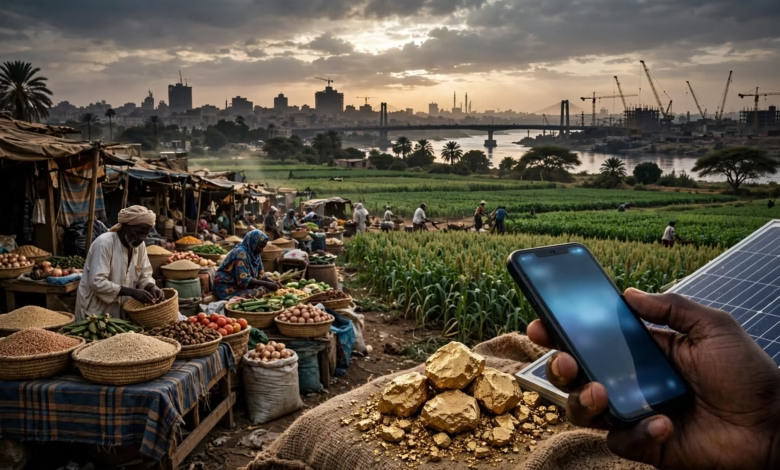
The Report Also Addresses Heavy Reliance On The Export Of Natural Capital, Specifically Gold, Which Has Become The Dominant Source Of Foreign Exchange. This Excessive Reliance Exposes The Economy To “Dutch Disease” Risks, Where Cash Inflows Weaken The Long-Term Competitiveness Of The Export-Oriented Manufacturing And Agricultural Sectors, Making It Imperative To Enhance Transparency And Manage Revenues Rigorously.
A Fragile Financial Sector Seeking Depth The Report Touches Upon The Sudanese Financial Sector, Describing It As “Shallow” And Exclusively Dependent On Banks, Comprising Around 37 Commercial Banks And A Limited Number Of Microfinance Institutions And Insurance Companies. Financial Intermediation Remains Extremely Weak; Bank Deposits Do Not Exceed 15% Of GDP, While Average Domestic Credit To The Private Sector Stands At Only 12% For The Period (2023–2025).
The Quality Of Banking Assets Deteriorated Sharply, With Non-Performing Loans Reaching 16.5% Of Total Loans, Driven By Business Disruptions Due To Conflict. In The Absence Of Effective Capital Markets, Access To Long-Term Financing Remains Virtually Nonexistent. The Report Offers A Package Of Solutions Starting With Expanding Digital Financial Services And Mobile Money, Developing Islamic Finance Instruments, And Mobilizing Diaspora Savings As Alternative Channels Capable Of Gradually Reintegrating The Sudanese Economy Into A Stable Productive Cycle.
The “Country Focus Report 2026 Sudan” Extends Its Deep Analysis Beyond Immediate Monetary And Fiscal Indicators, Diving Into The Infrastructure And Institutional Fabric That Forms The True Backbone Of The Economy. Perhaps One Of The Most Prominent Themes Given Exceptional Focus By The Report Is The Necessity To Re-Engineer The Global Financial Architecture To Suit The Nature Of Countries Suffering From Compound Fragility Like Sudan. The Report Contends That The International Financial System In Its Current Form—Represented By Multilateral Financial Institutions—Lacks The Flexibility Required To Handle Complex Contexts Where Armed Conflicts Intertwine With Economic Crises And Climate Change Impacts. The Stringent Conditions Tied To Conventional Financing, Along With Classical Risk Assessment Metrics, Make It Virtually Impossible For Sudan To Access Global Capital Markets Or Make Optimal Use Of Concessional Loans. Accordingly, The Report Calls For Adopting Innovative Financing Mechanisms, Including Risk-Sharing Instruments, Internationally Backed Sovereign Guarantees, Reallocating Special Drawing Rights (SDRs) To Fund Reconstruction Projects, And Establishing Dedicated Trust Funds For Early Recovery Capable Of Operating Flexibly Away From Traditional Lending Bureaucracy.
Climate Shocks And The Dilemma Of Agricultural Transition And Food Security
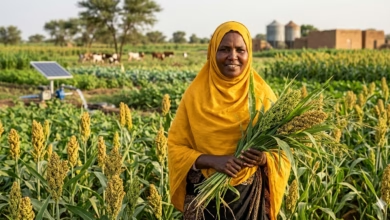
The Analytical Narrative Shifts To One Of The Most Dangerous Existential Threats Facing The Sudanese Economy: The Destructive Intersect Between Climate Shocks And Food Insecurity. Sudan Is Considered One Of The Most Vulnerable Countries To The Impacts Of Climate Change, Manifested In Severe And Recurrent Drought Waves, Rainfall Instability, Encroaching Desertification Swallowing Vast Swaths Of Arable Land, As Well As Devastating Seasonal Floods That Destroy Fragile Infrastructure. The Report Indicates That The Agricultural Sector, Which Constitutes The Backbone Of The Economy and The Largest Employer Of The Workforce, Relies Almost Entirely On Traditional Rainfed Agriculture, Leaving It Fully Exposed To Climate Volatility. This Exposure Threats Not Only Export Receipts And National Currency Valuation, But Hits The Core Of Food Security For Millions Of Citizens, Exacerbating Rates Of Malnutrition And Internal Displacement In Search Of Resources. The Report Lays Out A Roadmap For Transitioning Toward “Climate-Smart Agriculture”, Relying On Drought-Resistant Seed Varieties, Modernizing Irrigation Systems, And Activating Early Warning Mechanisms, While Explicitly Calling For Allocating A Substantial Portion Of Global Climate Finance (Of Which Sudan Currently Receives Mere Crumbs) To Support Smallholder Farmers And Build Rural Community Resilience.
The Infrastructure Gap: Severed Arteries Of Development
In Its Dissection Of The Physical Environment Supporting The Economy, The Report Highlights The Massive Infrastructure Deficit Acting As A Bottleneck To Any Serious Economic Recovery Efforts. Decades Of Neglect, Resource Misdirection Toward Consumption Spending, And Recent Widespread Destruction Of Vital Facilities Have Resulted In A Near-Total Collapse Of Basic Services. The Energy Sector, For Example, Suffers From A Huge Generation Deficit And Decayed Transmission And Distribution Networks, Leading To Persistent Power Outages That Paralyze Industrial Activity And Inflate Production Costs, Knocking Local Products Out Of Competition. This Grim Picture Extends To Road And Railway Networks That Have Become Incapable Of Connecting Production Areas (Particularly Agricultural And Mining) To Export Ports And Consumption Hubs, Causing Massive Resource Waste And Crop Spoilage. The Report Does Not Overlook Water And Sanitation Infrastructure, Describing Its Deterioration As A Ticking Public Health Time Bomb. Closing This Infrastructure Gap Requires Massive Capital Investments That The Deficit-Ridden Public Budget Cannot Bear. The Proposed Solution Lies In Engineering Effective Public-Private Partnership (PPP) Models, Provided A Transparent Legal And Regulatory Environment Is Established To Protect Investor Rights While Simultaneously Safeguarding State And Public Interests.
Human Capital: Severe Bleeding And Reconstruction Challenges
Economic Recovery Cannot Be Discussed In Isolation From The Most Critical Resource: People. The Report Devotes Substantial Space To Analyzing The Unprecedented Erosion Of Sudanese Human Capital. On One Hand, Sudan Is Witnessing The Largest “Brain Drain” Wave In Its Modern History, With Specialized Talent And Professionals (Doctors, Engineers, Academics, Technicians) Leaking Abroad In Search Of Safety And Living Stability, Leaving State Institutions And The Private Sector In Administrative And Technical Vacuums. On The Other Hand, Those Remaining Domestically Suffer Under The Collapse Of Healthcare And Education Systems. Schools And Universities Face Continuous Disruptions, Threatening To Create An Entire Generation Lacking Basic Education And Modern Labor Market Skills. The Healthcare System, Already Suffering From Structural Fragility, Faces A Comprehensive Collapse With Acute Shortages Of Lifesaving Medicines, Medical Supplies, And Destruction Of Central Hospitals. The Report Views Urgent Investment In Social Safety Nets Not As A Luxury, But As The Final Line Of Defense To Prevent Complete Societal Collapse. It Emphasizes Directing Development Finance Toward Direct Cash Transfer Programs For The Poorest Households, Rehabilitating Basic Health And Education Facilities, With A Special Focus On Empowering Women And Youth, As They Represent The Largest Demographic Block And The Latent Force Capable Of Driving Reconstruction If Equipped With Proper Education And Skills.
Governance And Institution Building: The Cornerstone For Restoring Trust
The Report Arrives At The Central Knot Preventing Sustainable Economic Growth: The Governance Crisis And Weak Institutional Capacity. The Analysis Concludes That All Monetary And Fiscal Reforms Will Evaporate Unless Anchored On A Solid Foundation Of Effective, Transparent Institutions. Sudan Suffers From Deep Imbalances In Its Public Financial Management (PFM) System, Characterized By Weak Expenditure Control, Revenue Leakage Outside Official State Oversight, And A Lack Of Transparency In Natural Resource Management (Specifically Mining and Petroleum Sectors). Added To This Is Complex Bureaucracy And A Regulatory Environment Hostile To Investment while Encouraging Corruption And Rent-Seeking Activities. Restoring Core State Functions, Building Civil Service Capacity, And Establishing Principles Of Accountability And The Rule Of Law Are Prerequisites For Successful Domestic Resource Mobilization Or External Finance Attraction. The Report Calls For A Comprehensive Digital Transformation Strategy In Government Administration (E-Government), Not Only As A Tool To Simplify Procedures And Improve Service Quality, But As An Effective Weapon To Dry Up Corruption Sources And Reduce Direct Human Intervention In Financial And Economic Transactions, Strengthening Citizen And Investor Trust In State Institutions.
Regional Integration And Cross-Border Trade Dynamics
Finally, The Report Places The Sudanese Economy In Its Regional And Geostrategic Context. Sudan Enjoys A Unique Location As A Bridge Linking The Horn Of Africa, North Africa, And The Middle East, Possessing A Strategic Seaboard On The Red Sea (Port Sudan). Despite These Advantages, Trade Performance Remains Weak And Limited To Raw Unprocessed Exports. The Report Identifies A Golden Opportunity In Activating Sudan’s Role Within The African Continental Free Trade Area (AfCFTA), Which Could Open Massive Markets For Sudanese Products, Provided There Is A Focus On Value Addition For Agricultural And Livestock Products Prior To Export. The Report Also Highlights The Importance Of Regulating And Developing Cross-Border Trade With Neighboring Countries, Which Currently Represents A Major Segment Of The Informal Economy, Converting It Into Formal Commercial Channels That Feed The State Treasury With Revenues And Enhance Regional Stability Through Economic Entanglement And Shared Interests.
The “Country Focus Report 2026 Sudan”, Issued By The African Development Bank Group, Continues Its Analytical Dive Into The Complexities Of The Sudanese Economic Landscape, Moving From Dissecting Macro Crises To Proposing Precise Pathways For Recovery Engineering, Lighting Up Mechanisms For Mobilizing Development Finance In An Environment Characterized By Extreme Fragility And Global Divisions. The Report Views Exclusive Reliance On External Capital Flows Under Current Geopolitical Conditions As A Risky Gamble, Placing Domestic Resource Mobilization At The Forefront Of Strategic Priorities For The Sudanese State. The Concept Is Not Limited To Merely Increasing Tax Collections, But Extends To A Comprehensive Reformulation Of The National Financial System To Be Fairer, More Efficient, And Flexible. The Sudanese Tax System Currently Suffers From Deep Distortion, Relying Overly On Indirect Taxes That Burden Lower-Income Groups, While The Tax Base Remains Extremely Narrow Due To Widespread Unjustified Tax Exemptions Granted To Specific Sectors And Companies Without True Development Returns Or Job Creation. The Report Clearly Calls For A Rigorous Review Of These Exemptions, Expanding The Tax Net To Cover High-Profitability Sectors Still Operating Outside The Formal Financial System Or Paying Less Than Their Fair Share.
In Addition, The Report Opens The File On Non-Tax Revenues, Stressing The Need To Govern And Manage State-Owned Natural Resources With Absolute Transparency. Fees And Revenues Accruing From Mining (Especially Gold), Telecommunications, And Oil Transit Must Fall Under A Unified Treasury System To Prevent Leakage And Enhance The Ministry Of Finance’s Strategic Expenditure Planning. Achieving This Makes Digital Transformation In Tax And Customs Administration Indispensable, Not Only To Simplify Procedures And Lower Compliance Costs For Taxpayers, But As A Decisive Tool To Reduce Corruption Space And Tax Evasion. African Development Bank Experts Believe That Implementing Electronic Invoicing Systems And Network Interconnection Across Revenue Agencies Could Double Domestic Revenue Collections Without Imposing New Taxes, Creating Vital Fiscal Space For Health, Education, And Infrastructure Spending.
In A Related Context, The Report Devotes Broad Analytical Space To Discussing The Role Of The “Private Sector” As The Alternative And Primary Driver Of Growth In Light Of Public Sector Incapacity. However, Sudan’s Business Environment Remains Shackled By Bureaucratic And Legal Obstacles That Stifle Individual Initiative And Repel Both Local And Foreign Investment. Analysis Indicates That Costs Of Starting A Business, Licensing, Property Registration, And Contract Enforcement Are Among The Highest And Most Complex In The Region. This Complex Institutional Reality Produces Two Catastrophic Outcomes: First, Strategic Investor Hesitancy To Enter The Sudanese Market, Preferring More Stable Neighboring Markets; Second, Local Small And Medium Enterprises Retreating Into The Shadow Informal Economy To Escape Regulatory And Fiscal Complexity. Hence, The Report Proposes Radical Reforms Requiring Firm Political Will, Starting With Updating Investment Laws To Be Transparent, Providing Genuine Guarantees For Property Protection And Profit Repatriation, Activating Independent Commercial Arbitration Mechanisms For Rapid Dispute Resolution, And Establishing A Functional One-Stop Shop Possessing Full Executive Powers To End Investor Struggles With Multiple Government Agencies.
Private Sector Discussions Cannot Be Separated From The “Financial Inclusion” Crisis, Representing One Of The Deepest Gaps In The Sudanese Economy. The Report Confirms That Most Entrepreneurs And SME Owners, Forming The Employment Backbone, Lack Access To Bank Financing. The Sudanese Banking Sector Is Highly Concentrated, Preferring To Finance Short-Term Commercial Operations With Fast, Guaranteed Returns, While Ignoring Productive Sectors Like Agriculture And Manufacturing That Require Long-Term Capital And Carry Higher Risks. To Address This, The Report Recommends Developing Innovative Financing Tools, Establishing Credit Risk Guarantee Funds To Encourage Bank Lending To Productive Sectors, And Enhancing Financial Technology (FinTech) To Deliver Accessible, Low-Cost Financial Services To Broad Segments Currently Unbanked, Especially In Rural And Peripheral Areas.
Among The Vital Angles Examined Closely In The Report Is “Illicit Financial Flows” And Resource Smuggling. The Lack Of Strict Capital Movement Control And Smuggling Of Strategic Commodities—Led By Gold And Cash Crops Across Open Borders—Represents A Continuous Drain On National Foreign Reserves, Depriving The Economy Of Resources Urgently Needed For Monetary Stability. The Report Places Combatting This Phenomenon As A Top Priority Requiring High-Level Security, Legal, And Institutional Coordination, Capacity Enhancements For Financial Intelligence Units, And Close Cooperation With International Institutions Against Money Laundering And Asset Recovery. Controlling These Flows And Integrating Them Into Official Channels Would Shift Sudan’s Current Account Balance And Relieve Inflationary Pressures Crushing Citizen Purchasing Power.
On Another Front, The Report Addresses The “External Debt” Dilemma As A Formidable Obstacle To Sudan’s Integration Into The Global Financial System. Despite High Hopes Placed On The HIPC Initiative, Consecutive Political Developments Froze This Path, Leaving Sudan Under A Mountain Of Legacy Debt And Arrears Compounded By Penalty Interest. Analysis Clarifies That Debt Damage Exceeds Deprivation From New Development Finance, Serving As A Continuous Negative Signal To International Investors Regarding Sovereign Risk Levels. The Report Offers A Pragmatic Approach Calling For Resuming Technical Dialogue With International Creditors, Specifically The Paris Club And International Financial Institutions, Offering Clear Guarantees And Commitments To A Strict Economic Reform Path That Could Pave The Way For Significant Debt Relief Or Rescheduling Under Highly Concessional Terms Aligned With Sudan’s Capacity To Pay Without Compromising Necessary Social Spending.
The Report Then Leads Us To Explore “Green Economy” And “Climate Finance” Dynamics—A Strategic Dimension No Longer Ignored. Sudan, Despite Contributing Almost Nothing To Global Greenhouse Emissions, Pays A Heavy Price For Climate Change Threatening Its Food Basket And Water Resources. Transitioning To A Climate-Resilient Economy Requires Huge Infrastructure Investments, Such As Small Water-Harvesting Dams, Disaster Early Warning Systems, And Renewable Energy Stations (Solar And Wind) To Reduce Reliance On Costly Imported Fossil Fuels. The Report Views Sudan As Possessing A Strategic Opportunity To Tap Into Global Climate Funds, Such As The Green Climate Fund (GCF), Though Accessing These Funds Requires Building Advanced Institutional Capacity To Draft Bankable Projects Meeting Strict International Environmental And Social Standards—A Challenge Government And Private Sector Stakeholders Must Overcome In Partnership With International Institutions.
Amid This Analysis, The Report Does Not Overlook The “Social And Demographic Dimension” As The Ultimate Objective Of Any Development Process. Sudan Stands Before A “Youth Bulge” Phenomenon Carrying Two Sides: Either Transforming Into A Massive “Demographic Dividend” Driving Production And Innovation If Provided Education, Training, And Work Opportunities, Or Becoming A Ticking Social Bomb Fueling Conflicts And Illegal Migration If Left Victim To Unemployment And Marginalization. The Report Stresses Redirecting Public Investment Toward Educational Curriculum Development Aligned With Modern Market Needs, Alongside Expanding Technical And Vocational Training Programs. It Also Reserves Dedicated Space For Economic Empowerment Of Women, Noting That Removing Legal And Social Barriers Preventing Active Female Participation In The Formal Economy Could Add Meaningful Percentage Points To GDP And Significantly Improve Household Living Standards.