
Geographic Thresholds And Strategic Transformations
The Threshold Of Beginning: Minarets Under The Shadow Of The Swastika
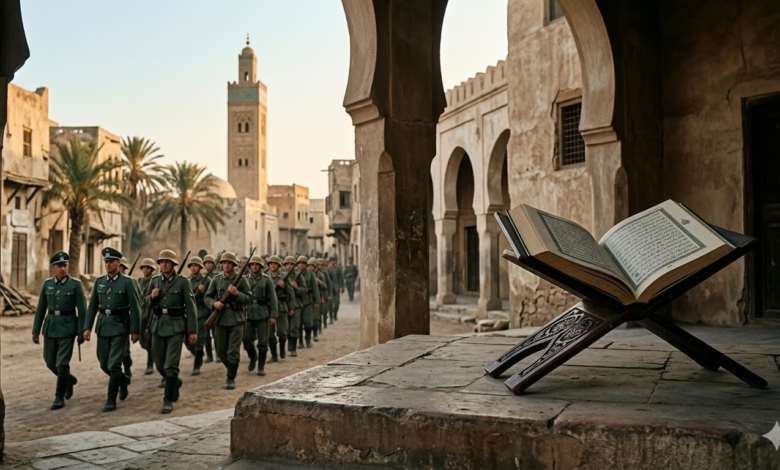
In The Midst Of The Second World War, Specifically Between 1941 And 1942, The Map Of The World Was Witnessing A Violent Reshaping By Iron And Fire. At That Critical Moment, Berlin No Longer Viewed Its Military Ambitions As Merely An Internal European Conflict To Secure “Living Space” (Lebensraum) In The Old Continent; Rather, The War Transformed, With A Single Stroke, Into An Open Global Confrontation Across Multiple Fronts And Continents. As The Armies Of The Wehrmacht (The German Army) And The Elite Forces (SS) Expanded From The Shores Of The English Channel In The West To The Peaks Of The Caucasus Mountains In The East, And From Scandinavia In The North To The Sands Of The Sahara Desert In North Africa, Nazi Military And Political Leaders Found Themselves Face To Face With A New Demographic And Geopolitical Reality: Millions Of Minarets Were Now Standing Within The Territories Invaded By Hitler, And Berlin Had Come To Directing Control Over Major And Pivotal Islamic Urban Centers Such As Tunis, Sarajevo, And Bakhchysarai In The Crimean Peninsula.
In His Book Published By Belknap Press Of Harvard University, Titled “Islam And Nazi Germany’s War”, Historian David Motadel Takes Us On An Astounding Investigative Journey, Backed By Thousands Of Archival Documents, To Deconstruct One Of The Most Complex And Least Studied Pages Of World War II: How Did Nazi Germany Attempt To Politicize Islam And Exploit It As A Strategic Tool To Serve Its War Machine? How Did The Nazi Stance, Ideologically Charged With Theories Of Racial Purity And The Supremacy Of The Aryan Man, Transform Into A Position Brimming With Utter Pragmatism, Re-formatting Its Political And Religious Discourse To Present Itself As A “Sincere Friend” To Muslims And A Defender Of Their Faith In The Face Of Three Common Enemies: The British Empire, The Communist Soviet Union, And The Jews?
Motadel Begins By Establishing A Shocking Numerical And Geographical Context That Illustrates The Scale Of The Human Mass That Was At The Center Of This Conflict; During That Period, There Were Approximately 150 Million Muslims Living Under British And French Colonial Rule In The Region Extending From North Africa To Southeast Asia, While More Than 20 Million Muslims Were Subject To The Control Of Moscow Behind The Soviet Curtain. When The War Reached Its Peak, And German Forces Approached The Lines Of Contact In The Middle East And Central Asia, The “Islamic World” Transformed In The Eyes Of Berlin Planners Into The Tipping Point That Could Decisive Settle The Global Conflict In Favor Of The Axis.
From Strict Ideology To Military Pragmatism: The Shift In Nazi Strategy
David Motadel Breaks In This Book The Common Stereotype Of The Nazi Regime As A Rigid Monolith Moving Solely Under The Inspiration Of The Texts Of The Book “Mein Kampf” And Strict Racial Ideology. He Clarifies That Nazi Policy Toward Muslims Was Not The Product Of Long-Term Ideological Planning, But Was Rather Born From The Womb Of Military Suffering And Strategic Dilemmas Faced By Berlin When The Winds Of War Began To Blow Contrary To What Hitler’s Ships Desired.
Until Late 1941, Arrogance Dominated The Corridors Of The Nazi Leadership In Berlin; The Swift Victories Of The “Lightning War” (Blitzkrieg) Deluded Hitler And His Men Into Believing That Final Victory Was Just Around the Corner, And That Their Long-Term Plans To Racially Re-engineer Eastern Europe, Embodied In The “General Plan For The East” (Generalplan Ost), Were Proceeding According To The Set Schedule. However, The Harsh Defeat Suffered By The German Army On The Gates Of Moscow In The Bitter Winter Of 1941, Followed By The Entry Of The United States Of America Into The War, Shattered The Illusions Of A Quick Victory. The Germans Suddenly Realized That They Were Embroiled In A Long-Term War Of Attrition For Which They Had Not Prepared.
By The End Of 1942, The Nazi Crisis Worsened Dramatically Following The Two Military Catastrophes In “Stalingrad” On The Eastern Front, And “El Alamein” In The Western Desert Of Egypt, As Well As The Escalation Of Resistance Movements And Guerrilla Warfare (Partisans) In The Occupied Territories. Here, And According To Motadel’s Robust Analysis, The “Logic Of Total Mobilization” And Military Pragmatism Imposed Themselves On The Decision-Makers In Berlin. Ideological Barriers Stepped A Pace Backward, And Strict Racial Restrictions Were Abruptly Relaxed. Given The Massive Depletion In Human Resources And The Acute Shortage Of Soldiers, The Wehrmacht And SS Forces Began To Open The Door For Volunteering And Recruiting Soldiers From All Occupied Territories, Promoting A “European-Global Alliance Against Bolshevism.”
Within This Sharp Pragmatic Shift, The Courtship Of The Islamic World Occupied A Prominent Place In German Strategy. This Courtship Was Not Merely An Attempt To Secure And Pacify The Muslim-Majority Areas That Fell Under Occupation Behind The Front Lines, But It Sought A Far More Dangerous And Strategic Objective: To Stir Up Unrest, Turmoil, And Armed Rebellions Behind Enemy Lines, Specifically In The Fragile Islamic Peripheries Of The Soviet Union (Such As The Caucasus, Crimea, And Central Asia), And In The British And French Colonies In The Middle East And North Africa.
“Islam” As A Bureaucratic Category: How Did The Nazis Conceive Religion?
Among The Deepest Parts Of Motadel’s Study Are Those In Which He Deconstructs The German Bureaucratic Mindset and How It Viewed and Conceived Islam. The Author Notes That The German Authorities, Across Their Various Often Competitor and Bureaucratically Conflicting Branches—Such As The Foreign Office (Auswärtiges Amt), The Ministry Of Propaganda Under The Leadership Of Goebbels, And The Ministry For The Occupied Eastern Territories Headed By Alfred Rosenberg, In Addition To The Leadership Of The Wehrmacht And The SS—Had Adopted An Essentialist And Reductionist Conception Of Islam.
German Official Documents Deliberately Reduced Individuals And Peoples To Their Religious Identities Alone, Regardless Of Their Actual Degree Of Religiosity, Or The Diversity Of Their Cultural, Political, And Social Environments. Terms Like “Islam” And “Muslim” Transformed Into Primary Classificatory And Administrative Categories In The Nazi Bureaucratic Archive. Although German Experts Realized In Their Closed Chambers The Immense Diversity And Astounding Complexity Involving The Islamic World, Practical Application On The Ground Fell Into The Trap Of The Idea Of A “Transcontinental Islam” As A Single Solid Block.
The Nazi Vision Rested On Two Basic Assumptions:
-
The First: That Islam Is Not Merely Devotional Rituals, But Is A Political And Military Force By Its Very Nature, In Which Faith Integrates Closely With Politics.
-
The Second: That This Religion Possesses A Strict And Comprehensible Legislative And Moral Code That Can Be Employed And Exploited To Direct The Masses.
Planners In Berlin Believed That The Religious Orders And Texts Followed By Muslims Provided An Ideal Ground For Lending Legitimacy To Authority And Military Mobilization. From Here, The Nazi Mindset Imagined The Existence Of What It Called In Its Documents “Global Islam” (Weltislam) Or The “Pan-Islamic League”, Conceiving It As An Undifferentiated Political And Geographical Entity Extending Like A Green Belt Around The World. Based On This Imagined Orientalist Conception, German Propaganda And Military Policies Were Designed—Policies Which, As Motadel Proves Throughout The Book’s Chapters, Frequently Clashed Violently With Local Realities, Complexities, And Rivalries On The Ground.
This Effort Was Not Just A Passing Media Maneuver, But Was A Major Systematic Attempt Spanning Three Continents To Politicize Religion And Drag Muslims Into A World War In Which They Had Neither Stake Nor Part, Utilizing In That Symbols, Quranic Verses, Religious Edicts (Fatwas), And Official Institutions To Justify This Hybrid Alliance.
Confrontation Fronts And The Nazi Propaganda Machine
Fronts Of Clash And Contact: North Africa And The Middle East As A Arena of Stakes
As The Scope Of The War Expanded, The North African And Middle Eastern Front Transformed Into One Of The Most Vital And Exciting Arenas In The Calculations Of The High Command Of The Wehrmacht. This Region, In The Eyes Of Hitler, Was Not Merely A Geographical Extension, But Was Judged As The Carotid Artery Of The British Empire, Where The Vital Supply Line Passed Through The Suez Canal, In Addition To Containing The Oil Sources That Were Beginning To Form The Backbone Of The Modern War Machine.
When Hitler Sent The “Africa Corps” (Afrikakorps) Led By General Erwin Rommel In Early 1941 To Rescue The Stumbling Italian Ally In Libya, The German Army Found Itself For The First Time In Direct Confrontation With An Entirely Muslim Demographic Environment. Here, Motadel Documented How The Germans Began Constructing A Local Strategy Aimed At Winning The Affection Of The Population And Exploiting Their Sentiments Directed Against British And French Colonialism.
In Tunisia, Egypt, And Libya, German Forces Attempted To Present Themselves As A “Liberation Force” Rather Than An Occupation Force. The Military Command Issued Strict Instructions To German Soldiers Regarding The Necessity Of Respecting Mosques, Avoiding Friction With Women, And Observing Prevailing Islamic Traditions; They Even Distributed Small Guidebooks To Soldiers Containing Advice On How To Deal With Muslims And Gain Their Trust. In Contrast, Nazi Planners In Berlin Were Watching With An Eye Of Hope That This Policy Would Translate Into Armed Revolutions Within The British Colonies In Egypt, Iraq, And Palestine, Leading To The Disruption Of Allied Efforts And The Cutting Of Their Supply Lines. However, Field Realities, Particularly The Decisive Defeat In The Battle Of El Alamein In 1942, Put A Swift End To These Nazi Ambitions In The Desert Sands, Shifting The Primary Focus To Another No Less Dangerous Front: The Eastern Front And Its Population Of Soviet Muslims.
The Media Machine And Goebbels: Radio Zeesen And The Fabrication Of Islamic Propaganda
The German Initiative Toward The Islamic World Was Not Exclusively Military, But Was Accompanied By A Massive and Systematic Propaganda Campaign Led By Nazi Propaganda Minister Joseph Goebbels In Coordination With The Foreign Office. Berlin Realized Early On That The Fastest Means To Reach The Muslim Masses—Who Were Suffering From High Illiteracy Rates At That Time—Was “The Spoken Word”; Hence, One Of The Most Dangerous Tools Of Nazi Propaganda Was Born: Targeted Broadcasts In Arabic And Other Eastern Languages.
The German Radio Station Directed From The Town Of “Zeesen” Near Berlin Was Broadcasting Daily Programs Charged Politically And Religiously To The Middle East And North Africa. These Programs Did Not Confine Themselves To Conveying News Of German Military Victories; Rather, They Used To Open With Recitations Of Verses From The Holy Quran Extolled By The Voices Of Senior Reciters, Interspersed With Enthusiastic Speeches That Merged Political Incitement With Religious Preaching.
The Propaganda Machine Of Goebbels Focused On Formulating An “Ideologized” Discourse Attempting To Find Imagined Common Ground Between Nazism And Islam, Manipulating Sensitive Issues Across Three Main Axes:
-
Anti-Western Imperialism: By Depicting Britain And France As Colonial Powers That Plundered The Wealth Of Muslims And Suppressed Their Freedom.
-
Anti-Bolshevik Communism: By Portraying The Soviet Union As The “Atheist Enemy Of God” That Destroys Mosques In Central Asia And The Caucasus And Fights Religion As An Idea.
-
Common Hostility To Judaism And Zionism: Which Was The Axis That The Nazi Propaganda Attempted To Exploit With Extreme Cleverness By Linking It To The Escalating Conflict In Palestine, Picturing Germany As The Sole Savior Of Muslims From The “Zionist Danger.”
Nazi War Theology: Employing The Quran, Jihad, And Fatwas
In One Of The Most Astonishing And Analytical Chapters Of The Book, Motadel Reveals The Extent Of German Bureaucratic Infiltration Into The Texts Of Islamic Jurisprudence And The Attempt To “Politicize War Theology.” The Matter Was No Longer Limited To Political Speeches, But Extended To Involve German Experts And Orientalists Working For The Regime Generating And Distributing Religious Pamphlets And Leaflets Brimming With Quranic Verses And Prophetic Hadiths Severed From Their Context To Serve Berlin’s War Effort.
German Authorities Directed Certain Loyal Clerics In The Occupied Areas, Or Islamic Figures Who Had Taken Refuge In Berlin, To Issue Religious Edicts (Fatwas) Declaring “Holy Jihad” Against The Allies And The Atheist Country (The Soviet Union). Hundreds Of Thousands Of These Leaflets Were Printed In Arabic, Persian, Tatar, And Turkish, And Were Dropped From Warplanes Over Frontlines Or Distributed In Mosques And Markets.
Nazi Audacity In This Regard Transgressed Traditional Boundaries, As German Propaganda Attempted To Promote Rumors And Folk Legends Supporting Their Authority; Leaflets Circulated In Some Areas Hinting That Adolf Hitler Was None Other Than The “Awaited Savior” Or That His Real Name Was “Hajj Muhammad Hitler”, And That He Had Secretly Converted To Islam And Would Soon Liberate The Islamic Nation From The Yoke Of Colonialism. The German Bureaucratic Mind Dealt With The Concept Of “Jihad” Regarded As A Mechanical Military Tool That Could Be Turned On At The Push Of A Button And Extinguished With Another, Overlooking The Spiritual And Historical Depth Of This Concept, And Imagining That Muslim Societies Could Be Led Entirely Via The Symbolic Manipulation Of Religious Texts. This “Religious Engineering” Proved Later To Be A Double-Edged Sword, And Was Frequently Met With Skepticism And Rejection By Conscious Intellectual And Religious Elites In The Islamic World, Who Realized That Berlin Moved Solely Driven By Pure German National Interest.
The Weapon Under The Shadow Of The Minarets – Islamic Legions And Recruitment Of The East
The Islamic Legion In The Wehrmacht And The SS: Actual Recruitment Of War Victims
The German Courtship Of Islam Was Not Merely Slogans Broadcast By “Zeesen” Radio Or Political Maneuvers In The Corridors Of The Foreign Office; Rather, It Swiftly Transformed Into A Solid Military Reality On The Ground As The Crisis Of Severe Depletion In Human Resources Worsened Within The German Army. David Motadel Documents In This Axis How The High Command Of The Wehrmacht And The Elite Forces (SS) Opened Their Doors Wide To Recruit Hundreds Of Thousands Of Muslims Into Their Ranks.
The Primary Source For This Massive Human Mass Was The Concentration Camps And Soviet Prisoners Of War; Millions Of Soldiers From Central Asia, The Caucasus, And Crimea Found Themselves Caught Between The Jaws Of A Pincer: Either Death By Starvation And Cold In German Camps, Or Preferring An Honorable Military Death By Wearing The German Uniform And Fighting The Stalinist Regime That Had Long Persecuted Their Nationalities And Religious Identities.
The Number Of Muslim Volunteers And Enlistees In German Military Units Exceeded Tens Of Thousands, And They Were Organized Into Special Military Formations Known As The “Eastern Legion” (Ostlegionen). The Matter Was Not Restricted To The Wehrmacht; Even The Leader Of The SS, Heinrich Himmler—Who Was Notorious For His Obsession With Racial And Aryan Purity—Became One Of The Most Enthusiastic Proponents Of Recruiting Muslims, As He Saw In Islam A “Practical, Military Religion” That Instills In The Souls Of Its Followers Courage, Compliance With Orders, And Fighting Without Fear Of Death Out Of Desire For Martyrdom—Qualities That Himmler Deemed Ideal For His Elite Soldiers.
The Caucasus And Central Asia Front: Exploiting The Wounds Of Stalinism
When German Tanks Penetrated The Territories Of The Soviet Union In Operation “Barbarosa” In 1941, And Later Arrived At The Fringes Of The Caucasus Mountains, They Were Marching Through Geographical Regions Inhabited By A Muslim Majority That Had Suffered Cruelly From Policies Of Ethnic Cleansing, Persecution, Forced Displacement, And The Suppression Of Religions Practiced By Joseph Stalin. Here, German Interest Converged With The Overwhelming Revengeful Desire Of These Inhabitants Against The Bolshevik Iron Grip.
In Regions Such As Chechnya, Ingushetia, Dagestan, And The Crimean Peninsula, German Forces Were Initially Received By Broad Sectors Of The Population As Liberating Troops. German Military Leaders On The Ground Moved With Pragmatic Intelligence; They Reopened Mosques That Had Been Closed By The Communists, Returned Confiscated Agricultural Lands To Their Owners, And Allowed Religious Rituals To Be Practiced With Absolute Freedom.
This Policy Bore Fruit In The Formation Of The “Tatar Legion” And The “Caucasian Mohammedan Legion” (Kaukasisch-Mohammedanische Legion), In Addition To The Legions Of Turkestanis. These Soldiers Were Fed Concentrated Doses Of Religious And Nationalist Propaganda, And Were Convinced That Their Fight Under The Flag Of The Swastika Was A “Holy Jihad” To Reclaim Their Homelands From The Atheist Soviets And Re-establish The Rituals Of Islam. However, This Military Alliance Built On The Wounds Of Stalinism Led Ultimately To A Major Historical Tragedy; When The Red Army Managed To Repel The Germans And Recapture These Regions, Stalin Poured His Full Wrath Upon These Peoples, Banishing And Forcibly Deporting Entire Communities (Such As The Crimean Tatars And Chechens) To The Deserts Of Siberia And Central Asia On Charges Of Collective Treason And Collaboration With The Nazis.
The Burning Balkans: The “Handschar” Division Of The SS And The Yugoslav Dilemma
Motadel’s Study Shifts To The European Front, Specifically To The Balkan Region Which Was Living In A State Of Utter Chaos And Ferocious Guerrilla Warfare Following The German Invasion Of Yugoslavia In 1941. In This Burning Spot, The Muslims Of Bosnia And Herzegovina Found Themselves Victims Of Ethnic Liquidation Operations And Horrific Massacres Committed By Ultra-Nationalist Serbian “Chetnik” Militias, In Addition To The Brutality Of The Communist Resistance Movement Led By Tito And The Fascist Croatian “Ustaše” Forces.
In The Face Of This Existential Threat, Berlin’s Interests Converged With The Conservative Bosnian Elites; This Cooperation Resulted In The Establishment Of One Of The Most Famous And Controversial Military Units Of The Second World War: The 13th Waffen Mountain Division Of The SS “Handschar” (13th Waffen Mountain Division of the SS Handschar). This Division Was The First Of Its Kind In The History Of The SS To Be Formed Of Non-German and Non-Christian Elements, Consisting In Its Overwhelming Majority Of Bosnian Muslims.
The SS Leadership Took Great Care To Grant This Division Full Religious And Cultural Specificity To Court Islamic Sentiments:
-
Soldiers Of The Division Wore The Traditional Bosnian “Fez” In Green Or Gray, Adorned With The SS Emblem (The Skull And Crossbones).
-
“Military Imams” (Mullahs) Were Appointed In Each Battalion To Supervise Congregational Prayers And Apply Sharia Rulings Regarding Foods (Providing Halal Meat And Completely Prohibiting Pork And Alcohol).
-
Regular Times Were Allocated For Religious Training And Spiritual Preaching Alongside Rigorous Military Training.
The “Handschar” Division Was Sent For Training In France And Germany Before Returning To The Balkans To Fight Fierce And Bloody Battles Against The Communists And Chetniks. Despite The High Combat Efficiency Displayed By The Division In Protecting Its Villages And Areas, It Was Also Embroiled In Acts Of Violence And Mutual Retaliation Against Serb Civilians, Rendering It Part Of The Cycle Of Excessive Ethnic Violence That Characterized The Balkan Front, Perfectly Embodying How Islam Transformed In The Hands Of Nazi Planners From A Spiritual Faith Into A Geopolitical Tool For Proxy Guerrilla Warfare.
Exile Diplomacy And The Complex Of “Aryan Purity”
Alliances And Pivotal Personalities: Hajj Amin Al-Husseini In The Heart Of Berlin
It Is Impossible To Read Nazi Policy Toward The Islamic World Without Pausing At Length Before The Political And Religious Figures Who Took Refuge In Berlin, Viewing The Victories Of The Axis As An Opportunity To Rid Themselves Of The Yoke Of British And French Colonialism. David Motadel Devotes A Wide Space To The Icons Of This Era, Chiefly Among Them The Grand Mufti Of Jerusalem Hajj Amin Al-Husseini, And Former Iraqi Prime Minister Rashid Ali Al-Gaylani, Who Fled To Germany After The Failure Of His Anti-British Revolt In 1941.
Hajj Amin Al-Husseini Arrived In Berlin In Late 1941, Received With Great Hospitality Where Mutual Interests Intersected; The Mufti Found In Germany A Powerful Ally Possessing The Military Capacity To Undermine The British Empire And Prevent Zionist Expansion In Palestine, While Nazi Leaders—Led By Hitler, Himmler, And Goebbels—Found In The Person Of The Mufti A Religious And Political Symbol Enjoying Charisma And Broad Spiritual Influence That Could Be Utilized As A “Spearhead” To Legitimize Nazi Propaganda And Steer The Muslim Masses.
The Mufti’s Headquarters In Berlin Became An Active Diplomatic and Media Center; He Contributed Directly To Formulating The Radio Discourse Directed Over The “Zeesen” Station, And Supervised The Guidance And Direction Of Military Imams Working In Islamic Units Within The Wehrmacht And The SS. Despite This Visible Warmth, Motadel Discloses Through Documents That This Relationship Was Governed By A Cautious Pragmatic Ceiling; Hitler Consistently Refused To Provide Written Political Pledges Or Explicit Public Guarantees Ensuring Absolute Independence For Arab States After The War, Driven By His Desire Not To Anger His Italian Ally Mussolini, Who Viewed The Mediterranean Sea And North Africa As An Exclusive Vital Space For Rome.
Deconstructing The Racial Contradiction: How Did Nazism Bypass The Dilemma Of The “Aryan Man”?
The Nazi Attempt To Recruit Muslims And Integrate Them Into Its Sensitive Military Apparatuses Such As The SS Forced Ideological Theorists In The Nazi Party To Confront A Complex Intellectual And Legal Dilemma; How Could A Regime Whose Philosophical And Legislative Foundation Rests On Theories Of “Racial Purity” And The Supremacy Of Aryan Blood, Viewing Non-European Peoples As Inferior (Untermenschen), Welcome Tens Of Thousands Of Soldiers From Central Asia, Arabs, The Caucasus, And The Balkans, And Grant Them Weapons And German Military Uniforms?
Motadel Clarifies How The Nazi Bureaucracy Demonstrated Astounding Tactical Flexibility And Twisted Around Its Ideological Texts; The Nazi Ministry Of Justice And Courts Issued Exceptional Legal Rulings and Interpretations Stating That “Muslims Do Not Fall Under Racial Categorizations Hostile To Germans”, And They Were Officially Exempted From Strict Racial Laws (Such As The Nuremberg Laws For Citizenship And Blood).
To Resolve This Knot Mentally And Intellectually For German Soldiers, Internal Propaganda Proceeded To Alter Concepts; The Criterion Was No Longer “Color Or Race” But Rather “The Common Enemy And The Stance Toward Bolshevism And Judaism.” In Himmler’s Meetings With Military Commanders, He Justified This Alliance By Stating That Islam Is A “Resilient And Military” Religion, And That Values Of Courage And Compliance With Orders Meet With The German Military Spirit, Making These Soldiers “Allies In Blood On The Battlefield” Regardless Of Their Ethnic Origins. This Crude Utilitarianism Demonstrated How The Most Extremist Totalitarian Ideologies Can Sacrifice Their Intellectual Postulates When Clashing With The Wall Of Pressing Military Need.
The Conflict Of Institutions: Bureaucratic Rivalry Inside The Corridors Of Berlin
Among The Deep Intellectual Dimensions Highlighted By Motadel’s Book Is The Shattering Of The Stereotype Regarding The Nazi Regime As A Harmonious Central Apparatus Moving With The Mechanism Of A Clock; The Author Proves That German Policy Toward The Islamic World Was An Arena For Bitter Turf Wars And Acute Bureaucratic Rivalry Among Several Feuding German Institutions, Frequently Resulting In Conflicting Decisions And Loss Of Effectiveness On The Ground.
The Arena Was Divided Among Three Main Poles:
-
The Foreign Office (Auswärtiges Amt): Led By Joachim Von Ribbentrop, Which Viewed The Islamic File As A Purely Diplomatic And Political Issue That Must Be Managed Through Traditional Channels And Alliances With Political Elites (Such As Al-Gaylani And Al-Husseini) To Destabilize The Allies.
-
The Ministry For The Occupied Eastern Territories: Headed By Alfred Rosenberg (The Nazi Party’s Theorist), Which Focused Exclusively On Soviet Muslims In The Caucasus And Central Asia, Attempting To Integrate Them Into His Vision For Re-deconstructing The Soviet Union Into Small Ethnic States Revolving In The German Orbit.
-
The Elite Forces (SS) And The Army (Wehrmacht): Both Of Which Viewed The File From A Purely Military Perspective To Compensate For Catastrophic Human Losses; They Bypassed The Political Plans Of The Foreign Office And Recruited Legions Directly From Prisoner Camps, Creating A State Of Administrative Disarray, Where Each Party Attempted To Monopolize The “Islamic File” And Employ It To Enhance Personal Influence With Adolf Hitler.
Sad Outcomes And Critique Of The Historical Thesis
Tragic Endings: The Fate Of The Legions And Berlin’s Allies After The Fall
As The Second World War Neared Its Inevitable End In 1945, And Allied and Soviet Armies Invaded The Heart Of Germany, The Pragmatic Illusions Upon Which Berlin’s Islamic Strategy Was Built Vanished. Tens Of Thousands Of Muslim Soldiers Who Had Enlisted In The Wehrmacht And SS Forces Faced Horrific, Tragic Fates; Some Were Killed In The Final Desperate Defensive Battles, While Others Fell Into The Captivity Of The Soviet Red Army, To Be Sent Directly To “Gulag” Camps In Siberia Or Face Immediate Execution On Charges Of High Treason.
On The Political Front, The Leaders And Icons Who Had Taken Berlin As Their Headquarters Dispersed; Hajj Amin Al-Husseini And Rashid Ali Al-Gaylani Managed To Flee And Seek Refuge In Other Countries After The Fall Of The Third Reich. This Era Left Deep Wounds In The Collective Memory Of Certain Peoples; Stalin Used The Cooperation Of Some Individuals From Soviet Muslim Nationalities As A Pretext To Launch A Comprehensive Ethnic Cleansing Campaign, Whereby He Deported Hundreds Of Thousands Of Crimean Tatars, Chechens, Ingush, And Balkars To The Arid Lands Of Central Asia, In One Of The Most Despicable Geopolitical Crimes Of The Twentieth Century.
Reasons For The Nazi Strategic Failure In The Islamic World
David Motadel Offers In His Concluding Chapters A Profound Analysis Of The Structural Reasons That Led To The Failure Of Nazi Germany in Achieving A Real and Firm Strategic Breakthrough In The Islamic World, And These Reasons Can Be Summarized In Three Pivotal Points:
-
Field Military Defeats: Politics Consistently Remains Hostage To Field Results; When The German Military Machine Broke In The Battles Of El Alamein And Stalingrad In 1942, Berlin Lost The Capacity For Direct Physical Access To The Heart Of The Islamic World In The Middle East And Central Asia. Nazi Promises Of Liberation Transformed Into Merely Hollow Rhetoric That Tanks Were Unable To Protect On The Ground.
-
The Glaring Contradiction Between Promises And Reality: Nazi Discourse Suffered From An Acute Credibility Crisis; How Could A Conscious Muslim Believe That Hitler—Who Adopts A Racial Ideology Considering The Peoples Of The East Lower In Rank—Is A “Friend Of Islam”? Moreover, Berlin’s Alliance With Fascist Colonial Powers Such As Italy (Which Had Committed Atrocities And Major Massacres Against Muslims In Libya) Made German Promises Of Liberation Appear As A Crude Political Lie In The Eyes Of Arab And Muslim Elites And Masses.
-
Naive Bureaucratic Orientalism: Germany Dealt With Islam As A Single Solid Monolith Recognizing No Differentiation, Overlooking Local Rivalries, Sectarian Complexities, And Cultural and Political Variances Among Muslim Peoples. The Nazis Believed That Dropping Leaflets Filled With Quranic Verses Was Sufficient To Move The Masses In A “Mechanical Jihad”, Failing To Realize That Islamic Societies Possessed Their Own Intellectual Debates And Conscious Elites Who Refused To Be Mere Fuel For Another European Imperialist War.
Concluding Reflection: The Continuous Lesson Of History
Ultimately, David Motadel’s Book Discloses A Dark And Complex Page From The History Of The Twentieth Century, Clearly Embodying How “The Religious Sacred” Transformed During Universal Crises Into Merely A “Geopolitical Tool” In The Hands Of Totalitarian Secular Powers That Do Not Believe In It Originally. The Story Of Nazi Germany’s Attempt To Politicize Islam And Recruit Legions Under The Shadows Of Minarets And The Swastika Is A Permanent Historical Reminder That Spiritual Doctrines Are Frequently Thrust Into Conflicts Of Interests And Influence.
The Muslims Who Enlisted In This War—In Their Overwhelming Majority—Were Not Believers In Nazism Or Admirers Of Hitler, But Were Rather Victims Of Oppressive Historical And Geopolitical Circumstances That Placed Them Between The Hammer Of Atheist Stalinism And The Anvil Of Opportunistic Nazism, Or Made Them Look Toward Any Lifeline To Rid Them Of The Oppression Of British And French Colonialism. This Book Remains A Eloquent Historical Document Teaching Us That Employing Religion In Military Battles Without Awareness Of Local Realities And Moral Outcomes Leads Instantly To Ultimate Human And Historical Catastrophes, With The Price Paid Generously In The Blood Of Ordinary Peoples.