

How Did The “Dream Of International Justice” Turn Into A Nightmare That Haunts The Criminal State?

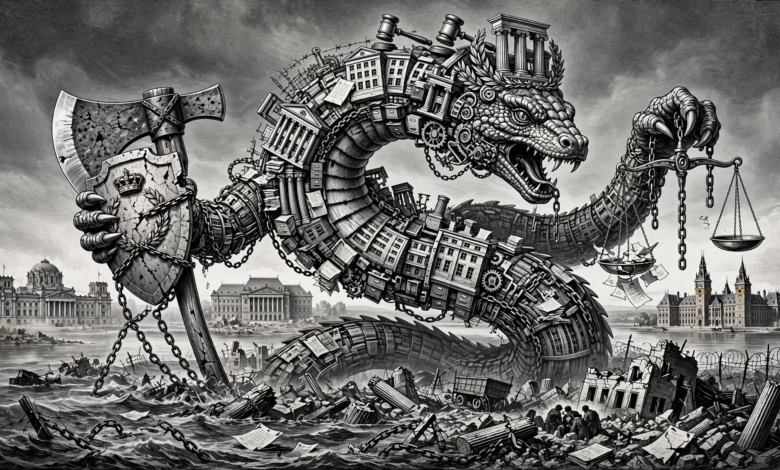
The Dilemma Of Sovereignty And The Emergence Of The “Monster State”
In A World Teetering On Shifting Geopolitical Sands, The Ancient Yet Renewed Question Emerges Concerning The Nature Of Justice In The International Space, And How The Rule Of Law Can Curb A Blind Power Armed By Ideology And Supported By Institutional Death Machines. The Book By Professor Lawrence Douglas, Published By Princeton University Press, Comes To Reframe This Core Debate By Deconstructing A Concept That Substantively Appears Contradictory Yet Represents The Harshest Reality Of Modern History, Which Is The Concept Of The Criminal State. Douglas Does Not Deal In This Massive Volume Merely With Isolated Violations Or Crimes Committed By Rogue Individuals Under The Cover Of War; Rather, He Directs His Analytical Scalpel To The Landmark Historical Moments When The State In Its Entirety, With Its Bureaucratic Apparatuses, Laws, And Ideological System, Transforms Into A Tool For Producing Organized Atrocities And Eradicating The Other. It Is A Deep Study In The Philosophy Of International Law And Its History Extending Through The Twentieth And Twenty-First Centuries, Examining That Elusive Dream Represented In Subjecting National Sovereignties To The Logic Of Global Criminal Accountability.
The Author Begins His Intellectual Journey By Confronting The Structural Dilemma That Has Faced International Law Theorists Since The Treaty Of Westphalia, Namely The Immunity Of National Sovereignty Which Made The State An Entity Exempt From Criminal Stigmatization. For Many Decades, Traditional Legal Jurisprudence Maintained That The State Is The Source Of Law, And Therefore It Cannot Itself Be The Subject Of Punishment Or Judicial Prosecution, For How Can One Prosecute Whoever Possesses The Exclusive Right To Legislate, Punish, And Extend Control. This Philosophical Impasse Is What Douglas Calls The Paradox Of International Justice, Where The Most Horrific Crimes In Human History Selfsame Become The Most Resistant To Accountability Because They Are Committed In The Name Of National Law And Under The Banner Of The State. From Here, The Author Traces How The Shocks Of Major Wars, Specifically The First World War And The Horrific Atrocities That Followed It, Forced The Global Conscience To Consider Breaking This Iron Ring, And To Search For A Legal Formula That Allows The Internationalization Of Criminal Accountability Without Deconstructing The International System Grounded Upon National States.
The First Section Of The Historical Reading Offered By Douglas Focuses On The Early Attempts That Followed The First World War, Casting A Revealing Light On The Forgotten And Complex Efforts Made By The Victorious Powers To Try The German Kaiser Wilhelm II, And Those Strenuous Deliberations That Took Place Regarding The Atrocities Committed Against The Armenians In The Ottoman Empire. The Author Sees In These Embryonic Attempts The Seeds Of Major Intellectual Transformation, Despite Their Abject Practical Failure At That Time Due To The Adherence Of States To The Concept Of Absolute Sovereignty And Their Fear Of Creating Judicial Precedents That Might Rebound Upon Them In The Future. Douglas Brilliantly Analyzes How The Leipzig Trials Transformed Into A Judicial Farce Proving To The World That Leaving The Trial Of War Criminals To The National Judiciary Of The Defeated State Is A Form Of Absurdity, Thereby Paving The Way For The Birth Of A New International Conviction Stating That Comprehensive Atrocities Require Judicial Platforms That Transcend Narrow National Borders.
The Thesis Of The Book Gains Depth When It Moves To Studying The Seismic Transformation Wrought By The Second World War And The Historic Trial In Nuremberg. Here, The Discussion No Longer Revolves Around Military Transgressions In The Battlefield, But Rather Around A Direct Confrontation With What Douglas Calls The Monster State, Which Was Represented In Nazi Germany. Nazism Was, In The View Of The Author, A Terrifying Embodiment Of The Efficiency Of The Modern Administrative Apparatus When Placed In The Service Of A Codified And Systematized Genocide. Crime There Was Not A Violation Of The Law, But Rather It Was The Law Itself, And The International Military Tribunal At Nuremberg Came To Present An Unprecedented Revolutionary Response, Announcing That Individuals Cannot Hide Behind Superior Orders Or Sovereign Immunity If Those Acts Violate The Basic Principles Of Humanity. Douglas Reviews The Hot Philosophical Debates That Raged Behind The Scenes Of Nuremberg Between Legal Giants Such As Robert Jackson And The Thinkers Who Formulated The Concepts Of Crimes Against Humanity And The Crime Of Genocide, Highlighting How The Court Succeeded In Creating A New Legal Language, Yet At The Same Time Faced The Dilemma Of Imposing Victors’ Justice.
The Author Wonders Whether The Dream Of International Justice Has Dissipated Or Transformed Into A Political Tool Used By Major Powers To Single Out Their Opponents And Try Them, While They And Their Allied Tigers Remain Immune To Any Prosecution. Through Reviewing The Record Of The Temporary Criminal Tribunals In The Nineties Of The Last Century, Such As The Tribunals For The Former Yugoslavia And Rwanda, Reaching Up To The Establishment Of The Permanent International Criminal Court In The Hague, The Author Places Us Before A Revealing Mirror Reflecting The Huge Gap Between Legal Idealism And Crude Political Realism. The Criminal State, As Formulated By Douglas, Is Not A Passing Phenomenon That Vanished With The Fall Of Berlin, But Rather An Ever-Present Possibility Whenever Extreme Nationalist Tendencies Converge With The Absence Of Real International Deterrence Mechanisms.
Douglas Does Not Confine Himself To Examining Legal Texts And International Conventions, But Rather Dives Deep Into The Philosophy Of Punishment And The Political Psychology Of Totalitarian Regimes, Demonstrating How The State Can Transform Its Ordinary Citizens Into Cogs In A Machine Of Mass Murder Through Dehumanizing The Victims And Affording A Routine Bureaucratic Character To Atrocities. This Analytical Entry Way Makes The Book An Essential Document Not Only For Legal Professionals And Political Scientists, But For Everyone Interested In Understanding The Nature Of Political Evil In The Modern Era, And How The International Community Can Build A Real Protective Wall Guarding The Future Of Humanity Against The Encroachment Of States When They Decide To Abandon Their Values And Turn Into Predatory Creatures Outside Common Human Law.
From Leipzig To Nuremberg – The Infrastructure Of Law In The Face Of Institutional Evil
In The Following Chapters Of His Work, Lawrence Douglas Moves To A Microscopic Examination Of The Legal Mechanisms That Attempted To Deconstruct The Concept Of “Obedience To The State” As An Impregnable Fortress Against Punishment, Focusing On The Essential Transition From The Structural Failure Of The Post-First World War Phase To The Revolutionary Establishment Of The New Legal System In Nuremberg. The Author Believes That Understanding This Transition Requires Not Looking At International Trials As Isolated Events, But Rather As A Long-Standing Intellectual Battle Over Who Possesses The Right To Define Political Crime When The State Itself Becomes The Sponsor Of The Crime And Its Real Engineer. The Author Spreads His Analytical Mantle Over The Details Of The Leipzig Trials In Germany In The Early Twenties Of The Last Century, Where The Victorious Allied Powers Granted The Fledgling Weimar Republic The Right To Try Its Officers And Soldiers Accused Of Committing Atrocities Against Prisoners And Civilians, To Prove Beyond Concrete Doubt That The National Judiciary, No Matter How Much It Claims Integrity, Remains Captive To The Military Culture And Chauvinistic National Identity Of The State, As Those Trials Transformed Into A Tool For Exonerating The Accused Or Granting Them Lighter Sentences That Aroused The Ridicule Of International Observers And Their Moral Shock.
This Historic Failure Was Not, In The Estimation Of Douglas, Merely An Absence Of Political Will, But Rather A Clarifying Embodiment Of The Philosophical And Legal Impasse Imposed By The Traditional Concept Of Sovereignty, Where The International Laws Existing At That Time Lacked A Clear Formulation Of “Individual Criminal Responsibility” For Political And Military Leaders, And The Classical Defense Represented In “Executing Superior Orders” Was Considered Sufficient To Deflect Blame From Individuals, So Long As The Act Had Been Committed Based On An Official Mandate From A Sovereign State. The Author Explains How German Legal Scholars Utilized This Normative Vacuum To Argue That Trying These Officers Before Courts Other Than Their National Courts Constitutes A Violation Of The Principle Of Non-Retroactivity Of Criminal Laws, The Principle Prescribing That There Is No Crime And No Punishment Except By A Prior Legal Text. From Here, The Book Highlights How This International Judicial Impotence Paved The Way For The Emergence Of Fascist And Nazi Regimes Which Realized That The International Community Stands Handcuffed In Front Of Comprehensive Atrocities So Long As They Wear The Garments Of National Legitimacy And Are Executed Within Recognized Geographical Borders.
At This Decisive Juncture, Douglas Dives Into The Depth Of The German Nazi Experience To Demonstrate How The Concept Of The “Criminal State” Evolved From A Mere Political Deviation Into A Complete Institutional And Legal Construction Aiming At Genocide. Nazism Was Not Merely A Gang That Seized Power And Suspended Laws, But Rather A System That Utilized Existing Legal Structures, And Developed A New Arsenal Of Legislation, Such As The Nuremberg Laws On Citizenship, To Make Discrimination, Persecution, And Murder Legal Acts And Even Sacred National Duties. The Author Analyzes With Supreme Brilliance This Terrifying Paradox: How Can The Law, Which Was Originally Created To Protect The Human Soul And Organize Justice, Be Mis-Shaped To Become The Primary Bureaucratic Tool For Organizing Death And Stripping Millions Of Human Beings Of Their Humanity. This Transformation In The Nature Of The State Is What Made The Traditional Approach Of International Law Entirely Impotent, And There Was No Alternative But To Bring About A Major Epistemological And Legislative Rupture Transcending Old Frameworks To Redefine Crime And Punishment At The Global Level.
This Historic Rupture Manifested In The Nuremberg International Military Tribunal In 1945, To Which Douglas Devotes A Wide Space For Analysis And Criticism, Considering It The Voltairian Moment In Which Modern International Criminal Law Was Born From The Womb Of Ashes And Destruction. Nuremberg Was Not, In The Eyes Of The Author, Merely A Platform For Retribution From The Surviving Nazi Leaders, But Rather A Giant Intellectual Laboratory For Formulating New Legal Concepts Unknown To Human Jurisprudence Before, Foremost Among Which Were The Crime Of Conspiracy To Wage An Aggressive War, Crimes Against Humanity, And Genocide Whose Legal Term Was Coined By The Polish Jurist Raphael Lemkin. Douglas Focuses On The Philosophical And Legal Genius With Which The American Prosecutor Robert Jackson Led The Trial, As He Insisted On Relying On Official Documents And Materials Produced By The Nazi Bureaucracy Itself, Instead Of Relying Exclusively On Eye-Witness Testimonies, To Deprive The Defendants Of Any Capacity For Denial, And To Reveal Before The World How The Offices Of Ministries And Administrative Bodies In Berlin Transformed Into Operations Rooms For Managing Comprehensive Massacres.
However, Douglas Does Not Present A Hagiographic Uncritical Reading Of Nuremberg; Rather, He Confronts With Academic Courage The Deep Contradictions That Marred That Unique Experience, And Which Still Shadow It Today. The Author Reviews In Thorough Detail The Dilemma Of “Victors’ Justice,” Where International Powers Such As The Soviet Union Sat On The Bench Of Judgment To Try The Nazis For Crimes Against Peace And Against Humanity, At The Very Time When The Stalinist Regime Had Committed Horrific Massacres, Such As The Katyn Massacre Against Polish Officers, Which The Soviet Prosecution Attempted To Pin On The German Army During The Trial. This Moral And Structural Defect In The Composition Of The Tribunal Reflects, According To The Book’s Thesis, The Continuous And Eternal Struggle Between The Moral Purity Of The Law And The Utilitarian Political Realism That Governs International Relations, Where The Tribunal Was Forced To Overlook Violations By The Allies, Including The Atomic Bombing Of Hiroshima And Nagasaki And The Bombing Of German Cities, In Order To Maintain The Cohesion Of The International Alliance And Complete The Trial Which Was Intended To Be A Lesson For History.
The Author Traces How Nuremberg Succeeded, Despite All Its Transgressions, In Laying Down The Revolutionary Principle That Changed The Face Of International Law Forever, Which Is That The Immunity Of The State Falls Away When It Turns Into A Tool For Committing Atrocities, And That Individuals, From The Top Of The Pyramid Of Power To The Lowest Soldier Implementing Orders, Bear A Personal Criminal Responsibility From Which They Cannot Extricate Themselves. Douglas Analyzes How This Trial Contributed To Setting Up The “Declaration Of Human Rights” And The Geneva Conventions Of 1949, Considering That The True Legacy Of Nuremberg Was Not The Individual Punishment Of Criminals, But Was The Creation Of A Cosmic Legal Conscience That Sees In Atrocities Committed Against Any Human Group An Assault On The Collective Human Conscience In Its Entirety, Opening The Door Wide For A Long-Term Dream To Establish A Permanent And Independent International Judiciary, A Dream That Quickly Collided With The Thick Walls Of The Cold War, Freezing For Decades Before Emerging Anew In A Completely Different International Scene.
The Freezing Of The Cold War And The Resurrection Of Temporary Tribunals – Reviving The Dream From The Ashes Of The Balkans And Rwanda
Lawrence Douglas Moves On To Monitor The Long Decades That Followed The Nuremberg Trials, An Era That Witnessed The Rise Of The Cold War And The Paralysis Of The International Judicial System That Had Been Heralded In The Mid-Forties. The Author Analyzes With Great Analytic Depth How The Global Legal Conscience Transformed Into A State Of Forced Winter Hibernation, Where The Ideological And Geopolitical Confrontation Between The Eastern And Western Blocs Hijacked The Ambitions Of International Criminal Law, And The United Nations And Its Security Council Transformed Into Arenas For Settling Political Accounts and Using The “Veto” Power Instead Of Being A Tool To Protect Humanity From Atrocities. In This Context, Douglas Clarifies That The “Criminal State” Did Not Cease Practicing Its Hobby Of Annihilation And Oppression During Those Decades, But Rather Concealed Itself Behind The Canopy Of Protection Provided By The Great Powers To Their Allies, Making Major Massacres Such As Those That Occurred In Cambodia Under The Khmer Rouge, Or Ethnic Cleansing Operations In Latin America And Africa, Pass Without Any International Judicial Accountability, As If The Legacy Of Nuremberg Had Been Deposited In History Museums As An Exceptional Case Dictated By The Circumstances Of Defeating The Abhorrent Nazi Power, And Not As A Sustainable Infrastructure For The New World Order.
However, This Obstinate Historical Stagnation Was Violently Shattered At The Dawn Of The Nineties Of The Twentieth Century, Specifically With The Collapse Of The Berlin Wall And The Disintegration Of The Soviet Bloc, An Event That Re-Opened Horizons For The Internationalization Of Criminal Justice, Even If That Came Through The Gateways Of The Human Hell That Exploded In The Balkans Region And In The Heart Of The African Continent. Douglas Dedicates A Wide Critical Analytical Space To Studying The Context Of Establishing The International Criminal Tribunal For The Former Yugoslavia In 1993, And The Special Tribunal For Rwanda In 1994, Considering Them The Official Declaration Of The Resurrection Of The “Dream Of International Justice” From Its Resting Place. The Author Explains How The International Community Found Itself, Under The Pressure Of Terrifying Scenes Of Ethnic Cleansing Operations In Bosnia And Herzegovina And The Srebrenica Massacres, Forced To Transcend The State Of Political Paralysis By Resorting To Chapter VII Of The United Nations Charter To Establish Criminal Tribunals By Resolutions From The Security Council, In A Step That Represented A Legal Precedent And A Direct Challenge To The National Sovereignty Of States Which Were Still Insisting That What Was Occurring Within Their Borders Fell Within Their Purely Internal Jurisdiction.
In His Deep Reading Of The Path Of The International Criminal Tribunal For The Former Yugoslavia, Douglas Highlights The Way International Law Confronted The Concept Of The State That Hides Behind Nationalist Sentiments To Execute Crimes Of Annihilation. Crime Here Was Not The Product Of The Absence Of The State Or The Collapse Of Its Organs, But Rather Was Driven And Planned By Political And Military Elites In Belgrade And Serbia, Who Employed Propaganda Organs And State Resources To Mobilize The Masses Toward Destroying The Other. The Author Analyzes The Trial Of The Former Yugoslav President Slobodan Milosevic As A Milestone In The History Of The International Judiciary, Where A Former Head Of State Stood For The First Time In Modern History Before An International Court To Be Held Accountable For Crimes Committed During His Period Of Governance. Douglas Re-Deconstructs The Defensive Strategy Adopted By Milosevic, Which Stood Upon Questioning The Legitimacy Of The Court Itself And Considering It A Political Tool In The Hands Of Western Powers, Showing How This Long And Complex Trial Revealed The Huge Logistical And Legal Difficulties Entailed In Proving “Command Criminal Responsibility” And Linking High Political Decisions Issued In Capitals With Field Crimes Committed By Soldiers And Militias In Remote Villages And Towns.
Similarly, Douglas’s Analysis Directs Itself Toward The African Continent To Deal With The International Criminal Tribunal For Rwanda, Reviewing The Terrifying Atrocities Of 1994 Which Witnessed The Annihilation Of Approximately One Million Human Beings From The Tutsi Ethnicity Within Merely One Hundred Days, And With Wide Participation By State Organs and Ordinary Citizens Alike. The Author Believes That The Experience Of Rwanda Offered Invaluable Jurisprudential Contributions To International Criminal Law, Particularly In The Case Of “The Prosecutor V. Jean-Paul Akayesu,” Where The Tribunal Ruled For The First Time That Sexual Violence And Systematic Rape Can Constitute An Essential Component Of The Crime Of Genocide When Committed With The Intent To Destroy Internally Or Partially A Specific Ethnic Group. The Author Also Analyzes The “Media Trial” In Rwanda, Which Condemned Radio And Press Officials Who Incited Murder, Highlighting How Institutional Evil Permeated The Arteries Of Society Through State Tools, And How The International Judiciary, Despite Its Geographical Distance And The Slowness Of Its Procedures, Was Able To Formulate Strict Determinants Preventing The Misuse Of Freedom Of Expression To Promote Speech Of Hatred And Annihilation.
However, Lawrence Douglas Does Not Fail To Direct The Arrows Of His Constructive Criticism At The Flaws Of These Temporary Tribunals, Explaining That They Suffered From Deep Structural Crises That Almost Blew Away Their Credibility. These Crises Manifested In The Geographical And Cultural Isolation Of Those Courts From The Societies Where Victims Existed, As Trials Were Taking Place In The Dutch Hague Or Tanzanian Arusha, Making Direct Victims Feel Alienated From The Justice Practiced In Their Name, Alongside The Exorbitant Financial Cost And The Extreme Slowness In Issuing Rulings Which Made Some Trials Continue For Long Years Without Resolution. The Author Believes That The Most Important Lesson Evolving From The Era Of The Nineties Is That Temporary Tribunals, Despite Their Success In Building A Sophisticated Jurisprudential Code And Trying Senior Leaders, Remain Fragmented First-Aid Solutions That Always Arrive After The Occurrence Of The Tragedy, And Depend Entirely On The Temporary Political Consensus Of Major Powers In The Security Council, Which Cannot Be Wagered Upon To Build A Permanent Global Deterrence System Capable Of Confronting The “Criminal State” At Any Time And In Any Place.
Douglas Concludes This Section By Affirming That The Special Tribunals For Yugoslavia And Rwanda Paved The Solid Ground, Intellectually And Procedurally, For Moving Toward The Most Ambitious And Daring Step In Human History, Which Is The Attempt To Institutionalize And Globalize This Justice Through Creating A Permanent International Criminal Court. The Two Experiences Proved That Breaking The Immunity Of Sovereignty Is No Longer Merely A Utopian Idea Suspended In The Space Of Philosophical Theorizing, But Has Transformed Into A Realistic Judicial Practice Possessing Fangs, Laws, And Judges, And That The Concept Of “Institutional Evil” Manufactured By States Can Be Deconstructed If The Common International Will Is Provided, Thereby Clearing The Path For The Major Legal Epic That Crystallized In The Rome Diplomatic Conference Of 1998.
The Utopia Of The International Criminal Court And The Geopolitical Mousetrap
Lawrence Douglas Reaches The Pinnacle Of Institutional Development For Global Justice, Which Is The Establishment Of The Permanent International Criminal Court Under The Rome Statute Of 1998, Which Entered Into Force In The Year 2002. The Author Believes That This Event Represented The Historic Crossing From Temporary Justice Linked To The Will Of Great Powers In The Security Council To An Institutionalized, Cross-Border, And Structurally Independent Criminal Judiciary, Possessing Permanent Jurisdiction To Look Into Crimes Of Genocide, Crimes Against Humanity, War Crimes, And Later The Crime Of Aggression. The Author Analyzes The Philosophical And Legal Elation That Accompanied The Birth Of This Court, Where Human Rights Advocates Believed That Humanity Had Taken Its Major Step Toward Restraining The Dragon Of National Sovereignty, And That The Time For The Escape Of The “Criminal State” From Punishment Had Gone Beyond Return, Since It Became Possible For The Prosecutor Of The Court To Initiate Investigations Independently Based On Reliable Information, Without Waiting For A Green Light From Major Political Capitals.
However, This Utopian Optimism Soon Collided, As Douglas Explains With Much Realism, With The Rock Of Geopolitics And The Bureaucracy Of Power That Governs The International System. The Author Deconstructs The Constitutional Structure Of The Rome Statute Showing How The Seeds Of Weakness Were Planted In The Bowels Of The Court Since The Moment Of Its Foundation, As Its Effectiveness Was Bound Up With The Capacity Of States Parties To Cooperate, Given The Court’s Lack Of A Police Apparatus Or A Special Executive Power Of Its Own To Arrest The Accused. Worse Still, In Douglas’s Analysis, Is The Selective Structure Imposed By The Refusal Of The Three Great Powers, The United States, China, And Russia, To Join The Court, Creating A Acute Legal And Moral Paradox; For The Court Founded To Be Global Has Become Incapable Of Extending Its Jurisdiction Over The States Most In Possession Of Military Outfits Of Death, Which Remain Protected Either By Their Lack Of Signature Or By Their Possession Of The Veto Power In The Security Council Which Alone Holds The Authority To Refer Cases Concerning Non-Member States To The Court.
Douglas Dedicates An Entire Chapter To The Consequences Of This Structural Imbalance, Focusing On The Sharp Criticisms Directed At The Court Throughout Its First Two Decades, Particularly Its Accusation Of Focusing Its Investigations and Prosecutions Almost Exclusively On The African Continent. The Author Analyzes This Scene Explaining That Concentrating On The Leaders And Rebels Of Africa, Such As The Trials Related To Uganda, The Congo, And Darfur In Sudan, Was Not The Result Of Racial Bias From The Court As Much As It Was A Reflection Of The Trap Of Impotence In Which It Lives; For African Leaders In Weak States Were The Easiest Targets To Prosecute Militarily and Politically, While Crimes Committed In Other Conflict Zones Outside The Continent Remained Far Beyond The Reach Of Justice Due To Geopolitical Protective Canopies. The Author Believes That This “Selective Justice” Inflicted Severe Damage On The Court’s Moral Legitimacy, And Transformed It In The Eyes Of Many States In The Global South Into A Tool For Western Legal Hegemony, Instead Of Being A Fair Cosmic Refuge For Victims Of The “Criminal State” Wherever They Are.
Douglas’s Reading Acquires A Dramatic Character When He Analyzes The Direct Clash That Occurred Between The International Criminal Court And Successive American Administrations, A Clash Which The Author Sees As An Eternal Embodiment Of The Refusal Of The “Imperial State” To Submit To Any External Legal Standard. The Book Reviews How This Confrontation Reached Its Zenith When The Former Prosecutor Fatou Bensouda Attempted To Open An Investigation Into Possible War Crimes Committed By American Forces In Afghanistan, And How Washington Responded By Imposing Financial Sanctions and Travel Bans On The Prosecutor And Senior Staff Of The Court, In An Unprecedented Step Reflecting The Superpower’s Disregard For International Law When It Threatens Its Members. Douglas Explains That This Clash Proved That The Dream Of Nuremberg Led By America In the Middle Of The Last Century Had Wshington Reversing Upon It When It Transformed Into A Permanent System That Might Reach Its Soldiers And Officials, Affirming That The Dilemma Of International Justice Lies In The Fact That Great Powers Want A Law Applied To Others Who Are Defeated, But They Categorically Refuse To Fall Under Its Weight Themselves.
The Analysis Of Douglas Does Not Stop At The Borders Of Political Criticism, But Extends To Examine The Procedural And Judicial Efficiency Of The International Criminal Court, Considering That The Slowness Of Procedures and The Small Number Of Convictions Issued By It Across Long Years Have Contributed To Deepening The Crisis Of Victims’ Trust In It. The Author Analyzes The Enormous Legal Complexities Facing The Prosecution In Gathering Forensic Evidence Amid Raging Conflicts, Particularly When Local Governments Refuse To Facilitate The Entry Of Investigators Or Undertake Obscuring The Features Of Crimes. The “Criminal State” In The Current Era, As Douglas Describes It, Has Become More Skillful In Hiding Its Traces, Employing Counter-Propaganda, And Withholding Information, Making International Judicial Work Most Similar To An Attempt To Walk In An Endless Legal And Political Minefield, And Forcing The Court To Enter Into Complex Political Bargains That Might End With Giving Concessions Touching The Essence Of Justice In Order To Secure A Minimum Baseline Of Procedural Cooperation.
The Author Ends This Section By Engaging With The Major Shifts Witnessed By The International Scene In Recent Years, Including The Return Of Major Wars And Conflicts Between States, And The Court’s Issuance Of Arrest Warrants Against Senior State Leaders Enjoying Enormous Nuclear And Geopolitical Influence. Douglas Believes That These Bold Steps, Although They Restore The Court’s Moral Prestige And Prove Its Lack Of Fear In Facing The Powerful, Place The Whole International Judicial System Before An Unprecedented Existential Test; For Either These Warrants and Pursuits Succeed In Creating A Real Deterrence Re-Shaping The Behavior Of States, Or They Will Reveal Finally The Impotence Of International Law In Front Of Naked Power, Which May Lead To The Collapse Of The “Dream Of International Justice” And The Return Of The World To The Absolute Law Of The Jungle Where The Powerful Holds The Full Right To Shape Truth And Punish The Weak Without Any Accountability Or Supervision.
Deconstructing Digital Sovereignty And The Horizon Of International Justice In The Era Of Geopolitical Liquidity
Lawrence Douglas Turns In The Concluding Chapters Of His Work Toward Anticipating The Future, Posing The Most Urgent Philosophical Question: Where Does The Dream Of International Justice Stand Today In Light Of A World Moving Away Rapidly From Unipolarity, And Sliding Toward A Fierce Pluralism Characterized By Liquid Alliances And Declinig Commitment To Multilateral Agreements? The Author Believes That The Concept Of The “Criminal State” Is No Longer Confined To The Classical Forms Of Totalitarian Regimes Witnessed In The Twentieth Century, But Rather It Evolves And Merges With Modern Technological Structures And The Era Of Smart Information. Atrocities Are No Longer Constantly In Need Of Columns Of Tanks Or Concentration Camps Visible To The Naked Eye, But Rather The State Has Become Capable Of Practicing Systematic Destruction Across Cyber Space, And Through Comprehensive Surveillance Algorithms, Hybrid Wars, And The Employment Of Artificial Intelligence In Directing Strikes, Liquidating Opponents, And Persecuting Minorities, Placing International Criminal Law In Front Of An Existential Challenge Related To How To Adapt Legal Texts Formulated In The Era Of Mechanical Wars To Reach Crimes Committed Via Computer Screens And Cloud Data Servers Crossing Continents.
The Author Analyzes, Explaining That Technology, Inasmuch As It Granted Victims and Rights Organizations Unprecedented Tools To Document Crimes Via Mobile Phones, Satellite Images, And Analysis Of Open Data, Has Provided In Return For Rogue States A Developed Arsenal To Deny Realities And Falsify Collective Consciousness Through Techniques Of Deep Fakes And The Huge Inflow Of Misleading Information That Erases The Line Separating The Torturer From The Victim. Douglas Points Out That This “Systematic Digital Denial” Represents The Latest Phase Of Institutional Evil, Where The State Seeks To Destroy The Concept Of Judicial Truth Itself, Making The Task Of The International Prosecution In Building Cohesive Cases Require A New Kind Of Experts And Investigators Capable Of De-Coding Virtual Crimes And Proving Command Responsibility From A Distance, Imposing Massive Financial And Technical Burdens On The Shoulders Of International Judicial Institutions Which Suffer Originally From Scarcity Of Resources And Continuous Political Tightening.
In Exhibiting His Summary Of The Book’s Central Philosophical Thesis, Douglas Returns To Debate The Eternal Tension Between Justice And Peace, Considering That Insistence On Criminal Prosecution Of State Leaders During The Continuation Of Conflicts May Form In Some Contexts A Highly Complex Political And Moral Dilemma. On One Hand, The Human Conscience Demands The Trial Of Criminals And Not Granting Them Any Immunity, And On The Other Hand, International Arrest Warrants May Lead To Driving These Leaders Toward Holding Onto Power Until The Last Breath and Escalating The Intensity Of Violence, Due To The Absence Of Any Political Exit Or Safe Haven For Them, Meaning That The Direct Price Of Justice May Be The Continued Bleeding Of Blood Among Civilians. The Author Does Not Provide A Simplistic Answer To This Dilemma, But Rather Invites The Necessity Of Formulating A Flexible Realistic Approach Marriageable Of Legal Rigor And Preventive Diplomacy, Affirming That Justice Ought Not To Be A Tool To Disrupt Peace, But Must Be Understood As An Essential Condition For Building A Lasting Stable Peace That Does Not Stand Upon Burying Crimes And Postponing Their Future Explosion.
Douglas Deals After That With The Alternative Frameworks That Have Begun To Emerge In Recent Years To Compensate For The Impotence Of The International Criminal Court, Foremost Among Which Is Activating The Principle Of “Universal Jurisdiction” By National Courts In Some European And Independent States. The Author Analyzes With Much Cautious Optimism How Local Courts In States Like Germany, Sweden, And France Were Able To Try And Convict Individuals Accused Of Committing Crimes Of Torture and Crimes Against Humanity In Conflicts In The Middle East And Africa, Based On The Presence Of The Accused Or The Victims On Their Territories. The Author Sees In This Orientation A True Beacon Of Hope Redistributing The Burden Of Criminal Accountability, And Transforming National Courts Into Cogs In An Integrated Global Network For Implementing Humanitarian Law, Reducing The Capacity Of Criminals To Hide Behind National Borders And Making The World A Place Gradually Narrowing Upon Those Who Believe That The Immunity Of Their Positions Or The Shift In The Balance Of Power Will Protect Them From Punishment Throughout Life.
However, Douglas Does Not Miss Warning Against The Dangers Inherent In Over-Relying On Universal Jurisdiction, Demonstrating That It May Transform Selfsame Into An Arena For Politicization And Mutual Legal Blackmail Between States, Where Some Powerful Regimes May Seek To Issue Malicious Arrest Warrants Against Officials Of Other States As A Tool For Political Or Diplomatic Pressure, Leading To An International Judicial Chaos Weakening The Prestige Of Real Criminal Law. From Here, The Book Stresses That The Optimum Solution Lies Constantly In Strengthening Existing International Institutions, And Reforming The Structure Of The United Nations And The Security Council Via Restricting The Use Of The Veto Power In Cases Of Genocide And Comprehensive Atrocities, A Demand Long Voiced By Small States and Rights Organizations, Yet Facing Determined Rejection From The Dominant Powers Which Still Hold Onto The Privileges of The Post-Second World War Era And Consider Them A Red Line That Cannot Be Touched.
Lawrence Douglas Concludes His Book “The Criminal State: War, Atrocity, And The Dream Of International Justice” With An Intellectual Elegy Combining The Pessimism Of The Mind And The Optimism Of The Will; For He Admits That The Road Toward An International Community Governed Completely By The Rule Of Law Remains Long and Thorny, And That The “Dream Of International Justice” May Pass Through Periods Of Relapse And Retreat Fronting The Rise Of Populist And Extreme Nationalist Tendencies That Disregard International Institutions. But He Affirms At The Same Time That This Dream, Since It Was Formulated In Nuremberg And Rooted In The Minds Of Successive Generations, Has Transformed Into A Normative Reality Impossible To Erase From The Human Conscience. The Trial Of States And Their Officials Is No Longer Merely A Fanciful Idea In The Bowels Of Philosophical Books, But Has Become A Practice From Which Tyrants Tremble And To Which The Oppressed Lean, And So Long As There Are Victims Demanding Fairness And Jurists Defending The Dignity Of Man, The Battle Against The “Monster State” Will Continue, And The Law Will Remain, Despite All Its Flaws And Fractures, The Finest Tool Contrived By Humanity To Tame Naked Power And Transform The Hope Of Justice Into A Tangible Reality Protecting The Future Of Human Civilization.