

In Her Compelling Investigative Book “The Long Death Of Adolf Hitler: An Investigative History,” Historian Caroline Sharples Presents An Unprecedented Historical Reading Of The Event That Ended The Bloodiest Conflict Of The Twentieth Century. The Author Does Not Content Herself With Recounting The Details Of The Final Minutes In The Dark Berlin Bunker, But Rather Dives Deep To Dissect The Phenomenon Of The Extended “Social And Cultural Death” Of The Nazi Tyrant, And How His Death Transformed From A Biological Fact Into An Ideological, Political, And Cultural Battlefield That Lasted For Decades.
The Radio Broadcast That Announced The End On An Unusually Cold Night Of May First, 1945, And In The German City Of Hamburg, Regular Radio Programs Ground To A Halt. Somber Music Replaced Light Melodies; Pieces By Wagner And Bruckner Were Played, Interspersed With Repeated Calls For Listeners To Remain Tuned In For An Important Statement. At Exactly Ten Twenty-Five PM, The Music Faded To Be Replaced By The Beating Of Drums, Then Came The Voice Of Admiral Karl Dönitz To Announce The Grave Event: Adolf Hitler Had Fallen While Fighting In The Capital Of The Reich. The Following Morning, The Phrase “Hitler Is Dead” Headlined World Newspapers, Accompanied By Caricatures Showing The End Of The Dictator With His Swastika Consumed By Flames.
Death Behind Closed Doors: Sharples’ Thesis Sharples Deconstructs A Unique Phenomenon In The History Of Modern Dictatorships; For Unlike The Italian Fascist Leader Mussolini Whose Body Was Subjected To Kicking And Spitting In The Squares Of Milan, Or Other Dictators Whose Lives Ended In Front Of Camera Lenses, Hitler Chose A Private Death Behind Closed Doors. Hitler Fully Realized The Danger Of Physical Symbolism, So He Ordered His Body To Be Burned Immediately Upon His Suicide To Avoid Any Desecration By The Advancing Allied Armies. This Deliberate Absence Of The Body, And Its Deprivation Of Traditional National Mourning Rituals, Is What Created The Vast Vacuum That Allowed The Rise And Persistence Of Conspiracy Theories And Fictional Escape Rumors To South America Or The Alps.
The Culture Of Anticipating Death: Hitler’s Funeral As A Mobilization Tool Sharples Reviews An Angle That Is Seldom Noticed, Which Is How “Hitler’s Death” Actually Began As A Popular Tool Years Before His Suicide. During The War Years, The Allies Used The Idea Of The Führer’s Death As A Weapon To Boost Morale And Mobilize The Masses To Support The War Effort. Propaganda Posters In Britain And The United States Were Filled With Bloody And Satirical Images Of Hitler, Some Showing Him With A Noose Tightening Around His Neck, And Others Depicting Him Overwhelmed Under The Weight Of Allied Industrial Production, Or With Angels Of Death Hovering Around Him Carrying A Running-Out Hourglass.
The Matter Went Beyond The Boundaries Of Posters To Reach The Very Heart Of The Daily Activities Of Peoples; For In Canada And Britain, Fundraising Campaigns Were Organized Under Slogans Such As “Drive A Nail Into Hitler’s Coffin,” Where Donors Paid Money In Exchange For Driving Actual Nails Into Mock Wooden Coffins That Roamed The Streets Amid Cheers Of Jubilation. In The American State Of North Carolina, Schools Organized Theatrical Performances Of Mock Funerals For Hitler To Encourage Students To Collect Scrap Metal To Build Tanks. Imagining Hitler’s Killing, And Composing Songs Mocking His Funeral, Was A Means Of Deep Psychological Catharsis For Peoples Who Suffered The Woes Of Conflict.
The Contradiction With The Nazi “Cult Of Death” The Author Posits A Stark Paradox Between Hitler’s Secret And Hasty Death, And The Massive “Cult Of Death” Machine Established By The Third Reich. Over The Course Of 12 Years, The Nazis Perfected Turning Their Dead Into Legendary “Martyrs,” Starting From The Casualties Of The Munich Putsch In 1923 Whose Remains Were Transferred In Iron Coffins To Open Temples Of Honor For Public Veneration, All The Way To Masterfully Staged And Dramatically Calculated Funerals Like That Of Reinhard Heydrich In 1942, Which Included Torchlight Processions And Conveying The Body Via A Special Train Arriving At The Mosaic Hall In Berlin.
Hitler Was Carefully Planning A Massive Mausoleum For Himself In Munich Or The City Of Linz, To Be Visited As A Legendary Landmark That Would Endure For Thousands Of Years. But The Ultimate End Came Contrary To All His Architectural And Theatrical Dreams; A Suffocating Underground Bunker, The Smell Of Poor-Quality Fuel, And An Abandoned Shell Crater In The Garden Of The Reich Chancellery Were The Concluding Scene Of His Legend.
Descent Into The Bunker: The Isolation Of The Tyrant And The Collapse Of The Legend Sharples Takes Us On A Meticulous Investigative Journey Into The Final Days, Where Hitler Withdrew From Public Utterly, Hiding In The Concrete “Führerbunker.” This Bunker Was Nothing But A Cramped Space, Subjected To The Vibrations Of Constant Russian Bombardment, Suffering From Groundwater Leakage And The Noise Of Generators Spewing Foul Diesel Odors. In This Suffocating, Artificially Lit Atmosphere, Staff Members Lost Their Sense Of Time, No Longer Differentiating Between The Beginning Of The Day And Its End.
The Testimonies Documented By The Book Paint A Picture Of A Man Broken Physiologically And Psychologically; The Head Of His Guard, Johann Rattenhuber, Described Him As Being “A Literal Wreck, His Face A Mask Of Fear And Confusion, With A Voice Barely Audible, Trembling Hands, And A Shaking Head.” The Nazi Command Machine Vanished, And Secretaries No Longer Found Orders Or Letters To Type, While Hitler Spent His Final Hours In Agitated Pacing Between Rooms, Summoning His Staff Members In The Early Hours Of Dawn To Sip Tea And Talk About His Dogs Or Past Memories To Reclaim The Illusion Of Control And Forget The Inevitability Of The Fall.
Successive Betrayals And The Distribution Of Death Capsules The Death Blow To Hitler’s Psyche, As The Investigation Clarifies, Was The Successive News Of The Betrayals Of His Closest Aides. In Late April, Hitler Learned Of Hermann Göring’s Attempts To Assume Power, Followed By The Shocking News Of Heinrich Himmler’s Secret Negotiations To Surrender To The Allies. Faced With This Reality, And In A State Of White-Hot Rage, Hitler Issued His Orders To Execute Those Traitors Within Reach, And Explicitly Declared His Rejection Of Any Plans To Escape From Berlin.
The Bunker Transformed In Those Days Into A Platform For Preparing Mass Death. Hitler Began Distributing Copper-Cased Cyanide Ampoules To His Secretaries, Staff, And His Cook, Explaining To Them How To Bite Them To Ensure A Quick Death. To Ensure The Effectiveness Of The Poison, It Was Tested In Cold Blood On His Beloved Dog “Blondi.” At The Same Time, And Under The Obsessive Dread That The Soviets Would Display Him As A Statue In A Museum Or Drag Him Through The Public Squares, Hitler Gave His Strict Instructions To His Aide Otto Günsche To Bring Quantities Of Gasoline To Burn His Body And The Body Of His Wife Eva Braun, To Ensure Their Total Disappearance.
On The Afternoon Of April 30, 1945, Hitler Bade Farewell To His Staff Gloomily, And Entered His Office, Closing The Door Firmly. He Told His Valet Heinz Linge With An Eerie Calm: “I Am Going To Shoot Myself Now. You Know What You Have To Do.” Moments Later, The Sound Of A Muffled Gunshot Was Heard, Ending The Life Of The Most Destructive Figure In Modern History, And Immediately Beginning The Chapters Of The Longest Investigative Inquiry That Followed That Instant.
The Secret Marriage And The Writing Of The Last Will Before Hitler Drew The Curtain On His Life And The Life Of The Third Reich, He Was Keen To Stage Two Final Scenes In The Besieged Berlin Bunker.
The First Scene Was His Quick Marriage To His Mistress Eva Braun In The Early Hours Of April 29. In An Absurdist, Strange Rite, And To The Thud Of Soviet Shell Explosions That Were Shaking The Walls Of The Bunker, A Civil Official Was Summoned From A Neighboring Combat Unit To Perform The Ceremony. Eva Signed With Her New Name “Eva Hitler,” To Finally Gain The Title She Had Long Awaited, And To Share His Inevitable Fate Less Than Forty Hours Later.
The Second Scene Was The Dictation Of His Political And Personal Will To His Secretary Traudl Junge. In That Document, Hitler Showed No Remorse For The Millions Of Lives Destroyed, But Rather Continued To Place The Blame Entirely On “International Jewry” For Igniting The War. He Also Settled His Final Accounts By Expelling Hermann Göring And Heinrich Himmler From The Nazi Party Due To Their Treason, And Appointed Admiral Karl Dönitz As His Successor. The Will Served As A Document Of Total Detachment From Reality, And A Desperate Attempt To Control The Course Of History Even After His Demise.
Diplomatic Shock And Popular Reactions As Soon As The Announcement Of Hitler’s Death Was Broadcast Via Hamburg Radio, Global Reactions Varied Remarkably, Which Sharples Tracks Accurately:
State Of Denial And Doubt: In Western Capitals, An Initial Feeling Of Skepticism Prevailed. There Was No Body Displayed To The Public As Had Happened With Mussolini, And There Were No Photographs Documenting The Event. Many Leaders And Diplomats Considered That The Announcement Might Be Merely A Final Nazi Trick Or A Tactic To Gain Time. Popular Elation: In The Streets Of London, New York, And Paris, Spontaneous Celebrations Broke Out. Crowds Poured Into Squares, And Banner Headlines Were Published In Newspapers In Huge Fonts Declaring “The End Of The Monster.” German Apathy: The Greatest Paradox Was Within Germany Itself; The People Who Were Cheering Hitler’s Name Years Prior Received The News Of His Death With A State Of Emotional Numbness And Utter Exhaustion. Germans Were Preoccupied With Surviving The Bombardment, Hunger, And Facing The Advancing Allied Armies, To The Extent That The Death Of The “Führer” Seemed Like Merely An Additional Detail In The Scene Of Their Homeland’s Collapse.
Soviet Investigations: The Body As A Political Tool Here, The Excitement Reaches Its Peak In The Book; As Sharples Reveals How The Soviet Union, Specifically Joseph Stalin, Manipulated The Story Of Hitler’s Death.
When Red Army Forces And Soviet Counter-Intelligence (SMERSH) Stormed The Garden Of The Reich Chancellery, They Found Charred Remains. Through Secret Investigations And Comparison With Dental Records (Which Were Confirmed By Hitler’s Dental Assistant, Käthe Heusermann), The Soviets Confirmed Categorically That The Body Belonged To Adolf Hitler.
But Stalin Took A Strategic Decision To Deliberately Conceal This Truth. Operation Myth: The Soviets Launched A Systematic Disinformation Campaign To Imply That Hitler Managed To Escape, And Even Hinted That The Western Allies (Britain Or The United States) Might Be Hiding Him. Seeds Of Division: The Goal Of This Was To Sow Suspicions Among The Victorious Allies, And To Justify Keeping Soviet Forces On High Alert And Their Rigorous Presence In Eastern Europe Under The Pretext Of “Searching For The Escaped Tyrant.”
The Legacy Of Rumors: Hitler Who Refused To Die Culturally The Absence Of The Body And Soviet Secrecy Led To The Creation Of A Massive Informational Vacuum That Swallowed The World For Decades. The Author Illustrates How This Vacuum Turned Into A Fertile Environment For The Strangest Conspiracy Theories: The Frequent Appearance Of Rumors About Sighting Hitler In Argentina, Brazil, Or Even In Secret Submarines Off The Coasts Of South America. The Spread Of Claims About Secret Nazi Bases In Antarctica. The Continued Receipt By The American Federal Bureau Of Investigation (FBI) Of Thousands Of Reports And Letters For Long Years From People Claiming They Saw Hitler Working In Cafés Or Living Under A False Identity.
The Fate Of The Remains: The Journey Of The Charred Body To The Biederitz River One Of The Most Exciting Aspects Addressed By Sharples Is The Horrific And Secret Journey Of What Remained Of Hitler’s Body. The Matter Did Not End With The Soviet Autopsy Of The Corpse In May 1945 And Confirming Its Identity, But Rather Took A Path That Extended For An Additional Twenty-Five Years: The Hidden Wooden Boxes: After The Conclusion Of Preliminary Investigations, The Soviet Intelligence Service Buried The Remains Of Hitler, Eva Braun, And The Family Of Propaganda Minister Joseph Goebbels Secretly In Wooden Boxes Under The Courtyard Of A Soviet Military Facility In The City Of Magdeburg, East Germany. Operation Archive (1970): When It Was Decided To Hand Over That Military Facility To The Government Of East Germany In The Early Seventies, The Head Of The KGB (Yuri Andropov) Feared That The Remains Might Be Discovered By Chance Later, And That The Place Would Turn Into A Secret Shrine For Neo-Nazis. So He Gave His Strict Orders For The Final Disposal Of The Remains In A Highly Secret Operation. The Remnants Were Exhumed, Completely Crushed, And Burned Again Until They Turned Into Ashes, Then Scattered In The Biederitz River, To Erase Any Intact Biological Remains Of Hitler From the Face Of The Earth. The Skull And The Jaw: The Soviets Excepted From This Deliberate Destruction A Part Of The Jawbone And A Piece Of The Skull Pierced By A Bullet, As They Were Kept As Conclusive Evidence In The Russian State Archive In Moscow, And They Were Allowed To Be Partially Displayed To The Public In The Year 2000.
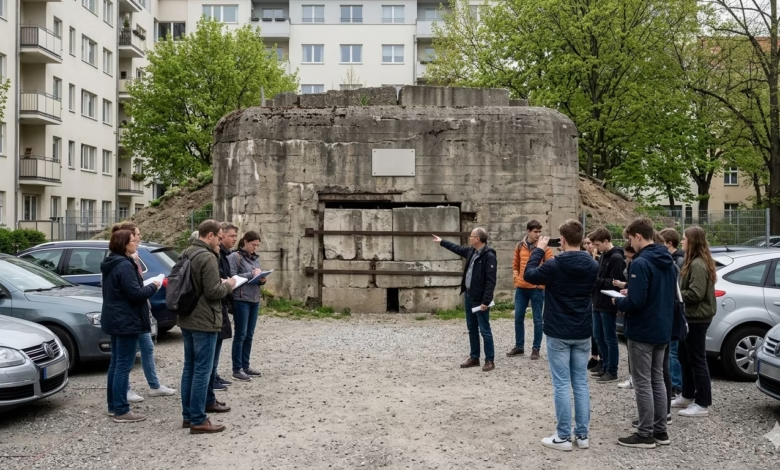
Obliterating Spatial Memory: The Führerbunker As A Parking Lot The Challenge Was Not Limited To The Body, But Extended To The Place Itself. The Author Discusses How Successive Governments (Whether In East Germany Or After The Unification Of Germany) Faced The Dilemma Of Dealing With The Site Of The “Führerbunker”: Systematic, Incomplete Destruction: The Soviet Forces Tried In 1947 To Destroy The Bunker With Explosives, But The Thick, Reinforced Concrete Walls Proved Obstinate And Did Not Collapse Completely, So The Site Was Backfilled With Earth And Rubble And Covered To Hide It From Sight. Preventing Spatial Sanctification: Fearing That The Site Would Turn Into A “Kaaba” For Neo-Nazis And Sympathizing Fascists, The German Authorities Deliberately Kept The Location Utterly Unmarked For Long Decades. Deliberate Banalization Of The Site: Today, The Site Of The Bunker Lies Beneath An Ordinary Parking Lot And A Residential Complex That Attracts No Attention. An Informational Plaque Was Not Placed To Indicate The Historical Importance Of The Place Until Late In 2006 (Just Ahead Of Germany Hosting The World Cup), As A Preemptive Step To Pull The Rug From Under The Feet Of Tour Guides Who Were Promoting Myths About The Place, And To Present A Dry, Abstract Historical Reality Devoid Of Any Legendary Aura.
Hitler In Popular Culture: From Terrifying Demon To Material For Ridicule In The Final Chapters Of The Book, Sharples Tracks The Radical Transformation In How Contemporary Societies Consumed Hitler’s Death Culturally And Medially Across Decades: Cinema And The Humanization Of Evil: From The Movie “The Last Ten Days” (1955) Leading Up To The German Cinematic Masterpiece “Downfall” (Der Untergang) In 2004, Filmmakers Attempted To Reconstruct The Final Hours With Terrifying Accuracy. The Film “Downfall” Sparked Great Controversy For Depicting Hitler As A Broken, Physiologically Weak Man, Pitiful At Times, And Not Just As An “Absolute Monster,” Opening An Ongoing Philosophical Debate On The Nature Of Evil And How To Present It. The Internet Era And Satirical Clips (Memes): The Greatest Paradox Highlighted By The Author Is How Hitler’s Iconic Scene Of Rage And Collapse Before His Generals From The Movie “Downfall” Transformed Into One Of The Most Famous Parody Clips On The Internet. Thousands Of Fake Subtitles Were Superimposed On The Scene To Address Ordinary Daily Topics, Which The Author Considers “The Ultimate Cultural Victory” For Free Societies Over The Tyrant; Where He Was Stripped Of All Historical Prestige And Terror, And Turned Into Merely A Recyclable Digital Joke.
Delayed Legal Death: The Declaration Of Death 11 Years After The Suicide Among The Strangest Paradoxes Revealed By Sharples Is That Adolf Hitler, From A German Legal And Administrative Standpoint, Remained “Alive” Until The Mid-Fifties. The Dilemma Of The Absence Of Conclusive Evidence: Given The Nonexistence Of A Publicly Declared Corpse Or An Official Death Certificate Issued By A Recognized Forensic Doctor In Germany, German Courts Refused For Years To Issue An Official Declaration Of Death. The Berchtesgaden Court (1952 – 1956): In 1952, A Lower Court In The Berchtesgaden Region (Where Hitler’s Famous Mountain Residence “The Eagle’s Nest” Is Located) Began A Series Of Complex Legal Hearings To Determine Whether Hitler Was Dead Or Not. The Court Listened To Testimonies From More Than 40 Witnesses Who Were Present In The Bunker, Including His Secretaries, His Guards, And His Doctors. Liquidation Of The Estate And The Book “Mein Kampf”: This Procedure Was Not Merely A Legal Luxury, But Rather A Pressing Necessity To Resolve The Fate Of His Massive Property, And More Importantly, The Copyrights Of His Book “Mein Kampf” And Its Financial Revenues That Were Flowing Into His Accounts. On October 25, 1956, The Court Finally Issued An Official 84-Page Document Declaring Adolf Hitler Officially Dead At Exactly 3:30 PM On April 30, 1945, Closing The Legal File After More Than A Decade From Its Actual End.
War Of Memoirs: The Conflict Of The Bunker’s Guardians Over Ownership Of The Truth Sharples Reviews How “Hitler’s Death” Turned Into A Profitable Business And A Means For Self-Exculpation By The Few Individuals Who Survived The Berlin Bunker. As Soon As They Emerged From Prisoner-Of-War Camps (Whether Soviet Or Western), Publishing Houses And Media Outlets Rushed To These Witnesses: The Trevor-Roper Mission (1945): Commissioned By British Intelligence To Refute Soviet Falsehoods, The British Historian Hugh Trevor-Roper Collected Urgent Testimonies That He Published In His Famous Book “The Last Days Of Hitler” In 1947. This Book Represented The Official Western Narrative That Attempted To Strangle Rumors In Their Infancy. The Industry Of Witnesses’ Memoirs: The Publication Of Memoirs By The Staff Close To Hitler Followed Rapidly; His Personal Valet Heinz Linge, His Military Aide Otto Günsche, His Secretary Traudl Junge, And Even The Wireless Telephone Operator Rochus Misch All Wrote Accounts. Humanizing The Tyrant As A Defensive Mechanism: Sharples Notes That Most Of These Memoirs Moved In A Similar Direction; Portraying Hitler In His Final Days As A Sick Old Man, Kind In His Treatment Of His Employees, And Detached From Reality. This Focus On “Hitler’s Humanity Inside The Bunker” Was An Implicit Way For These Employees To Say: “We Were Serving A Helpless, Gentle Man, And We Knew Nothing Of The Holocausts And Atrocities Of War Outside The Bunker,” Transforming The Memoirs Into Another Arena For Laundering Reputations And Distorting Historical Truth.
The Curse Of Blood: The Psychological Suicide Of The Führer’s Family And The Disappearance Of The Name The Author Follows A Dark Human And Social Angle Related To The Biological Extension Of Hitler. How Did His Relatives Live His “Death”? Paula Hitler (The Full Sister): His Sister Paula Lived In Total Isolation After The War Under A Pseudonym, “Paula Wolff.” Throughout Her Interrogations By American Intelligence, She Remained Adherent To Denying Her Brother’s Atrocities, And Lived On Limited Allowances Until Her Death In 1960, Considering Her Brother’s Death To Be An End To Her Own Life As Well. The Nephews And Nieces In America And Europe: The Rest Of The Extended Family Members (Such As The Sons Of His Half-Brother) Took A Collective, Unwritten Decision To End The Lineage. They Changed Their Family Names Entirely, And Some Moved To Live In Remote Areas In The United States (Like Long Island). The Brothers Of The New Generation Pledged To Each Other Not To Marry And Not To Have Children, To Ensure That “Hitler’s Gene” Ends And Dies Biologically Forever With Their Departure, In A Process Of Silent Voluntary Suicide For The Entire Lineage.
The Führer’s Ghost In The German Collective Psychology: “The Inability To Mourn” In Conclusion, Sharples Links The Absence Of The Body And The Method Of Death To The Psychological Crisis Suffered By The German Society After The War, Citing The Famous Psychological Thesis Of Alexander And Margarete Mitscherlich Regarding “The Inability To Mourn”: Absolution Via Sudden Death: With Hitler’s Sudden Death And Disappearance, Millions Of Germans Felt An “Immediate Dissolution” From The Oath They Had Taken To Him. The Legendary Charisma Fell Suddenly, And The Enormous Emotional Investment Placed By The People In This Man Transformed Into A State Of Denial And Shock. Escaping From Guilt: Since The Führer Died And Was Buried (Or Burned) Secretly, German Society Did Not Pass Through A Process Of “Confronting The Corpse” Or An Obligatory Funeral That Would Force Them To Review What They Had Done. Instead, Hitler Was Handled As If He Were “A Magic Wave That Vanished,” And Germans Began Directing Their Focus Toward Economic Reconstruction, Forgetting The Ghost Lying In The Bunker, Which Delayed Germany’s True Confrontation With Its Nazi Past Until The Late Sixties With The Rise Of The New Generation Of Youth Who Began Asking The Parents: “What Did You Do When Hitler Died?”.
Conclusion: Why Does Hitler’s Death Still Matter? Caroline Sharples Concludes Her Investigative Study With A Profound Wrap-up: The World’s Continued Obsession With The Death Of Adolf Hitler And Its Details Is Not Mere Morbid Curiosity, But Rather A Reflection Of Humanity’s Constant Need To Understand The Mechanisms Of “Absolute Evil” And To Gain Psychological Reassurance Of Its Vanishing. The Political Manipulation Of His Body’s Absence Proved That Physical Facts Alone Are Insufficient To Close The Dark Pages Of History. Hitler’s Death, With All The Rumors, Political Maneuvers, And Deconstruction Of Spatial Memory It Carried, Remains A Standing Warning That Tyrants May Fall By A Bullet In A Single Moment, But Their Toxic Aftereffects Require Decades Of Cultural And Historical Deconstruction To Be Permanently Buried.