
The Thresholds Of Forgotten Paper… A Mysterious Tale From The Port Of ‘Aydhab In December Of The Year 1144 AD, A Group Of Jewish Merchants And Travelers Gathered In The Remote Port Of “Aydhab” On The Coast Of The Red Sea. Their Gathering Was Not To Strike A Commercial Deal, But Rather To Record A Legal Testimony Charged With Bitterness And Feud Between Two Of Their Acquaintances. The Core Of The Story Is That A Merchant Named “Ibn Jamahir” Went To The Muslim Governor Of Police In The Town, Appealing To Him To Punish A Slave Boy Named “Safi” On Charges Of Slander And Defamation. “Safi” Was A Familiar Face To The Jewish Community; He Was Working As An Agent And An Errand-Runner For The Head Of The Rabbinical Academy In Fustat (Old Cairo).
When The Governor Summoned The Boy “Safi”, Ibn Jamahir Did Not Stand Idly By, But Rather Mobilized A Number Of His Muslim Colleagues To Testify In His Favor That The Boy Had Insulted Him With The Most Obscene Language. However, The Risen Boy Responded Before The Crowd With A Phrase That Shook The Foundations Of The Session, Saying To Ibn Jamahir: “You Had A Female Slave And She Became Pregnant By You, And When She Bore You A Son, You Banished Her Along With Your Son To Barbara” On The Somali Coast! The Words Froze, Yet Ibn Jamahir Insisted On Punishment, So The Governor Ordered The Whipping Of The Boy “Safi” In Front Of The Dignitaries Of The Jewish Merchants In The Port Before He Was Thrown Into The Depths Of Prison.
This Passing Incident, Documented In Just Two And A Half Lines In The Arabic Language Written In Hebrew Letters (Judeo-Arabic), Epitomizes The Deepest Substance Of The Book By The American Historian And Author “Craig Perry” Recently Published By Princeton University Press Entitled: “Slavery And The Jews Of Medieval Egypt: A History”. It Is The Core Story To Which The Author Returns Repeatedly; Because That Enslaved Mother And Her Child, Who Appeared And Disappeared From The Records Of History In The Blink Of An Eye, Represent The True Silenced Voice In The Major Chronicles Of History.
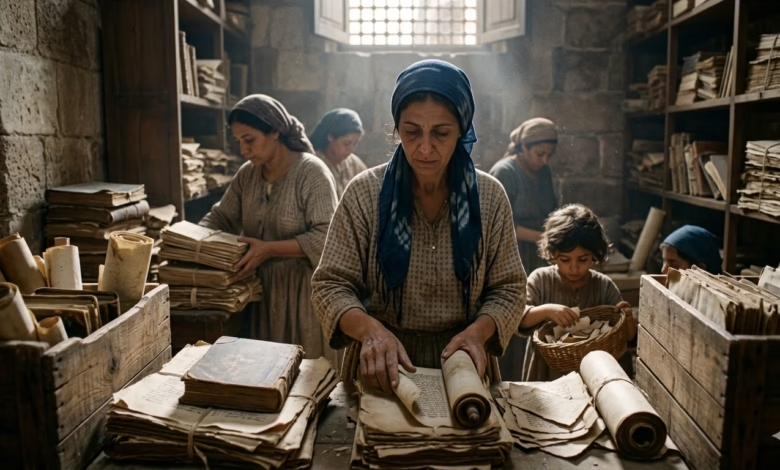
Through This Work, Perry Opens A Wonderful Window On The Social And Economic Story Of Slavery In Fatimid And Ayyubid Egypt (Between The Eleventh And Thirteenth Centuries AD), Relying On A Documentary Treasure That Has No Parallel: The Documents Of The “Cairo Genizah”. These Massive Everyday Papers, Which Were Preserved For Centuries In A Storage Room Of The “Ben Ezra” Synagogue In Fustat Out Of Fear Of Desecrating The Name Of God Written On Them, Were Not Merely Religious Texts, But Rather Contained Commercial Letters, Bills Of Sale, Marriage Contracts, Court Certificates, And Charity Lists. Through More Than 400 Documents From This Genizah, Perry Reconstructs An Entire Forgotten World, Bringing Slaves And The Enslaved Out Of Being Mere Numbers In Account Books Into Human Beings Who Have Names, Feelings, Families, And Destinies Fluctuating Between Cruelty And Emancipation.
The Book Is Structurally Divided Into Three Major Sections Branching Into Eight Chapters, Covering Aspects Of Law And The Slave Trade, Domestic Slavery, And The Lives Of The Enslaved And Enfranchised. The Author Leads Us To Deconstruct Not Only The Social Structure Of Medieval Egypt, But Also To Confront Historical And Political Myths That Have Long Been Exploited In Modern Ideological Polemics.
Deconstructing The “Myth Of The Big Trader”.. The Local And International Slave Market For Many Years, Historical Research Surrounding The Issue Of Slavery In Jewish Communities During The Middle Ages Kept Revolving In A Vicious Circle Governed By A Single Question: Did Jews Dominate The Transcontinental “Wholesale Trade” In Human Beings? Perry Explains With A Great Deal Of Patience And Critical Analysis How This Excessive Focus On The “Wholesale Slave Trade” Was Driven By Polemical Religious And Political Agendas, And Even Contributed To Fueling Anti-Semitic Movements In The Modern Era, Which Attempted To Promote The Myth That Jews Were The “Primary Manufacturers Of Eunuchs” And The Monopolists Of The Global Slave Trade.
Perry Explodes A Solid Research Surprise In The Chapters Of The First Section Of The Book; He Confirms -In Agreement With The Pioneers Of Genizah Studies Such As Goitein, Moshe Gil, And Mordechai Friedman- That There Is Not A Single Documentary Evidence Proving That The Jews Of Egypt In That Era Practiced The Slave Trade In “Wholesale” Or Managed Huge Networks To Smuggle Human Beings For Profit Into Egypt. But, And Here Lies The Methodological Ingenuity Of The Author, Denying The “Wholesale Trade” Does Not Mean Exempting Medieval Jewish Society From Immersing Itself In The Phenomenon Of Slavery.
The Alternative That Historians Overlooked, And Which Perry Became The First To Give It Flesh And Blood, Was The “Local Resale And Retail Market”. The Book Reveals That The Most Active And Voluminous Slave Trade Was Taking Place Within The Egyptian Local And Regional Markets. Jewish Merchants And Dignitaries Used To Buy Slaves For The Purposes Of Domestic Service Or Commercial Assistance From The Markets Of Fustat, Alexandria, And Qus, And They Used To Sell Them And Resell Them Among Themselves According To Their Familial And Economic Needs.
The Second And Third Chapters Of The Book (“Deconstructing The Slave Trade To Egypt” And “Everyday Human Trafficking And The Rooting Of Ethnicity In Slavery”) Take Us To The Backstage Of This Daily Commerce. Slavery In Fatimid Egypt Was Not A Stagnant Sector, But Rather A Complex, Multi-Patterned Network In Which The State Intertwined With Individuals. The Upper Echelons Of Mamluks, Soldiers, And Favorite Concubines Were Monopolized By The Muslim Fatimid And Ayyubid Courts, While The Urban Households Of The Middle And Wealthy Classes Of Muslims, Christians, And Jews Were Competing To Attract Other Categories Of Slaves Designated For Urban Service.
The Purchase Process Was Not Devoid Of An Early “Racial” Classification, Something To Which Perry Devotes A Splendid Analytical Space. The Author Studies How Buyers Viewed “Gins” (Which Is The Medieval Term Corresponding To Race Or Lineage). Deeds And Letters Distinguished Precisely Between “Luwati” Female Slaves (From North Africa), “Nubian” And “Abyssinian” Female Slaves, And “Saqaliba” (Slavic) Or “Rum” (Byzantine) Servants. These Designations Were Not Merely Geographical Indicators, But Were Loaded With Medieval Medical And Climatic Theories (Such As The Theory Of Climates And Humors) That Linked Skin Color, Climate, Behavioral Temperaments, And The Capacity To Work. For Example, Nubian Female Slaves Were Viewed As Possessing Moderate Temperaments And Strong Bodies Suitable For Hard Labor, While Racial Traits Became A Tool To Justify Enslavement And Establish Standard Specifications For Human Beings Within The Markets.
The Dialectic Of Subordinate Power.. How Did Jewish Law And Islamic Sharia Meet? In The First Chapter Of The Book, Perry Places Us Before A Structural Paradox That Characterized The Status Of Jews In Islamic Society During The Middle Ages, And He Calls It The “Dialectic Of Submission And Authority”. The Jews (In Their Capacity As Dhimmi People) Formed A Subordinate And Governed Community In The Sultanate System. A Jewish Man Was Not Allowed, Except In Very Rare Cases, To Possess Military Or Political Power, Which Was Exclusive To The Ruling Muslim Elite. However, This Structural Submission Before The Islamic State Was Countered, As An Implicit Reward Or As Part Of The Arrangements Of The Dhimmi System, By Possessing “Absolute Legal Authority” Within The Boundaries Of Their Homes; Which Is The Authority Of Owning Slaves And Controlling The Lives Of Other Human Beings.
The Ownership Of Slaves Was, For The Jews, A Very Special Form Of Power And Social Distinction. But This Authority Was Not Absolute Without Restrictions, Rather It Was Governed By A Precise And Strict Intersection Between The Dominant Islamic Sharia (Which Regulates The Public Space and Markets) And Jewish Law (Halakha) Which Regulates The Internal Relations Of The Community.
Among The Most Prominent Of These Strict Restrictions Imposed By The Islamic Space Was: The Prohibition Of Jewish Ownership Of Muslims. If A Jewish Merchant Bought A Male Or Female Slave And It Turned Out That This Person Had Converted To Islam, Or If The Slave Declared His Islam While Being In The House Of His Master, Islamic Law Immediately Forced The Jewish Owner To Sell Him To A Muslim Buyer Or Free Him. Therefore, The Purchase Process Turned Into A Space Filled With Tension; As Jewish Owners Used To Inspect Scrupulously The Religious And Religious-Racial Background Of Slaves Before Paying Dinars. In Times Of Political Turmoil, Muslim Rulers -Such As The Fatimid Caliph Al-Hakim Bi-Amr Allah- Tended To Tighten These Laws and Prevent Non-Muslims From Buying Slaves As A Form Of Re-Imposing Social Hierarchy and Demonstrating The Heavenly Supremacy Of Islamic Authority.
Internally, And At The Heart Of The Jewish Space, Maimonidean Laws (Relative To The Great Philosopher And Jurist Moses Maimonides Who Lived In Cairo In The Twelfth Century) Tried To Formulate A Code Of Conduct Regulating This Violent And Intimate Asymmetrical Relationship. Perry Studies The Fatwas Of Maimonides And His Son Abraham, And Shows How Jewish Jurisprudence Tried To Adapt To An Islamic Urban Reality Overflowing With Concubines and Slaves. Maimonides Acknowledged In His Book “Mishneh Torah” The Legality Of Enslavement and Linked It Sometimes To The Traditional Biblical Curse (The Curse Of Ham, The Son Of Noah), Calling At The Same Time For Treating Slaves With Conditional Human Kindness. But This Kindness Did Not Negate The Fact That Slavery Was A System Built On Coercion; For The Slave Remains A Financial Chattel To His Owner, His Body Lawfully Exploitable For Labor, And In The Case Of Concubines, The Body Was Sometimes Exploitable For Sexual Pleasure.
The Book Reveals How This Legal Intersection Led To The Emergence Of Unique Jewish Marriage Documents Called “The Conditions Of Concubines”. Free Jewish Families, When Marrying Off Their Daughters, Insisted On Inserting An Explicit Clause In The Marriage Contract (The Ketubah) Preventing The Husband From Buying A Female Slave Or Bringing Her Into The Marital Home, Or Preventing Him From Taking Her As A Concubine (Tasari). This Condition Served As A Defensive Weapon Employed By Free Wives To Protect Their Social Status and Household Economy From The Threat Posed By Female Slaves Who Possessed Physical Attraction Or Emotional Influence Inside The House.
Slavery For Service (lil-Khidma).. Dynamics Of Domestic Life And Gender In The Second Section Of The Book, Which Bears The Title “Domestic Slavery”, Perry Dives Deeply Into The Alleys Of Cairo And Fustat To Present A New Formulation For The Traditional Concept Of “Domestic Slavery”. Perry Prefers To Use The Original Term Mentioned In The Genizah Documents, Which Is “Slavery lil-khidma” (Slavery For Service), Justifying This Choice By The Fact That The Word “Domestic” Wrongly Suggests That Slaves Were Confined Behind The Four Walls Of Houses.
On The Contrary, Genizah Letters Show That Slaves And Concubines Enjoyed “Social Mobility And Wide Spaces Of Movement” That Made Them Vital Elements For The Urban Economy. The Servant Boy Or The Slave Girl Left The House Daily To Buy Food From The Markets, Fetch Water, Carry Bread To The Public Ovens, Deliver Letters Between Merchants, And Even Represent Masters In Some Simple Transactions. This Continuous Movement Made Slaves An Integral Part Of The Street Fabric Of Cairo, And Granted Them At The Same Time Opportunities To Build Human Relationship Networks Crossing Religions and Classes.
Through A Clever Statistical Analysis Of The Professions And Genders Of Slave Owners (Included In The Appendices Of The Book), Perry Clarifies That The Ratio Of Men To Women In Slave Ownership Was Close To Three To One. Male Owners Concentrated In Specific Urban Professions: Pharmacists, Physicians, Textile Merchants, And Religious Dignitaries. The Ownership Of Slaves In These Circles Was An Unmistakable Sign Of Belonging To The Upper Middle Class Or The Elite.
The Book Deconstructs The Concept Of “Slavery And Its Relationship To Gender” Through Two Opposing Chapters: “Slavery And Manhood” And “Slavery And Womanhood”. For Men, Possessing “Ghilman” (The Plural Of Ghulam, Which Is The Slave Who Works As A Personal Assistant Or Commercial Agent) Represented An Extension Of Virility And Economic and Social Prestige. The Ghulam Was The Travel Companion Of The Merchant On His Long Journeys Across The Indian Ocean Or The Mediterranean, And He Trusted Him With His Financial Secrets. Sometimes, Deep Ties Of Loyalty Developed Between The Master and His Ghulam That Surpassed The Relationship Of Bondage, Reaching The Point Of Exchanging Letters Of Anxiety During Illness and Prayers For Recovery.
As For The Female Side, The World Of Concubines Was Divided In Turn Into Precise Hierarchies Reflected By The Linguistic Lexicon Of The Genizah. There Is “Jariya” (The General Term For Female Slaves), And There Is “Wasifa”. Perry Notes That When Both Terms Appear Together, “Wasifa” Indicated A Higher Rank; She Is The Favorite Girl Or The Close Personal Companion To The Mistress Of The House, Who Masters Fine Cooking Skills, Spinning, Or Playing Instruments, While Cleaning, Cooking, And Hard and Humiliating Labor Are Left To The “Jariya”.
This Female World Was Not Devoid Of Coiled Violence. The Practice Of “Tasari” Or The Sexual Exploitation Of Concubines Was A Reality Creating Tremendous Tensions Under The Roofs Of Houses. Perry Devotes Space To A Famous Letter From The Fatwas Of Abraham Maimonides Throbbing With Human Drama; Where A Free Wife Complains That Her Husband Bought A Female Slave And That He Practices Sex With Her Secretly In Her Absence, Which Made The House Turn Into A Hell Of Jealousy And Quarrels, Leading The Matter To End With The Intervention Of The Rabbinical Court To Force The Husband To Sell The Female Slave To Prevent Scandal And Preserve The Dignity Of The Free Wife.
Manumission, Integration, And Erasure.. The Nubian Diaspora In The Heart Of Fustat The Book Reaches Its Destination Where Perry Traces The Complex Life Paths Of The Enslaved After Achieving Their Freedom, And How The Jewish Society Dealt With These “New Freedpersons” (Known In Hebrew As Meshuḥrar And In Arabic As ‘Atiq Or Ma’tuq).
Manumission In Jewish Law Required An Official Deed Signed By Witnesses Before The Court, Called “Get Shihrur” (Deed Of Release). Perry Publishes And Contemplates A Splendid Document Dating Back To The Year 1176 Declaring The Manumission Of A Woman Named “Nashiya”, Where It Was Written In The Deed That She Became Free and Independent For Herself and No One Had Any Right Over Her According To The “Law Of Moses And Israel”. But Freedom Was Not The End Of The Journey, Rather It Was The Beginning Of A Long And Complex Process Of “Religious and Social Transformation”. In Order For The Freed Slave To Become A Full-Fledged Member In The Jewish Community, He (Or She) Had To Undergo Official Religious Conversion Rituals, Most Notably Immersion In The Ritual Bath (The Mikveh) To Wash Away The Trace Of Ancient Bondage.
Perry Reveals, Utilizing A Recent Discovery By The Historian Moshe Yagur, The Story Of A Female Slave Named “Sa’ada” Who Was Freed In Fustat In The Year 1198 At The Hands Of Her Owner, The Merchant Abu Al-Ma’ali Al-Dajaji. The Notes Written On The Back Of The Deed Show That Sa’ada Went On An Autumn Day In October To The “Synagogue Of The Iraqis” In Fustat, Immersed Herself In The Pure Water, And Received Instructions Regarding The Commandments That Became Binding On Her As A Free Jewish Woman.
But The Bitter Question That Perry Raises: How Did Society View These Freedpersons In Their Daily Lives? The Documents Show Clear “Ambivalence”. From An Economic Standpoint, Some Masters Used To Grant Their Freed Female Slaves Gifts And Endowments Of Money, Fabrics, Or Jewelry, Enabling Them To Form A “Dowry” Helping Them To Marry Free Jewish Men From Lower Classes, Or To Enter Into Commercial Partnerships. Other Freedpersons, Such Like The Servant Boy “Faraj”, Exploited His Commercial Skills And Previous Connections As A Commercial Agent To Transform Into An Independent Merchant In The Pearl Market In The Red Sea.
However, There Was A Dark Side Manifested In The “Deliberate Erasure Of Memory”. Perry Proves -Through A Reading In Discovered Family Genealogy Lists- That Large Jewish Families Used To Deliberately, Over The Course Of Two Or Three Generations, Drop The Names Of Slave Mothers Or Freed Grandparents From Official Family Trees. The Goal Was To Purify The Family Lineage From The “Stigma Of Slavery”. This Social Erasure, Which Was Considered In Its Time A “Success Story” For Integration and Melting Into Society, Historically Caused The Hiding and Obliteration Of The Torments and Agonies Of Thousands Of Human Beings.
And While The Official Ledgers Of Bills Of Sale and Manumission Close Their Pages, There Remain Unspoken Spaces In Craig Perry’s Study, Relating To The Architecture Of Fustat Houses and How Slavery Imposed A Reformulation Of Both Space and Body Together. Urban Houses Were Not Merely Walls Sheltering Families, But Were Complex Geographical Theaters In Which Hierarchies Of Power Were Managed Daily; The Multi-Story Houses With Which Genizah Documents Overflow Used To Isolate Female Slaves and Servants In Lower Spaces Or Rooms Attached To Roofs, Creating A Kind Of “Spatial Separation” That Ensures Meeting The Needs Of The Family Without Infringing Upon The Privacy Of Masters Or Their Ritual Purity. In This Narrow Domestic Space, The Body Of The Enslaved Transformed Into A Tool For Producing Luxury, But It Remained At The Same Time A Source Of Constant Anxiety For Masters; Since Diseases That Afflicted Slaves -Such As Tuberculosis Or Seasonal Epidemics That Struck Egypt- Represented A Heavy Financial Loss and A Direct Health Threat To The Household Members, Making Medical Care For Slaves, As Shown By The Prescriptions of Jewish Pharmacists In The Genizah, A Pragmatic Mix Between Preserving “Human Capital” and The Fear Of Contagion.
On Another Aspect, Perry Did Not Stop At The Boundaries Of Legal Manumission, But Traced Obscure And Painful Paths Relating To “Re-Enslavement” Or Relapsing Into The Bottom Of Society. The Freedom Attained By Some Freedpersons Was A Fragile Freedom Threatened By Market Economies; As Some Charity Letters Reveal That Emancipating An Aged Female Slave Or A Servant Boy Afflicted With A Disability Preventing Him From Working Was Not Always A Charitable Act, But Was In Many Cases A Disguised Dismissal To Get Rid Of The Burden Of Their Financial Support. These Outcast Freedpersons Found Themselves Without A Familial Safety Net, Forcing Them To Live On The Margins Of Synagogues, Begging For A Morsel Of Bread From Community Charity Boxes (The Quffah), Or Even Accepting Harsh Working Conditions Approaching Actual Slavery Anew Under The Name Of “Service For Paltry Wages” To Protect Themselves From The Horrors Of Hunger and Homelessness In The Bustling Streets Of Cairo.
Deep In This Tragedy, A Astonishing Human Dynamic Emerged Relating To “Alternative Families” And “The Making Of Kinship and Slaves’ Friendships” Behind The Backs Of Masters. Since The Legal System Possessed The Right To Separate The Biological Families Of Slaves By Sale and Transfer, Genizah Documents Demonstrated How These Mixed Groups Of Nubians, Abyssinians, and Luwatis Succeeded In Weaving Strong and Parallel Solidarity Ties Among Themselves Inside Markets and Alleys. Slaves and Concubines Exchanged News, Consoled Each Other In Loss, And Shared Secrets About The Temperaments Of Their Masters and Ways To Gain Favor Or Avoid Punishment. This Invisible Solidarity Network Represented The Only Psychological Outlet That Allowed Them To Maintain Their Humanity, And Even Some Freedpersons Who Succeeded In Accumulating Simple Wealth Used To Bequeath Their Scant Money Or Belongings To Their Old Companions In Slavery Instead Of Leaving It To Their Former Owners, In A Final and Eternal Attempt To Prove Loyalty To Their True Class, And Rewrite Their Destinies With Their Own Hands Away From Account Books and Masters’ Deeds.
Perry Places Us Before A Perplexing Moral Mirror; The Jewish Community In Fatimid Egypt Used To Spend The Most Precious Possessions, Collect Donations From Small And Great, And Mobilize Its Cross-Oceanic Commercial Networks For The Sake Of Ransoming and Redeeming Any Free Jewish Person Who Fell Into Captivity As A Result Of Wars Or Pirate Raids, Considering This Work The Highest Religious and Moral Duty Of All. But At The Same Time, This Community Found No Moral Or Religious Qualm In Going To The Very Same Markets To Buy Other Human Beings and Confine Them In Their Homes As Enslaved Targets, Simply Because These Others Fall Outside The Boundaries Of The Religious Identity Of The Group. This Sharp Separation Between “Free Religious Brotherhood” and “The Other Vulnerable To Enslavement” Reveals The Way In Which Jurisprudential Systems Can Justify The Most Cruel Human Contradictions.
Another Angle In Which The Author Dives With Great Detail Is What Can Be Called “The Meticulous Economic and Legal Life Of Slaves In Rabbinical Courts”. Perry Explains That Slaves In The Jewish Space Were Not Merely Objects Of Absolute Oppression, But Learned Over Time How To Test The Boundaries Of Laws and Exploit Them In Their Favor. Jewish Courts Allowed Slaves To Stand Before Judges To File Complaints Against Their Masters In Cases Of Excessive Ill-Treatment, Or To Demand The Implementation Of Verbal Promises Of Manumission That Masters Had Made In Moments Of Illness Or Remorse. Through Genizah Letters, Perry Traces How Some Slaves Obtained “Obscure Gains” Or Funds Private To Them (Via Extra Labor Or Gifts), And They Utilized These Funds In Markets To Bargain With Their Masters Or To Buy Their Freedom Themselves, Making The Contract Of Slavery In The Egyptian Metropolis A Dynamic Contract Interspersed With Silent Daily Bargains.
Likewise, The Book Devotes A Unique Space For Studying “The Spatial Anthropology Of Fustat Houses”. Perry Analyzes The Architectural Structure Of Middle-Class Houses As Described By Lease and Sale Deeds In The Genizah, To Understand Where Slaves and Concubines Slept, and How Privacy Was Managed In Cramped and Shared Residential Spaces. This Daily Physical and Spatial Proximity Between Masters and The Enslaved Created A Kind Of “Coerced Intimacy”, Where Concubines Become Privy To The Secrets Of Free Women, and Servant Boys Become A Repository For Men’s Secrets. This Intimacy Did Not Mean The Absence Of Violence, Rather It Made Violence More Complex; For The Slap Or Punishment By Confinement Occurred In The Very Same Room Where Food Was Cooked and Children Were Raised, Making The Medieval House A Permanent Theater For Unending Psychological and Social Tensions.
Finally, Perry Addresses The Methodological Aspect Of Writing This History, Which He Calls “The Resistance Of The Archive”. For Slaves Did Not Write Their Letters Themselves, And Their Voices, Cries, and Silence Did Not Reach Us Except Through A Filter Written By Masters, Judges, Or Merchants. From Here, We See Perry Applying A Rigorous Critical Method Relying On “Reading Between The Lines” and Capturing Passing Shreds; Under A Dry Accounting Entry Mentioning The Price Of A Shroud Fabric For A Deceased Female Slave, Or In The Margin Of A Letter Where A Merchant Asks His Wife To Beat The Servant Boy Because He Neglected Work, Perry Extracts A Complete Human Tragedy. What Traditional Historical Research Did Not Touch Upon For A Long Time, And This Book Came To Establish, Is That Slavery Was Not Merely A Legal Or Economic Institution, Rather It Was A Daily Existential Experience Lived By Thousands Of Human Beings On The Pavements Of Cairo And Inside Its Closed Rooms, Trying All The Time To Preserve Their Humanity In A World That Insisted On Turning Them Into Mere Commodities.
At The Conclusion Of This Work, Craig Perry Puts Forward A Major And Influential Thesis: The History Of Slavery In The Cairo Genizah Is In Its Reality A “Slow and Semi-Hidden History Of An African Diaspora (The Majority of Whose Mass Was Nubian)” That Was Forcibly Displaced and Abducted Across Regional Trade Networks To Melt and Integrate At The Heart Of One Of The Most Vibrant and Prosperous Jewish Communities In The Middle Ages. Perry’s Book Does Not Content Itself With Re-Reading The Papers of History, But Rather Grants A Belated Certificate Of Recognition To “Sa’ada”, “Nashiya”, And The Banished Mother In The Port Of ‘Aydhab, To Declare That Their Shattered Stories Are An Authentic and Essential Part Of The Grand Human Narrative Of Medieval Egypt.