
Beyond The Conflict In Sudan
A reading Of The Report “The Future Of Development In Sudan 2026”

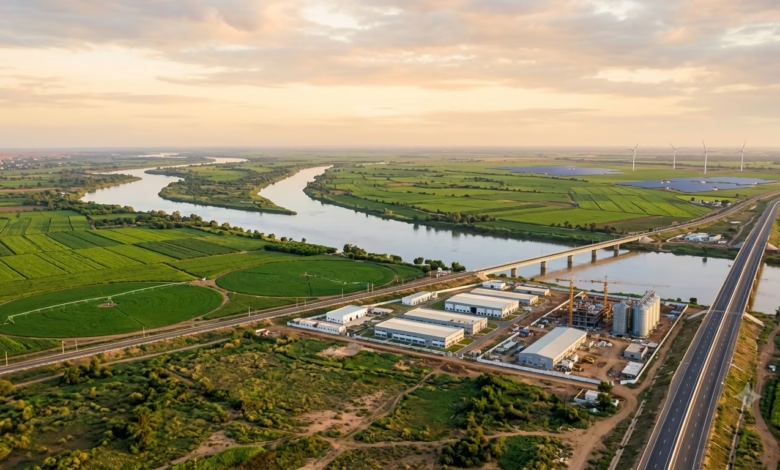
Sudan Stands Today At A Historical And Decisive Crossroads, Trapped Between Immense Untapped Potential, And A Brutal Vortex Of Conflict That Ravages Its Institutions And Exhausts Its Capabilities. In This Complex Context, The Issued Report Titled “Beyond The Conflict: Charting A Path To Sustainable Growth And Development In Sudan” Emerges As A Critically Important Document For Diagnosing This Reality. The Report, Prepared At The Request Of The United Nations Development Programme (UNDP) And With Support From The African Futures And Innovation Programme (AFI-ISS), Provides A Precise Dissection Of The Country’s Reality And Its Potential Future, Backed By Data And Scenario Forecasting.
The Paradox Of Geography And Resources: Richness Of Nature And Poverty Of Man
Sudan, Which Gained Its Independence In 1956, Lives A Stark And Painful Developmental Paradox. It Is The Third Largest Country In Africa With An Area Of Approximately 1.86 Million Square Kilometers, Enjoying A Strategic Location Connecting North, East, And Central Africa, And Vital Maritime Outlets On The Red Sea That Make It An Important Logistical Gateway. Furthermore, Sudan Possesses Massive Mineral Wealth Including Gold, Uranium, Chromium, Gypsum, And Iron, In Addition To Vast Expanses Of Arable Land And Immense Livestock Wealth That Make It A Potential Regional Player In Food Supply Chains.
Despite This Absolute Opulence In Resources, The Developmental Outcome After Nearly Seven Decades Of Independence Appears Disappointing, As These Resources Have Not Been Translated Into Wide-Scale Growth, Job Creation, Or Welfare Improvement. Repeated Conflicts, Institutional Weakness, And Policy Blunders Have Impeded The Path Of Building A Functional State. According To The Human Development Report 2023-2024, Sudan Ranks 170th Out Of 193 Countries, Reflecting Multidimensional Constraints That Include Economic Disparity, The Collapse Of Education, And The Deterioration Of The Health System.
The April 2023 Earthquake: Figures Of The Disaster And Its Exorbitant Cost
In April 2023, Sudan Slipped Into A Grinding Civil War Between The Sudanese Armed Forces (SAF) And The Rapid Support Forces (RSF). This War Was Not Just A Passing Security Crisis, But A Humanitarian And Developmental Disaster That Paralyzed State Institutions And Brought It To The Brink Of Total Collapse.
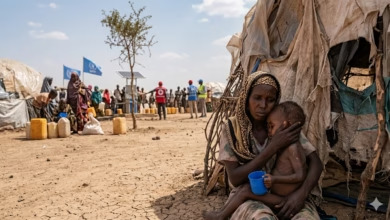
In The Language Of Numbers, Which Is The Most Accurate In Describing Tragedy, This Conflict Has Resulted In The Death Of More Than 150 Thousand People, And The Displacement Of Nearly 15 Million Human Beings. By Mid-2025, About 12 Million People Were Forced To Evacuate Their Homes, Including 7.7 Million Internally Displaced Persons, And 4.1 Million Who Fled To Neighboring Countries In Search Of A Safe Haven. These Frightening Numbers Make Sudan Witness The Fastest-Growing Displacement Crisis In The Entire World.
On The Living Front, Famine Threatens Broad Sectors, As 24 Million People Face Food Insecurity. In The Most Cruel Details, About 19 Million People (Nearly 40% Of The Population) Face Severe Food Insecurity. Also, 19 Million People Lack Clean Drinking Water And Basic Sanitation Services.
Economically, The Bleeding Is Sharp And Painful, Threatening To Blow Up The Entire Economic Structure. In 2023 Alone, Sudan Lost An Estimated 6.4 Billion Dollars Of Its Gross Domestic Product. This Sharp Economic Decline Pushed Around 7 Million Additional People Into The Clutches Of Extreme Poverty Within Just One Year. In Comparison With A Hypothetical Scenario Of The Absence Of Conflict, The Sudanese Citizen Lost Around 500 Dollars From The Per Capita Gross Domestic Product (According To Purchasing Power Parity) In 2023 As A Direct Result Of This War.
The Current Path (The Baseline): Extended Stagnation And A Cloudy Future
The Report Paints A Scenario Known As The “Current Path,” Which Is An Analytical Baseline That Assumes The Continuation Of Current Policies And Existing Development Trends Without Radical Structural Interventions, Assuming A Peace Agreement Is Reached And The Conflict Ends By 2026. Under This Path, The Future Image Appears Grim And Forewarns Of A Long-Term Stagnation.
The Sudanese Economy Is Expected To Grow By A Meager Average Of Just 1.2% Between 2024 And 2043, A Rate Far Below The Average Of 6.2% Expected For Low-Income African Countries. In Light Of This Slowing Growth, The Per Capita Gross Domestic Product Will Remain Below The Levels Of The Early Nineties Until Deep Into The Forties Of The Current Century.
As For Poverty, It Is Expected That Extreme Poverty Levels Will Exacerbate To Affect Nearly 60% Of The Population By 2030, Which Translates To About 36 Million Human Beings Living In Extreme Poverty. Even With A Further Look Toward 2043, Extreme Poverty Will Continue To Impact Around 38.8% Of The Population (About 31.7 Million People). This Faltering Path Simply Means That Sudan Will Not Be Able To Achieve The Sustainable Development Goals (SDGs), Or The Africa Agenda 2063.
The Worst-Case Scenario: The Cost Of Guns Inaction Until 2030
The Authors Of The Report Go Beyond Merely Monitoring The Normal Path, To Warn Of The “Cost Of Inaction” And The Continuation Of The Language Of Weapons. In Case The Extended Armed Conflict Continues Until 2030 (The Extended Conflict Scenario), The Consequences Will Be Catastrophic And Beyond The Capacity Of The State And Society To Absorb.
Under The Weight Of This Nightmarish Scenario, Sudan’s Gross Domestic Product Will Drop To Just 23.1 Billion Dollars In 2043, Recording A Massive Loss Estimated At 34.5 Billion Dollars Compared To A Hypothetical Scenario In Which The War Never Broke Out. This Violent Economic Contraction Will Lead To The Erosion Of The Per Capita Gross Domestic Product By 1725 US Dollars By 2043.
The Human Cost Of This Scenario Represents The Real Disaster; As It Is Expected That About 52.4 Million Sudanese (Equivalent To 63.3% Of The Total Population) Will Live Under The Extreme Poverty Line (2.15 Dollars Per Day) By 2043. This Means That 34 Million Additional People Will Pay The Price Of Continuing The War By Falling Into The Trap Of Absolute Deprivation, Compared To What The Situation Would Have Been If Peace Had Continued.
Demography Of Crises: A Ticking Time Bomb Or An Engine For Growth?
The Sudanese Economic Tragedy Cannot Be Studied In Isolation From The Accelerating And Transforming Demographic Reality. Sudan Is Today The Eighth Largest Country In Terms Of Population In The African Continent, With A Count Estimated At 52 Million People, A Figure That Represents More Than Double The Population In 1990.
The Sudanese Society Is Characterized By Being Extremely Youthful; For In 2023, 57.2% Of The Population Was Under The Age Of Fifteen. Although The Fertility Rate Decreased From 6.1 Children Per Woman In 1990 To 4.3 In 2023, It Still Remains Within The Highest Rates And Poses A Redoubled Pressure On Basic Government Services Such As Education And Health.
Sudan Possesses The Fifth Largest “Youth Bulge” In East Africa, Where The Rate Of This Bulge (The Proportion Of Youth Between 15 And 29 Years To Total Adults) Reached Around 48.3% In 2023. This Demographic Reality Constitutes A Distinct Double-Edged Sword; Either It Is Invested As A “Demographic Dividend” Through Education, Training, And The Provision Of Job Opportunities To Lead The Process Of Political Change And Economic Revival, Or It Turns Into Fuel For Violence, Social Tension, And Crime If Marginalization Continues And Unemployment Spreads, Which Was Estimated Among Youth At About 12% In 2023.
The Report Affirms Categorically That The High Dependency Ratio Presses Heavily On The Government’s Ability To Generate Revenues For Development, And Reduces Domestic And Household Savings, Which Limits The Capital Available For Investment And Structurally Impedes Economic Growth. In The Current Existing Path, Sudan Will Remain Incapable Of Achieving The Minimum Required Dependency Ratio (1.7 People Of Working Age For Each Dependent) To Benefit From The “Demographic Dividend” Even By 2043, Rather The Formation Of This Dividend May Be Delayed Until The Year 2068 If The Data Does Not Change.
Anatomy Of Structural Collapse: Infrastructure, Services, And The Agricultural Sector Dilemma
If Political Paralysis And Military Conflict Represent The Most Visible Face Of The Sudanese Crisis, The Gradual Fragmentation Of Infrastructure, Service Sectors, And Productive Sectors Represents The Silent Bleeding That Threatens To Eliminate Any Hope For Near Recovery. The “Sudan Development Future” Report Does Not Stop At The Boundaries Of Describing Military Battles Or Counting The Numbers Of Victims And Displaced Persons, But Rather Penetrates With A Strict Analytical Method To Dismantle The Joints Of The Real Economy, Highlighting How The Sectors That Were Once Considered A Lever Of Hope Turned Into A Heavy Burden Threatening To Drag The Country Toward Decades Of Backwardness And Structural Stagnation.
Infrastructure And Water: The Amputated Lifeline
Infrastructure In Any Country Represents The Backbone Upon Which Economic Growth And Social Stability Rest. In The Case Of Sudan, The Report Shows How The Absence Of Chronic Investment, Followed By The Direct, Systematic Destruction Resulting From The War, Led To Entering The Country Into A Stifling Services Crisis. Roads, Bridges, Electricity Networks, And Water Facilities Are No Longer Just Facilities Needing Maintenance, But Rather Have Turned Into Arenas Of Destruction And Tools For Military And Economic Pressure.
The Deepest Manifestations Of This Crisis Manifest In The Water And Sanitation Sector. In A Country Whose Land Is Cleaved By The Great Nile River With Its Grand Tributaries, And Which Possesses A Massive Reservoir Of Groundwater, More Than 19 Million People Live Without Access To Safe And Clean Drinking Water. This Reality Doesqrcode Not Reflect A Scarcity In The Natural Resource As Much As It Reflects A Resounding Failure In Management And Structural Investment. The War Caused The Destruction Of Main Pumping Stations, Cleaved Supply Lines, And Disrupted Supply Chains For Essential Chemicals Needed For Water Purification. According To The Report’s Analyses, This Deprivation Is Not Limited To Being A Direct Humanitarian Crisis, But Is A Main Inhibitor Of Productivity; As Rural Communities, Specifically Women And Children, Spend Long Hours Daily Fetching Water Instead Of Engaging In Education Or Income-Generating Economic Activities.
As For Energy And Electricity, The Scene Is No Less Grim. Sudan Suffers From A Sharp Structural Deficit In Electricity Generation, Where Vast Expanses Of The Country, Especially In Peripheral And Rural Regions, Lack Any Connection To The National Grid. The Recent Conflict Led To Main Generation Stations Going Out Of Service, And The Destruction Of Transmission And Distribution Lines, Leaving The Capital And Main Cities Living In Almost Complete Darkness For Extended Periods. This Comprehensive Interruption Was Not Restricted To Disrupting Citizens’ Daily Lives, But Struck The Small And Transformational Industrial Sector To The Core, And Skyrocketed Production Costs Insanely Due To Intermittent Reliance On Private Generators Running On Scarce And Costly Fuel, Making Local Commodities Lose Their Original Slender Competitive Capability.
Education And Health Sector: Loss Of Human Capital
The Most Severe Loss Incurred By Sudan From The Current War Is Not Embodied In Destroyed Buildings Or Lost Funds, But In The Systematic Destruction Of Human Capital, Which Is The Only Real Wealth Capable Of Building The Country’s Future. The Report Paints A Dreadful Picture Of The Reality Of The Education And Health Sectors, Affirming That The Ramifications Of Their Collapse Will Extend To Include Entire Future Generations.
In The Education Sector, The War Led To Hitting The Educational System With Almost Complete Paralysis. Thousands Of Schools And Universities Were Closed, And Hundreds Of Them Turned Into Shelters For Displaced Persons Or Into Barracks And Military Points. Data Indicates That Millions Of Sudanese Children Are Today Outside School Benches, Threatening The Emergence Of A “Lost Generation” That Lacks Basic Skills, Reading, And Writing. This Long Interruption From Education Does Not Only Mean A Decline In Knowledge Indicators, But Opens The Door Wide For The Growth Of Phenomena Like Child Labor, Enlistment Of Minors In Armed Groups, And Early Marriage For Girls. On The Long Economic Frontier, The Report Warns That This Cognitive Deterioration Will Lead To A Sharp Drop In Future Labor Productivity, Reducing The Economy’s Ability To Attract Investments Based On Knowledge And Skill, And Condemning The Country To Remain At The Bottom Of Value-Added Chains.
The Situation Does Not Differ Much In The Health Sector, Which Has Reached The Brink Of Comprehensive Collapse. Hospitals And Medical Centers Faced Direct Targeting And Widespread Looting, Especially In The Khartoum State, Darfur Region, And Kordofan States. Documented Reports State That More Than 70% Of Health Facilities In Conflict Areas Have Become Completely Out Of Service. This Institutional Collapse Coincides With A Mass Migration And Broad Displacement Of Doctors, Nursing Staff, And Specialists Who Fled Searching For Safety, Creating A Massive Medical Vacuum.
Consequentially, Epidemics And Infectious Diseases Such As Cholera, Dengue Fever, And Malaria Spread In Light Of The Absence Of Vaccines, Life-Saving Medicines, And Scarcity Of Clean Drinking Water. The Report Clarifies That Maternal And Child Mortality Rates, Which Were Already High Before The War, Recorded Scary Leaps. The Collapse Of The Health System Does Not Represent A Moral And Humanitarian Disaster Only, But Constitutes A Destructive Economic Drain; For Sick And Debilitated Labor Is Unproductive Labor, And The Cost Of Subsequent Health Care And Acute Malnutrition Among Children Will Shackle The State Budget For Years And Decades To Come, Impeding Capital Accumulation Necessary For Development.
The Agricultural Sector Paradox: An Empty Food Basket
For Long, Description Of Sudan As The “Food Basket Of The Arab World” Or The “Sleeping Agricultural Giant” Prevailed In Arabic And Regional Economic Literature, Given Its Possession Of Millions Of Acres Of Fertile Lands, Diversity Of Climates, And Abundance Of Its Water Sources. However, The Report Shatters This Stereotypical Image To Reread The Realistic Agricultural Structure Boldly And Objectively, Revealing Deep Structural Flaws That Preceded The War, Then The War Came To Deepen Them And Make Them A Source Of Threatening Human Existence Itself Through The Gates Of Famine.
The Sudanese Economy Historically And Excessively Relies On Agriculture And Livestock Wealth, Where This Sector Contributes Significantly To The Gross Domestic Product And Employs The Majority Of The Workforce, Especially In Rural Areas. Nevertheless, The Report Clarifies That This Sector Continued To Suffer Decades Of Political Marginalization, Weak Government Investment, And Reliance On Traditional Means Of Production And Technology Lacking Efficiency. Successive Governments Focused On Extracting Oil And Gold As An Easy Means For Generating Fast Revenues, Neglecting Agricultural Modernization, Value Chain Development, And Building Cold Storage And Roads To Link Production Areas To Export Markets.
When The April 2023 War Broke Out, Sudanese Agriculture Received A Mortal Blow. Military Operations Concentrated In Vital Productive Regions, Especially In Gezira State, Which Comprises The Largest Irrigated Agricultural Project In The Country Under A Single Gravity-Fed Irrigation System In The World, In Addition To Sennar, Al-Qadarif, Kordofan, And Darfur States, Which Are States Representing The Backbone Of Traditional And Modern Rain-Fed Production Of Grains Such As Corn, Feterita, Sesame, And Cotton.
Military Operations Led To The Displacement Of Farmers And Agricultural Laborers, Who Turned Into Displaced Persons Searching For Safety, Leaving Their Lands Without Planting Or Harvesting. At The Same Time, The Banking And Financing System Collapsed, Depriving Farmers From Obtaining Necessary Agricultural Loans To Purchase Basic Inputs Like Improved Seeds, Fertilizers, Pesticides, And Essential Fuel To Run Harvesting Machinery And Water Pumps. Added To That, Widespread Looting Operations That Affected Warehouses And Stores Of Major Agricultural Companies And Research Centers, Causing The Loss Of Genetic Assets For Seeds And Developed Technologies.
The Disaster Did Not Stop At The Boundaries Of Production, But Extended To Include Distribution And Marketing Networks. Overland Roads Linking States With The Main Port Sudan Harbor Became Unsafe, Strewn With Checkpoints And Illegal Levies By Factious Disputants, Raising The Cost Of Crop Transportation To Astronomy Levels, Making Their Export Or Movement To Consumption Areas Within The Country Almost Impossible. Due To These Combined Factors, Grain Production In Sudan Collapsed By Proportions Ranging Between 40% To 50% Compared To Pre-War Years, Explaining The Falling Of Millions Of Sudanese Into The Trap Of Acute Hunger And Actual Threat Of Famine In Wide Areas. The Sector That Was Hoped To Save The Economy Is Now Itself In The Intensive Care Unit, Needing An Urgent International Rescue Plan To Restore The Minimum Prerequisites Of Its Functioning.
Foreign Trade And Public Finance: Comprehensive Isolation And Dried Resources
The Report Then Moves To Analyze How These Sectoral Collapses Reflected On The Macroeconomic Indicators Of The State, Specifically On The Frontier Of Foreign Trade And Public Finance, Highlighting The Status Of Isolation And Unprecedented Financial Bleeding Experienced By The Country.
The War Caused A Terrifying Contraction In Sudanese Exports. Gold Is Historically The First And Primary Export Relied Upon By The Central Bank To Provide Foreign Currency And Import Strategic Commodities Like Wheat, Medicines, And Petroleum Derivatives. With Non-Official And Military Forces Controlling Gold Mining Areas And Spreading Widespread Smuggling Operations Across Borders Without Passing Through Official Channels, The State Treasury Lost Its Primary Resource For Foreign Exchange. Decline In Exports Was Not Limited To Gold, But Included Agricultural And Animal Exports Like Gum Arabic (Of Which Sudan Possesses The Largest Global Reserve), Livestock, And Sesame, Due To The Halting Of Overland Export Ports And Paralysis Of Domestic Trade Movement.
Conversely, In Light Of The Sharp Collapse In Local Production, The Country’s Need To Import Food, Relief Materials, And Fuel Skyrocketed, Creating A Massive Trade Deficit And Continuous Pressure On The Value Of The Sudanese Pound, Which Witnessed A Historical Collapse And Unprecedented Decline In Its Value Against Foreign Currencies In The Parallel Market, Causing Raging Inflation Waves Surpassing The Citizen’s Purchasing Power By Thousands Of Times.
As For Public Finance, The Sudanese State Lost Its Structural Ability To Collect Revenues And Generate Taxes. The Destruction That Affected The Industrial Zone In Khartoum North And Omdurman, And The Paralysis Of Major Companies And Commercial Institutions, Caused An Almost Complete Driness Of Tax And Customs Revenues That Used To Finance The Public Budget. Facing This Sharp Driness In Resources, And With Escalating Military Expenses Directed To Finance The War Effort And Purchase Weapons And Ammunition, Fiscal Authorities Resorted To The Option Of “Deficit Financing” Or Printing Currency Without Production Cover. This Option, As The Report Accurately Analyzes, Represents Additional Fuel For Inflation Fires, Contributes To Erasing What Remained Of Household Savings, And Drives The Economy Toward A State Of “Stagflation” Where Production Contracts And Prices Escalate Simultaneously, Which Is The Most Complex And Intractable Economic Status For Traditional Solutions.
Governance Of Destruction: Absence Of The State And Expansion Of The Parallel Economy
The Report Concludes This Part Of Its Structural Diagnosis By Focusing On The Dilemma Of “Governance And Institutions.” The Collapse Of The Sudanese State Did Not Occur Suddenly In April 2023, But Was The Product Of Decades Of Institutional Corruption, Nepotism, Exclusion Of Competencies, And Politicization Of Civil Service. The Current War Came To Put The Mercy Bullet On What Remained Of Official Administrative Structures.
With Scattered Decision-Making Centers And Absence Of Unified Authority Of Law, What Can Be Called “Governance Of Destruction” And The Economy Of War Profiteers Emerged. The Informal Sector And Parallel Economy Expanded To Surpass 80% Of Actual Economic Activity In The Country. Smuggling Networks, And Illegal Trade In Weapons, Fuel, And Stolen Food Commodities, Became The Basic Engine For Markets In Wide Regions. The Report Clarifies With A Lot Of Concern That These Informal Structures And Warlords Have A Direct Economic Interest In The Continuation And Fueling Of The Conflict, Because Peace And Rule Of Law Mean Simply The End Of Their Influence And Sources Of Unjust, Ill-Gotten Wealth, Making The Process Of Building Peace And Access To A Political Settlement Complex Beyond Merely Signing Papers Between Generals To The Necessity Of Dismantling These Complex Vested Economic Networks And Drying Their Financing Sources.
Re-Engineering The Future: Manufacturing, Regional Integration, And Governance Shifts In The “Sudan Rising” Path
If The Structural Collapse That Affected Infrastructure And The Agricultural Sector Represents The Darkest Face Of The Current Sudanese Crisis, The Transition Of The Economy From Stagnation And Destruction Into Horizons Of Structural Recovery Requires A Precise Dismantling Of Advanced Sectors Of Production, Trade, And Capital Mobility. The “Sudan Development Future” Report Does Not Only Record The Manifestations Of Destruction That Affected The Industrial And Institutional Core Of The Country, But Lays Down A Strict Quantitative And Predictive Guide -Via International Futures (IFs) Forecasting Platform- Highlighting Through It How Sudan, In Case Of Reaching A Comprehensive Political Settlement, Can Reformulate Its Economic Positioning Via An Integrated Scenario Bearing The Name “Sudan Rising.”
Manufacturing Sector: From Ashes Of Destruction To Value-Added Chains
The Manufacturing Sector Is Considered The Essential Engine For Any Sustainable Productive Transformation, Given Its Superior Capacity To Generate Regular Job Opportunities And Build Solid Forward And Backward Linkages With The Agricultural And Service Sectors. However, Sudanese Industry, Which Geographically Concentrates By 66% In Khartoum, Geizra, Darfur, And Kordofan States To Provide Infrastructure And Markets, Received A Fatal Blow During The Recent Conflict. The Report Documents That The War Caused The Destruction And Ruin Of Approximately 90% Of Industrial Establishments And Institutions In The Capital And Its Environs, Paralyzing The Four Main Categories Of Production: Food Transformation Industries (Like Sugar Refining And Oil Presses), Light Industries (Like Detergents, Plastics, And Textiles), Heavy Industries Linked To Cement And Oil Refining, As Well As Strategic Facilities Like Giad Industrial Complex And Pharmaceutical Industries That Represented A Promising Platform For East Africa.
In Contrast To This Destruction Which Reduced Manufacturing’s Contribution To Scarcely 4.9% Of The Gross Domestic Product In 2023 (Equivalent To Scarcely 1.6 Billion Dollars), The Report Proposes Outlines Of A Flexible Strategic Salvation Strategy That Began Generating By Moving Some Factories To Safe, Resource-Rich States, And Offering Investment Incentives Like Land Allocation And Procedural Simplification. Nonetheless, Structural Obstacles Represented In Raging Inflation, Foreign Exchange Scarcity, Chronic Disconnection Of Electricity, Slender Skills Of Labor, And Low Wages, Remain Obstacles Requiring Radical Rectification. In The “Sudan Rising” Scenario, Plans Based On Agro-Industrial Partnerships Appear As A Primary Tool For Linking Productive Countryside With Cities, Relying On Technical And Vocational Education And Training (TVET) Programs To Raise Worker Productivity, While Trimming Bureaucratic Government Regulations Impeding Private Sector Growth And Dragging Sudan To The Bottom Of The African List In Industrialization Indexes.
Foreign Trade And Regional Integration: Exiting The Tunnel Of Historical Deficit
Sudan Suffers Historically From A Chronic Trade Deficit And Acute Tapering In Export Diversity, Especially After The Shock Of South Sudan’s Secession In 2011 And The Loss Of 75% Of Oil Resources That Used To Represent 90% Of Export Earnings. In The Current Path, The Report Shows That Sudanese Foreign Trade Lives A Serious Contraction; As Exports Concentrate In A Limited Number Of Raw Commodities Like Gold, Gum Arabic, Livestock, Sesame, And Cotton, Directed Principally To Countries Like The UAE, China, Italy, Egypt, And Turkey. Estimates Reveal That By 2030, Total Exports Will Not Exceed The Need Of 2.5% Of The Gross Domestic Product (Around 717 Million Dollars), To Reach Just 9.6% (3.7 Billion Dollars) By 2043, Which Is Less Than One-Third Of The Average For Low-Income African Countries. In Contrast, Official Imports (Which Include Wheat, Fuel, And Automobiles) Retreated Due To The Collapse Of Purchasing Power And Scarcity Of Currency, Stabilizing At Meager Levels Not Expressing The Actual Requirement Of The Country.
The Existential Exit From This Trade Impasse, As Formulated By The Report, Lies In The “Readiness Plan” For Integration Under The Umbrella Of The African Continental Free Trade Area (AfCFTA). This Transition Requires Rehabilitating Damaged Vital Trade Corridors And Frontier Logistical Nodes, Trimming Non-Tariff Barriers, And Simplifying Transactions Via Digital Facilitations. Shifting From Exporting Raw Materials To Exporting Manufactured And Agro-Processed Commodities Will Allow Sudan To Benefit From Preferential African Markets, And Exploit Its Unique Geographical Location Overlooking The Red Sea As A Logistical Gateway For Landlocked Countries In Central And East Africa, Turning Its Trade Balance From A Draining Structure Into A Lever For Growth.
Financial Flows And Banking: Rebuilding International Partnerships And Remittances
The Current War Created Comprehensive Destruction In The Banking And Financial Infrastructure, Especially In Khartoum And Darfur States, Severing Official Financial Transactions And Depriving Individuals And Companies From Accessing Their Accounts And Savings. This Institutional Collapse Pushed Remittances From Sudanese Expatriates -Which Represented A Real Lifeline To Support Household Consumption And Small Projects With A Value Reaching 892 Million Dollars In 2022 (Around 2.4% Of Gross Domestic Product)- Into Informal Channels Like “Hawala” Networks And Parallel Digital Applications. On The Frontier Of Foreign Direct Investment (FDI), The Report Explifies How Repellent Business Environment, Bureaucratic Corruption, And Geopolitical Risks In The Horn Of Africa Led To Investors’ Abstention; As Sudan Ranked 171st Out Of 190 Countries In The Ease Of Doing Business Report For 2020.
In The “Sudan Rising” Path, Reforming The Financial System Becomes An Indispensable Imperative Via Stimulating Official Flows And Securing Them Against Legal Risks And Confiscation Of Properties. The Integrated Economic Model Predicts That In Case Of Implementing Structural Reforms Via Sudanese Investment Encouragement Authority, Developing Portfolio Investments, And Controlling Illicit Financial Flows, Foreign Direct Investment Could Surpass Low Expectations For The Current Path Standing At 5.6% By 2043. Channeling These International Monies And Expatriate Remittances Toward Productive Sectors, Supported By International Social Safety Networks Like Those Approved Recently By The World Bank To Strengthen Social Protection, Represents The Essential Pillars For Financing Reconstruction And Ensuring The Stability Of The National Currency.
“Sudan Rising” Scenario: A Predictive Reading In Comprehensive Development
The Report Presents A Deeply Significant Numerical Comparison Between Surrendering To The Current Path Based On Fragmentation And Stagnation, And Between Adopting The “Sudan Rising” Scenario Based On A Coordinated, Synchronous Bundle Of Reforms Including Governance, Agriculture, Education, Health, Infrastructure, Trade, And Financial Flows.
Gross Domestic Product And Economy Size: In Case Of Continuation Of The Current Model, The Sudanese Economy Will Confront Meager Growth Not Exceeding 1.2% On Average Until 2043. Whereas In The “Sudan Rising” Scenario, The Growth Locomotive Will Leap To An Annual Rate Of 5%, Bringing The Size Of Gross Domestic Product To 58.2 Billion Dollars By 2043, An Increase Of Up To 20 Billion Dollars Beyond The Traditional Path.
Per Capita Income: Per Capita Gross Domestic Product (According To Purchasing Power Parity PPP) Will Recover To Reach 3,176 Dollars By 2043, Surpassing The Average Of Peer Low-Income African Countries, And Exiting The Country From The Chasm Of Historical Retrogression That Returned Per Capita Income In 2023 To 1992 Levels.
Combating Extreme Poverty: This Axis Represents The Greatest Achievement Of The Integrated Scenario; As The Report Predicts The Success Of These Reforms In Extricating 17.3 Million Sudanese From The Guillotine Of Extreme Poverty By 2043, Dropping Poverty Rate To Just 18% Of The Population, Which Is Half The Expected Rate For Peer African Countries Standing At 28.3%, And Strikingly Lower Than The 38.9% Expected In The Current Path.
Life Expectancy Of The Citizen: Thanks To Improved Living Standards, Health Care, And Nutrition, Life Expectancy At Birth Will Rise By 4.2 Additional Years Compared To The Current Path, Reflecting Real Improvement In The Quality Of Human Capital.
Governance Dilemma: Rebuilding State Institutions And Social Justice
Literature Of The Report Concurs That The Roots Of The Sudanese Crisis Lie In A Historical Governance Model Based On Excessive Centralization, Exclusion Of Peripheries, And Absence Of Democratic Culture And Peaceful Rotation Of Power, Where The Country Witnessed 6 Military Coups And More Than 35 Announced Attempts During Seven Decades Of Independence. This Institutional Failure Led To Sharp Deterioration In Governance Indicators; As Mo Ibrahim Index Of African Governance Clarifies That Sudan’s Evaluation In Safety And Security Collapsed By 55% Retrogression From 56 Points In 2018 To 25.4 Points In 2023, Becoming The Worst Performer In The Continent.
Therefore, The Governance Scenario Sets Strict Prerequisites For Recovery Based On Three Pillars: Stability And Security, Building Institutional Capacity, And Political And Social Inclusivity. By Applying This Package, The Composite Indicator Of Governance In Sudan Rises To Reach 0.50 By 2043 (A 34% Increase Beyond Current Path), Also Government Security Index Jumps By 20% To Reach 0.73. These Institutional Reforms Integrate With Economic Tools Aimed At Squeezing Class And Communal Disparities, Through Imposing Progressive Taxes On Skilled Labor And Channeling Direct Social Remittances And Assistance To Unskilled Labor And Poorest Households. Sound Governance And Restoring Rule Of Law Are The Only Valves For Drying Founts Of “War Economy,” Dismantling Networks Of Parallel Interests, And Transforming Sudan From A Fragile State Threatened With Vanishing Into A Model For Sustainable Regional Uplift.
Energy And Climate Change Dilemma: Sovereign Choices To Build “Sudan Of Tomorrow”
The Forward-Looking Reading Of The “Sudan Development Future” Report Is Not Completed Without Delving Into The Axis Deeply Associated With Environmental Sustainability And Long-Term Geopolitical Security, Namely The File Of Energy And Climate Change, And Consequentially Formulating Final Strategic Recommendations And Sovereign Choices To Extricate The Country From The Tunnel Of Fragility And Conflict. Addressing These Files Represents The Foundation Stone Linking Between Integrated Structural Reform Packages Reviewed In Previous Parts, And Building Solid Ground Ensuring That Sudan Does Not Rebound Again To Squares Of Conflict And Structural Stagnation After The War Lays Down Its Weapons.
Energy And Climate Change File: Environment Challenge And Green Transition Equation
The Report Highlights That Climate And Environmental Change In Sudan Is Not Just An Academic Luxury, But A Direct Existential Threat Touching The Core Of Food Security And Social Peace. Sudan Suffers Historically From Extreme Sensitivity Toward Climatic Fluctuation, Where Creeping Drought And Desertification Intersect With Violent Seasonal Floods Of The Nile River and Its Tributaries, Leading To Soil Erosion And Shrinkage Of Arable And Pasture Lands, Especially In Darfur, Kordofan, And Eastern Sudan Regions. This Environmental Degradation Represents One Of The Deep, Invisible Drivers For Civil Conflicts; As It Pushes Pastoralists And Farmers To Violent Competition For Scarce Resources Of Water And Pastures, Fueling Social Tension Foci Exploited By Political And Military Forces To Ignite Armed Conflicts.
On The Energy Front, Sudan Lives A Compound Deficit; As More Than 80% Of The Population, Especially In Rural And Impoverished Areas, Relies On Traditional Biomass (Like Firewood And Charcoal) To Meet Their Basic Needs Of Cooking And Heating, Causing Destruction Of Forest Cover and Accelerating Desertification Rates. In Contrast, The Report Clarifies That The Official Energy Mix In The Country Suffers From Flaccid Diversification; As Electricity Generation Is Restricted To Hydroelectric Power Linked To Nile Dams, And Thermal Generation Based On Costly And Polluting Petroleum Derivatives.
In The “Sudan Rising” Scenario, The Analytical Model Proposes The Imperative Of Shifting Toward Renewable Energy As A Strategic And Sovereign Choice; For The Country Possesses Solar Radiation Rates That Are Among The Highest Globally, In Addition To Promising Potentials For Generating Wind Energy Along The Red Sea Coast. Investing In Decentralized Mini-Grids Based On Solar Energy In Countryside Areas Will Contribute To Stimulating Small Rural Industries, Developing Agricultural Irrigation Systems, And Raising Quality Of Health And Educational Services, Squeezing Reliance On Petroleum Imports Consuming Foreign Exchange, And Achieving Sudan’s International Commitments Toward Reducing Carbon Emissions And Building Climate Resilience Capacity.
The Integrated Matrix For The Revival Scenario: A Reading In Fruit Of Coordinated Reform
The Real Added Value For The United Nations Development Programme Report Lies In Its Ability To Simulate The “Cumulative And Synchronous Impact” Of Reform Packages; For The Report Affirms Via Its Quantitative Models That Treating A Single File In Isolation From Other Files Will Not Guide Sudan To Sustainable Recovery. Investing In Education Without Creating An Attractive Investment Environment For Industry Will Lead To Exacerbating Graduate Unemployment and Their Migration, Just As Developing Agriculture Without Building Infrastructure And Roads For Transport Will Keep Crops Hostage To Their Production Areas Without Ability To Reach Markets Or Export.
Therefore, The “Sudan Rising” Scenario Rests On Activating All Tethers Of Development At One Time And In An Integrated, Coordinated Manner. Upon Applying This Matrix, Predictive Results Of The Model Reveal Qualitative Leaps In All Developmental Indicators By 2043 Compared To The Faltering Current Path; As Capital Accumulation Rates Rise, Labor Productivity Improves Driven By Comprehensive Health Care and Development Of Skills, And Demographic Dependency Ratio Contracts, Bringing The Country Nearer To Reaping Fruits Of The Promising “Demographic Dividend.” This Interconnected Network Transforms The Sudanese Economy From A Fragile Rentier Model Relying On Extracting Raw Materials And Smuggling Them, Into A Diversified Production Economy Based On Knowledge And Added Value, Offering It Essential Immunity To Encounter External Economic Shocks And Regional Geopolitical Fluctuations.
Recommendations And Sovereign Choices: Road Map For Building Sudan Of The Future
Based Upon This Comprehensive Structural Diagnosis and Integrated Predictive Scenarios, The Report Concludes By Laying Down A Bundle Of Strategic Recommendations and Strict Sovereign Choices That Decision-Makers, National Forces, And International Partners Must Adopt Immediately Upon Reaching A Political Settlement And Ceasefire, Summarized In Four Core Flowing Axes:
First, Giving Extreme Priority To Rebuilding and Rehabilitating Human Capital and Social Safety Networks; This Requires Launching An Urgent National Program To Return Millions Of Children And Youth To School Benches and Vocational Training To Compensate For Years Of Deprivation, And Rehabilitating Destroyed Hospitals And Health Centers Focus On Primary Health Care and Combatting Epidemics. This Integrates With Converting Temporary Transitional Relief International Humanitarian Assistance Into Direct and Conditional Cash Social Support Programs For Poorest Families And Displaced Persons, Contributing To Restoring Purchasing Power, Stimulating Local Markets, and Orienting Consumption Toward Basic Commodities Produced Locally.
Second, A Corrective Revolution In Agricultural and Manufacturing Sectors To Consolidate Food Security and Raise Exports; This Is Achieved Via Untying State and Security Companies’ Monopoly Over Production Inputs, Facilitating Small Farmers’ Access To Bank Finance, Modern Agricultural Technologies, and Improved Seeds, Along With Mobilizing Public and Private Investments To Reconstruct Gezira Project and Major Irrigated and Rain-Fed Projects. This Production Must Be Linked Directly To Transformational Value Chains Via Supporting Edible Oil Factories, Sugar Refining, and Modern Slaughterhouses Valid For Export, Ending The Era Of Exporting Livestock and Crops As Cheap Raw Materials, and Opening The Door Prior To Penetrating African and Arab Markets, Benefitting From Merits Of The African Continental Free Trade Area.
Third, Reforming The Financial System and Institutional Governance To Dry Founts Of War Economy; This Includes Restoring The Central Bank Of Sudan’s Full Mandate Over Monetary Policy, Regulating Currency Printing To Control Inflation, and Restructuring The Banking Sector To Simplify Digital Transactions and Attract Remittances Of Sudanese Expatriates Via Official Channels and Securing Them. Sound Governance Requires Dismantling Parallel Interest Networks and Shadow Economy, Activating Accountability and Transparency Mechanisms, and Shifting Toward A Real Decentralized Administrative Model Ensuring Fair Distribution Of Resources and Wealth Between The Center and Peripheral Regions, To End Historical Grievances That Were Continuous Fuel For Civil Wars.
Fourth, Building Sustainable and Climate-Friendly Infrastructure As A Vessel For Regional Integration; This Sovereign Choice Comprises Concentrating Efforts On Rehabilitating Overland Road Networks and Railways Linking Production Areas In West and South Of The Country With The Main Port Sudan Harbor and Neighboring Landlocked Countries, Securing These Corridors Against Illegal Levies. Also, Energy Sources Must Be Diversified Via Rapid Expansion In Solar and Wind Energy Projects, and Developing Water Harvesting Facilities and Small Dams To Manage Water Resources Effectively, Contributing To Safeguarding Rural Communities Against Climate Change Shocks and Ensuring Sustainability Of The Expected Production Boom.
Conclusion: The Historical Choice Between Revival And Demise
In The Final Analysis, The Report “Beyond The Conflict: Charting A Path To Sustainable Growth And Development In Sudan 2026” Places The Sudanese Political Elite and International Community Prior To The Mirror Of Naked Historical Truth; For The Country No Longer Possesses Luxury Of Time Or Flaccid Political Maneuvers. Continuation In The “Current Path” Or Slipping Toward An “Extended Conflict” Scenario Do Not Mean Continuance Of Battles Only, But Literally Mean Dissolution Of The Sudanese State, Converting It Into A Debris Of Fragmented Institutions, and Millions Of Population Crouching Under The Guillotine Of Extreme Poverty and Permanent Famine, With What It Bears Of Catastrophic Threats Over The Security Of The Horn Of Africa, Red Sea, and The Region As A Whole.
Contrarily, The “Sudan Rising” Scenario Demonstrates Via Numbers and Strict Scientific Models That Outlines Of Exiting The Disaster and Ushering The Era Of Revival Are Not Impossible; For The Country Still Retains Its Grand Geographical, Mineral, Agricultural, and Youth Attributes, and All It Needs Is Courageous Political Will To Formulate A New Social Contract and Coordinated, Sustainable Sovereign Policies. The Report In Its Essence Is Not Merely A Predictive Monitoring Of Crises, But Is A Document Of Hope and A Practical Guide Proving That Sudan, Once The Final Silence Of Guns Is Sealed and Language Of Law Prevails, Is Fully Capable Of Percolating From The Ashes Of War To Rebuild Itself As A Rising Economic Power and A Beacon For Comprehensive Development and Social Justice In The African Continent.