
How Did Sleep Shape The Journey Of Human Evolution?
In The Midst Of Rapid Technological Evolution And Bustling Modern Life, We Stand Today Before A Global Obsession That Disturbs The Slumber Of Millions: We Do Not Sleep Well, Or So We Think. But What If All Our Perceptions Of Ideal Sleep, And Of The Way Our Ancestors Used To Sleep, Were Just A Grand Illusion? Evolutionary Anthropologist And Primatologist David R. Samson Takes Us On A Breathtaking Scientific And Historical Journey Through His Book “The Sleepless Ape: The Story Of Sleep In Human Evolution.” In A Masterful, Journalistic, Narrative Style, We Will Dive Deep Into This Extraordinary Book To Uncover The Greatest Paradox In Human History: How Did We Evolve To Become The Creatures With The Most Complex And Energy-Consuming Brains, Yet We Are Considered The Shortest Sleepers Among All Primates?
The Great Paradox And The Journey To The Savannah
Samson Begins His Book By Posing A Perplexing Scientific Paradox; Sleep Is Considered Vital And Essential For Human Physical And Cognitive Health, And Its Absence Leads To Dire Consequences, Yet Humans Sleep Less Than Any Other Ape On Earth. Despite The Fact That We Sleep For Short Periods Compared To Other Apes, We Live Longer, Healthier Lives, And Enjoy Unprecedented Cognitive Abilities. If Sleep Is Of Such Utmost Importance, How Did We Evolve To Need So Little Of It?
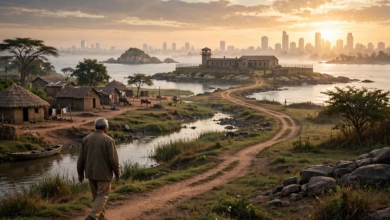
To Answer This Question, The Author Did Not Just Remain In The Sterile, Air-Conditioned Sleep Laboratories Of Developed Nations; Instead, He Decided To Move His Laboratory To The Field. Samson Embarked On An Arduous Scientific Mission, Supported By The National Geographic Society, Which Led Him On A 7,800-Mile Journey From The United States To The Heart Of East Africa. His Exact Destination Was The “Sengeli” Camp Located Near Lake Eyasi In Northern Tanzania, Where The “Hadza” Tribe Lives.
The Hadza Tribe Is Considered One Of The Last Remaining Hunter-Gatherer Tribes On Earth. In That Vast Savannah, Filled With Shrubs And Spaced-Out Baobab Trees, These Individuals Live A Life Dependent Entirely On What The Earth Provides In Terms Of Fruits And Roots, And What Animals They Hunt. They Do Not Live In Concrete Houses, But Rather In Temporary Huts Built Primarily From Acacia Wood And Covered With Savannah Grasses. The Camp Itself Is A Dynamic Entity Vibrating With Life Day And Night, Where Fires Are Strategically Distributed Between Huts, And Families Gather Around Them To Cook, Smoke, And Exchange Conversations and Stories.
Shattering The Myth Of “Paleo Sleep”
The Prevailing Scientific Knowledge In Anthropological Circles Regarding Ancient Human Sleep Was Almost Nonexistent. For Long Decades, Psychologists And Biologists Relied In Their Studies On Data Derived From Societies Described By The Scientist Joseph Henrich With The Acronym (WEIRD), Which Stands For Western, Educated, Industrialized, Rich, And Democratic societies. These Societies, In Which We Live Today, Represent An Exception And Not The Rule In Human History. We Have Created For Ourselves “Sleep Castles”; Dark, Quiet, Temperature-Controlled Rooms Where We Sleep On Comfortable Mattresses, Isolated From Any External Disturbance.
Because Of This Modern Isolation, A Romantic Hypothesis Emerged Called The “Paleo Sleep Hypothesis.” This Idea Assumes That Humans Living In Natural Environments, Such As Hunter-Gatherers, Enjoy A Long, Uninterrupted, And Extremely Deep Sleep, Exactly As We Might Feel After A Long Day Of Camping In Nature. But When Samson Distributed Actigraphs – Which Are Wristwatch-Like Devices Characterized By Their Durability, Water Resistance, And Ability To Precisely Measure Periods Of Sleep And Wakefulness – To Members Of The Hadza Tribe, The Results Came As A Resounding Scientific Shock.
The Sleep Of The Hadza Was Neither Long Nor Peaceful. On The Contrary, The Extracted Data Proved That Their Sleep Was Extremely Short, Highly Fragmented, And Of Low Efficiency. Sleep Efficiency Is The Metric That Determines The Percentage Of Time A Person Actually Spends Sleeping Compared To The Time Spent In Bed. While The National Sleep Foundation In The United States Recommends A Sleep Efficiency Of 85% As A Minimum For Healthy Sleep, Members Of The Hadza Recorded Percentages Only In The Late Sixties.
The Camp Was An Experimentally Noisy Environment; Conversations Never Stop, Babies Nurse, Dogs Bark, And Dance Rituals, Such As The Sacred “Epeme” Dance Performed On Dark, Moonless Nights, Make The Night A Time For Social Activity And Not Just For Rest.
The Astonishing Paradox: Sleep Quality Between Science And Sentiment
Here Emerges What Samson Calls The “Sengeli Mystery.” If Hadza Sleep Is Bad, Fragmented, And Short According To Western Scientific Standards, How Do They Feel About Their Sleep? When The Researcher Conducted Translated Interviews With Members Of The Tribe, The Answers Were Astonishing And Defied All Expectations. Almost No One Complained Of A Lack Of Sleep. When Asked Whether They Slept “Too Little,” “Enough,” Or “Too Much,” 35 Out Of 37 Participants (About 95%) Answered That Their Sleep Was “Perfectly Enough.”
As For The Speed Of Falling Asleep, The Overwhelming Majority Reported That They Doze Off Quickly, Which Stands In Stark Contrast To Industrial Societies Where 92% Of The Population In The United States, For Example, Believe That They Do Not Fall Asleep Quickly. Even More Bizarre Was Their Evaluation Of Their Sleep Environment. A Typical Hadza Bed Consists Of An Animal Skin, Such As An Impala, Stretched Out On The Ground, And They Might Use Rolled-Up Clothes Or A Mound Of Earth As A Pillow. There Are No Curtains To Block The Light And No Air Conditioners. Nevertheless, 97% Of The Hadza Individuals Surveyed Stated That Their Beds Were Comfortable. When Asked Directly: “Do You Have Sleep Problems?”, The Categorical Answer Was A Total Negative From Everyone. All Mothers Who Share A Bed And Nurse Their Babies Throughout The Night (Which Is Known Scientifically As Breastsleeping) Considered That Separating From The Child At Night Is The Real Danger, And Confirmed That This Closeness Is The Natural Way To Keep The Child Warm, Fed, And Safe.
This Stark Contradiction Between Objective Data (Short And Fragmented Sleep) And Subjective Experience (Complete And Absolute Satisfaction With Sleep) Shattered Preconceived Ideas. How Can People Who Live In A Harsh, Open Environment And Sleep For Short Periods Be Happy And Satisfied With Their Sleep, While Residents Of Tokyo And New York Suffer From Anxiety And Insomnia Despite Sleeping In Isolated, Air-Conditioned Rooms?
This Journey Proved That Sleep Is Not Just A Rigid Biological Process Measured By Hours In A Closed Laboratory, But Rather A Flexible And Adaptive Social Behavior. Humans In Small-Scale Societies Do Not Sleep In Isolation From Their Environment, But Rather Sleep As Part Of A Warm Social Fabric. They Share Beds, With The Average Hadza Individual Sleeping Next To More Than Two Other People On Average. They Derive Warmth From The Campfires And From Human Touch, And They Interact With Lunar Cycles And Weather Changes.
The Hadza Tribe Was Not A Scientific Anomaly; Subsequent Studies On Other Tribes, Such As The “San” In Southern Africa, Showed That Their Chronic Insomnia Rates Are Almost Nonexistent (1.5 To 2.5%) Compared To Percentages Reaching Up To 30% In Industrial Societies, Even Though They All Sleep For Periods Fewer Than The Western Average.
This Discovery Places Us Before The Gateway Of A New Understanding Of Our Evolutionary History. This Astonishing Flexibility, And The Ability To Content Oneself With Short, Intensive, And Social Periods Of Sleep, Formed A Secret Weapon For Our Ancestors That Allowed Them To Survive, Evolve, And Dominate The Planet. But Before We Can Understand How We Reached This Stage Of “Shrinking” Our Sleep Hours, We Must First Dive Into The Physiology Of Sleep Itself; What Is Sleep? And What Are The Heavy Tolls That Our Bodies And Brains Pay When We Are Deprived Of It?
The Infrastructure Of The Night: Anatomy Of Sleep Physiology
To Understand How Sleep Evolved, We Must First Abandon The Common Notion That Views It Merely As A State Of “Inactivity” Or A Temporary Coma. Samson Explains, Drawing On Decades Of Neuroscience Research, That Sleep Is One Of The Most Complex And Dynamic Vital Activities In The History Of Living Beings. When We Succumb To Sleep, Our Brains Begin To Go Through A Series Of Regular Cycles Divided Into Two Main Phases: Non-Rapid Eye Movement (NREM) Sleep, And Rapid Eye Movement (REM) Sleep.
The Non-Rapid Eye Movement Phase Is Itself Divided Into Three Sub-Stages That Progress From Light Sleep To Extremely Deep Sleep, Or What Is Known As Slow-Wave Sleep. In This Final Stage, The Heart Rate Slows, Blood Pressure Drops, And Neurons Enter A State Of Slow Rhythmic Harmony. Here, The Body Performs Major Maintenance Operations; Growth Hormone Is Secreted To Repair Damaged Tissues, Strengthen The Immune System, And Cleanse The Brain Of Toxic Metabolic Waste Accumulated During The Day Through What Is Known As The Glymphatic System, Which Acts As The Sewage System For The Human Brain.
As For The Second Phase, Which Is Rapid Eye Movement (REM) Sleep, It Is The Stage For The Most Bizarre And Exciting Dreams. In This Stage, A Wondrous Thing Happens; The Electrical Activity Of The Brain Becomes Completely Similar To Its Activity During Wakefulness, The Eyes Move Rapidly Behind Closed Eyelids, While The Body Is Paralyzed By A Temporary Paralysis That Prevents The Person From Physically Acting Out Their Dreams To Protect Them. During These Hours, The Brain Reorganizes Memory, Processes Emotions And Sentiments, And Connects Distant Information To Produce Creative Ideas.
The Full Cycle Between These Two Phases Takes About Ninety Minutes In A Human Adult, And Repeats Several Times Throughout The Night. This Exquisite Engineering Design Is Not A Luxury, But A Pressing Biological Need, And When We Try To Manipulate It Or Shorten It By Force, We Open The Door To A Comprehensive Cognitive And Physical Famine With Devastating Consequences.
The Heavy Tolls: What Happens When We Stop Sleeping?
Samson Takes Us On A Terrifying Tour Inside The Body And Mind Of A Sleep-Deprived Human, Citing Pioneering Research By Scientists Such As Matthew Walker And Eve Van Cauter. Sleep Deprivation Does Not Just Make You Feel Drowsy And Tired; It Generates A Chemical And Physical Assault On Every Organ In Your Body.
On The Cognitive Front, The Brain Begins To Collapse At A Frightening Speed. The Ability To Concentrate And Pay Attention Drops Sharply, And Short-Term Memory Is Affected To The Point Where Neurons Fail To Absorb New Information Or Archive Old Information. The Prefrontal Cortex, Which Is The Center For Decision-Making And Impulse Control, Is Impaired, Making The Sleep-Deprived Person Mood-Volatile, More Prone To Impulsivity And Uncalculated Risk-Taking, And Unable To Evaluate Dangers Logically. This Is Accompanied By A Dangerous Phenomenon Known As “Microsleep,” Which Are Sleep Episodes Lasting No More Than A Few Seconds That Occur Against A Person’s Will And Unconsciously, And They Are Responsible For Thousands Of Fatal Traffic Accidents Annually Around The World.
On The Physical Front, The Effects Are No Less Catastrophic. Studies Have Proven That Shifting Sleep Hours To Four Or Five Hours For Several Consecutive Nights Places The Body In A State Resembling “Pre-Diabetes”; Where The Sensitivity Of Cells To Insulin Drops Sharply, Impeding Their Ability To Process Glucose In The Blood. Sleep Deprivation Also Tampers With The Hormones Responsible For Appetite, Elevating The Hormone “Ghrelin” Which Causes Hunger, And Decreasing The Hormone “Leptin” Which Gives A Feeling Of Fullness, Driving Humans Instinctively To Consume Foods Rich In Sugars And Carbohydrates, Paving The Way For Severe Obesity.
It Does Not Stop There; The Heart And Circulatory System Pay A Harsh Toll Too. A Single Night Of Bad Sleep Raises Blood Pressure And Heart Rate, And Increases Inflammation Levels In The Arteries. The Book Closely Links Chronic Lack Of Sleep To Increased Risks Of Heart Attacks And Strokes. Even The Immune System, Our First Line Of Defense, Collapses In The Absence Of Sleep; Where The Production Of Natural Killer Cells – Which Are The Cells Responsible For Attacking Cancerous Tumors And Viruses – Drops By Up To Seventy Percent After Just One Night Of Very Short Sleep.
The Biological Enigma And The Double Burden Of Insomnia
This Detailed Exposition Of Biological Hazards Leads Us Directly Back To The Paradox From Which The Book Started; If Sleep Deprivation Is This Destructive, And This Catastrophic To The Survival Of The Living Organism, Why Exactly Did Humans Evolve To Be The Shortest Sleepers Among All Other Apes And Primates? How Did These Few Hours Of Sleep Align With The Spectacular Evolution Of Our Brains And Our Health?
Here, David Samson Points To The Concept Of “Evolutionary Flexibility” And How Humans Did Not Reduce Their Sleep Hours Randomly, But Rather Carried Out A Process Of “Sleep Intensification.” What Humans Lack In Quantity, They Compensate For In Quality And Efficiency, Specifically Through Increasing The Percentage Of Rapid Eye Movement (REM) Sleep Compared To Other Animals. But This Exquisite Evolutionary Adaptation That Allowed Our Ancestors To Survive In The Dangerous Savannah Environment Has Turned In Our Current Era Into A Sword Hung Over Our Necks.
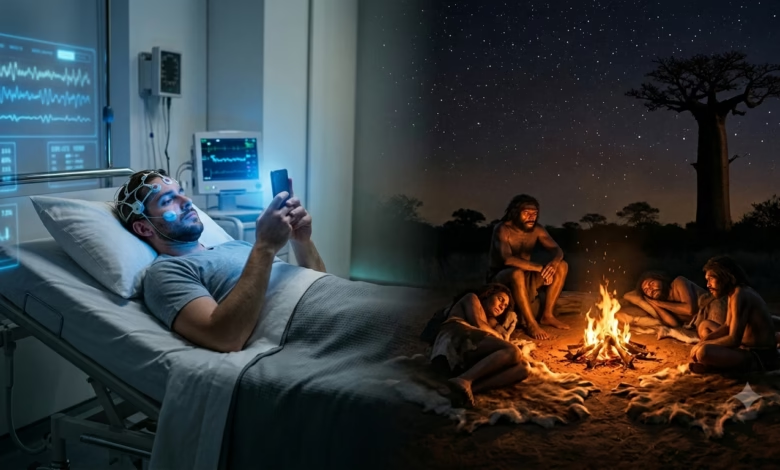
In Our Contemporary Industrial Societies, We Have Come To Live In Environments That Are Non-Extended Technologically And Biologically From Our Evolutionary History. We Have Replaced Warm Campfires, Continuous Social Interaction, And Safe Group Beds With Isolated Rooms, Blue Artificial Lighting Emitted From Screens All Night long, And Endless Work Pressures. This Gap Between What We Evolved For And The Way We Live Today Has Created A Modern Epidemic Known As Chronic Insomnia And Human Sleep Anxiety. We Suffer Because We Try To Force Our Bodies To Sleep In Mechanical Ways That Contradict Our Evolutionary Nature As Sleepless and Social Apes.
Understanding The Complex Physiology Of Sleep, And The Terrifying Tolls We Pay When We Lose It, Paves The Way For Us To Ask: How Did This Unique Evolutionary Journey Begin? How Did Our Ancestors Shift From Safe Sleep Atop Tree Branches To Dangerous Sleep On The Ground? And What Was The Major Evolutionary Leap That Made Sleep An Essential Engine For The Emergence Of Human Consciousness and Human Culture?
Primate Sleep Engineering: The Tree Platform Revolution
To Understand Human Distinctiveness In Sleep, Samson Opens This Historical Chapter By Comparing Sleep Behavior Among Different Primate Species. Most Small Monkeys, Such As Baboons And Macaques, Live A Night Life Fraught With Danger; They Sleep Crouched Atop Thin Tree Branches, Holding Onto Them With Their Limbs All Night Long To Avoid Falling. This Pattern Of Sleep Imposes Strict Biological Constraints; The Fear Of Falling And Of Flying Or Climbing Predators Makes The Sleep Of These Monkeys Extremely Light, Fragmented, And Lacking Deep Sleep Or Rapid Eye Movement (REM) Sleep, Which Requires Complete Muscle Relaxation And Temporary Physical Paralysis. For These Creatures, Succumbing To Deep Sleep Simply Means Falling And Dying.
But Around 14 To 18 Million Years Ago, A Major Evolutionary Leap Occurred In The Line Of Great Apes (Such As Chimpanzees, Gorillas, And Orangutans). These Large Creatures Began To Build What Are Called “Tree Platforms” Or Nests. The Ape No Longer Slept Crouched On A Branch, But Began To Collect Thick Branches, Break Them, And Line Them With Soft Leaves To Make A Real Bed Suspended In The Tops Of Trees.
Samson Explains That This Engineering Step Was Not Merely A Means For Comfort, But Was A “First Technological Revolution.” These Platforms Provided Double Protection From Falling And From Terrestrial Predators, And For The First Time In Evolutionary History, Great Apes Were Able To Fully Recline And Relax Their Muscles, Allowing Their Brains To Enter Longer And Deeper Periods Of Slow-Wave Sleep and Rapid Eye Movement Sleep. This Improved Quality Of Sleep Reflected Directly On Their Cognitive Capacities, Making Chimpanzees And Orangutans Outperform Smaller Monkeys That Do Not Build Nests In Intelligence Tests And Simple Tool-Making.
The Great Leap: Descending To The Ground And The Dangers Of The Savannah
If Great Apes Achieved A Breakthrough With Their Sleep Atop Trees, Our Hominin Ancestors Faced A Major Existential Dilemma A Few Million Years Ago. With Climate Change And The Drying Of Rain Forests In Africa, Trees Began To Space Out, Making Way For Open Savannah Spaces. Here, Our Ancestors, Such As “Australopithecus,” Then “Homo Habilis,” And “Homo Erectus,” Were Forced To Spend Longer Times On The Ground In Search Of Food and Shelter.
But This Environmental Transition Came With A Terrifying Trade-Off: How Can A Weak Creature, Which Does Not Possess Sharp Claws Nor Cutting Fangs, And Cannot Run At The Speed Of Cheetahs, Sleep On The Open Ground? The Night In The African Savannah Is Not A Time For Serenity; It Is The Vital Stage For The Fiercest Historical Predators, Such As Saber-Toothed Cats, Lions, And Giant Hyenas That Possess An Extraordinary Sense Of Smell And Night Vision. Sleeping On The Ground Represented Biological Suicide By All Accounts, Yet Our Ancestors Did It. How Did They Descend, and How Did They Survive?
Samson Explains That This Existential Challenge Is What Forged Distinct Human Traits. For A Human To Sleep On The Ground And Survive, They Had No Choice But To Rely On Their Social Intelligence. The First Tool That Enabled Them To Do So Was The Control Of Fire. Fire Was Not Just A Tool For Cooking Food, But Was The First Defensive Security System History Ever Knew; Fire Illuminates Pitch Darkness, Emits Warmth, And Most Importantly, It Terrifies Predators And Keeps Them Away From The Perimeter.
As For The Second And Stronger Weapon, It Was “Hypersociality.” The Individual No Longer Slept Isolated; Instead, The First Human Groups Formed, Sleeping Together Around The Fire. This Collective Living Led To The Emergence Of What The Author Calls The “Sentinel Hypothesis.” In A Single Human Group, Not Everyone Sleeps At The Same Time Nor At The Same Depth; The Biological Sleep Rhythms (Chronotypes) Vary Among Individuals According To Age And Sex. Young People May Stay Up Until Dawn, While The Elderly Wake Up With The First Threads Of Light. This Rhythmic Diversity Made The Ancient Human Camp Protected At Almost Every Hour Of The Night; There Is Always An Awake Eye, A Tossing Person, Or An Individual Feeding The Fire, Ensuring That Predators Do Not Ambush The Group While It Is Immersed In Sleep.
Evolutionary Pressure And The Intensification Of Human Sleep
This Dangerous Terrestrial Environment Imposed An Enormous And Unprecedented Evolutionary Pressure On The Architecture Of Human Sleep. Humans Had To Balance Two Contradictory Needs: The Dire Biological Need For Deep Sleep To Feed Their Growing Brains, And The Security Need To Remain Vigilant and Ready To Flee Or Fight At Any Moment. The Ingenious Evolutionary Solution Was To “Compress And Intensify” Sleep.
While A Chimpanzee Sleeps Around 9 To 11 Hours Daily, And A Macaque Monkey Sleeps Around 14 Hours, Human Sleep Hours Dropped To Reach An Average Of 6 Or 7 Hours Only. But More Important Than Quantity Was The Radical Structural Change In The Quality Of This Sleep; The Percentage Of Rapid Eye Movement (REM) Sleep In Humans Increased To Last Significantly Longer Compared To Any Other Primates. We Spend Around 20 To 25% Of Our Sleep Time In The Dreaming Phase (REM), While This Percentage Does Not Exceed 5 To 10% In Great Apes.
This Intensification Allowed Humans To Obtain All The Cognitive, Perceptual, And Psychological Benefits Of Sleep In A Record Short Time. Sleep Transformed Into A “Compressed And Highly Efficient Process.” The Few Hours We Sleep Give Our Brains A Golden Opportunity To Clear Toxins, Archive Memory, And Process Emotional Traumas, While Leaving Us Long Hours Of Wakefulness During The Day And Night To Explore The Environment, Hunt Animals, Develop Social Relationships, And Transfer Culture and Knowledge Among Tribe Members Around Campfires.
This Transition From Light Tree Sleep To Intensive Collective Ground Sleep Was Not Merely An Adaptation To The Environment, But Was The Spark That Ignited The Great Human Revolution. Short And Intensive Sleep Enabled Us To Save Time And Energy, Opening The Door Wide For The Emergence Of Consciousness, Language, Art, And Myths That Were Told At Night Around The Fire While Sleepless Apes Guarded Their Companions.
But How Did This Intensive Sleep, Specifically The Long Dream Phase, Affect Our Minds And Our Creative Abilities? And How Did It Contribute To Forging Our Cultural Minds?
The Dream Laboratory: How Does REM Sleep Reshape The Mind?
To Comprehend The Profound Impact Of REM Sleep In Our Evolutionary Path, Samson Places Us Before An Exciting Anatomical And Neurological Comparison Between The Human Brain And The Brains Of Other Great Apes. When A Chimpanzee Goes Through The Dreaming Phase, It Is Short And Fragmented, Whereas Humans Dive Into This Phase For Extended Periods Occupying Almost A Quarter Of Their Night. In These Specific Hours, A Spectacular Physiological Revolution Occurs Inside The Skull; The Secretion Of “Noradrenaline” Stops Completely In The Brain, Which Is The Substance Responsible For Stress, Anxiety, And External Focus, While Emotional And Visual Memory Regions, Such As The Limbic System and Visual Cortex, Flurry With Activity Exceeding Their Activity During Wakefulness.
This Unique Chemical Combination (Immense Emotional And Visual Activity In An Environment Completely Free Of Anxiety And Stress) Creates What The Author Describes As A “Global Creative Thinking Basin.” In The Absence Of Severe Censorship By The Prefrontal Cortex, The Brain Becomes Free To Connect Distant Memories, Conflicting Ideas, And Daytime Experiences That Seem Outwardly Unrelated. This Cognitive Fluidity Is What Allowed Ancient Humans To Leap Over Cliché Solutions To Daily Problems; In Dreams, The First Ideas Sparked For Developing Complex Stone Tools, Devising Innovative Hunting Methods, And Imagining Engineering Solutions For Shelter. The Dream Was Not Merely Night Hallucinations, But Was A Highly Accurate And Free Mental Simulation Permitting The Testing Of Infinite Possibilities Without Bearing The Cost Of Failure In Harsh Reality.
Furthermore, REM Sleep Represents A Primary Processor For Emotional Traumas And Complex Social Experiences. Living In Cohesive Human Groups Requires Sharp Social Intelligence; Such As Understanding Hierarchies, Reading Facial Expressions, Deciphering Intentions, And Dealing With Jealousy, Alliances, And Disputes. Throughout The Day, The Human Brain Absorbs A Torrent Of Emotionally Charged Social Signals, And At Night, Comes The Turn Of The REM Phase To Carry Out A Process Of “Reprocessing” These Scenes. The Brain Strips Memories Of Their Painful Or Stressful Emotional Charge While Retaining The Cognitive Lesson Learned From Them, Allowing Humans To Wake Up The Next Day More Capable Of Empathy, Communication, And Self-Control, Which Are The Pillars Of Human Social Stability.
Campfires: Extending The Day And The Emergence Of Night Culture
Samson Does Not Satisfy Himself With Studying Neurons And Individual Sleep; He Moves With His Engaging Narrative Style To Draw Us A Vivid Painting Of The Ancient Human Camp After Sunset. Controlling Fire Was Not Only To Protect Sleepers From Hyenas And Lions, But It Brought A Radical Transformation In The Timeline Of Humanity; Fire Succeeded In “Extending Daylight Hours” Artificially, Granting Our Ancestors Several Additional Hours Of Wakefulness After Dark.
These Acquired Night Hours Around The Fire Did Not Resemble Daytime Hours Dedicated To Arduous Labor, Hunting, Gathering, And Fleeing From Dangers. At Night, The Body Calms, Environmental Pressures Recede, And The Group Gathers In A Warm Circle Around The Burning Flame. Here, “Human Culture” Was Born In Its Purest Forms. Anthropological Studies Relied Upon By The Author Indicate That Daytime Conversations In Primitive Societies Focus Heavily On Economic Matters, Complaints, And Practical Organization, While The Nature Of Conversations Changes At Night By Up To Eighty Percent To Center On Stories, Myths, Singing, And Religious Rituals.
Around Campfires, The Dreams And Night Visions Experienced By Individuals Transformed Into Shared Narrative Material. Ancestors Woke Up To Recount To Their Clan What They Saw In Their Sleep Of Journeys, Conflicts, And Creatures, Turning The Subjective Individual Experience Into A Collective Myth Believed By All. This Shared Storytelling Contributed To Creating A “Collective Identity” And Shaping The First Religious Beliefs, Enhancing Trust And Cohesion Among Tribe Members To Unprecedented Levels In The Animal Kingdom. Intensive Sleep, Coupled With Night Wakefulness Around The Fire, Made The Night A Real Womb Where Symbolic Language Was Born, And There In Lived The Capacity To Imagine What Does Not Exist, Which Is The Foundation Upon Which All Subsequent Human Civilizations Arose.
Sleep As A Glue For The Social Fabric
Through This Integrated Vision, David Samson Puts Forward A Revolutionary Idea That Challenges Contemporary Capitalist Individualistic Thought, Which Views Sleep As An Isolated, Private Activity; In The Evolutionary History Of Humanity, Sleep Was A “Social Process Par Excellence.” There Was No Such Thing As Solitary Sleep In A Closed Room. Humans Slept Close Together, Sensing Each Other’s Breath, Moving To The Rhythm Of Their Companions’ Movements, Deriving Warmth And Security From This Physical Cohesion.
This “Co-sleeping” Was Not Merely A Response To A Lack Of Space Or Cold Weather, But Served As A Glue Retaining The Cohesion Of The Social Fabric. It Promotes The Secretion Of The Hormone “Oxytocin” – The Hormone Of Bonding And Trust – And Reduces Levels Of The Hormone “Cortisol” Responsible For Stress. When Infants Sleep Beside Their Mothers, Their Heartbeats And Breathing Rhythms Synchronize, Ensuring Healthy Neurological And Psychological Development. The Security Felt By A Human Surrounded By Their Sleeping Clan Allowed Them To Enter Deep Sleep Phases Peacefully, Reassured That The “Sentinel Hypothesis” Is Working Efficiently, and That There Is Always A Brother Or Friend Staying Up To Protect Them.
This Exquisite System, In Which Biology Intertwined With Culture, And Dreams With Campfires, Proved An Astounding Success For Millions Of Years, Making This Sleepless Ape A Master Of The Earth And An Explorer Of Its Horizons. But What Happened When This Ape Decided To Abandon The Savannah, Build Concrete Cities, Invent The Light Bulb, And Enter The Era Of Industry And Globalization? How Did This Great Evolutionary Blessing Turn Into A Curse? And How Did Our Modern, Isolated, Air-Conditioned Sleep Castles Turn Into A Trap For Insomnia, and Psychological And Physical Illnesses?
The Rise Of Individual “Sleep Castles”: Isolation In The Name Of Comfort
To Understand The Scale Of The Transformation We Live Today, Samson Asks Us To Contemplate The Architecture Of The Modern Home. In Contemporary Western And Industrial Societies, The Ideal Bedroom Is Viewed As An Oasis Of Absolute Isolation; A Closed Room, Blocked By Thick Curtains Preventing The Intruding Of Any External Light, Equipped With A Plush, Independent Mattress, And Its Temperature Controlled Precisely Via Central Air Conditioning, Where An Individual Sleeps Alone Or With One Partner At Most, And Children Are Isolated In Separate Rooms From Their Early Infancy. This Environment, Which We Consider The Pinnacle Of Luxury And Health Progress, Is Given By The Author The Description “Sleep Castles.”
But From The Perspective Of Evolutionary Anthropology, These Castles Represent A Stark Biological Anomaly And An Experiment Completely Isolated From Our Ancient History. Throughout Millions Of Years, The Human Brain Evolved To Link Security With Group Sleep And Social Cohesion. In Our First Natural Environment, Sleeping Alone In A Dark, Silent Place Meant One Thing To The Defensive Mechanisms In The Brain: That You Have Lagged Behind The Clan, Or That You Have Become An Easy, Isolated Prey In The Open.
When We Place Modern Humans In A Highly Isolated, Silent Bedroom, The Lymphatic Sensory System And The Primitive Brain Do Not Interpret This Total Silence As Rest, But Rather As A Potential Danger Sign; Keeping The Prefrontal Cortex And Threat-Sensing Areas In A State Of Hidden Alert. This Separation From Shared Sleep (Co-sleeping), Which Used To Flood Our Bodies With Oxytocin And Lower Cortisol, Made Modern Sleep A Fragile Process, Requiring Heavy Mental And Psychological Effort To Calm The Brain And Convince It To Succumb To Sleep.
Light Pollution And The Assassination Of The Biological Clock
The Second Pillar Of Modern Alienation From Sleep Materializes In The “Digital And Optical Revolution” That Has Overrun Our Lives. Samson Explains In Close Physiological Detail How The Human Retina Evolved To Possess Light-Sensitive Neurons Containing The Pigment “Melanopsin.” These Cells Have Nothing To Do With Standard Visual Sight; Rather, Their Only Function Is To Measure The Quantity Of Blue Light In The Surrounding Environment, And Send Direct Signals To The Suprachiasmatic Nucleus (SCN) In The Brain, Which Is The Maestro Responsible For Managing Our Biological Clock (Circadian Rhythm).
In Nature, Blue Light Is Emitted Heavily From Sunlight During The Day, Giving A Signal To The Brain To Stop Producing The Hormone “Melatonin” – Known As The Night Hormone Or Sleep Hormone – To Start Wakefulness And Activity. With The Sunset, Blue Light Gradually Fades To Be Replaced By The Warm, Reddish Light Of Campfires, Which The Brain Interprets As A Safe Signal To Begin Pumping Millions Of Melatonin Molecules Into The Bloodstream, Paving The Way For A Deep, Regular Sleep.
In The Present Era, We Have Besieged Ourselves With Smartphone Screens, Tablets, Television Screens, And Fluorescent Lamps That Emit Massive Amounts Of High-Energy Blue Light At Late Hours Of The Night. When We Browse Our Phones In Bed Before Sleep, We Are Literally Sending A Misleading Chemical Signal To Our Brains Saying: “It Is Two O’clock In The Afternoon In The African Savannah!”. The Inevitable Result Is A Severe Delay In Melatonin Secretion, And A Destruction Of The Structure Of The Nightly Cycle, Leading To Utmost Difficulty In Falling Asleep, A Sharp Drop In Its Efficiency, and Depriving Our Brains Of Preceding, Precious Periods Of Slow-Wave Sleep And REM Sleep.
The Insomnia Epidemic And The Evolutionary Mismatch Hypothesis
This Deep Gulf Between Our Ancient Biological Engineering And Our Modern Technological Environment Leads Us Directly To Understanding The True Roots Of One Of The Greatest Health Dilemmas Of Our Time: Chronic Insomnia. Samson Argues That Insomnia Is Not Merely A Biological Malfunction Or A Genetic Disease Afflicting Unlucky Individuals; It Is A Natural, Expected Response To An Unnatural Environment. It Is A Vivid Embodiment Of What Evolutionary Biologists Call The “Evolutionary Mismatch Hypothesis.”
We Possess Bodies And Minds That Evolved To Sleep In An Open, Warm, Socially Noisy Savannah, Governed By The Natural Cycles Of The Sun, Yet We Ask Them To Sleep In Isolated Concrete Boxes, Under The Influence Of Continuous Work Stress, Morning Alarms, Artificial Light, And Caffeine-Rich Beverages We Consume Throughout The Day To Compensate For Fatigue. This Conflict Places The Autonomic Nervous System In A State Of Permanent Arousal, Activating The Sympathetic System (Fight Or Flight Mechanism), Making Sleep, Which Ought To Be The Natural Flow Of Life, A Daily Nightly Battle Fought By Modern Humans Against Themselves.
The Danger Here Lies Not Only In Feeling Exhausted, But In The Fact That This Chronic, Cumulative Sleep Deprivation, Resulting From Modern Lifestyles, Fuels A Long Chain Of Chronic Diseases That Were Almost Unknown To Our Ancestors, Such As Depression, Anxiety, Alzheimer’s, Type 2 Diabetes, And Cardiovascular Diseases. We Are Paying A Heavy Toll From Our Human Health As A Price For Our Artificial Illumination And Modern Isolation.
This Precise, Worrying Diagnosis Of Modern Reality Places Us Before A Decisive Crossroad. If Returning To The Savannah And Sleeping In Thatch Huts Around Fires Is Impossible And Unrealistic In Our Complex World Today, How Can We Bridge This Gap? How Can We Use This Deep Evolutionary And Historical Understanding Of Human Sleep To Reshape Our Bedrooms, Work Schedules, And Daily Lives In A Way That Harmonizes With Our Nature As Sleepless Apes, Without Forfeiting The Gains Of Civilization And Technology?
Returning To Biological Roots: Redesigning Modern Bedrooms
The First Emotional And Practical Steps Put Forward By Samson To Bridge The Evolutionary Gap Do Not Materialize In Demolishing Cities Or Abandoning Technology, But Rather In “Rethinking The Architecture Of Sleep” Within Our Contemporary Homes. If Modern Sleep Castles, With Their Superb Isolation And Silence, Evoke The Suspicion Of The Primitive Brain That Links Isolation To Danger, The Solution Lies In Introducing Elements Of The “Natural And Social Environment” Into Our Rooms In Smart, Studied Ways.
It Begins With Strict Control Of Light, Which Is The Primary Driver Of Melatonin Production. The Author Calls For Applying A “Light Quarantine” In Homes; A Procedure Starting At Least Two Hours Before Bedtime, Where Bright Lights With White And Blue Illumination Are Turned Off, Replaced By Warm, Dim Illumination Tending Toward Redness, Resembling In Its Wavelengths Ancient Campfires. He Also Stresses The Absolute Necessity Of Removing Digital Screens From Bedrooms, Transforming The Bed Into A Sacred Space Dedicated Exclusively To Sleep and Warm Human Connection.
On The Social Front, The Book Challenges The Prevailing Western Notion Regarding The Necessity Of Isolating Infants In Separate Rooms From Their First Months. It Cites Primitive Tribes Like The Hadza And The “San” Where Children Share A Bed With Their Mothers And Fathers, Granting Them Psychological Security and Reducing Nightly Crying And Stress Fits. Samson Calls Upon Modern Societies To Adopt Greater Flexibility In Dealing With Co-sleeping And Safe Physical Attachment, Taking Into Account Modern Medical Safety Standards, Because Human Cohesion At Night Is The Natural Antidote To Anxiety, And The Glue That Grants The Brain The Absolute Signal Of Security To Succumb To Deep Slow-Wave Sleep.
A Revolution In Social Timing: Respecting Diverse Biological Rhythms
The Second Transition In Samson’s Evolutionary Strategy Requires A Radical Revolution In How Modern Societies Organize Work And Education Times. The Author Explains That Human Rhythmic Diversity (Chronotypes) Among Members Of The Same Tribe – Between Larks That Wake Up Early And Night Owls That Stay Up Until Dawn – Was Not A Genetic Flaw, But Was A Highly Important Security Feature Permitting The Emergence Of The “Sentinel Hypothesis” To Protect The Group All Night Long.
Nevertheless, The Industrial And Capitalist Contemporary System Imposed A Unified, Harsh Time Mold Beginning In The Early Morning, A System Blatantly Biased In Favor Of Larks (Morning People) And Continuously Punishing Night Owls (Evening People). Forcing Millions Of Employees And Students Who Possess Delayed Biological Clocks To Wake Up In The Early Hours Of The Morning Leads To What Is Called “Social Jetlag,” Where These Individuals Live In A State Of Permanent Sleep Deprivation, Destroying Their Mental And Physical Health and Depriving Them Of The Capacity For Creativity And Productivity.
Here, The Book Proposes A Progressive Vision Calling Upon Corporations And Educational Institutions To Adopt “Evolutionary Timing Flexibility.” Permitting Flexible Work Schedules, And Delaying School And University Start Times To Align With The Natural Shift In The Rhythms Of Adolescents And Young Adults, Is Not A Type Of Luxury; It Is A Pressing, Healthy Physiological Need. When Societies Grant Their Individuals The Freedom To Sleep And Wake Up Based On Their Evolutionary Genetic Codes, They Do Not Just Raise Their Quality Of Life And Health, But Rather Reclaim That Immense Creative Energy That Used To Flow From The Minds Of Our Dreaming Ancestors In The Savannah.
Reconciliation With Daytime Naps: Restoring Regard For Biphasic Sleep
In An Inspiring Tour Among Tribes And Natural Environments, Samson Corrects Another Modern Illusion Which Holds That Ideal Human Sleep Must Be A Single Continuous Segment Extending To Eight Hours At Night (Naps And Monophasic Sleep). Field Data From Hunter-Gatherer Societies Prove That Natural Human Sleep Tends To Be “Biphasic” Or Multi-Phasic In Many Instances. In Hot Midday Periods, When The Sun Is In the Zenith And Movement Or Hunting Becomes Arduous, Humans Resort Instinctively To Taking A Short Nap (Siesta) In The Shade.
This Daytime Nap Is Not A Sign Of Laziness; It Is An Exquisite Evolutionary Mechanism To Recharge The Brain, Cleanse Metabolic Waste, And Calm The Aroused Nervous System. In Our Modern World, Sleeping In The Day Is Viewed As A Sort Of Poor Efficiency, Driving Millions To Use Massive Doses Of Caffeine And Energy Drinks To Resist This Natural Dip In Human Activity At Midday.
The Author Calls For Restoring Regard For Napping In Modern Work Environments, Citing Pioneering Technological Firms That Have Begun To Provide “Sleep Pods” For Their Employees. A Nap Lasting No More Than Twenty Minutes Is Capable Of Restoring Cognitive Attention, Lowering Stress Levels, And Improving Mood In A Way Outperforming The Effect Of Caffeine Significantly, And Most Importantly, It Harmonizes With The Authentic Biological Clock Shaped In Our Bodies Across Millions Of Years.
David Samson Concludes His Extraordinary Book With A Profound Anthropological And Philosophical Cry Calling For Altering Our Total View Of The Night And Sleep. Sleep Is Not A Dead Space Of Time, Nor Is It A Loss In Calculations Of Profits And Productivity; It Is The Biological And Cultural Womb Where Our Humanity Was Born. Without This Short, Intensive Sleep, Filled With Symbolic Dreams And Social Bonds, We Would Not Be Today The Rational, Creative Creatures That Colonized The Earth And Explored Space.
Saving The Night Of Humanity Requires Us To Stop Treating Our Bodies As Mechanical Machines That Can Be Turned On And Off At The Click Of A Button Or By Taking A Sleeping Pill. We Must Learn From The Hadza Tribe Anew That Sleep Efficiency Is Not Measured By Rigid Hours In An Isolated Lab, But Rather By Subjective Satisfaction, Harmony With Nature, And The Social Warmth That Surrounds Us. When We Redesign Our Cities, Our Rooms, And Our Schedules To Respect The “Sleepless Ape” Crouched In Our Depths, We Do Not Just Reclaim Our Lost Health, But Rather Reclaim The Essence Of Our Humanity and Our Psychological Peace.