

Zionists Of The Swamps: How Nuer Pastoralists Created Their Own Version Of Judaism On The Frontiers Of Ethiopia

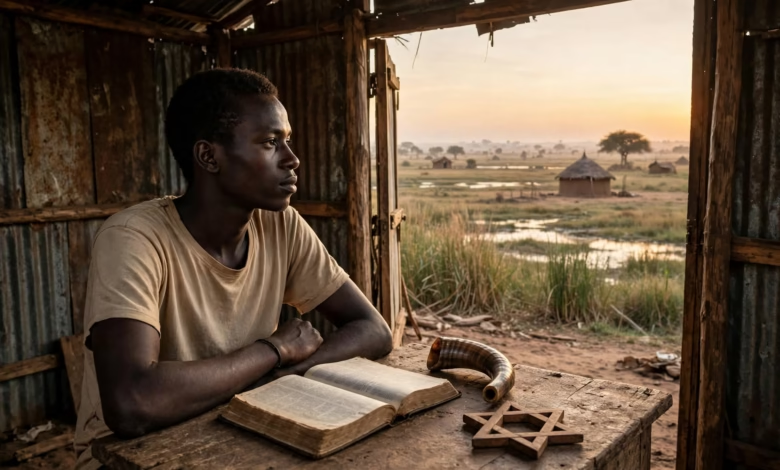
In The Far West Of Ethiopia, Where The Asphalt Road Ends And The Swamps And Plains That Do Not Recognize The Maps Of Countries Begin, Gambella Lies. A Dusty, Humid, Border City, Forgotten In The Official Ethiopian Narrative, But In The Book Of The Israeli Anthropologist Yotam Gidron It Turns Into A Global Stage. There, Among The Nuer Communities That Were Displaced And Expanded From Their Lands In South Sudan Toward The Margins Of The Modern Ethiopian State, A Phenomenon Emerged During The Last Three Decades That At First Glance Seems An Unsolvable Riddle: Churches Whose Followers Call Themselves “Zionists,” Then “Messianic Jews,” Who Celebrate The Sabbath Not Sunday, Blow The Shofar, Raise The Flag Of Israel, Read The Hebrew Torah In A Confused English Translation, And Believe That The Messiah Yehoshua Will Return To Reign For A Thousand Years From Jerusalem.
The Book “Messianic Judaism Among The Nuer: Truth And Mediation Nuer Messianic Judaism: Truth And Mediation In The Ethiopia-South Sudan Borderlands” Published This Year 2026 By Cambridge University Press Within The Series Of The International African Library, Is Not Just Another Ethnographic Monograph About Christianity In Africa. It Is A Book That Puts Its Hand On: How Do We Understand Religious Change Without Turning It Into A Mechanical Reaction To A Crisis? And How Do We Understand People’s Search For Truth In A World Overflowing With Lies And Fake Mediations?
Yotam Gidron, The Researcher Who Spent Long Years Moving Between Gambella And “Newland,” The Semi-Urban Neighborhood Built By The Nuer On The Outskirts Of The City, Does Not Offer Us A Simple Story Of Collective Transformation From Paganism To Christianity. What He Offers Is More Complex And Exciting. Christianity Reached The Nuer Since The Beginning Of The Twentieth Century With American Presbyterian Missionaries In South Sudan, But The Story That Concerns Him Began In The Seventies When Some Nuer Converted To The Seventh-Day Adventist Church, That American Church That Sanctifies The Sabbath And Believes In The Near Second Coming. And From The Womb Of Adventism, And In The Nineties Of The Last Century Specifically, A Small Group Split Taking The Name “Church Of God” Then Split Again, To Declare That It Is Not Christian In The Familiar Sense But Is “Yahweh Community” Or “The Zion District Zion District.” These Are The Heroes Of The Book.
The Central Idea On Which Gidron Builds His Work Is Borrowed From A Broader Anthropological Debate About Modernity In Africa, But He Flips It Brilliantly. Many Studies Portrayed Africans In Border Cities As Victims Of A Fake Modernity, Drowning In The Feeling That They Are Deceived, Searching For The Authentic Amid A World Of Cheap Imitation And False Education And Fake News. Gidron Does Not Deny The Existence Of This Anxiety, But Makes It The Starting Point. Nuer Youth In Newland, As He Narrates In The Amazing Second Chapter, Live A Daily Obsession With Deception. They Fear That Their School Certificate Is Forged, That The Preacher Is A Fraud, That The Medicine Is Adulterated, That The City Itself Is A False Promise Of Modernity. But Instead Of Explaining Their New Religiosity As A “Response To Crisis,” Which Is The Lazy Explanation That Dominates Studies Of Religious Change, Gidron Insists That Jewish Messianism Among The Nuer Is A Positive Cognitive And Ethical Project: It Is A Way To Sort The Real From The Fake, And Build A Spiritual Mediation They Trust That It Is Unpolluted.
Here Lies The Subtitle: Truth And Mediation. The Believers In Gambella Are Not Only Searching For A New Doctrine, But For A Clean Communication Channel With The Divine. The Early Missionaries Brought The Bible, But The Multiple Translations, And The Warring Sects, And The Imported Church Music, All Raised One Question: Where Is The True Divine Institution And Where Is Human Manufacture? For These Believers, Every Church Claims That It Is The True Church Because It Returns Directly To The Bible. Therefore The Issue Of Origin And Institutional Genealogies, And Tracing Church History All The Way To Jerusalem In The First Century, Became A Daily Obsession. To Be A Messianic Jew Means That You Rejected The Corrupt Church Mediations And Returned To The Authentic Hebrew Source.
And Gidron Adds Another Layer Of Complexity That Makes The Book Unique In The Field Of African Studies: His Own Position As A Researcher. He Is Israeli, Jewish, Speaks Hebrew, Came To A Community That Sanctifies Israel And The People Of Israel And The Language Of Israel With An Almost Mythical Sanctification. In Gambella, He Was Received As A “Brother” Coming From Zion, Asked About The Meaning Of Hebrew Words, About The Shape Of The Real Shofar, About Whether He Knows Rabbis. This In-Between Position, To Which He Devotes An Impactful Methodological Reflection In The First Chapter “On Encounters,” Was Not Just A Methodological Obstacle But Was The Material Of The Research Itself. The Encounter Between A Largely Secular Jewish Researcher And Nuer Believers Who Consider Themselves The True Heirs Of Israel, Reveals The Fragility Of Borders Between Researcher And Researched, And Between Judaism And Christianity, And Between Africa And Israel.
The Book Then Does Not Talk About A Strange Sect In A Remote Place. It Talks About The Heart Of Contemporary Evangelical Christianity. During The Past Two Decades, Studies Of Charismatic Pentecostal Christianity Dominated The Understanding Of African Christianity, Until The Word “Born Again” Became Synonymous With Pentecostalism. Gidron Reminds Us That There Is A Wide Space Of Non-Pentecostal Evangelical Protestantism, Like Adventists And Church Of God, Which Rejects Noise And Spiritual Healing And Material Prosperity, And Focuses Instead On Purity Of Doctrine, And Literal Study Of The Book, And Eschatology And The Second Coming. These Are The “Zionists” In Gambella. And They Represent A Growing Current In Africa: Christian Zionists Who Reject What They Call “Replacement Theology,” That Is The Idea That The Church Replaced Israel, And Believe That God’s Covenant With The Jewish People Is Still Valid, And That Supporting The Modern State Of Israel Is A Biblical Duty.
In This Sense, Gambella Is Not An Exception But Is Part Of “The African Messianic Front” Extending From Zimbabwe Where The Lemba Group That Claims Aaronic Lineage, To Nigeria Where Jewish Igbo Groups, To Ghana And Uganda And Kenya. But Gidron Presents A Historical Argument: In The Case Of The Nuer, Judaism Was Not Imported From Outside, But Was A Logical Result Of An Internal Path Begun By The Protestant Debate About Biblical Authenticity. The More Believers Delved Into Reading The Text, They Discovered That Jesus Himself Was A Jew Who Observed The Sabbath And Jewish Festivals, So They Asked: Why Don’t We Do Like Him?
In Order To Understand Why The Nuer Became Messianic Jews, You First Have To Understand Why The Nuer Abandoned Their Village To Come To Gambella, And Why Gambella Itself Became, In Their Imagination, A Symbol Of Falsity.
Yotam Gidron Does Not Describe Gambella As A Geographical Background, But As A Main Character In His Novel. In The Third And Fourth Chapters, Which Form The Theoretical Heart Of The Book, He Draws A Picture Of A Border City That Arose By An Imperial Decision In 1907 As A River Port For Ethiopian Coffee, Then Was Neglected For Decades, Then Was Reinvented After 1991 When The Ethiopian People’s Revolutionary Democratic Front Regime Decided To Transform It Into A Regional Capital. The Ethiopian State Came Late And Strong. It Built Huge Administrative Buildings, And Asphalted Streets That Suddenly End In Mud, And Schools That Grant Certificates Recognized By No One, And Fake Jobs In A Bureaucratic Apparatus That Local Residents See As A Machine For Looting Nuer Resources For The Benefit Of “Highlanders,” That Is Ethiopians Coming From The Amhara And Tigrayan Highlands.
The Nuer Themselves Arrived In Gambella As Relatively New Settlers. During The Eighties And Nineties, And With The Second Sudanese Civil War And The Collapse Of Socialism In Ethiopia, A Huge Migration Of Nuer From South Sudan Toward The Lowlands In Gambella Began. Gidron Calls This Phenomenon “Nuer Settler Expansion,” And He Does Not Use The Term Arbitrarily. The Nuer Historically Are Expanding Pastoralists, Searching For New Pastures And Water, But Their Expansion This Time Was Not A Search For Grass For Cattle But For A School, And A Clinic, And A Market, And Connection To The Modern World. They Were Fleeing War In Sudan And Famine, But They Were Also Searching For What The Nuer Call “Tek” Or Progress. They Came To Find Themselves In A City That Does Not Want Them.
Here Is Born What Gidron Calls “Fake Modernity.” In Newland, The Muddy Neighborhood Built By The Nuer With Their Own Hands On The Edge Of Gambella, Everything Seems A Counterfeit Copy. Houses Built Of Tin In The Style Of City Houses, But They Sink In Every Rainy Season. Youth Wear Second-Hand Clothes Imported From Europe, But They Do Not Resemble The Fashion They See On Their Phones. Schools Exist, But Teachers Do Not Attend, And Certificates Are Bought And Sold. Even Medicines In Pharmacies Are Suspected To Be Adulterated. In This Atmosphere Saturated With Doubt, Rumors Multiply. A Rumor That The Amhara Poison Nuer Waters, A Rumor That Non-Governmental Organizations Steal Children’s Blood, A Rumor That The Regional Governor Built His Palace With Oil Money. Gidron Does Not Treat Rumor As A Superstition That Must Be Debunked, But As A Cognitive Structure: Rumor Is People’s Way To Try To Explain A World In Which All Mediations Seem Corrupt.
And Here The Concern Of The City Meets The Concern Of The Church. Because The Churches Themselves Became In The Eyes Of Newland Youth Part Of The Market Of Falsity. After The Number Of Sects In Gambella Exploded From Five Churches In The Eighties To More Than Forty Churches In The First Decade Of The Millennium, It Became Difficult To Distinguish Between The True Preacher And The Charlatan. Every Church Claims That It Possesses The Complete Truth, And All Use The Same Verse: “Where Two Or Three Gather In My Name, There Am I Among Them.” How Do You Know Who Is Right? This Is The Existential Question On Which The Messianic Project Rises.
Gidron Returns To A Fundamental Concept In Nuer Thought: “Kuoth” Or “Kuoth.” It Is A Word That Was Mistranslated For Decades In Anthropological Literature As “Spirit” Or “God.” Evans-Pritchard, The First Who Studied The Nuer In The Thirties, Made Of It An Abstract Theological Concept. But Gidron, Based On The Later Work Of Johnson And Hutchinson And On His Field Research, Restores To The Word Its Practical Meaning: Kuoth Is An Invisible But Influential Presence, A Force, Air, Something That Travels Through Speech And Breathing And Blowing. The Closest Concept In Arabic Might Be “Spirit” As “Breath,” Or “Word” As A Creative Act. Therefore When The Nuer Says “Word Of God” Or “Ruac Kuoth” He Does Not Mean A Rigid Text But A Living Force That Travels.
Messianic Judaism Offers An Answer To This Dilemma. If The True Kuoth Was Transferred To The Prophets In The Old Testament Through Precise Hebrew Words, Through The True Names Of God, Through Festivals Of Precise Timing, Then Any Distortion In Mediation – A Wrong Translation, A Wrong Name For God, A Wrong Sabbath Day – Means That You No Longer Receive Kuoth But Something Fake. Therefore You See Them Obsessed With The Issue Of The Name. Is The True Name Of God God Or Jehovah Or Yahweh Or Yahovah? Is The Name Of The Savior Jesus Or Yeshua Or Yahshua Or Yahawashi? For Us This May Seem A Sterile Linguistic Debate, But For A Believer In Newland, The Name Is The Channel. If You Call With A Wrong Name, You Are Connecting To A Cut Line, Or Worse, You Connect To A Demonic Force Pretending To Be God.
The Fifth Chapter In The Book, Tracks How Music Turned Into An Arena For This Battle. The Nuer Love Singing, And Their Old Churches Depended On Drums And Improvised Songs That Narrate Personal Experiences. But The New Messianics Banned Drums Completely. Why? Because Drums, As One Leader Says To Gidron, “Make The Body Move Before The Mind Understands.” They Arouse Emotion, And Emotion Can Be Easily Faked. Pentecostals Cry And Shout And Fall To The Ground, But Is This Real Kuoth Or Just Collective Hysteria? The Messianics Chose An Opposite Path: Singing Without Rhythm, With One Voice, With Direct Reading From The Hebrew Psalms. Silence And Slowness As A Sign Of Authenticity.
And Thus Gambella, With All Its Noise And Lies, Turns Into A Laboratory For Testing Truth. Believers Do Not Flee From The City To The Countryside Searching For Imagined Purity, But Remain In Its Heart And Build Inside It An Alternative Space: Zion District. It Is Not A State Nor A Neighborhood, But A Network Of Houses And Small Churches That Apply Jewish Law As They Understand It: Do Not Eat Pork, Do Not Drink Blood, Do Not Shave Your Beard, Keep The Sabbath Precisely From Sunset Friday To Sunset Saturday. These Daily Bodily Boundaries Are What Create A Feeling Of Authenticity Amid Surroundings They See As Polluted.
Gidron Leaves You With A Striking Paradox: Those Who Accuse Everyone Of Falsification, Are Accused By Others That They Are The Biggest Fakers. The Rest Of The Nuer, Whether Presbyterians Or Pentecostals Or Even The Mother Adventists, View The Messianics As An Extremist Group That Invented Its Judaism From The Internet, Buying Kippah Hats From AliExpress Website And Learning Hebrew From YouTube. The Accusation Of Falsity Is Mutual, Circular, And Never Ends. And This Is Exactly What Makes The Study Of Gambella A Mirror For Our World All, Where Truth Has Become Not What Exists, But What Can Be Proven That Its Mediation Is Not Fake.
If Gambella Taught The Nuer Doubt About Everything, Then The Bible Itself, As It Was Distributed To Them, Taught Them How To Transform This Doubt Into A Method. This Is The Central Historical Thesis In The Third Batch Of Gidron’s Book, And It Is The Batch That Transfers The Reader From The Geography Of The City To The Genealogy Of Faith.
Everything Begins, As Gidron Documents, With An Event That Has Nothing To Do With The Nuer At All: A Schism That Occurred In The Adventist Church In America In 1866. A Small Group Rejected The Authority Of The Prophet Ellen White And Said It Will Return To The Book Alone, And Launched On Itself The Name “Church Of God.” This Marginal Church, That Most Americans Themselves Do Not Know, Believed In Three Principles That Would Later Become Fuel For The Messianic Revolution In Africa: First, That The Sabbath Is The True Jewish Sabbath Day And Not Sunday; Second, That The Soul Does Not Live By Itself But Sleeps Until Resurrection, Which Cancels The Idea Of Eternal Hell; And Third, That The Festivals Of Israel In The Old Testament Are Still Binding. Church Of God Remained A Small Poor Sect In Oklahoma And Texas, But It Possessed One Thing That Made It Exportable: A Magazine Called “Herald Of Truth.”
In 1925, A Copy Of That Magazine Reached Malawi, And From There To Kenya, And From Kenya To Uganda, And From Uganda Via Ugandan Missionaries To Gambella At The End Of The Seventies. The Ugandan Missionary Who Introduced It To The Nuer Was Named “Elfert,” A Thin Black Man Who Distributed Handwritten Leaflets About The Necessity Of Keeping The Jewish Passover. Adventists In Gambella, Who Were Themselves A Persecuted Minority By The Larger Presbyterian Churches, Split. Some Said: If We Keep The Sabbath Because The Ten Commandments Say So, Why Don’t We Also Keep The Passover? And If Passover, Why Don’t We Celebrate The Feast Of Tabernacles?
Gidron Calls This “The Logic Of Biblical Extremism,” And It Is Not A Value Judgment But A Description Of A Mechanism. Evangelical Protestantism Is Based On The Principle Of “Scripture Alone,” But This Principle When Taken With Absolute Seriousness Transforms Into A Dismantling Machine. Each Generation Discovers That The Generation Before It Did Not Apply The Book Literally Enough. Thus Church Of God Came Out Of Adventists, Then A Smaller Group Came Out Of Church Of God In The Nineties And Said: If We Keep Jewish Festivals, Why Don’t We Also Use Their Hebrew Names? Why Do We Say God While The Original Text Says Yahweh? And Why Do We Say Jesus While The Angel Said His Name Is Yehoshua?
Here Appear Two Unexpected Heroes In The Story: The Internet And Videos. In About 2005, Electricity Reached Intermittently To Newland, And With It Primitive Internet Cafes Working With Diesel Generators. Nuer Youth Who Was Searching For The Meaning Of The Word “Yahweh” In His Old English Dictionary, Suddenly Discovered YouTube. And There He Found A Whole World He Did Not Know Existed: White American Messianic Rabbis With Long Beards Blowing The Shofar In Texas, And African Americans From The “Black Hebrews” Movement Wearing The Tallit, And Israelis Dancing The Hora Dance In Jerusalem. They Found Visual Confirmation That What They Do In A Mud Hut In Gambella Is Also Done By People In America And Israel. They Were Not Alone.
But More Important Than The Internet Was Another Transformation That Gidron Documents Precisely: The Transformation Of Prophecy From Text To News. Nuer Churches Were Always Eschatological Churches, Believing That Christ Will Return Soon. Adventists Calculated The Date Of Return And Failed, But They Left A Legacy Of Calculating Times. The New Messianics Revived This Legacy But Linked It To Modern Israel. The Establishment Of The State Of Israel In 1948, And The 1967 War, And The Migration Of Ethiopian Falasha, And Even News About A Red Heifer Born In Texas To Be Slaughtered In The Temple, All Became Signs They Read In The Local Newspaper “Addis Zemen” Translated Slowly. Gidron Cites An Unforgettable Conversation With One Leader Of “Zion District” Who Opens Before Him A World Map Drawn By His Hand, And Points To A Line Connecting Jerusalem And Gambella And Newland, And Says: “We Are In The Middle. We Are The Bridge. When He Returns, He Will Pass From Here.”
This Line, The Bridge, Is The Concept Of Mediation That Gives The Book Its Title. Messianics Do Not Only Want To Be Jews, But Want To Be True Mediators Between God And The World. And They Believe That Greater Christianity Failed In This Mediation Because It Cut Its Connection To Israel. Therefore They Rebuild Mediation Through Three Tangible Things To Which Gidron Devotes Entire Chapters: The Name, And The Blood, And The Time.
The Name, As We Preceded, Is The Vocal Channel. Blood Is The Bodily Channel. The Nuer Historically Are A Pastoral People, Cattle Is Their Bank And Their Spirit. In Their Traditional Rituals, Slaughtering A Bull And Sacrificing It Was The Way To End Conflict And Restore Peace. Presbyterian Missionaries Banned Cattle Slaughter As Sacrifice And Said That The Blood Of Christ Is Enough. But The Messianics, With Their Reading Of The Book Of Leviticus, Rediscovered Blood. Not As Animal Sacrifice, For They Do Not Slaughter Bulls In Church, But As A Nutritional And Ethical Rule: Prohibiting Eating Blood, Prohibiting Eating Meat Not Slaughtered In A Lawful Way, Prohibiting Adultery Because It Is Mixing Bloods. Blood At Their View Is Not A Metaphor But A Dangerous Material If Polluted. And This Meets With Their General Concern From Pollution In Gambella, Where They Fear Mixed Bloods, From Diseases, From Fake Medicines.
As For Time, It Is The Calendar. Other Churches Celebrate Christmas On December 25, Which Is A Date That Does Not Exist In The Bible. Messianics Reject It Completely And Celebrate Instead The Seven Jewish Festivals: Passover, Unleavened Bread, First Fruits, Weeks, Trumpets, Atonement, Tabernacles. Gidron Describes How They Try To Calculate These Festivals By The Moon, In A City Where There Is No Hebrew Calendar, So They Are Forced To Contact Their Relatives In America Via WhatsApp To Ask Them: When Does The New Moon Begin At You? The Calendar Becomes A Transcontinental Communication Network, A Temporal Mediation Connecting Newland With Jerusalem.
Gidron Reaches A Conclusion: Messianic Judaism Among The Nuer Is Not An Imitation Of American Christian Zionism, But Is A Critique Of It. American Zionist Christians Support Israel For Selfish Eschatological Reasons: They Want Christ To Return To Convert Jews Or Destroy Them. As For The Nuer, They Want To Become Themselves Part Of Israel. They Are Not Supporters Of Israel, But Claimants That They Are Israel. And Here Lies Their Strength And Weakness At Once. Their Strength Because They Flip The Hierarchy Of Evangelism: The White No Longer Teaches The Black, But The Black Re-Educates The White What True Judaism Is. And Their Weakness Because This Claim Is Rejected From Both Sides: From Ethiopian Churches That See Them As Heretics, And From The State Of Israel That Does Not Recognize Them As Jews.
Yotam Gidron Begins The Sixth Chapter Of His Book With A Scene That Seems Marginal But Summarizes All His Theory. In One Evening Of Newland, He Sits With A Young Man Named Duot, An Unemployed High School Graduate, Holding A Large English Holy Book With Torn Cover. Duot Does Not Read The Book, But Wipes It. He Passes His Hand Over The Pages, Smells It, Puts It On His Forehead, Then Says To Gidron: “This Book Has Power, But Translations Lied About It.” This Sentence, Which Seems Simple, Is The Key To What Will Come, Where Gidron Moves From History Of Sects To Anthropology Of Book And Body.
Nuer Messianics, As Gidron Observes, Do Not Deal With The Bible As A Text For Reading Only, But As A Material Thing That Has Weight And Heat And Smell. And This Is Not Strange To The Nuer. In Their Traditional Society, Truth Was Not Transmitted Via Abstract Words But Via Things: A Spear Planted In Ground To Make Peace, A White Bull Slaughtered To End Revenge, A Copper Bracelet Given As A Covenant. When Missionaries Came, They Brought With Them Something New: A Book. A Book That Does Not Rust And Does Not Die, Can Be Carried And Transported. For The Fathers’ Generation, The Mere Existence Of The Book Was A Miracle. As For The Sons’ Generation In Newland, Who Learned Reading And Writing In State Schools, The Book Transformed From Miracle To Problem.
The Problem Is Translations. In Gambella Alone, Gidron Finds Five Different Translations Of The Bible In Nuer Language, And Three Competing English Translations, And An Official Amharic Translation Used By The State. Each Translation Translates The Name Of God In A Different Way, And All Claim That It Is The Most Correct. Educated Youth, Who Learned In School That There Is One Correct Answer For Each Question, Get Dizzy Before This Multiplicity. Here Comes The Role Of The Internet Again, But Not As A Source Of Information, But As An Additional Source Of Doubt. When One Searches For “The True Name Of God” He Finds Hundreds Of Websites, All Offer A Different Answer, And All Accuse The Other That It Is From The Work Of Satan.
Gidron Presents Here His Most Important Theoretical Contribution, And It Is Redefining Mediation. In Classical Anthropological Theory, Especially At Birgit Meyer Who Studied Pentecostal Christianity In Ghana, Mediation Is Viewed As A Problem That Must Be Overcome: How To Reach God Despite The Existence Of A Corrupt Human Mediator? But Gidron Says The Opposite: For Nuer Messianics, Mediation Is Not An Obstacle But Is The Essence Of Religion. You Cannot Reach Kuoth Without A Material Mediator: A Spoken Word, A Correct Name, Pure Blood, A Holy Day. The Question Is Not How To Get Rid Of Mediation, But How To Find The Unpolluted Mediation.
Therefore Messianics Pay Obsessive Attention To Material Details That Seem To The Outside Observer Trivial. Gidron Spends Long Pages Describing Endless Debates About How To Tie The Threads Of The Tallit, Or Whether The Shofar Must Be Blown From Right To Left Or The Opposite, Or Whether It Is Permissible To Use A Microphone In Church Because The Microphone Changes The Sound Of Kuoth. This Is Not Empty Ritualism, But Is A Daily Laboratory For Testing Authenticity. If Satan Is Able To Imitate Everything, As They Believe, Then The Only Way To Expose Him Is In Precise Details That Cannot Be Imitated Except With Difficulty.
And Here Enters The Body. In Pentecostal Christianity, The Body Is Proof Of Truth: If You Fall To The Ground, If You Speak In Tongues, If You Tremble, That Means The Holy Spirit Descended On You. Messianics Reject This Proof Completely. For Them, The Moving Body Is A Deceived Body. Truth Appears In The Disciplined Body, The Silent, Sitting For Hours Reading With A Low Voice, Fasting From Mixed Food, The Beard That Is Not Shaved Because Leviticus Said Do Not Shave The Corners Of Your Beard. The Body At Their View Is Not A Theater For The Spirit But An Archive Of Obedience.
Gidron Connects This To A Broader Transformation In Africa: From Christianity Of Emotion To Christianity Of Text. In The Nineties, Pentecostal Churches Promised Immediate Healing And Quick Riches, And Attracted People Because They Offer A Magical Solution To Gambella’s Problems: Unemployment And Disease And Fear. But After Two Decades Of Unfulfilled Promises, A New Generation Began Searching For Something Else: Not A Quick Miracle, But A Stable System That Can Be Trusted. Messianic Judaism Offers This System: A Precise Calendar, Clear Food Rules, Specific Names, Holy Days That Do Not Change. In A World Everything In It Is Fake And Changing, The Sharia Becomes A Refuge.
But This Refuge Has A Heavy Price, And It Is A Price That Appears In Power Relations Inside Society. Those Who Possess Knowledge Of Hebrew Text, And Who Possess Smart Phones To Access YouTube, And Who Know A Little English, Are Who Become Leaders. Gidron Describes How The Church Transformed From An Equal Group Of Pastors To A Class Of Young Educated “Teachers” Who Correct The Reading Of Elders. Women, Who Were In Pentecostal Churches Dancing And Prophesying, Find Themselves In Messianic Churches In The Back, Silent, Head-Covered, Forbidden From Blowing The Shofar Because It Is A Male Act. Pure Truth, When It Becomes Textual And Material In This Form, Becomes Also Masculine And Classist.
And Gidron Adds A Brave Methodological Note In This Context. He, As An Israeli Researcher, Was Always Called As A Judge In Authenticity Disputes. They Asked Him: Is This The Way Jews Really Blow The Shofar? Is This The Correct Shape Of Star Of David? And He Finds Himself In A Dilemma: If He Says Yes, He Grants Legitimacy To A Claim Rejected By Rabbis In Israel; And If He Says No, He Destroys The Faith Of His Hosts. He Chose To Be Honest, To Say That Rabbinic Judaism Is Completely Different From What They Do, But He Discovered That They Do Not Care About Rabbinic Judaism. What Matters To Them Is Biblical Judaism, Judaism Of Moses And Not Judaism Of Talmud. And In This Sense, They See Themselves More Jewish Than The Jews Themselves.
In A Chapter Where Gidron Describes A Visit Made By One Leader Of “Zion District” To Israel By Invitation From An American Christian Zionist Organization. The Man Returned Frustrated. He Was Not Allowed To Pray At The Wailing Wall Because He Was Not Jewish According To Halakha, And No One Understood His Language, And He Felt That He Is Just A Tourist. But He Returned Also More Determined. He Said To Gidron: “Jews There Forgot Who They Are. We Remember.” Here The Circle Of Mediation Completes: He Who Claims That He Is The Original Mediator Becomes Himself Accused That He Is Fake, So He Rebuilds His Own Mediation In Newland.
We Are Before A Question That Concerns Us All: What Do We Do When We Live In A World Overflowing With Media That We Do Not Trust? Do We Search For A Purer Mediation, As The Nuer Do, Or Do We Surrender To The Idea That Everything Is Fake? Gidron Does Not Offer An Answer, But Leaves The Reader With A Picture Of A Young Man Wiping A Torn Book And Smelling Its Scent, Searching For A Power Still There, Despite All False Translations.
Yotam Gidron Concludes His Book That Took More Than Ten Years Of Field And Archival Work With A Farewell Scene That Does Not Resemble Happy Endings We Are Used To In Anthropology Books He Does Not Leave Gambella Having Been Guided To Truth, Nor Does He Leave His Nuer Friends Having Become Recognized Jews. He Leaves Carrying A Bag Full Of Recording Tapes, And Notebooks, And A Small Kippah Hat Gifted To Him By One Leader, And One Letter Written To Him By A Big Sheikh With A Shaking Hand: “Tell Them In Israel That We Are Here, And That We Keep The Covenant.” This Letter That Will Never Reach Its Address, Is In Truth The Summary Of The Whole Book: A Story Of People Searching For Recognition Of Their Mediation In A World That Refuses To Recognize Them.
In The Final Chapter, Which Bears The Title “Beyond The Crisis Of Truth,” Gidron Presents His Theoretical Contribution And It Is The Contribution That Makes This Book Exceed The Boundaries Of African Studies To Become An Attempt To Understand Our Present Era, The Era Of Fake News And Post-Truth. For Decades, The Theory Of “Christianity As A Response To Crisis” Dominated In Anthropology. This Theory Says, With Simplification, That Africans Become Christians Because Their Traditional Society Collapsed, So They Resort To The Church As A Social Hospital. Gidron Rejects This Interpretation Not Because It Is Completely Wrong, But Because It Is Insulting. It Transforms Believers Into Passive Victims, And Transforms Faith Into A Painkiller.
What He Proposes Instead Is What He Calls “The Moral Pragmatism Of Truth.” Nuer Messianics, According To Gidron, Are Not Sick People Searching For Medicine, But Are Practical Philosophers Who Raise A Question Facing Us All Today: How Do We Know That What We Know Is True When All Channels Of Knowledge Are Suspicious? They Are Not Searching For Comfort, But For A Way To Live With Dignity In A World Where They Feel They Are Constantly Deceived By The State, And Non-Governmental Organizations, And Companies, And Other Churches, And Even By Their Relatives Who Migrated To America And Became Sending Fabricated Pictures Of A Prosperous Life.
And Here Lies The Importance Of The Concept Of Mediation That Occupied The Book From Its Title. Gidron Borrows From Media Theorists Like Marshall McLuhan And Birgit Meyer The Idea That Every Message Needs A Mediator, And That The Mediator Is Not Neutral But Shapes The Message. But He Adds A Nuer Special Touch: The Mediator Does Not Only Shape The Message, But Can Pollute It. Therefore Searching For The Pure Mediator Is The Religious Work Itself. The Correct Hebrew Name Is A Pure Mediator, The Shofar Made Of Real Ram Horn And Not Plastic Is A Pure Mediator, The Lunar Calendar Calculated By Naked Eye And Not By Phone Application Is A Pure Mediator. Religion Transforms From Inward Faith Into A Precise Material Craft.
This Craft, As Gidron Shows In Analysis, Has A Dangerous Political Dimension. In Present Ethiopia, Where Nationalities Struggle Over Recognition And Resources, The Claim Of The Nuer That They Are Part Of Israel Becomes A Political Claim Par Excellence. They Say Implicitly: We Are Not Just A Marginal Ethnic Minority In An Amhara Ethiopian State, We Are The Chosen People Of God, Our History Is Older Than The History Of The Ethiopian State Itself, And Our Center Is Not Addis Ababa But Jerusalem. This Discourse, Although Spiritual In Its Appearance, Grants Them Dignity Beyond Citizenship. But At The Same Time It Isolates Them. The Ethiopian State Sees Them As Culturally Secessionist, And Churches Of South Sudan See Them As Agents For Israel, And Israel Itself Does Not Want Them.
Gidron Does Not Hide His Sympathy With Them, But He Says That This Search For Purity Creates A New Harsh Purity. The Zion District, Which Began As A Liberation Movement Against Corruption Of Churches, Became Itself An Institution Imposing Strict Censorship: It Prevents Music, Prevents Mixing, Expels Who Doubts, And Accuses Everyone Who Leaves It That He Returned To Worship Of Satan. Absolute Truth, When It Is Believed That You Found It, Quickly Turns Into Absolute Authority. And This Lesson Does Not Concern The Nuer Alone, But Concerns Every Group That Claims Possession Of Pure Mediation, From Salafi Jihadi Movements To White Supremacy Groups In America That Also Claim That They Are The True Israel.
*Published Opinions Do Not Necessarily Represent The Opinion Of Nile Post