

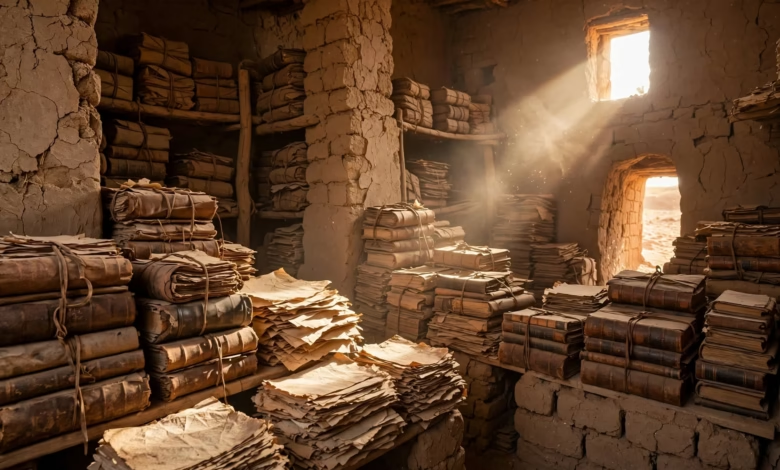
There Is No City In The World, Perhaps, That Carries As Much Contradiction As Timbuktu Carries. In The European Imagination, For Centuries It Was Synonymous With The Farthest Ends Of The Earth, The End Of The Map Where The Blackness Of Everything Begins, The City Of Gold That Cannot Be Reached, A Geographical Illusion That Feeds The Stories Of Adventurers. And In The African And Arab Imagination, It Was Something Completely Different, A Solid Material Reality, A University City, A Market For Books Before Being A Market For Gold And Salt, A Knot Of Ink And Paper Whose Threads Extend From Fez To Cairo To Mecca. And Between These Two Perceptions, Between Myth And Archive, Shamil Jeppie Places His New Book, Which Is A Work That Does Not Only Narrate The History Of A City, But The History Of An Idea, And Proves That The History Of Africa Is, In Its Essence, The History Of The Book.
The Book In Our Hands Is Not A Traditional Book About Timbuktu. It Is Not An Orientalist Journey Nor An Impressionistic Collection Of Manuscripts Found By Chance In Wooden Boxes In The Desert. It Is The Project Of A Historian Who Grew Up At The Extreme South Of The Continent, On A Peninsula At The Edge Of Africa, As He Confesses In His Moving Dedication To His Parents, And Who Learned West African History In A Small Study Circle In The Eighties Of The Last Century At The Hands Of The Militant And Historian Neville Alexander, At A Time When The Official Curricula In South Africa Under The Apartheid System Taught That History Began In Europe And That Africans Have No Past. From That Paradox The Spark Of This Book Emerges. Jeppie Narrates How Fate Led Him, After Decades, To Become Part Of A Project Launched By President Thabo Mbeki To Revive The Archives Of Timbuktu In Cooperation Between The National Archive Of South Africa And Mali. And Thus The Man Who Learned That His History Was Stolen Became Responsible For Saving Another Stolen History As Well, Or Rather, A History That Was Deliberately Erased By The Myth Of The Silent Desert.
Jeppie Opens His Book With A Painful Statement By The Most Famous Scholar Of Timbuktu, Ahmad Baba Al-Timbukti, In Which He Says: “I Am The Least Among My Clan In Terms Of Books, One Thousand Six Hundred Volumes Were Plundered From Me”. One Thousand Six Hundred Volumes For A Man Who Describes Himself As The Least In Terms Of Library Among His Relatives. This Sentence Alone Demolishes Centuries Of Colonial Propaganda That Portrayed Sub-Saharan Africa As A Continent Without Writing, Oral Societies Waiting For Someone To Write About Them. And Jeppie Places Next To It A Quotation From Leo Africanus In The Sixteenth Century: “In This City Many Books Are Sold, Coming From The Land Of The Berbers, Written By Hand, And Those Who Bring Books Profit From Books More Than They Profit From Any Other Commodity”. The Most Profitable Market In Timbuktu Was Not Gold Nor Salt, But The Book.
Jeppie Does Not Write About Manuscripts As Dead Objects, But As Living Beings With A Biography. The Manuscript In Timbuktu, As We Will See, Is Copied, Sold, Endowed As Waqf, Smuggled, Buried In The Sand Upon Invasion, Inherited, Stolen, Recovered. It Has An Economy And It Has Ethics And It Has A Geography. And When Timbuktu Fell Under Moroccan Occupation In 1591, The Plunder Was Not Only Gold, But Plunder Of Libraries. And When French Colonialism Came, It Was Not Looking For Maps, But For Documents Proving That This Land Had No History To Justify Its Existence. And When Ansar Al-Din Groups Came In 2012 And Threatened The Manuscripts, What The Locals Saved Was Not Just Paper, But A Collective Memory Eight Centuries Old.
The Introduction Which He Entitled “Books And Rebels In The Desert” Sets The Entire Theoretical Framework. Timbuktu Which We Know Today As A Symbol Of Remoteness Is In Reality The Center Of A Huge Knowledge Network Linking The Atlantic Ocean To The Niger River, And Linking Shinqit In Mauritania To Kano In Nigeria, And Linking Fez To Timbuktu To Gao. This Network Was Not Based On Armies But On Students And Professors And Scholarly Licenses. The Ijaza, That Document Which The Sheikh Grants To His Student To Transmit A Specific Book, Was A Passport Across The Desert, And Was A Currency More Stable Than Gold. Jeppie Captures These Details To Say Something Big: That The Desert Was Never A Barrier, But Was An Inland Sea, And That The Book Was The Ship.
The Discovery Of The Timbuktu Manuscripts Was Not A Sudden Event Resembling The Finding Of A Pharaonic Tomb, But Was A Slow, Hesitant Process Full Of Mutual Suspicion, And This Is What Makes It More Exciting Than Any Myth. Shamil Jeppie Devotes His Entire First Chapter To This Moment, Not To Narrate A Personal Adventure, But To Historicize A Transformation In The View Of The Desert Itself. For Until The Nineties Of The Last Century, The Dominant Discourse In Western Academia, And Even In Many African Circles, Dealt With The Greater Sahara As A Void, As A Transit Zone, As A Natural Separator Separating “White” Africa From “Black” Africa, Between A Written History And An Oral One. And The Libraries Of Timbuktu, If Mentioned, Were Placed In The Margin Of Margins, As A Strange Exceptional Case, As Something That Came From Outside, From The Arabs, And Not As An Authentic African Product.
Jeppie Narrates How This Entire Scene Changed In A Few Years. In 2003, A Mission From South Africa Arrived In Bamako Then In Timbuktu, Within A Project Launched By President Thabo Mbeki Under The Slogan Of “African Renaissance”. The Official Goal Was To Help Restore And Preserve The Manuscripts, But What Happened On The Ground Was Deeper Than Mere Technical Restoration. South African Historians, Along With Archival Experts, Entered The Houses Of Timbuktu Families, To Find Themselves Facing A Scene No One Expected. In Mud Rooms, Under Beds, Inside Rusty Metal Boxes Closed With Large Locks, On Rooftops, There Were Piles Of Manuscripts, Not In The Hundreds, But In Tens Of Thousands, And Later Hundreds Of Thousands Would Be Mentioned. Some Of Them Written In Beautiful Handwriting On Paper Imported From Italy, And Some Others On Coarse Local Paper, Some Bound In Decorated Goat Leather, And Some Others Without Cover, Eaten By Termites From The Edges. The Smell Was The First Thing That Shocked The Visitor, The Smell Of Old Paper, Dust, Leather, And Oxidized Ink.
The Surprise Was Not Only In The Number, But In The Attitude. The Owners Of These Libraries, Who Are Ancient Families Such As The Haidara And Kunta Families, Did Not See Themselves As “Owners” Of Manuscripts, But As Trustees Over Them. The Book In Timbuktu, As Jeppie Explains, Is Not A Commodity, But A Waqf, But A Legacy, But Part Of Lineage. To Inherit A Library Means To Inherit A Responsibility, And To Open It To A Stranger Means To Risk Losing The Blessing. And For This Reason Dealing With The South African Mission Was Fraught With Caution. There Was A Long History Of Plunder, From French Orientalists Who Took Manuscripts To Paris, From Antiquities Dealers, From Researchers Who Photograph And Do Not Return. And Jeppie And His Team Had To Build Trust, To Explain That They Did Not Want To Transfer The Books To Pretoria, But Wanted To Help People Preserve Them In Their Place.
The Manuscript Restoration Project Was Not Neutral. It Was Part Of Mbeki’s Project To Build Cultural Legitimacy For The New South Africa, After Apartheid, By Linking It To A Deep And Written African History. And It Was Also Part Of An Internal Malian Conflict Over Who Owns Timbuktu. Does It Belong To The State In Bamako? Or To Its People Of Arabs And Tuaregs? Or To The Entire Islamic World? And When The New Ahmad Baba Institute Was Built With South African Funding, With Its Modern Glass Facade And Its Air Conditioners That The City’s Intermittent Electricity Cannot Bear, The Paradox Appeared Completely. A Luxurious Building To Preserve Manuscripts, While The Real Manuscripts Are Still In Houses, Because Their Owners Do Not Trust The Governmental Building. And Thus The “Discovery” Of Books In The Desert Was Not So Much A Material Discovery As It Was A Discovery Of A New Relationship Between The State And The Private Archive, Between World Heritage And Family Ownership.
Jeppie Goes Further Than That To The Idea Of Discovery Itself. The Manuscripts Were Never Lost At All For The People Of Timbuktu. They Know Them, Read Them, Study Upon Them, Seek Blessing Through Them. What Was Missing Was The Recognition Of The Outside World For Them. And Therefore Jeppie Uses The Term “Rediscovery”, And Insists That What Happened In The Early Millennium Is Not The Birth Of A New Interest, But A Return To An Old Interest. Since The Nineteenth Century, The German Traveler Heinrich Barth Had Spoken About The Libraries Of Timbuktu, And French Orientalists Had Collected Lists Of Them, But Colonialism Deliberately Marginalized Them Because The Existence Of An African Written Culture Would Undermine The Justification Of The “Civilizing Mission”. And When The Post-Independence Period Came, The Malian State Was Busy Building A Modern Nation, And Did Not Have Resources To Care About Old Paper In The Desert. And Thus The Manuscripts Remained In The Shadows, Preserved With Extreme Care Inside Houses, Awaiting A Suitable Political Moment To Appear.
The Manuscript Was Not Printed, But Copied By Hand, And Each Copy Is An Artistic And Economic Work. There Were Professional Copyists, And There Was Paper Coming Via Caravans From Morocco, And There Was Ink Made Locally From Charcoal And Gum, And There Were Pens From Reed. And Every Manuscript Carries At Its End What Is Called “Hard Al-Matn”, Where The Copyist Writes His Name And The Date Of Copying And Its Place, And Sometimes Complains Of The Cold Of The Desert Or Of The Pain Of His Hand Or Of The High Price Of Paper. These Small Margins Are What Allow Jeppie To Write A Social History Of The Book, Not Only A History Of The Text. For He Does Not Ask What The Book Says About Maliki Jurisprudence, But Asks How This Book Arrived In Timbuktu, How Much Its Price, Who Copied It, Who Read It, Who Endowed It.
If Timbuktu Was An Open Library, Then Ahmad Baba Al-Timbukti Was Its Pampered Child Who Was Born Exactly In Its Heart. Shamil Jeppie Devotes His Second Chapter To Deconstructing The Myth Of The Man Who Transformed In The Arab Imagination Into Just A Name In Biographical Books, And Returns Him To His Human Size As A Student, As A Son, As An Heir To A Huge Family Library, And As A Producer Of A Complex Knowledge Network. Ahmad Baba Was Born In 1556 In The Aqit Family, Which Is A Berber Family From The Sanhaja Tribe, That Settled In Timbuktu And Became One Of The Pillars Of Scientific Life In It, A Family That Owns, As Ahmad Baba Himself Tells Us In A Tone Of Artificial Humility, One Thousand Six Hundred Volumes, And It Is A Number At Which We Must Pause Long Because It Summarizes Everything.
One Thousand Six Hundred Volumes In The Sixteenth Century In A Desert City Does Not Mean Only Material Wealth, But Means Belonging To A Scholarly Class That Owns The Means Of Knowledge Production. For The Book In That Era Was Not A Commodity Sold In Bookstores, But Was A Family Project. It Needs Paper Brought From Fez Or From Venice Via Caravans, And A Copyist Who Receives A Wage, And A Binder, And A Long Time For Reading And Correction. Owning One Thousand Six Hundred Volumes Means That The Aqit Family Was Running A Small Copying Workshop, And That It Was Investing In Education As Families Today Invest In Real Estate. And This Is What Explains Why The Education Of Ahmad Baba Was Early And Exceptionally Intensive. He Did Not Go To A “School” In The Modern Sense, But Grew Up In A Permanent Scholarly Council Inside His House.
His Father, Ahmad Ibn Al-Hajj Ahmad Ibn Umar Ibn Muhammad Aqit, Was A Well-Known Jurist, And His Uncle Abu Bakr, And His Grandfather, And His Maternal Uncle, All Of Them Were Scholars. The House Was Crowded With Students Who Came To Read The “Mukhtasar” Of Khalil Or The “Risala” Of Ibn Abi Zayd Or The “Mudawwana”. And The Child Ahmad Baba Would Sit In A Corner, Listen, Memorize, Then Be Tested. The System Of Ijaza That Was Prevalent Was Not A Graduation Certificate, But Was A Series Of Personal Relationships. To Take An Ijaza In A Book Means That You Sat Before A Sheikh Who Read The Entire Book To You, From Its Beginning To Its End, And Authorized You To Transmit It From Him. And Every Ijaza Is A Link In A Chain Extending To The Original Author. And Thus The Library Of Ahmad Baba Was Not Only Books, But Was Chains Of Human Beings, A Spider Web Of Sheikhs Extending From Timbuktu To Fez To Cairo To Mecca.
Jeppie Lists The Sheikhs Of Ahmad Baba, And They Are In The Dozens, But He Stops At Two Who Represent The Two Poles Of His Formation. The First Is His Father And His Maternal Uncle, Who Represented The Local School Of Timbuktu, The School Of Maliki Jurisprudence That Is Relatively Strict, Committed To The Apparent Text, Keen On Scholarly Purity. And The Second Is The Sheikhs Of The Newcomers, Especially The Moroccans, Who Brought With Them Logic And Philosophy And Theology And Philosophical Sufism. Timbuktu In That Period, That Is In The Second Half Of The Sixteenth Century, Was Living Its Second Golden Age Under The Rule Of The Askias Of The Songhai Empire. The City Was Safe, Prosperous, Attracting Scholars As It Attracted Traders. And There Was Feverish Competition Between Schools, Between Those Who See That Knowledge Is Only Jurisprudence, And Those Who See That Knowledge Includes Logic And Rhetoric And Prosody And Astronomy.
Ahmad Baba Absorbed Both Sides. He Read Jurisprudence Until He Became A Mufti While In His Twenties, And Read Grammar Until He Explained The “Alfiyya”, And Read Logic Until He Excelled In It, And Read Sufism But With Caution, Because He Feared Being Accused Of Deviation. This Early Prudence Will Determine His Fate Later. For The Man Who Will Be Accused Of Rebellion Against The Moroccan Sultan Was Not Rebellious By Nature, But Was A Conservative Jurist Who Sees That The World Must Be Ruled By Sharia, Not By The Sword. And Here Jeppie Captures A Pivotal Moment: When The Moroccan Army Occupied Timbuktu In 1591, Ahmad Baba Was Not Just A Scholar, He Was A Symbol Of Intellectual Independence. He Represented The Class Of Songhai Scholars Who Used To Issue Fatwas For The Askias, And Who Refused To Issue Fatwas For The New Invader. Therefore He Had To Be Broken.
Before That Moment, Jeppie Describes An Amazing Daily Life Of Timbuktu As A City Of Books. There Was A Book Market, And There Were Copyists Sitting In Mosques, And There Were Students Coming From Gao And Jenne And Kano And Borno, Spending Years Copying One Book To Return With It To Their Countries. And There Was A System Of Endowing Books, Where The Scholar Endows His Book For Students Of Knowledge, So It Is Not Sold Nor Inherited. And There Were Women’s Libraries, And It Is A Fact That Jeppie Insists On Highlighting, For Some Families Used To Teach Their Daughters Reading And Writing To Copy The Qurans, And Some Women Owned Small Libraries. This Scene Completely Demolishes The Image Of The Illiterate Desert.
The Education Of Ahmad Baba Was Not An Individual Education, But Was A Collective Investment Of An Entire City. Every Book In The Aqit Library Had Passed Through Dozens Of Hands, Every Paper Had Been Cut In Fez, And Carried On A Camel, And Sold In The Market Of Timbuktu, And Copied By A Poor Student In Exchange For Food, And Corrected By A Sheikh, And Read In A Circle. Ahmad Baba Was Not An Isolated Genius, But Was The Quintessence Of This Ecosystem Of The Book. And When The Moroccans Would Come And Take Him Chained To Marrakesh, They Did Not Capture One Man, But Captured A Library Walking On Two Feet, And A Complete Knowledge Network. And This Is What Will Make His Exile In Marrakesh Not Only A Punishment, But An Encounter Between Two Worlds, Between The Desert Of Timbuktu And The Court Of Marrakesh, Between A Margin That Thought Itself A Margin And A Center That Thought Itself A Center.
At Dawn Of A Day In The Year 1591, Timbuktu Did Not Wake Up To The Call To Prayer As Usual, But To The Sound Of The Hooves Of The Saadian Moroccan Army Which Crossed The Desert With Portuguese Cannons And Internal Betrayal. The Great Songhai Empire Had Collapsed In The Famous Battle Of Tondibi, And The Commander Judar Pasha, The Mamluk Of Spanish Origin, Entered The City Not As A Conqueror But As A Plunderer. His First Decisions Were The Arrest Of The Elite Of Timbuktu Scholars, At Their Head Ahmad Baba Al-Timbukti. The Arrest Was Not Random, But Was Intended As An Operation Of Cultural Amputation. For Sultan Ahmad Al-Mansur Al-Dhahabi In Marrakesh Did Not Want Only The Gold Of Sudan, But Wanted Legitimization Of His Occupation, And He Knew That Legitimacy In The Islamic World Does Not Come From Cannons, But From Fatwas Of Scholars. And When The Scholars Of Timbuktu Refused To Issue A Fatwa Permitting The Annexation Of The Lands Of Sudan To The King Of Morocco, They Became A Danger That Must Be Exiled.
Shamil Jeppie Narrates This Moment: Ahmad Baba Was Led Chained In Chains, With About Seventy Scholars And Members Of Their Families, In A Journey Across The Desert That Took Months, From Timbuktu To Sijilmasa Then To Marrakesh. It Was A Journey Of Intended Humiliation, But It Transformed, Without Intention From Its Organizers, Into A Journey Of Introduction. For At Every Station The Captive Scholars Would Meet Local Scholars, And Ahmad Baba Would Surprise Them With The Breadth Of His Memorization. He Memorized Dozens Of Texts By Heart, And He Owned Ijazas In Books That The Moroccans Themselves Did Not Know Except By Name. And Thus The Legend Began To Shift From Being A Rebellious Prisoner To Being “The Wondrous Sudanese” Who Knows What The People Of Marrakesh Do Not Know.
When He Arrived In Marrakesh In 1594, He Was Not Thrown Into A Dark Prison As One Might Imagine, But Was Placed Under House Arrest In A State Of Anticipation. Sultan Ahmad Al-Mansur, Who Was Nicknamed The Golden For His Wealth From The Gold Of Sudan, Was A Cultured Man Who Loved To Surround Himself With Scholars, But He Was Also A Despotic Sultan Who Could Not Tolerate Opposition. He Wanted To Break Ahmad Baba, To Make Him Issue Fatwas For Him, But Ahmad Baba Refused. And In Those Early Years, The Man Lived In A State Of Severe Anguish, Which He Himself Describes In His Letters As “Estrangement Of Religion And Homeland”. He Was Not Crying Only Over Separation From Family, But Over Separation From His Library That Was Plundered, And His Books That Were Scattered. One Thousand Six Hundred Volumes He Left Behind, And Does Not Know Their Fate. This Shock Is What Would Push Him To Write With Unprecedented Abundance.
Here Lies The Big Transformation That Jeppie Monitors. For Ahmad Baba, Who Was In Timbuktu A Jurist And A Teacher, Transformed In Marrakesh Into An Encyclopedic Author. He Wrote In Exile More Than He Wrote In His Homeland. Why? Because Writing Became The Alternative Homeland. And Because Marrakesh, Although It Was A Prison, Was Also A Huge Library. It Was The Capital Of An Empire Extending From Andalusia To Sudan, And In It Were Book Treasuries He Had Not Seen In Timbuktu, And In It Were Scholars From The Expelled Andalusians, And From Fez, And From The Desert. He Suddenly Found Himself At A Wider Knowledge Crossroads, But A Crossroads In Which He Does Not Possess Freedom.
In This Period, Ahmad Baba Authored His Most Famous Book “Nayl Al-Ibtihaj Bi Tatriz Al-Dibaj”, Which Is A Supplement To The Book Of Ibn Farhun “Al-Dibaj Al-Mudhahhab Fi Ma’rifat A’yan Ulama Al-Madhhab”. And The Book Is Not Just Biographies, But Is An Implicit Political Statement. For Through His Translation Of Maliki Scholars, He Was Proving That The Chain Of Knowledge Is Not Interrupted By The Occupation Of A City, And That Timbuktu Is An Authentic Part Of Dar Al-Islam, And That The Scholars Of Sudan Are Part Of The Same Chain That Includes The Scholars Of Kairouan And Cordoba And Fez. He Was Writing To Say To Marrakesh: We Are Not Barbarians You Came To Civilize, We Are Your Colleagues In The Same School.
As He Also Authored His Controversial Book “Mi’raj Al-Su’ud Ila Nayl Hukm Majlub Al-Sud”, Which Is A Treatise On Slavery And Enslavement. In It He Addresses An Issue That Was Very Sensitive In Marrakesh, Which Is The Enslavement Of Black Africans. And Many Jurists Of Marrakesh Used To Justify The Enslavement Of Any Black Coming From The Lands Of Sudan Under The Pretext Of Disbelief. So Ahmad Baba Came To Establish A Strict Jurisprudential Rule: The Origin In A Muslim Is Freedom, And It Is Not Permissible To Enslave A Muslim, And The People Of Timbuktu And Jenne And Kano And Borno Are All Muslims, And Therefore It Is Not Permissible To Enslave Them. It Was A Revolutionary Fatwa In Its Context, Because It Struck At The Heart Of The Slavery Economy That Fed The Palaces Of Marrakesh. And For This Reason, His Book Was Not Just A Jurisprudential Research, But Was Legal Resistance With Ink.
Jeppie Describes How The Status Of Ahmad Baba Began To Change In Marrakesh. At First He Was Ostracized, Then He Became A Curiosity Visited, Then He Became A Professor. Students Of Marrakesh Used To Come To Him Secretly, Then Openly, To Take From Him. They Were Amazed By His Method Of Teaching, Which Combines Between The Jurists Of Timbuktu And The Easterners. And His Circle Began To Grow In The Ben Youssef Mosque, Until He Became One Of The Great Scholars Of Marrakesh Despite Himself. And The Great Paradox That Jeppie Captures Is That The Sultan Who Wanted To Break The Thorn Of Timbuktu Ended Up Importing Its Entire University In The Person Of One Man. For Marrakesh Which Wanted To Prove Its Superiority Over Sudan Found Itself Learning At The Hands Of A Sudanese.
The Exile Was Not Easy. Ahmad Baba Lived In Marrakesh Fourteen Years, From 1594 To 1608. His Wife Died, And Some Of His Sons Died, And He Remained A Stranger Speaking The Dialect Of The People Of Timbuktu Which The Moroccans Used To Mock. But He Did Not Break. He Refused All Offers Of The Sultan To Assume The Position Of Judge Or Imam, Because He Considered That Accepting The Position Means Recognizing The Legitimacy Of The Occupation. He Used To Say: “I Do Not Sit In A Council Whose People Were Usurped”. And This Moral Stance Is What Made Him, In Jeppie’s View, A Model Of The Resistant Intellectual, Not By Weapon, But By Refraining From Signing, By Preserving The Independence Of The Pen.
When Ahmad Baba Al-Timbukti Entered Timbuktu In 1608, He Was Not Returning To His House, But To The Ruins Of His House. This Is The Image That Shamil Jeppie Draws In The Fourth Chapter, And It Is An Image Completely Far From The Romanticism That A Reader Who Thinks That Return Is A Happy Ending Might Imagine. Timbuktu Which He Left In 1594 Was The Capital Of The Mighty Songhai Empire, A Safe City, Prosperous, Gold Comes To It From The South And Salt From The North And Books From Everywhere. As For Timbuktu Which He Found In 1608, It Was An Occupied City, Ruled By Moroccan Pashas Who Do Not Know Its Language, And Arma Soldiers, Who Are A Mixture Of Moroccan And European Mercenaries, Living In A Fortress Separate From The Population, Imposing Taxes And Cutting Roads.
The Social Scene Had Changed Completely. The Great Scholarly Families, Such As The Aqit Family Itself, Had Dispersed. Some Of Them Were Killed, And Some Fled To Jenne And Kano And Borno, And Some Remained But Lost Their Libraries. Jeppie Narrates That Ahmad Baba Did Not Find His Library Which He Left, That Which Included One Thousand Six Hundred Volumes, For It Was Plundered And Sold In The Markets Of Fez And Marrakesh. And He Did Not Find Many Of His Sheikhs And Students. The Mosques Were Still Standing, The Sankore Mosque And The Jingereber Mosque, But The Knowledge Circles In Them Had Become Smaller, And More Cautious, Because Any Gathering Could Be Interpreted As A Rebellion Against The Authority Of The Pasha.
In This Void, Ahmad Baba Did Not Return To Teaching As An Enthusiastic Young Man, But Returned As A Reference Sheikh, As An Implicit Judge, As A Mufti Whom No One Can Ignore. He Was Fifty-Two Years Old, And He Had Spent Fourteen Years In Marrakesh, During Which He Became A Well-Known Name In All Parts Of The Islamic Maghreb. And When He Returned, He Carried With Him What No Scholar In Timbuktu Carried: Ijazas From Scholars Of Marrakesh And Fez, And Manuscripts He Wrote There, And A Reputation As A Man Who Resisted The Sultan And Did Not Break. And Thus, Without Seeking, He Found Himself A Spiritual Leader Of A Defeated City.
Jeppie Describes How Ahmad Baba Exercised His New Authority. He Did Not Carry A Weapon, And Did Not Call For An Armed Revolution, Because He Knew That The Balance Of Power Does Not Allow. But He Practiced What Can Be Called Jurisprudential Resistance. He Used To Issue Fatwas For People In Their Daily Issues, And He Refused To Visit The Pasha In His Palace, And He Insisted That The Pasha Come To Him If He Wanted A Fatwa. And He Was Rebuilding What Could Be Built Of The Educational Network. He Opened His Circle In His House, Then In The Mosque, And Students Began To Return To Him, Not Only From Timbuktu, But From Neighboring Regions. He Used To Teach Them Jurisprudence, But He Also Used To Teach Them How To Preserve Books, How To Hide Them, How To Endow Them So That They Are Not Plundered Again. For The Great Lesson He Learned In Exile Is That The Book Does Not Remain If It Remains In One Large Library, But Remains If It Is Dispersed In Many Houses.
In These Last Years, Ahmad Baba Wrote And Classified And Revised. He Was Writing At A Feverish Speed, As If He Felt That Time Is Short. He Authored Books In Jurisprudence And Language And Sufism, But The Most Important What He Wrote In This Period Is What Can Be Called A Codex Of Memory. He Was Writing Biographies Of His Sheikhs Who Died In Exile Or In Timbuktu, Preserving Their Names And Their Dates And Their Books, So That They Are Not Forgotten. He Realized That Occupation Does Not Only Kill People, But Kills Memory, And That The Mission Of The Scholar In Time Of Defeat Is To Be A Living Archive. And Here Jeppie Links Between The Biography Of Ahmad Baba And The Story Of The Manuscripts That We See Today. For Many Of The Manuscripts That Were Saved In 2012 Were Carrying Ijazas In The Handwriting Of Ahmad Baba Or In The Handwriting Of His Students, That Is The Chain Of Preservation That He Began In The Seventeenth Century Is Itself That Which Continued Until The Twenty-First Century.
Ahmad Baba, Who Defended The Freedom Of Muslims In His Book About Slavery, Found Himself In Timbuktu Defending The Freedom Of The City Itself. The Pashas Used To Impose Exorbitant Taxes, And They Used To Seize Caravans, And They Used To Interfere In The Affairs Of The Judiciary. And Ahmad Baba Used To Confront Them With The Legal Argument, Saying To Them: This Is Not Permissible, This Is Injustice, This Is Contrary To The Maliki School. And Sometimes They Listened To Him, Because They Needed His Legitimacy, And Sometimes They Ignored Him. But He Did Not Stop. He Represented The Last Remnant Of Moral Authority Of The Collapsed Songhai.
Jeppie Also Narrates The Forgotten Human Side. Ahmad Baba In His Last Years Was Not A Myth, But Was An Old Tired Man, Who Lost His Eyesight Partially From Excessive Copying, And Who Complained Of Joint Pains, And Who Lived In A Modest House After Losing His Family Fortune. He Was Surrounded By A Small Number Of Loyal Students, And He Spent His Days Between Prayer And Teaching And Writing. He Did Not Marry Again After The Death Of His Wife In Exile, And Lived As An Ascetic. This Human Image Is What Makes Him A Tragic Hero, Not A Superhero.
Ahmad Baba Died In 1627, At The Age Of Seventy-One Years, In The Same City In Which He Was Born, But It Is A Completely Different City. He Was Buried In The Cemetery Of Scholars In Timbuktu, And His Grave Is Still Known Until Today, People Visit It For Blessing. But More Important Than His Grave Is What He Left Of Books. For After His Death, His Books Dispersed Again, Some Of Them Remained In Timbuktu, And Some Went To Fez, And Some To Shinqit, And Some To Kano. And This Dispersion Is What Will Create The Phenomenon That Jeppie Will Study In The Next Chapter: The Rise Of Shinqit As A New Center For The Book In The Desert, After The Decline Of The Star Of Timbuktu.
If Timbuktu Had Fallen As A Political Capital In 1591, It Did Not Fall As An Idea, But Migrated. This Is The Central Thesis Upon Which Shamil Jeppie Builds His Fifth Chapter, Which Is A Chapter In Which He Moves Geographically From The Bank Of The Niger To The Heart Of The Desert Of Mauritania, To The City Of Shinqit. And The Name Alone Carries A Great Significance, For Shinqit Was Not Just A City, But Became A Name Given To An Entire Country, The Country Of Shinqit, That Is Present-Day Mauritania, As The Pilgrims Coming From West Africa To Mecca Were Called “The Shinqitis” Even If They Were From Timbuktu Or Kano, Because Shinqit Became The Cultural Port Through Which Everyone Passes.
Jeppie Begins This Chapter With A Question: Where Did The Libraries Of Timbuktu Go After The Moroccan Occupation? Part Of Them Was Plundered To Marrakesh And Fez, And Part Of Them Remained Buried In Houses, But A Third Part, And It Is The Most Important, Migrated With The Scholars Who Fled Oppression. Those Scholars Did Not Go South To Jungles They Do Not Know, But Went North And West, To Where There Are Kinship And Tribal Networks That Protect Them, To Walata And Tichitt And Wadan And Shinqit. And Thus, While Timbuktu Was Bleeding Its Scholars, The Oases Of Adrar In Mauritania Were Receiving Them And Gradually Transforming Into New Centers For The Book.
Shinqit Which Jeppie Talks About Is Not The Touristic City That Some Adventurers Visit Today To Take Pictures Of Its Mud Libraries, But Is A Historical Phenomenon Four Centuries Old. It Was Founded As A Commercial Center In The Thirteenth Century, But It Truly Flourished In The Seventeenth Century, That Is Directly After The Fall Of Songhai. And The Reason Is Not Coincidence. For With The Collapse Of Security On The Niger Road, Caravan Routes Shifted, And The Western Road, The Pilgrimage Road From West Africa Via Mauritania To Morocco Then To Mecca, Became Safer. And With Commercial Caravans, Scholarly Caravans Traveled. The Shinqiti Student Traveled To Fez To Study, Then Returned With A Small Library On The Back Of His Camel, And The Timbukti Scholar Immigrant Settled In Shinqit And Opened A Knowledge Circle.
What Distinguishes Shinqit Is That It Developed An Economy Of The Book Different From Timbuktu. In Timbuktu, The Book Was Linked To A Rich State And A Prosperous Empire. As For In Shinqit, It Was Linked To The Tribe And The Mahdhara. The Mahdhara Is The Mobile Desert School, A Large Tent In Which The Sheikh And His Students Sit, Moving With Livestock, But They Carry With Them A Mobile Library Of Dozens Of Manuscripts. And The Mahdhara Is Not Just A School, But Is A Complete Social System. The Student Serves His Sheikh For Years, Herds His Sheep, And Copies His Books, And In Return Memorizes Texts And Takes Licenses. And Thus Copying The Book Was Part Of Education, Not A Separate Profession.
Jeppie Describes In Detail How The Book Industry In Shinqit Was A Family And Tribal Work. Paper Came From Morocco, But It Was Very Expensive, And Therefore The Shinqitis Wrote In Very Precise Handwriting, Very Small, To Save Paper, So That One Page May Contain Two Texts, One In The Main Text And Another In The Margin In Finer Handwriting. And Ink Was Made From Acacia Gum And Charcoal, And The Pen From Palm Fronds. As For Binding It Was From Goat Leather Tanned In A Special Desert Way, And They Placed In It Talismans And Supplications To Preserve The Book From Termites And From Plunder. For The Book In The Desert Is Not Just A Vessel For Information, But Is A Being That Needs Spiritual And Material Protection.
What Is Striking In The Narrative Of Jeppie Is That Shinqit Was Not An Isolated City, But Was A Knot In A Global Network. He Documents How The Libraries Of Shinqit Contained Books From Andalusia Printed In Venice, And Books From Cairo, And Books From Timbuktu Itself, And Books Authored Locally In Jurisprudence And Language And Astronomy. For The Scholars Of Shinqit Were Not Just Copyists, But Were Great Authors. They Authored In Grammar And Language Until Their Books Became Taught In Al-Azhar, And They Authored In Maliki Jurisprudence Until Their Fatwas Became A Reference In Fez, And They Authored In Genealogy And Astronomy, Because Astronomy Was Necessary To Determine The Qibla And Prayer Times In The Desert Without Landmarks.
And Here Jeppie Captures A Moment: How Shinqit Transformed From A City On The Margin To A Center Threatening The Center Itself. For In The Eighteenth And Nineteenth Centuries, The Shinqitis Became The Teachers Of The Two Holy Mosques. They Went To Mecca And Medina, And Sat To Teach, And Scholars From All The Islamic World Came To Them To Learn The Arabic Language In Its Origins, Because The Shinqitis Preserved A Bedouin Eloquent Language Not Polluted By The Colloquial Of Cities. And Thus The Equation Was Reversed, So Instead Of Shinqit Being A Margin Receiving Knowledge From Fez And Cairo, It Became A Center Exporting Knowledge To Them.
Jeppie Describes A Library, It Is The Library Of Ahl Habat In Shinqit, Which Still Exists Today, And Which He Visited Himself. He Describes The Mud Room, And The Wooden Shelves, And The Manuscripts Piled Without Apparent Order, But The Owner Of The Library Knows Each One Of Them. He Describes How The Owner Of The Library Brought Out For Him A Manuscript Of Ibn Malik And On It Marginal Notes In The Handwriting Of Ahmad Baba Al-Timbukti Himself, Transferred From Timbuktu To Shinqit Across Centuries, And How This Manuscript Is The Material Evidence That The Book Migrated. For Shinqit Is Not The Opposite Of Timbuktu, But Is Its Continuation, It Is The New Timbuktu That Was Born When The Book Needed A Safer Desert.
If Shinqit Is The New House To Which The Book Migrated After The Fall Of Timbuktu, Then The Kunta Way Is The Road Itself, It Is The Map That Drew The Migration Of The Book Across The Desert. Shamil Jeppie Devotes His Sixth Chapter To One Of The Most Exciting And Mysterious Phenomena In The History Of Islamic West Africa, Which Is The Emergence Of The Kunta Family As A Knowledge And Sufi Empire Without Army Nor Borders, Extending From The Oases Of Tuwat In Present-Day Southern Algeria, To Timbuktu, Then Beyond It Until The Borders Of The Savanna Forest, And Controlling For Two Centuries The Trade Of Salt And Books And Spiritual Blessing.
The Story Begins In Tuwat, Which Is A Group Of Oases In The Algerian Desert That Was For Centuries A Jewish And Islamic Center For Trade. There The Kunta Family Arose, Which Is An Arab Family Claiming Descent From Uqba Ibn Nafi, But In Reality Berber Arabized, Gradually Transforming From Trade To Knowledge Then To Sufism. And The Transformation Here Is Not Coincidence. For In The Desert, The Trader Who Crosses Long Distances Needs Protection, And Protection Does Not Come From The Distant Sultan, But From Blessing. And Blessing Comes From Knowledge And From Sainthood. And Thus The Kunta Family That Owned Salt Caravans Began To Own Also Caravans Of Scholarly Licenses, And Its Sheikh No Longer Sold Only Salt, But Sold Supplication, And Sold The Book, And Sold Mediation Between Warring Tribes.
Jeppie Narrates How Kunta Moved From Tuwat To Timbuktu In The Eighteenth Century, Not As Invaders, But As Mediators. Timbuktu At That Time Had Weakened, Ruled By Warring Arma Pashas, And Needed Moral Authority Above The Authority Of Weapons. So The Kuntis Came, At Their Head Sheikh Sidi Al-Mukhtar Al-Kunti, Who Was Born In 1729 And Died In 1811, To Fill This Void. Sidi Al-Mukhtar Was Not An Ordinary Jurist, But Was The Founder Of A Sufi Order, The Qadiriyya Kunta, That Combined Between Popular Sufism Based On Miracles And Dhikr, And Scholarly Sufism Based On Jurisprudence And Language. And His Essential Weapon Was Writing. He Authored More Than Three Hundred Books And Treatises, Some Of Them In Huge Volumes, And Some Of Them In Small Papers He Sends To His Disciples In Tribes.
Here Jeppie Stops To Analyze The Phenomenon Of “The Kunta Book”. For The Kuntis Did Not Write Only For Scholars, But They Wrote For Shepherds, For Merchants, For Women, For Slaves. They Wrote Short Letters In Simple Language, Explaining How To Pray, How To Deal With Your Neighbor, How To Resolve A Dispute Over A Water Well, And They Always Sealed Them With A Sufi Dhikr Or Supplication. And These Letters Were Copied And Distributed Via A Network Of Disciples, Very Much Resembling A Book Distribution Network In Modern Times. For Every Student Of The Order Had To Copy A Book For His Sheikh Before Taking The License. And Thus The Books Of Kunta Multiplied Hugely, Until They Today Constitute A Large Percentage Of The Manuscripts Preserved In Timbuktu And Shinqit.
The Most Exciting Issue That Jeppie Addresses In This Chapter Is The Issue Of Tobacco. And It Is An Issue That May Seem Marginal, But It Reveals How The Book Was A Battlefield For Political And Economic Conflict. In The Seventeenth Century, Tobacco Arrived In The Desert Coming From The Americas Via Moroccan Ports, And Became A Popular Commodity, People Smoking It And Snuffing It. So Scholars Divided: Is Tobacco Forbidden Or Permissible? Sidi Al-Mukhtar Al-Kunti, Who Himself Smoked, Wrote A Treatise Defending Tobacco, Saying It Is A Stimulant For Worship And Helps To Stay Awake For Night Prayer. While Other Scholars, Especially From The Jurisprudential School In Fez, Wrote Treatises Prohibiting Tobacco And Considering It Intoxicating And Corrupting. And The Issue Transformed Into A War Of Books. Each Team Writes A Treatise And The Other Team Responds With A Treatise, And The Letters Move Across The Desert, And Are Read In Mahdharas And Mosques, And Fatwas Are Issued On Their Basis In Markets.
Jeppie Uses The Issue Of Tobacco To Say Something Bigger: That Jurisprudence In The Desert Was Not A Rigid Text, But Was An Open Market Of Ideas, Influenced By Trade And Politics And Popular Mood. And That The Scholars Of Kunta Succeeded Because They Were Flexible, They Understood That The Desert Jurist Cannot Prohibit A Commodity That People Consume Every Day, But He Must Find For It A Legal Rooting. And This Is What Made Their Way Spread Quickly, Because It Offered An Islam That Coexists With The Desert, Not An Islam That Collides With It.
Then Jeppie Moves To Geography. For The Network Of Kunta Did Not Stop At Timbuktu, But Extended South To Masina And To The Fulani Region, Where The Disciples Of Kunta Founded New Islamic Emirates In The Nineteenth Century, Such As The Emirate Of Ahmadu Lobbo In Masina, And The Emirate Of Al-Hajj Umar Al-Futi. The Kuntis Were The Advisors, They Were The Judges, They Were The Writers Of Diwans, They Were Those Who Write Diplomatic Letters For The New Sultans. And Thus The Desert Book That Began In Tuwat, Moved Via Timbuktu To Found New States In The Savanna. This Is The Moment In Which The History Of The Book Transforms From An Elite History To A Foundational History For The Modern State In West Africa.
In Every City That Has A History Of Books, There Is A Man Who Comes At The Last Moment, When Everything Begins To Collapse, To Gather What Dispersed, To Preserve What Was About To Be Lost, To Transform His House Into Noah’s Ark For Paper. In Timbuktu, This Man Was Ahmad Bul’araf, Or As The People Of The City Pronounce It, Ahmad Bul’araf, And It Is The Name To Which Shamil Jeppie Devotes His Seventh Chapter, Not As A Biography Of One Man, But As A Study Of The Phenomenon Of Collecting Itself, Of The Psychology Of The Collector In A Society That Sanctifies The Book To The Point Of Obsession.
Who Is Ahmad Bul’araf? He Is Not A Great Jurist Like Ahmad Baba, Nor A Sheikh Of A Way Like Sidi Al-Mukhtar Al-Kunti, Nor A Rich Merchant Like The Merchants Of Shinqit. He Is An Ordinary Man, Born In Timbuktu In The Late Nineteenth Century, In A Middle-Class Family That Owned A Small Library, And Learned In The Kuttab Then In Mosque Circles, But He Did Not Complete His Higher Studies In Fez Or In Al-Azhar, But Remained In Timbuktu. He Worked As A Clerk For The French Colonial Administration For A Period, Then As A Teacher, Then As A Simple Employee In The Municipality Of The City. But His Real Hobby, Which Transformed Into A Life Mission, Was Collecting Manuscripts.
Jeppie Narrates How Bul’araf Began His Project At A Time When Timbuktu Was Living Its Worst Periods. French Colonialism Entered The City In 1893, And Built Its Forts, And Imposed Its Taxes, And Tried To Erase Everything Arab Islamic In Favor Of French “Modernity”. The Scholarly Families Had Weakened, And Many Youths Were Migrating To Bamako Or To Ivory Coast In Search Of Work, And Many Libraries’ Paper Was Sold By The Kilo To Salt Merchants Who Used It To Wrap Their Goods, Or Left For White Ants To Eat In Abandoned Mud Rooms. In This Atmosphere Of Official Indifference And Popular Poverty, Bul’araf Used To Roam Houses, Door By Door, Asking About Old Books, Buying Them For A Cheap Price Sometimes, And Taking Them For Free Sometimes Else When Their Owners Saw Them As Just Useless Junk.
Bul’araf Was Not Rich, But He Had Two Things No One Else Had: A Tremendous Memory Of Names Of Books And Their Authors, And A Wonderful Ability To Persuade. He Knew That This Family Owns A Copy Of “Mukhtasar Khalil” With Marginal Notes In The Handwriting Of Ahmad Baba, And That That Family Owns A Poetry Diwan Of A Shinqiti Jurist From The Eighteenth Century, And That A Third House Hides A Manuscript In Astronomy Written On Gazelle Leather. He Preserved The Map Of The City’s Libraries In His Head, As The Bedouin Preserves The Map Of Wells In The Desert. And He Convinced People That Selling The Book To Him Is Better Than Leaving It To Loss, And That He Will Preserve It And Take Care Of It, And That He Will Not Take It Out Of Timbuktu.
And Thus, Over Forty Years, From The Twenties Of The Twentieth Century Until His Death In The Sixties, Ahmad Bul’araf Gathered Approximately Three Thousand Manuscripts, Placed Them In His Small Mud House In The Sankore Neighborhood, In Rooms That Sun Does Not Reach, Piled Them Over Each Other, Some Bound And Some Without Cover, Some Complete And Some Incomplete, But All Of Them Form What Can Be Called Today The Popular Archive Of Timbuktu. It Was Not An Organized Archive By The Standards Of The French National Archive, It Was Not Cataloged Nor Numbered, But It Was A Living Archive, Knowing Every Manuscript In It By Its Story, Where It Came From, Who Copied It, Who Read It, How Many Times It Was Sold.
What Distinguishes The Story Of Bul’araf, As Jeppie Highlights, Is That It Reveals A Transformation In The Concept Of Ownership. For The Manuscript In Traditional Timbuktu Was A Family Waqf, Not Sold Nor Bought Except In Cases Of Extreme Necessity. But Bul’araf Transformed It Into A Cultural Commodity, But A Commodity That Does Not Leave The City. He Bought To Preserve, Not To Trade. And He Refused All Offers That Came To Him From French And American Antiquities Dealers To Buy His Library For Large Amounts. He Used To Say: “These Are The Books Of Timbuktu, They Must Remain In Timbuktu”. And This Simple Sentence Is What Made Him A National Hero In The Eyes Of Many Malians Today, After The Colonial Authorities Viewed Him As Just An Eccentric Hobbyist.
Jeppie Devotes A Large Part Of This Chapter To Describing Bul’araf’s Relationship With The Colonial Authority. For The French, Who In The Beginning Were Not Interested In Manuscripts, Began In The Thirties And Forties To Become Interested In Them As Part Of Their Project To Study “Black Islam”, That Is African Islam Which They Saw As Deviant Islam That Must Be Reformed. So Some French Officers And Researchers Came To Bul’araf, Asking Him To Show Them His Library, To Sell Them Some Of It, To Allow Them To Photograph It. And Bul’araf Dealt With Them With Extreme Caution, Giving Them Little And Hiding Much, Because He Feared They Would Take The Books To Paris And Not Return. And He Was Right, For Many Manuscripts Of Timbuktu That Were Taken In That Period Exist Today In The French National Library, And Mali Cannot Retrieve Them.
The Most Dramatic Moment In The Life Of Bul’araf Came With Independence In 1960. For The New Malian State Came, Under The Presidency Of Modibo Keita The Socialist, Looking For National Heritage Proving That Mali Was A Great State Before Colonialism. And It Found In The Library Of Bul’araf A National Treasure. So It Offered Him To Buy His Library To Become The Nucleus For The Ahmad Baba Center For Documentation And Research, Which Is The Center That The Government Founded With The Help Of UNESCO. And Here Bul’araf Fell Into An Ethical Dilemma. He Wanted His Books To Be Preserved, But He Feared They Would Go To The State Which He Does Not Trust In Its Ability To Preserve, And Which Might Use Books For Political Purposes. And After Long Negotiations, He Agreed To Sell Part Of His Library, But He Kept Another Part In His House, Which Is The Part That His Grandchildren Still Keep Today.
For Long Years, The Orientalist Belief Prevailed That Islamic Culture In Africa Remained A Manuscript Culture Until A Very Late Time, And That Printing Arrived Late Because Muslims Rejected It Claiming It Defiles The Sanctity Of The Quranic Letter. Jeppie Demolishes This Myth From Its Basis. For The Manuscript Did Not Remain Because It Is Sacred, But Remained Because It Was A Complete Economic And Social System. For Copyists And Binders And Sellers Of Paper And Ink And Teachers Who Correct Copies, All Of Them Formed A Social Class Living From The Manuscript. And If Printing Came Suddenly, It Would Cut Their Livelihoods. And Therefore The Delay Of Printing Was Not A Religious Refusal As Much As It Was Economic Resistance, Exactly As European Copyists In The Fifteenth Century Resisted The Machine Of Gutenberg.
Jeppie Narrates How The Printed Book Entered The Desert For The First Time In The Late Nineteenth Century, Not Via Timbuktu, But Via Pilgrimage. For The Shinqiti Or Timbukti Pilgrim Who Goes To Mecca And Cairo, Returns With Lithographic Prints Of “Al-Risala” Of Ibn Abi Zayd Or “Mukhtasar Khalil”, Printed In The Bulaq Press In Cairo Or In The Lithographic Press Of Fez. And The First Reaction Was Astonishment. A Clean Book, Its Letters Equal, No Need To Copy, Its Price Cheaper Than The Manuscript. But Astonishment Soon Transformed Into Suspicion. For The Printed, As One Of The Sheikhs Of Shinqit Whom Jeppie Quotes Says, “A Book Without Chain”. For The Traditional Manuscript Carried At Its End The Chain Of Licenses, So-And-So Read Upon So-And-So From So-And-So Until The Author, As For The Printed It Carries Only The Name Of The Press. So How Do We Trust It? And How Do We Know That The Copyist, Or Rather The Printer, Did Not Err?
This Suspicion Created A Division In The Book Market. For Since The Early Twentieth Century, There Became In Timbuktu Two Types Of Books: An Ancient Manuscript, Precious, Trustworthy, Preserved In Boxes, And A Modern Printed, Cheap, Suspicious, Used For Daily Teaching. And Poor Students Bought The Printed Because It Is Cheaper, While Rich Families Kept The Manuscript Because It Is More Blessed. And Thus Printing Did Not Kill The Manuscript, But Created For It A New Aura, The Aura Of Authenticity. The Manuscript Became A Symbol Of Old Knowledge, Of The Connected, Of The Chain, While The Printed Became A Symbol Of New Knowledge, Of The Disconnected, Of The Fast.
Jeppie Puts Forward In His Conclusion A Staggering Number, Which Is The Summary Of Efforts Of African And European Researchers Over Twenty Years To Try To Count What Was Written In The Region Of The Desert And The Sahel: No Less Than Seventy Thousand Different Titles, And This Number Is The Minimum, And Does Not Include Texts Written In African Languages In Arabic Script, What Is Called Ajami, Which Are Texts That Research Has Begun To Care About Only Recently. Seventy Thousand Manuscript Books In A Region Said To Be Without Writing. This Number Alone Is Enough To Demolish An Entire Library Of Colonial Books That Said Africa Is An Oral Continent. And Jeppie Adds That Most Of These Books Were Written In The Nineteenth Century, Not Because Previous Centuries Were Ignorant, But Because The Nineteenth Century Was A Century Of Relative Stability, Century Of New Islamic Emirates In Masina And Sokoto, Century Of Mahdharas That Flourished, Century Of Sufi Orders That Encouraged Writing. That Is The Flourishing Of The Book Is Linked To Political Stability, And This Is A Rule Applicable To Every Place In The World.
From The Book
Writing Timbuktu: The Book In West African History, Shamil Jeppie