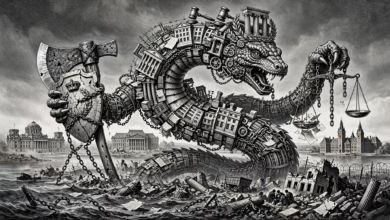

The Embers Of Readiness Lie in The Ashes of Deceptive Peace

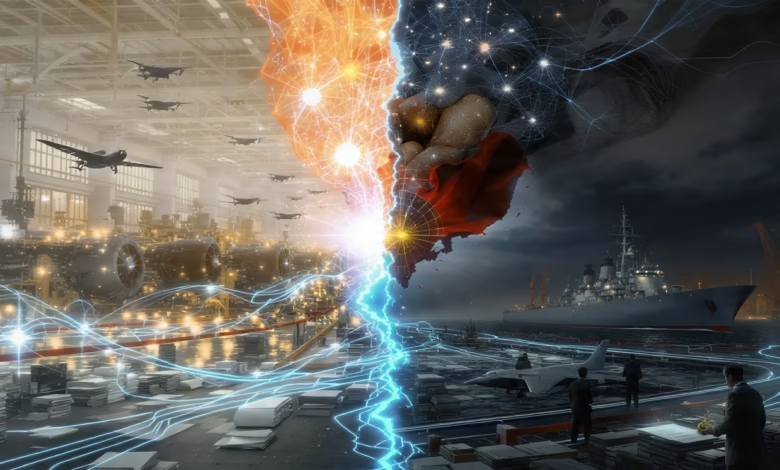
The History Of Great Powers Is Nothing More Than An Extended Struggle Between ‘Mouse Hunters’ Who Seize Victory Through Flexibility And Achievement, And ‘Organizers’ Who Drown Armies In Seas Of Bureaucracy And Sterile Regulations. In His Newly Released Book From Oxford University Press For 2025 Titled ‘The American Edge: The Military Technology Nexus And The Sources Of Great Power Dominance,’ Researcher And Strategic Scholar Seth Jones Puts His Finger On The Bleeding Wound In The Body Of Contemporary American Strategy. Jones, From His Position As Director Of The International Security Program At The Center For Strategic And International Studies (CSIS), Presents A High-Level Analytical Brief That Blends Compelling Military History With Incisive Geopolitical Vision, To Craft A Resounding Warning To Decision-Makers In Washington And Western Capitals. The Essence Of This Warning Is That The United States Today Lives In A Real Wartime Environment, But It Confronts It With A Mindset And A Defense Industrial Base Drowning In Illusions Of Sustainable Peace.
The Author Starts From A Core Idea Formulated By The Famous Historian Paul Kennedy In His Classic ‘The Rise And Fall Of The Great Powers,’ Which Is That Long Wars Between Major States Are Ultimately Decided By The Most Flourishing Productive Bases, Or In The Words Of Old Spanish Leaders: ‘Victory Belongs To The One Who Owns The Last Cent.’ From This Starting Point, Jones Takes Us On An Extended Historical Journey Across The Twentieth Century And The Early Twenty-First Century, Reviewing The Rise, Fall, And Evolution Of The Military Industrial Bases Of The Great Powers, From Imperial Germany And Imperial Japan, Through The Soviet Union, To The Powerfully Rising Chinese Dragon. However, The Greatest Focus Remains On America, Which The Writer Sees As Now Standing In An Extremely Dangerous Position; Where China Has Succeeded In Putting Its Industrial Base On A State Of Readiness For War, While Washington Still Shackles Its Productive Genius With Chains Of Strict Oversight, Lengthy Contracting Procedures, And Aversion To Risk.
Industrial Genius As A Shield For Democracy: Lessons From World War II
The Enjoyable Journalistic Journey That Jones Weaves Begins On The Night Of May Twenty-Eighth, 1940, When William Knudsen, President Of General Motors And A Brilliant Industrial Genius, Was Sitting Behind His Desk Contemplating Automobile Production Figures, While Newspapers Were Carrying Terrifying News About The Collapse Of The Belgian Army And The Nazi Forces’ Invasion Of Western Europe. At That Critical Moment, Knudsen’s Phone Rang With President Franklin Roosevelt On The Other End, Who Immediately Summoned Him To Washington To Take On The Mission Of Rebuilding America’s Defense Industrial Base. The Goal Was Not Merely Assembling Weapons, But Summoning The ‘American Industrial Genius’ That Is Unrivaled In Solving The Dilemmas Of Mass Production.
Jones Clarifies That America Was Not Always That Prepared Great Power; After World War I, Washington Completely Dismantled Its Military Industrial Base And Entered A Phase Of Protectionist Isolation And Defense Austerity. By Early 1940, American Factories Were Incapacitated, And Its Stockpiles Of Strategic Materials Such As Rubber, Copper, And Aluminum Were Almost Nonexistent, To The Extent That Two-Thirds Of American Steel Plants Were Idle Because Of The Great Depression, At A Time When German, Soviet, And Japanese Factories Were Operating At Full Capacity. Laws And Regulations Shackled Companies, Imposing Strict Limits On Profits And Prior Audits Lasting Years, An Environment The Author Describes As The ‘Dominance Of The Organizers.’
But Roosevelt Quickly Realized That Confronting The Danger Of Fascism And Nazism Required An Immediate Shift To A Wartime Environment. He Established The War Production Board And Gave It Broad Powers To Cut Government Red Tape, Bypass Antitrust Laws, And Pump Incentive Funds To The Private Sector Through Contracts That Guaranteed Profitability In Exchange For Speed And Volume. The Strategic Landscape Transformed Within Months; Knudsen And Prominent Businessmen Such As Shipbuilder Henry Kaiser Led A Counter-Production Offensive. Automobile Factories Turned Into Giant Workshops For Manufacturing Aircraft Engines And Tanks; Ford Alone Produced More Military Equipment Than The Entire Italian Economy Under Mussolini.
The Writer Cites The Epic Development And Production Of The Heavy Strategic Bomber ‘B-29 Superfortress’ As A Stark Model Of Creative Cooperation Between Government And The Private Sector. This Aircraft Represented An Unprecedented Engineering Leap: A Pressurized Cabin For Flying Above The Summit Of Everest, An Automated Fire-Control System Relying On Early Analog Computers, And Wings With An Innovative Aerodynamic Design. Despite The Enormous Risks And Technical Flaws That Once Led To The Crash Of A Prototype And The Death Of Senior Test Pilots, The War Department Continued To Press Forward Driven By Extreme Necessity. The Efforts Of Boeing, Bell, General Motors, And General Electric Combined To Produce This Bomber Directly From Drafting Boards To Assembly Lines Without Waiting For Lengthy Tests. The Result Was A ‘Production Deluge’ That Drowned The Enemies, As These Aircraft Destroyed Japan’s Industrial Base And Ended The War In The Pacific, Proving Roosevelt’s Immortal Saying: ‘We Must Be The Great Arsenal Of Democracy.’
Walking The Tightrope: The Pendulum Of Peace And War In The Twentieth Century
Seth Jones Does Not Merely Record Past Glories, But Follows In A Flowing Narrative Style The Historical Predicaments Into Which American Policymakers Fell When They Misread The International Scene. With Japan’s Surrender And The End Of World War II, President Harry Truman’s Administration Hastened To Dismantle The War Production Board And Cut The Defense Budget Sevenfold, Driven By Vain Hopes For A Sustainable Peace. Jones Comments On This Direction, Describing It As A Strategic And Shortsighted Mistake; Soviet Leader Joseph Stalin Was Actively Moving To Expand His Influence And Build His Military Arsenal. Washington Did Not Awaken From Its Slumber Except With The Shock Of The Outbreak Of The Korean War In 1950, Which Forced Truman To Hurriedly Double Defense Spending And Return To A Wartime Mindset.
This Dangerous Pendulum Repeated Throughout The Cold War Years. The Author Believes That The Kennedy, Johnson, And Nixon Administrations Fell Short In Investing In Essential Defense Technologies During The Vietnam War And Afterward, Which Weakened American Deterrence And Gave The Soviets A Numerical Superiority In Conventional Weapons In Europe. This Bureaucratic Failure Manifested Starkly Even At The Height Of Military Operations In Afghanistan And Iraq; The Department Of Defense Failed To Rapidly Supply Combat Forces With Modern Equipment. The Book Bitterly Quotes Former Defense Secretary Robert Gates’ Constant Complaint About The ‘Damned Peacetime Mindset’ That Dominates The Pentagon And Prevents It From Responding Quickly To Battlefield Requirements.
In Contrast, The Book Highlights Flashes Of Exceptional Success Achieved By Small Groups That Managed To Escape The Grip Of The ‘Organizers.’ Perhaps The Most Prominent Is The Advanced Development Projects Division At Lockheed, Known As ‘Skunk Works,’ Under The Leadership Of The Genius Clarence ‘Kelly’ Johnson. This Group Was Distinguished By A Strict Work System Based On Simplicity, Speed, Secrecy, And Minimizing Government Regulations To The Bare Minimum. Kelly Johnson And His Team, Through Close And Direct Cooperation With The Central Intelligence Agency And The Pentagon, Succeeded In Producing Legendary Spy Planes Such As The U-2 And The SR-71 Blackbird, Culminating In The Stealth Fighter F-117 Nighthawk. This Agile Management Pattern Is What Gave America The ‘Second Offset’ In The 1980s, Crowned By A Crushing And Swift Victory In Operation Desert Storm In 1991 Thanks To Precision-Guided Weapons And Stealth Technologies.
However, The Joy Over This Victory And The Collapse Of The Soviet Union Led Washington Into A New Trap That Jones Calls ‘The Last Supper’ In 1993. In That Year, Pentagon Leaders Met With Defense Company Chiefs And Urged Them To Merge And Reduce Production Capacities Due To The Absence Of International Adversaries. This Was Followed By The American Arsenal’s Shift After The September 11 Attacks Toward Counterterrorism And Drone Warfare. While Washington Was Absorbed In Chasing Armed Groups, Another Adversary Was Watching Intelligently, Studying The American Way Of War, And Quietly And Methodically Building The Arsenal Of The Twenty-First Century: Chinese President Xi Jinping.
The Shocking Paradox: Chinese Wartime Mindset Versus American Peacetime Routine
In The Later Chapters Of His Book, Seth Jones Moves To Present A Terrifying Statistical And Geopolitical Comparison Between The Reality Of The Defense Industrial Base In Both The United States And China Today. The Author Lays Out The Stark Truth: China Today Lives In A Wartime Footing Environment, With A Primary Goal Of Deterring The United States, And If Deterrence Fails, Fighting A Major War And Winning It. In Contrast, The American Defense Industrial Base Still Operates With A Peacetime Footing Mindset; It Lacks Production Capacity, Flexibility, And The Ability To Respond Quickly To Field Emergencies, Which Has Cost The US Military The Advantage Of ‘Overwhelming Superiority.’
To Prove This Argument, The Book Cites Astounding Figures About Chinese Naval And Air Power. The Navy Of The Chinese People’s Liberation Army Has Become The Largest In The World By Number, With An Arsenal Comprising More Than 370 Warships And Submarines. Behind This Rise Stands China State Shipbuilding Corporation, Which Has Given Beijing A Shipbuilding Capacity For Commercial And Military Vessels 230 Times Greater Than American Capacity. Indeed, A Single Shipyard In China Possesses Production Capacity Exceeding That Of All American Shipyards Combined. On The Aerial Front, The People’s Liberation Army Possesses More Than 3,150 Aircraft, Including Fifth-Generation Fighters And Strategic Bombers, Led By Giant State-Owned Companies Such As The Aviation Industry Corporation Of China (AVIC). Moreover, US Government Estimates Indicate That China Is Acquiring Missile Systems And Advanced Weapons At A Rate Five To Six Times Faster Than America, Concurrent With Expanding Its Nuclear Arsenal To Reach 1,000 Warheads By 2030.
Nevertheless, Jones, As A Fair Strategic Researcher, Does Not Overlook The Structural Weaknesses In This Rigid Centralized Chinese Model. The Writer Sees Rampant Corruption As A Stumbling Block Within The People’s Liberation Army And Its Industrial Base. Also, The Top-Down Directive Model Kills The Spirit Of Innovation And Initiative, Which Is Why Beijing Relies Entirely On A Strategy Of Cyber Espionage And Intellectual Property Theft From Western Companies, Or What A Senior US Department Of Justice Official Described As ‘Steal, Copy, Then Replace.’ Added To This Is That The Chinese Soldier And Citizen In This Sector Is Obligated To Be Both ‘Red’ (Ideologically Loyal) And ‘Expert’ (Professionally Competent) At The Same Time, And When There Is Conflict, Safety Lies In Blind Loyalty Rather Than Taking Initiative And Challenging Constraints. Finally, The Actual Combat Effectiveness Of The Chinese Military Remains Questionable; It Has Not Fought A Major War Since Its Conflict With Vietnam In 1979, A War In Which Its Performance Was Very Poor.
Venture Capital And Privatization: The Secret Weapon Of The New Edge Of Superiority
Here Emerges The Great Comparative Advantage Of The United States And The West, Which Lies In The Vibrant Private Sector And Free Productive Genius, Provided That The Government Improves Its Utilization Of It And Shifts From An Environment Of ‘Organizers’ To An Environment Of ‘Mouse Hunters.’ Jones Points To A Tectonic Shift Witnessed By The Western Defense Sector In The Late 2010s, Represented By The Strong Entry Of Venture Capital And Private Equity Funds Into This Field, Led By Prominent Investors And Entrepreneurs Such As Peter Thiel And Marc Andreessen. After Defense Funding During The Cold War Came Exclusively From The Department Of Defense Through Agencies Such As DARPA, Venture Capital Investments In Defense Technology Startups Jumped From 1.9 Billion Dollars In 2013 To An Astronomical Figure Of 31 Billion Dollars In 2024.
The Russian War On Ukraine, The Continuous Escalation In The Taiwan Strait And The South China Sea, And The Explosive Tensions In The Middle East Have Proven That Commercial Technology And Autonomous Systems Have Become The Nerve Of Modern Wars. Here The Book Reviews The Pioneering Role Played By Elon Musk, Mark Juncosa, And Gwynne Shotwell At SpaceX And The Starlink Satellite Network In Providing Revolutionary Space Solutions That Changed The Balance Of Power On The Ukrainian Battlefield. It Also Highlights The Role Of Giant Software Companies Such As Palantir, Led By Alex Karp, In Analyzing Intelligence And Military Data In Cooperation With The CIA’s Investment Arm In-Q-Tel, In Addition To The Huge Contributions Of Companies Such As Microsoft, Google, And Amazon In The Fields Of Cybersecurity, Cloud Computing, And Digital Defense. Joining This Scene Is A New Generation Of Ambitious Startups Such As Anduril, Founded By Palmer Luckey, Which Develops Advanced Autonomous Platforms And AI-Powered Sensor Networks.
Jones Believes That This Free System Based On Bottom-Up Innovation Gives America A Fundamental Superiority Over The Centralized Chinese Model; Free Tech Companies Are Capable Of Producing An Innovative Mix Combining Expensive Advanced Systems (Such As Submarines, Stealth Fighters, And Long-Range Missiles) And Cheap Unmanned Systems (Such As Drones And Naval Suicide Drones), Supported By Artificial Intelligence And Quantum Computing To Confuse Enemy Networks And Break Their Offensive Plans.
Glass Arteries And The New Oil
While The Corridors Of The Pentagon Buzz With Talk Of Naval And Air Power Struggles, Seth Jones Penetrates In The Folds Of His Thesis To The Depth Of The Invisible Infrastructure That Runs The Nerve Of The Contemporary World, To Address The Decisive Geotechnological Dimension In The Hegemony Battle Between Washington And Beijing. The Conflict Is No Longer Confined To The Number Of Missile-Carrying Ships, But Extends To The Ocean Floor, Where Networks Of Submarine Fiber-Optic Cables Lie That Carry More Than Ninety-Eight Percent Of International Data And Communications. The Author Explains How These Delicate Glass Tubes Have Turned Into A New Cold War Battlefield; While Beijing, Through Its National Companies, Seeks To Extend Its Own Networks To Link Asia With Africa And Europe Within The Vision Of The ‘Digital Silk Road,’ Washington Wages A Fierce Battle To Block These Projects, Using Its Strategic Influence To Prevent Chinese Companies From Landing Their Cables At Vital Points, And Pressuring To Ensure That Global Data Traffic Continues To Pass Through Routes Controlled By Western Allies, Realizing That Whoever Controls Information Flows Possesses The Absolute Ability To Eavesdrop, Or Cut The Digital Lifeline Of Its Adversaries At Zero Hour.
Nor Is The Scene Above Ground Any Less Fierce; The Book Traces The Complex Geopolitics Of Semiconductor Supply Chains, Describing Them As The ‘New Oil’ That Fuels The War Machine And Artificial Intelligence. Here Emerges The Concept Of ‘Forward Defense Through Technological Alliances,’ Where Jones Sees That America Cannot Fight This Battle Alone. The American Edge Depends Absolutely On Securing A Monopoly Over The World’s Most Complex Machines, Such As Extreme Ultraviolet (EUV) Lithography Systems Produced By The Dutch Company ASML, Which Is The Sole Supplier Of The Technology Necessary To Print The Most Advanced Electronic Chips. The Author Reviews How The US Administration Coordinated With The Government In The Hague To Impose Strict Export Controls Preventing These Machines From Reaching Chinese Factories, In An Attempt To Strangle Beijing’s Capabilities To Develop Advanced Military Algorithms Or Hypersonic Self-Guided Missiles, Making Taiwan And TSMC The Heart Of The Geopolitical Storm And The Axis Of Joint Deterrence.
In A Related Context, Jones Devotes Important Analytical Space To Studying The ‘Dilemma Of Interdependence,’ Questioning How Two Great Powers Can Wage A Cold War While Their Economies Are Intertwined In An Unprecedented Way In Human History. Unlike The Cold War With The Soviet Union, Which Was Economically Isolated, American Supply Chains Remain Hostage To Chinese Factories In Sensitive Sectors, Starting From Antibiotics And Essential Pharmaceutical Ingredients, To Rare Earth Elements And Vital Minerals Necessary For Manufacturing Military Vehicle Batteries And High-Density Magnets Used In Fighter Aircraft. The Writer Describes This Situation As A ‘Balance Of Commercial Terror,’ Where Washington Strives Hard Through Policies Of ‘Reshoring’ And ‘Friend-Shoring’ To Move These Production Lines To Friendly Countries Or Bring Them Back Inside America, A Long And Costly Path That Collides With The Slowness Of Western Bureaucracy And The Resistance Of Free Markets That Always Seek The Lowest Cost.
The Book Delves Into The Moral And Psychological Battle Taking Place Behind The Curtain, Represented In The Clash Of Systems And Values. Jones Argues That The Essence Of Competition Lies Not Only In Factory Efficiency, But In The Governance Model Each Side Offers The World. While Beijing Promotes A Model Of ‘Authoritarian Capitalism’ And Centralized Efficiency Capable Of Deciding Giant Projects Without Political Opposition Or Legal Constraints, The Writer Sees The Fatal Weaknesses Of This System In The Absence Of Self-Criticism, And The Fear Of Decision-Making Among Middle-Level Leaders For Fear Of Party Retribution, Which May Lead To Strategic Disasters In A Fast-Changing Wartime Environment. On The Other Hand, The American Democratic System, Despite Its Apparent Flaws And Its Sterile Bureaucracy In Peacetime, Possesses An Inherent Self-Resilience Stemming From Freedom Of Expression, And The Ability Of Civil Society And The Private Sector To Correct Course And Innovate Suddenly When They Sense Existential Danger, The Very Spirit That Seth Jones Bets On To Revive The ‘Arsenal Of Democracy’ And Secure Western Superiority In The New Century.
The Pulse Of Deep Labs: The Front Of Artificial Intelligence, Quantum Computing, And Reclaimed Human Intelligence
Beyond The Steel From Which Ships Are Built And The Silicon From Which Chips Are Carved, Seth Jones Addresses The Most Mysterious And Decisive Front In The Great Power Struggle, A Front Not Measured By Quantities But By The Ability To Think And Predict Before The Opponent By A Fraction Of A Second. It Is The Front Of Superintelligent Artificial Intelligence And Quantum Computing, Where The Author Describes This Competition As A ‘Race Toward Absolute Unknown.’ In This Arena, Washington And Beijing Do Not Merely Seek To Improve Missile Accuracy, But To Build Cyber Minds Capable Of Managing Entire And Extended War Theaters With Thousands Of Drones Simultaneously, Analyzing Billions Of Intelligence Data In Real Time, And Formulating Strategic Options For Military Leaders That Surpass Human Mental Capacity. The Book Highlights The Dilemma Of ‘Sovereignty Over Algorithms’; Whoever Possesses Superiority In Large Language Models And Deep Learning Possesses The Ability To Wage A Silent Informational And Psychological War, Capable Of Fragmenting Adversaries’ Internal Fronts And Shaping Global Public Opinion Without Firing A Single Bullet.
This Feverish Race Extends To The Quantum Computing Revolution, Which Jones Sees As The Coming ‘Digital Nuclear Weapon.’ Success In Building A Stable And Highly Efficient Quantum Computer Simply Means The End Of Encryption And Cybersecurity As We Know It Today; These Super Machines Would Be Able To Break The Toughest Military And Diplomatic Codes Protecting Western Nations’ Secrets In A Matter Of Minutes, Meaning Complete Strategic Exposure Of The Opponent. Here The Writer Warns That China Is Pumping Astronomical Government Budgets, Not Subject To Market Oversight, Into The Hefei National Laboratory For Quantum Research, Seeking To Leapfrog Stages And Achieve A ‘Qualitative Breakthrough’ That Ends Traditional American Software Superiority. In Contrast, America Relies On The Vitality And Innovations Of Big Tech Companies And Scientists At Prestigious Universities, Who Are Trying To Maintain The Technological Gap By Inventing Encryption Systems Resistant To Quantum Attacks Before Beijing Succeeds In Achieving This Structural Breakthrough.
However, This Super Technological Competition Ultimately Returns, As Jones Clarifies, To The Most Precious And Scarcest Resource On Earth: ‘Human Minds And Human Intelligence.’ The Book Brilliantly Analyzes The War For Global Talent Attraction, Considering That America’s Historical Superiority Did Not Stem From Its Geography Alone, But From Its Unique Ability To Transform Itself Into A Magnet Attracting The Brightest Minds, Scientists, And Programmers From Every Corner, Including China, Russia, And Europe. The Author Warns That Protectionist Tendencies And Strict Restrictions On Immigration And Academic Visas Within The United States May Constitute ‘Slow Strategic Suicide,’ As These Measures Lead To Expelling Prodigies And Drying Up Sources Of Innovation In American Labs. At The Same Time, Beijing, Through Systematic Programs, Tries To Repatriate Its Expatriate Scientists And Entice International Talent To Work In Its Facilities. Accordingly, Jones Concludes That The Real Arsenal Of Democracy In The Twenty-First Century Is Not Merely An Arsenal Of Factories, But An ‘Arsenal Of Free Minds’; And That Winning The Battle Of The Future Requires Washington To Realize That Protecting Its Borders Never Means Closing Its Windows To Cross-Continental Human Genius.
The Final Call: Rebuilding The Arsenal Of Democracy Before It Is Too Late
Seth Jones Concludes His Book With A Sharp Warning Tone, Reminding Us Of The Years Of Isolation And Rejection Experienced By Winston Churchill In The 1930s; When He Stood Alone In The British House Of Commons Warning Of Nazi Germany’s Rapid And Continuous Rearmament, While Political Parties Mocked Him And Preferred A Policy Of Appeasement And Bureaucratic Regulation, A Negligence That Nearly Proved Fatal For Great Britain.
The Current Wartime Environment The World Is Going Through Requires, According To Jones, An Urgent And Comprehensive Revolution In The Workings Of The Pentagon And Congress. It Is Not Possible To Continue Drafting Defense Contracts That Take Years, Nor Can We Accept Sterile Routine Regulations That Fear Risk And Drive Innovators And Startups Out Of The Defense Market. The American Government Must Move Quickly To Adopt Commercial Technologies, Secure Vital Supply Chains Domestically Such As Aluminum And Bauxite, Expand Strategic Stockpiles, And Facilitate Procurement And Acquisition Contracts To Provide What The Military Needs Immediately To Prevent Wars Or Win Them.
The American Edge: The Military Tech Nexus and the Sources of Great Power Dominance
Seth Jones