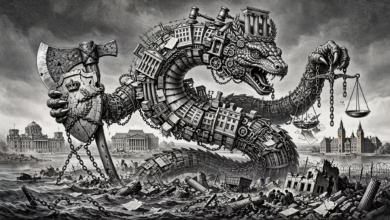

In The Contemporary Cultural And Intellectual Landscape, It Is Rare To Find A Book That Possesses The Moral Courage And Methodological Depth To Swim Against The Sweeping Current Quite Like “Why China Needs Democracy” By The Chinese Thinker And Researcher Dongxian Jiang, Recently Published By The Prestigious Princeton University Press (2026). This Reference Work Comes At A Highly Complex Historical Moment; Where Western Constitutional Democracies Appear In Crisis, Struggling To Survive In The Face Of Rising Waves Of Populism And Internal Fragmentation, While Voices Rise In The East And West Admiring The Authoritarian “Chinese Model” As An Efficient Alternative Capable Of Achieving Stability, Rapid Economic Growth, And Overcoming Major Crises Without The Obstacles Of Electoral Democracy.
The Researcher Opens His Book With An Admission That Carries A Mixture Of Bitter Irony And Strict Commitment, Likening The Timing Of Introducing His Thesis To The Common Chinese Proverb “Joining The Kuomintang Army In 1949”; An Expression Applied To Anyone Who Possesses Extremely Bad Political Timing That Drives Them To Commit To A Cause Doomed To Extinction In The Absolute Moment Preceding Its Collapse. The Book Defends Constitutional Democracy For China At A Time When Political Commentators From Various Spectrums Declare “The Death Of American Democracy,” And In Light Of A Steady Rise Of Global Chinese Influence That Has Codified The Narrative Of “Authoritarian Success.” However, This Specific Timing Is What Grants The Work Its Uniqueness; It Is Not An Emotional Ideological Manifesto, But Rather A Solid Theoretical And Practical Exercise Rooted In The Reality Of Diagnosing The Deep Structural Crises That The State And Society Experience In China Today.
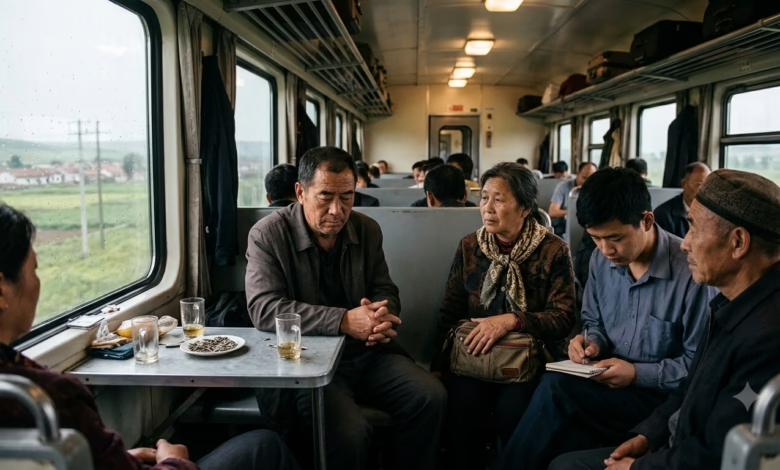
The Narrative Begins From The Heart Of Daily Chinese Reality, Through An Opening Scene Crafted By The Researcher Where He Takes The Reader On A Journey Via Regular Non-High-Speed Trains In The Northeastern Provinces Of China (Dongbei/Manchuria) In The Summer Of 2024. In Those Shared Carriages, Where Passengers Sit Knee-To-Knee Around Narrow Tables, “The Other China” Emerges; The Unpolished, Less Affluent, And More Realistic China. There, The Author Documented The Complaints Of Citizens Regarding Strict Security Measures And Humiliating Identity Checks, Which Did Not Aim To Combat Crime As Much As They Aimed To Intercept “Petitioners” (Shangfanghu); Who Are Ordinary Citizens Traveling In Pursuit Of Lodging Official Complaints Against The Arbitrariness Of Local Authorities.
Through A Dialogue With A Retired Soldier Whose Labor Rights Were Crushed, And A Woman Whom The Authorities Deprived Of Her Deceased Husband’s Pension And Imprisoned Her Son When She Insisted On Demanding Her Right, The Core Of The Crisis Crystallizes. That Simple Rural Woman, Who Received No Formal Education, Summarizes The Structural Predicament Of The Entire System In An Extremely Simple Yet Deep Phrase: “Look At The United States, They Have Two Parties. We Have Only One Party. We Have No Way To Resist.” This Innate Longing For An Institutional Mechanism Capable Of Curbing State Encroachment, And Protecting The Individual From Unrestrained Domination, Is The Foundation Stone Upon Which Dongxian Jiang Builds His Entire Thesis.
This Book Is Distinguished By The Fact That It Does Not Adopt Western Democracy As A Ready-Made Model For Export, Rather It Agrees With Many Of The Criticisms Directed At The American System, Which Has Often Come To Function As An “Oligarchic Dictatorship” That Serves The Wealthy And Produces Political Paralysis Due To Sharp Polarization. Instead, The Author Presents A Realist Political Theory For China. In Pursuit Of This, He Engages In A Dual Intellectual Battle To Dismantle What He Calls “The Tyranny Of Feasibility” And “The Tyranny Of Confucianism,” Which Are The Two Approaches That Have Dominated Political Theorizing On China In Recent Decades.
“The Tyranny Of Feasibility” Is Manifested In That Conservative Tendency Among Academics (Such As The Late Joseph Fewsmith) Who Condition The Legitimacy Of Any Democratic Proposal Upon The Immediate Availability Of Its Requirements In Present Reality, Considering That The Absence Of Independent Civil Society Institutions In China Makes Democracy An Inapplicable Illusion. The Author Rejects This Reductionism, Emphasizing That A Realist Political Theory Must Study The Possible Without Becoming A Hostage To It. Political Theory, Unlike Public Policies, Functions To Prepare The Intellectual Ground For Possibilities That May Become Viable In The Long Term, And Constantly Arguing “A Lack Of Readiness” Is Merely A Cover To Perpetuate The Status Quo.
As For “The Tyranny Of Confucianism,” It Is The Tendency That Has Prevailed In Both Western And Chinese Academic Circles alike, Which Assumes That Any Contextual Political Theory For China Must Necessarily Emanate From The Confucian Heritage. Jiang Dismantles This Assumption, Explaining That Chinese Political Thought Historically Was Always Rich In Pluralism, And Included Schools Such As Daoism, Legalism, And Mohism, In Addition To Modern Socialist And Maoist Theses That Are Fundamentally Anti-Confucian. Consequently, Confining The Debate To The Binary Of “Western Democracy Versus Confucian Meritocracy” Narrows The Horizon Of Normative Imagination And Overlooks True Questions Regarding The Fate Of The Leninist System Under A Semi-Open Economy.
The Researcher Dongxian Jiang Moves Us From Dismantling Prevalent Academic Theories To Dissecting The Structure Of The Contemporary Chinese State. The Author Focuses In This Context On Refuting What He Calls “Enlightened Authoritarianism” And The Narrative Of Administrative Competence And “Meritocracy” Promoted By The Political Leadership In Beijing, And Supported By Some Political Theorists In The West, Such As Daniel Bell And Wang Shaoguang.
The Author Analyzes Critically The Thesis Stating That The Chinese Communist Party Represents A Unique Model Of Rugged Political Meritocracy; Where Political Cadres Rise Based On Competence, Education, Administrative Experience, And The Ability To Achieve Economic Success, Rather Than Family Loyalties Or Electoral Populism. Defenders Of This Model See That It Provides China With A Rational, Long-Term Leadership Capable Of Making Fateful Decisions Away From The Fluctuations Of Public Opinion And Short-Term Electoral Pressures That Paralyze Western Democracies.
But Jiang, Through His Realist Reading, Drops This Cosmetic Mask From The Structure Of Chinese Governance. The Author Explains That “Chinese Meritocracy” Is Not An Independent Rational System, Rather It Is A Tool Entirely Subservient To The “Leninist Logic” Based On The Absolute Hegemony Of The Party And The Monopoly Of Power. The Criteria For Promotion Within The Party Hierarchy, Even If They Include Economic and Educational Performance Indicators, Maintain That The Decisive And Ultimate Criterion Remains Always “Absolute Political Loyalty” To The General Line Of The Party And The Central Leadership. This Comprehensive Politicization Of The Selection Mechanism Transforms Administrative Competence From A Tool For Serving The Public Good Into A Means Of Fortifying The Power Of The Ruling Elite.
From This Authoritarian Monopoly Emerges A Structural Predicament The Researcher Calls “The Paradox Of Self-Censorship And Bureaucratic Inertia.” In The Absence Of A Free Press, An Independent Judiciary, And Elected Oversight Institutions, The Party Becomes The Sole Monitor Of Itself. This Situation Leads To The Emergence Of An Environment Saturated With Fear And Uncertainty Among Local Officials; Since Evaluation Criteria Are Vague, Volatile, And Depend On Political Satisfaction From Above, Bureaucrats Tend To Adopt Strategies Of Excessive Caution, Falsifying Reports And Statistics To Please The Central Leadership, And Suppressing Any Signs Of Local Social Discontent Before It Reaches The Knowledge Of The Capital. Consequently, The Alleged “Competence” Transforms During Critical Times And Major Crises (Such As Health Or Environmental Crises) Into Structural Paralysis Resulting From The Fear Of Taking Initiative.
This Fear, As Documented By Jiang, Is Manifested In The Way The State Deals With The Movement Of Society. Instead Of Responding To Legitimate Popular Demands As Crucial Inputs For Developing Public Policies, The System Views Any Independent Expression Of Opinion Or Demand For Rights As A Direct Threat To Social Stability And National Security. Here Lies The Greatest Flaw In The Narrative Of “Enlightened Authoritarianism”; Since The Absence Of Institutional Feedback Loops Provided By Constitutional Democracy Deprives The Decision-Maker Of Knowing The True Pulse Of The Street, Making The System Vulnerable To Major Surprises And Disturbances Resulting From The Accumulation Of Suppressed Grievances Beneath The Polished Surface Of Apparent Stability.
Furthermore, The Book Dismantles The Concept Of The “Developmental State” To Which Credit Is Attributed For The Chinese Economic Miracle. Jiang Argues That The Tremendous Economic Growth Witnessed By China In The Past Four Decades Was Not An Inevitable Product Of Authoritarianism, But Rather The Result Of Policies Of Openness, Partial Economic Liberalization, Benefiting From Globalization, And The Hard Work Of The Chinese People. He Emphasizes That The Continuity Of This Model Is Threatened Today Due To The Absence Of The Rule Of Law And The Protection Of Private Property; Since The Absence Of An Independent Judiciary Means That The Success Of Any Economic Project Or Investment Remains Hostage To The Satisfaction Of The Political Power And Relations Of Patronage With Party Officials, Which Limits True Innovation And Drives Local Capital And Talent To Emigrate Abroad In Search Of Legal Security.
We Arrive At The Hard Core Of The Theoretical And Institutional Project Proposed By The Author As A Radical And Realist Alternative To The Dominant One-Party Model. Jiang Moves Us From The Stage Of Critical Dismantling Of The Theoretically Stable “Chinese Model” Narratives, To The Stage Of Detailed Institutional Design Which He Views As The Effective And Sole Remedy For The Disease Of “State Domination” Over The Destiny Of The Individual And Society In China.
The Author Departs From A Diagnostic Thesis Postulating That The Great Moral And Political Ailment In Contemporary Chinese Life Lies In The Absence Of Any Mechanism To Protect The Ordinary Citizen Face To Face With The Structural And Comprehensive Penetration Of Party And State Institutions. Because Political And Security Power Is Concentrated Absolutely In The Hands Of The Ruling Elite, Citizens Find Themselves In A Permanent State Of Exposure And Extreme Vulnerability; Since There Is No Independent Body To Which They Can Resort To Raise Grievances Or Curb Arbitrary Decisions. From Here, Jiang Argues That The Solution Cannot Be Via “More Moral Promises” To Confucian Cadres, Or Via Improving Channels Of “Authoritarian Deliberation” Promoted By Party Theorists, But Rather Via A Radical Redistribution Of Constitutional Power Within Society.
The First Institutional Pillar To Which The Book Dedicates A Lengthy And Rigorous Analysis Is “The Independence Of The Judiciary” And The Activation Of True Constitutional Review. The Author Points With Intellectual Regret To The Fact That The Current Chinese Constitution, Despite Repeated Amendments That Have Affected It (Which Codified The Leadership Of The Communist Party And Granted The President The Right To Remain In Power For Life), Remains Merely “A Constitution Without Constitutionalism,” According To The Expression Of The Famous Chinese Legal Scholar Qianfan Zhang. The Constitution In Chinese Reality Does Not Function As A Tool To Limit The Power Of The Ruler, But Rather As A Means To Codify And Sanctify His Hegemony.
Jiang Presents A Tailored Vision For Reforming The Chinese Judicial Apparatus; Where He Sees That Separating The Judicial Power From The Legislative And Administrative Organs Of The State Is Not A Liberal Luxury, But Rather The Vital Sole Guarantee For Providing An Environment Based On Legal Rationality Instead Of Political Moodiness. The Author Explains That If The Entity That Legislates Laws And Manages The State Remains The Selfsame Entity That Interprets Them And Applies Them In Direct Disputes, Then The Power Will Always Possess A Structural Motive To Interpret Laws According To Its Immediate Interests, Or Even To Exempt Itself From Any Legal Restrictions, Which Destroys The Concept Of “The Rule Of Law” From Its Very Foundation.
Jiang Sees That The Independent Judiciary, Owing To Its Reliance On Rigorous Legal Argumentation And Stable Institutional Logic, Is The Constitutional Organ Most Capable Of Drawing And Maintaining The Boundaries Of Citizens’ Political Freedoms (Such As Freedom Of Expression, Freedom Of The Press, And Freedom Of Assembly) And Protecting Them From Erosion. In Contrast, The Administrative Organ Or The Ruling Bureaucracy, Driven Always By Obsessions Of Security Efficacy And Narrow Political Interest, Tends Structurally To Narrow These Freedoms And Stifle Them Whenever It Senses The Slightest Threat. Therefore, The Author Sees That The Existence Of A Judiciary Possessing The Power Of “Judicial Review” And Capable Of Invalidating Unconstitutional Laws And Decrees Affecting The Rights Of Citizens Is The Foundation Stone In Any True Transformation Toward Constitutional Democracy In China.
From This Point, The Researcher Connects The Independence Of The Judiciary To The Broader Principle Which Is “The Separation Of Powers,” Which He Redefines In The Chinese Context As A Mechanism For Creating “Horizontal Accountability” And Expanding The Space For Legitimate Public Protest. The Modern State In China Monopolizes The Tools Of Physical And Military Coercion Completely, Leaving Individuals In A Continuous State Of Fragility And Anticipation. To Alleviate This Structural Threat, The Book Proposes Dismantling And Distributing Power Across Multiple And Balanced Organs And Institutions, Such That Any Abuse Of Power Emanating From A Specific Branch (Like The Executive Or Security Organ) Can Be Checked And Curbed By The Other Branches.
The Book Also Dismantles With Boldness One Of The Most Popular Narratives In The Literature Of The “Chinese Model,” Namely The Thesis Of “Deliberative Democracy” (Xieshang Minzhu) Under The Umbrella Of The One Party, Whih Is Defended By Theorists Like Yu Keping (Owner Of The Famous Saying “Democracy Is A Good Thing”) Or Daniel Bell. This Narrative Claims That The Party And The State Engage In Wide Discussions And Deliberations With Citizens And Their Representatives Through Multiple Channels To Reach Policies That Reflect Social Consensus, And That The Metric Is The Quality Of Public Policies, Not The Mechanism Of Selecting Officials.
Jiang Rejects This Approach Entirely, Describing It As A Crisis-Ridden Model Of “Authoritarian Deliberation” That Lacks The Simplest Mechanisms Of Accountability. The Author Poses A Crucial Realist Question: In The Absence Of An Institutional Mechanism Enabling Citizens To Remove And Dismiss Corrupt Or Arbitrary Officials Through Ballot Boxes, What Compels Party Cadres And Government Officials To Listen Seriously To People’s Complaints Or Commit To The Results Of Deliberations? The Absence Of “Competitive Electoral Accountability” Deprives The System Of Any Genuine Incentive To Comply With Popular Will, Making All Those Consultative Channels Merely Temporary Safety Valves Or Propaganda Tools To Absorb Discontent Without Offering Material Concessions In The Structure Of Power.
Therefore, Dongxian Jiang Concludes In This Pivotal Chapter That Simple Reform Demands Displayed By The Chinese Street Today, Such As The Desire For Freedom Of Expression Or Ending The Arbitrariness Of Local Police, Cannot Be Protected Or Institutionalized Unless They Lead Ultimately To A Process Of “Comprehensive Structural Redesign” Of The Political System Entirely. This Process Presupposes Inevitably Ending The One-Party Monopoly Of Power, And Introducing Periodic Competitive Elections As The Sole Mechanism For Vertical Accountability That Enables The People To Punish Ruling Elites And Remove Them. Constitutional Democracy In This Sense Is Not A “Utopian Wish” Separated From Reality, But Rather The Sole Interconnected Practical And Institutional Result Imposed By The Necessity Of Protecting The Chinese Human Being From Authoritarian Encroachment.
One Of The Most Controversial Elements Bearing Philosophical And Institutional Depth Is The Dismantling Of The Concept Of “Good Governance” And Redefining It From A Realist Democratic Perspective That Refutes The Prevalent Authoritarian Narrative Setting Administrative Competence Apart From Popular Selection Mechanisms.
The Author Focuses In This Section On Dismantling A Thesis Adopted By Several Contemporary Theorists, Who Argue That What Matters To The Ordinary Citizen In The Long Run Is Not “The Political Process” Or The Form Of The System And The Authority Of Ballot Boxes, But Rather Tangible “Outputs”; Such As Security Stability, Economic Growth, Efficient Public Service Delivery, And Building Modern Infrastructure. According To This Authoritarian Narrative, The Chinese System Based On The One Party Has Proven Superior Merit In Achieving These Outputs Compared To Numerous Developing Or Even Developed Democracies Experiencing Slow Decision-Making And Mutual Obstruction Among Branches.
Jiang Flips This Thesis Upside Down, Relying On A Precise Dissection Of The Working Mechanisms Of The Chinese Bureaucracy Under The Umbrella Of Authoritarianism. The Author Argues That What Appears To The Eye As “Decisive Efficiency” Under Normal Circumstances Transforms In Its Reality Into A Principal Source Of “Irrationality And Catastrophic Structural Vulnerability” During Times Of Unexpected Crises Or Complex Economic Transformations. The Essence Of Good Governance, As Viewed By The Author, Cannot Be Separated From The Concept Of “Constitutional Legitimacy And Accountability.”
Jiang Explains This Structural Defect By Monitoring The Phenomenon Of “Blind Bureaucratic Compliance”; For Within The Chinese System, Party And Government Officials Locally Are Evaluated Based On Strict Top-Down Targets Defined Centrally, Such As Achieving Specific Growth Rates, Or Maintaining A Specific Level Of Strict Security And Combating Disturbances. Given The Absence Of Elected Local Councils Or A Free Press Capable Of Directing Criticism Or Revealing Realities, The Ultimate Sole Goal For The Local Official Becomes To Please His Political Superiors In The Party Hierarchy, Not To Serve The True Interests Of Citizens In His Region.
This Situation Leads To A Destructive Bureaucratic Behavioral Pattern Based On Two Matters; The First Is “Data Fabrication And Concealment”; Where Officials Tend To Conceal Environmental Disasters, Health Crises, Or Issues Of Corruption, Out Of Fear For Their Professional Career, And These Crises Do Not Emerge To The Surface Until After They Exceed The Capacity Of Local Authorities To Contain Them and Transform Into A Comprehensive National Threat. The Second Matter Is “The Harsh And Arbitrary Enforcement Of Policies” Without Consideration For The Circumstances Of Citizens Or Their Basic Rights, As Long As This Enforcement Achieves The Quantitative Targets Demanded By The Capital Beijing.
From Here, The Book Presents Its Alternative Thesis: Constitutional Democracy Is The Only Possible Incubator For “Sustainable Good Governance.” Jiang Explains That Introducing Mechanisms Of Electoral Accountability And Popular Oversight Radically Alters The Incentives Of The Bureaucracy And Officials; For When The Local Official Knows That His Survival In His Position Or His Removal Depends On The Votes Of Citizens In His District, He Will Direct His Efforts And Energies Toward Listening To Their Complaints and Fulfilling Their Actual Needs, Instead Of Focusing Exclusively On Pleasing The Central Elite In The Party. Democracy In This Sense Is Not Merely A Moral Value, But A Practical Mechanism For Correcting The Course Of Public Policies and Making Government Administration More Responsive, Flexible, And Less Prone To Catastrophic Errors Resulting From Inertia And Misleading Reports.
Furthermore, The Researcher Links Good Governance To The Presence Of An “Independent Civil Society.” The Author Sees That The Contemporary Chinese State, Through Its Relentless Pursuit To Swallow Society And Dismantle Any Independent Organizations (Whether Labor Unions, Human Rights Associations, Environmental Organizations, Or Even Religious Groups), Deprives Itself Of A Vital Safety Net. A Vibrant Civil Society Functions As A Natural Channel To Convey The True Pulse Of The Street, Share Developmental Burdens, And Provide Flexible Solutions To Local Problems. By Stifling This Space, The State Finds Itself In Direct and Solitary Confrontation With Any Popular Discontent, Raising The Cost Of Preserving Security And Stability, And Making The Entire Political Structure Fragile And Breakable Facing Aftershocks.
We Arrive At The Concluding And Most Sensitive Chapter, Where The Researcher Leaves Behind The Space Of Pure Political And Institutional Theorizing To Contemplate Possible Future Scenarios, and Realist Paths That China Can Take Toward Constitutional Democratic Transformation, Dismantling Simultaneously The Anxieties Of “Chaos And Fragmentation” That The Ruling Elite Has Long Utilized To Justify Perennially The Status Quo.
Jiang Prefaces This Section By Discussing The Dilemma Of “Fragile Stability” That Dominates Official Political Discourse In Beijing. The Author Explains That The Authoritarian Narrative Succeeded Over Decades in Consolidating A Zero-Sum Equation In The Minds Of Citizens And Elites Alike, Stating: Either The Acceptance Of Absolute Hegemony Of The One Party As A Sole Guarantor Of Stability and Order, Or Falling Into The Abyss Of Warlord Chaos, And Crushing Economic And Social Crises That Characterized Certain Periods Of Modern Chinese History. The Researcher Sees That This False Choice Represents The Greatest Psychological And Intellectual Obstacle Facing Any Real Change, Emphasizing That Authoritarianism In Present Reality Does Not Prevent Chaos, But Rather Postpones It and Contributes To Accumulating Its Causes Beneath The Surface, Rendering The Potential Explosion More Violent And Destructive.
In Pursuit Of Offering A Rational And Reassuring Alternative, The Book Proposes A Gradual and Realist Conception Of the Path Of Democratic Transformation, Drawing Upon Experiences Of Political Transition In East Asia And The World, And Respecting The Structural Specificity Of The Chinese State. Jiang Argues That The Desired Transformation Ought Not To Come Via A “Sudden Chaotic Revolution” That Destroys State Institutions And Leaves The Country In A State Of Power Vacuum, But Rather Via A Process Of Gradual Constitutional Institutionalization Beginning With Opening The Public Sphere, Granting Basic Freedoms Like Freedom Of Expression and the Press, And Enabling Civil Society To Organize Itself Independently. This Preliminary Openness, According To The Author’s Vision, Affords New Elites and Societal Talents An Opportunity To Emerge and Train In Political Practice, Creating Legitimate Communication Channels That Enable Managing Social Disputes Peacefully And Openly.
The Researcher Moves Next To Detailing Transition Mechanisms At The Level Of Administrative And Constitutional Structures, Suggesting A Model Built On “Gradual Competitiveness”; Where One Can Begin By Activating True Competitive Elections At Local And Municipal Levels First, To Form A Practical Laboratory For Building Trust and Developing Local Governance, Before Transitioning To Regional And National Levels. Jiang Sees That This Process Guarantees Preserving The Cohesion And Continuity Of The Administrative Bureaucracy Of The State, Preventing The Transformation Of Political Conflict Into A Tool For Undermining Public Service Institutions, Thereby Reassuring Conservative Forces And Societal Strata Fearing The Absence Of Stability.