
The Prison Of Geography And The Complex Of History – From The Dream Of Liberation To The Nightmare Of Totalitarianism
Panoramic Introduction – The Eritrean Riddle And The Intractability Of Understanding
The Contemporary Reader Of The Geopolitical Landscape In The Horn Of Africa Stands Before A Highly Strange And Complex Historical Paradox; A Paradox Embodied In The State Of Eritrea, This Strategic Coastal Entity Stretching Along The Southern Shores Of The Red Sea, Which Fought One Of The Longest And Fiercest National Liberation Movements In The Twentieth Century Against The Ethiopian Empire And Subsequently Against The Marxist Military Regime (The Derg), Achieving A Legendary Independence In 1993 Driven By A Massive Popular Momentum And Broad Democratic Aspirations, Only To End Up Rapidly As One Of The Most Closed, Repressive, And Isolated Countries In the Entire World, To The Extent That It Has Come To Be Called In International Journalistic And Human Rights Literature “The North Korea Of Africa.” The Book By The Prominent British Journalist And Researcher “Martin Plaut”, Published By The Prestigious Oxford University Press Under The Title “Understanding Eritrea: Inside Africa’s Most Repressive State”, Comes To Tear Away These Dense Veils Of Ambiguity, Offering A Structural, Historical, And Political Anatomy Of This Unique And Tragic Experience, Attempting To Answer The Core, Burning Question: How Did The Dream Of Freedom And Emancipation From Colonialism And Dependency Turn Into An Absolute Totalitarian Nightmare In Which A Single Man And A Closed Military Elite Clasp The Breaths Of An Entire People? Plaut Does Not Merely Monitor The External Manifestations Of Oppression, But Rather Dives Deep Into The Inner Entrails Of The Eritrean Entity To Emerge With A Tightly Crafted Explanatory Formula.
The Knowledge Background Of The Author And His Methodological Tools
The Great Scientific And Documenting Value Of This Book Cannot Be Separated From The Long Professional And Personal Background Of Its Author, Martin Plaut. Plaut Spent Long Decades Of His Professional Life As A Scholar And Analyst Specializing In African Affairs At The British Broadcasting Corporation (BBC), Specifically In The African Section, Which Afforded Him A Rare Opportunity To Keep Pace With The Eritrean Revolution Since Its Early Days In The 1970s And 1980s, And Even To Meet The Historical Leadership Of The Eritrean People’s Liberation Front (EPLF, Led By The Current President Isaias Afwerki) In Their Mountainous Hideouts In The Fortified Town Of “Nakfa” During The Years Of Armed Struggle. This Rare Blend Of Live Observation, Field Journalistic Expertise, And Direct Access To Defector Sources And Secret Documents Grants The Book Immense Critical Credibility; He Is Not Just An External Observer Launching Cold, Normative Judgments, But Rather An Expert Who Lived The Chapters Of The Tragedy And Tracked Its Paths Step By Step. Plaut Relies In His Book On A Multi-Dimensional Investigative Methodology: He Blends Chronological Historical Narrative To Understand The Crystallization Of The Eritrean Identity With Political Analysis Of The Structure Of The Ruling Power, Drawing On A Vast Archive Of United Nations Reports, International Monitoring Groups, Vivid Testimonies Of Victims Of Forced National Military Service, And Exclusive Interviews With Former Eritrean Diplomats And Officials Who Succeeded In Fleeing From The Hell Of The Regime. The Result Is A Flowing Text That Moves Smoothly Between The Rugged Mountainous Geography Of The Sahel Region, The Corridors Of International Politics In New York And Addis Ababa, And The Secret Detention Centers In The Scorching Eritrean Deserts.
The Genes Of Resistance – The Militarization Of Society And The Birth Of The People’s Front
Plaut Begins His Deconstruction Of The Eritrean Phenomenon By Returning To The Historical Roots Of The Liberation Movement, Arguing That The Seeds Of The Current Totalitarian Regime Were Not The Product Of Coincidence, But Were Planted In The Organizational And Military Soil Of The Eritrean People’s Liberation Front During The 1970s. The Author Explains In Detail How Eritrean Society, With Its Ethnic Diversity (Religious And Linguistic Between The Christian Tigrinya In The Highlands And The Muslim Tribes In The Lowlands), Faced A Shared Existential Challenge Manifested In Severe Ethiopian Oppression, Especially After Emperor Haile Selassie Abolished The Federal System And Forcibly Annexed Eritrea In 1962. This Challenge Forged The Eritrean National Identity Inside The Furnace Of A Ferocious Guerrilla War That Lasted For Thirty Years. In This Context, The Eritrean People’s Liberation Front Emerged As A Highly Efficient, Secret, And Iron-Disciplined Military And Organizational Machine. Plaut Explains That The Front, In Order To Survive Against The Ethiopian Army—Which Was Larger In Number And Better Equipped (And Later Backed By The Soviets)—Developed An Internal Organizational Culture Based On Absolute Obedience, Utmost Secrecy, Mutual Suspicion Of Strangers, And Absolute Self-Reliance As A Result Of The International Community’s Betrayal. This “Mountainous Organizational Culture,” Which Was A Decisive Success Factor For Achieving Military Independence, Is The Very Same Culture That, According To Plaut’s Strict Analysis, Transformed Into A Dictatorial Curse After Seizing Control Of The State In 1991; As The Revolutionary Leadership Failed To Transition From The Mindset Of “Managing A Secret Guerrilla War” To The Mindset Of “Managing A Pluralistic Civil State,” Continuing To Treat Citizens As Soldiers Subject To Orders, And Regarding Any Internal Debate Or Divergence Of Opinion As High Treason Demanding Immediate Crushing.
The Dilemma Of Independence And Building A One-Party State
In The Chapter Dedicated To The Early Years Of Independence (1991-1998), Martin Plaut Paints A Dramatic Picture Of The Loss Of A Major Historical Opportunity To Build A Stable Democratic State In The Horn Of Africa. For After The Historic Popular Referendum In 1993, In Which Eritreans Voted By A Percentage Nearing 100% In Favor Of Independence, Hopes Were Pinned On The Front Transforming Into A Civil Political Party Committed To Pluralism And Building Constitutional Institutions. Indeed, A Very Advanced Constitution For The Year 1997 Was Drafted, Guaranteeing Fundamental Rights, Liberties, Separation Of Powers, And Political Pluralism. However, Plaut Reveals With Great Precision And Documentation How Isaias Afwerki, The Provisional President And Head Of The Front, Systematically Circumnavigated This Constitutional Entitlement; As The Constitution Was Suspended And Never Implemented On Flimsy Pretexts, And National Elections Were Frozen Indefinitely. The Author Analyzes This Period, Explaining How The Hard Core Of The Regime, Represented By Afwerki And A Small Group Of Military Generals Close To Him, Began To Monopolize All Economic And Political Levers Of The State, Dissolve All Independent Civil Organizations, And Transform The “Eritrean People’s Liberation Front” Into The “People’s Front For Democracy And Justice” (PFDJ), Which Is The Sole Legitimate Party That Holds Absolute Control Over Public Life, Preventing The Formation Of Any Other Party Or The Issuance Of Any Independent Press, Turning The Eritrean Public Space Into A Theater For A Single Voice With No Partner.
The Catastrophic 1998 War With Ethiopia – The Turning Point And Complete Reversion
The Bloody Border Conflict Between Eritrea And Ethiopia Over The Small Town Of “Badme” Between 1998 And 2000 Represents, In The Eyes Of Author Martin Plaut, The Pivotal Event That Completely Closed Any Remaining Window For Democratic Transition In The Country, And Formed The Golden, Ideal Pretext That Isaias Afwerki Needed To Slam Shut His Iron Fist And Usher In The Era Of Comprehensive Oppression. This Grinding War, Which Broke Out Between Two Former Allies (Afwerki And Meles Zenawi, The Prime Minister Of Ethiopia), Claimed The Lives Of More Than One Hundred Thousand People On Both Sides And Depleted Immense Economic Resources, Suddenly Returned Eritrea To The Mindset Of A “Sieged Fortress” And Confronting An Existential Threat. Plaut Analyzes With Sharp Journalistic Acuteness How Afwerki Exploited The Relative Military Defeat And The Subsequent Diplomatic Stalemate (Despite The Decision Of The International Boundary Commission Regulating Badme’s Belonging To Eritrea And Ethiopia’s Refusal To Implement It At The Time) To Declare An Unwritten, Permanent State Of Emergency. The Hypothesis Of “No War, No Peace” With The Giant Ethiopian Neighbor Became The Official Ideology Of The State, Under Which The Complete Freezing Of Public Liberties Was Justified, The Private Economy Was Abolished In Favor Of Military Cartels, And The System Of “Compulsory National Service Of Indefinite Duration” Was Launched, Which Replaced Normal Civil Life And Transformed The Entire Country Into A Vast, Open Concentration Camp Under The Banner Of Protecting National Security.
Anatomy Of The Totalitarian Machine – Deconstructing The Security State Structure And The Hell Of National Forced Labor
The Structure Of Individual Power – Isaias Afwerki And The Shadow Of The Only Man
Martin Plaut Moves In This Part Of His Book From Historical Background To The Structural Anatomy Of The Ruling Regime In Asmara, Focusing His Analytical Scalpel On The Personality Of President Isaias Afwerki, Without Whom The Eritrean Repressive Machine Cannot Be Understood Outside Of Probing The Depths Of His Mindset And Mode Of Governance. Plaut Explains That Afwerki Succeeded In Transforming The Eritrean State Into A Living Embodiment Of His Own Personality, Which Is Characterized By Morbid Suspicion, Isolationism, And An Absolute Tendency Toward Total Control. In Eritrea, As The Book Reveals, There Are No Institutions In The Standard Political Or Administrative Sense; There Is No Council Of Ministers That Meets Regularly To Make Policies, Nor Is There A Parliament That Enacts Laws, Rather The Ruling Party Itself, The People’s Front For Democracy And Justice, Is Nothing But A Cardboard Facade For Passing Presidential Decrees. Plaut Accurately Describes How Afwerki Runs The Country Through A Parallel, Informal Network Of Military Commanders And Security Officials Answering Directly To Him, Who Are Changed, Rotated, Or Enforced Into Disappearance Periodically To Ensure No Institutionalization Of Any Power That Might Pose A Threat To The Presidency. This Jelly-Like, Intentional Structure Made The Head Of State The First And Last Reference In Every Small And Large Matter, Ranging From Signing International Peace And War Treaties To Approving Operational Budgets For Small Projects Or Granting Import And Export Licenses, Leading To A Total Paralysis In State Institutions And The Entrenchment Of A System Of “Absolute Rule Of One Individual” Unparalleled In Africa’s Modern Eras.
The Massacre Of September 2001 – The Assassination Of Politics And The Closure Of The Public Sphere
Plaut Proceeds In A Griping And Painful Investigative Narrative To Document The Event That Formally Extinguished The Last Glimmer Of Hope For Internal Reform, Known In Contemporary Eritrean History As The Tragedy Of The “Group Of Fifteen” (G-15) In September Of 2001. In The Wake Of The Shock Resulting From The Catastrophic War With Ethiopia, A Group Of Senior Revolutionary Leaders, Ministers, And Veteran Warriors, Who Had Led The March To Independence Alongside Afwerki, Dared To Sign An Open Letter Demanding The Implementation Of The Suspended Constitution, Holding The Postponed Elections, And Holding The President Accountable For His Individual Decisions During The War. The Author Details, Based On Material Derived From Diplomats Who Witnessed That Era And Associates Of The Palace, How Afwerki Exploited The World’s Preoccupation With The Events Of September Eleventh In The United States To Launch A Brutal Purge Campaign On September 18, 2001. All Signatories Of The Letter From Among The Historical Icons Of The State Were Arrested, Classified As Traitors And Agents, And Dragged To Secret Prisons Deep Within The Desert Without Trial, And They Have Not Seen The Light Since That Day, Rather Reports Cited By The Author Indicate That Most Of Them Have Passed Away Inside Solitary Confinement Cells Under Inhumane Conditions. In The Very Same Week, The Regime Took The Decision To Shut Down All Independent Newspapers And Magazines That Had Begun To Grow And Flourish In Asmara, And Dozens Of Young Journalists And Writers Were Arrested, Entering Eritrea Since That Date Into An Absolute Isthmus-Like Silence, Becoming The Only State In Africa That Does Not Possess A Single Independent Or Private Medium Of Information, Where The Printed, Visual, And Audio Press Became Exclusively Restricted To The Ministry Of Information, Which Sings The Praises Of The Leader Day And Night.
The “Sawa” Camp And The Hell Of Unlimited National Service
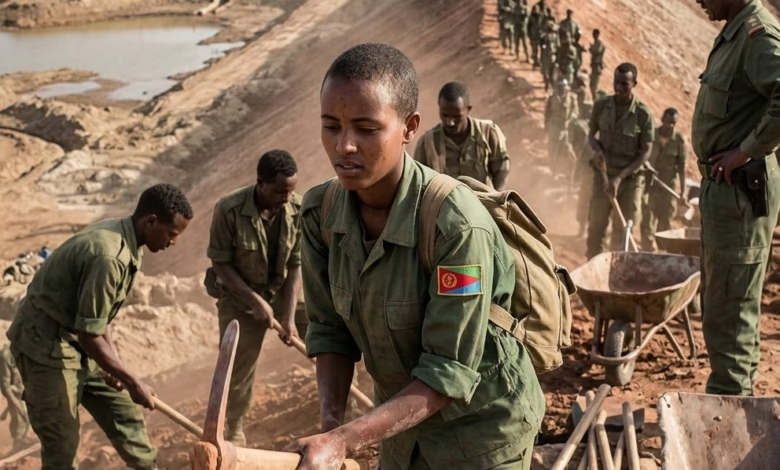
The Compulsory National Service System, Known Locally And In International Literature As The Hell Of the “Sawa” Camp, Represents The Primary Pillar Relied Upon By The Asmara Regime To Subdue Society And Break Its Will, A Core Axis To Which Martin Plaut Allocated A Broad And Detailed Analytical Space In His Book. Plaut Clarifies That This Service, Which Started In The Mid-1990s As A Noble National Program For Reconstruction And Consolidating National Cohesion For A Duration Of Eighteen Months, Transformed After The 1998 War Into A Permanent System Of Enslavement And Forced Labor With No Time Limit. Every Young Man And Woman In Eritrea, Upon Reaching Their Final Two Years Of Secondary School, Is Forced To Relocate To The Isolated Desert Camp Of “Sawa” In The West Of The Country To Complete Their Education And Military Track There. The Book Reveals, Via Living And Horrific Testimonies Of Youth Who Succeeded In Fleeing, How These Conscripts Are Subjected To Systematic Brainwashing Operations, Harsh Trainings, And Constant Starvation, In Addition To The Horrific Physical And Sexual Violations Exposed Upon Young Female Conscripts At The Hands Of Officers And Generals Without Any Legal Deterrent. After Basic Training Ends, These Youth Do Not Return To Their Civil Lives, But Rather Are Distributed As Slave Laborers For Token Wages That Can Barely Purchase A Loaf Of Bread, Working In The Farms Of Generals, In Road Construction, Or In Mining Operations Belonging To Foreign Companies, Extending This Situation For Long Years And Decades That Might Deliver A Person To The Age Of Forty Or Fifty Without Possessing The Right To Choose Their Profession, Marry, Or Live With Their Families, Making National Service A Tool For Destroying The Eritrean Family Core And Transforming The Entire Society Into An Army Of Slaves Working For The Benefit Of The Ruling Military Elite.
The Archipelago Of Secret Prisons And The Policy Of Enforced Disappearance
In A Chapter That Makes One’s Skin Crawl, Plaut Takes Us On An Investigative Tour Inside The Geometry Of Eritrean Detention, Describing The Country As An “Archipelago Of Secret Prisons” Scattered Throughout The Nation, Many Of Which Consist Of Metal Shipping Containers Placed In Arid Deserts, Such As The Infamous “Eira Eiro” Camp. The Author Analyzes How The Authorities Use These Metal Containers As Psychological And Physical Torture Tools; As These Containers Lack Any Ventilation, And Temperatures Inside Them In The Summer Reach More Than Fifty Degrees Celsius, While Converting Into Bitterly Cold Refrigerators In The Winter. The Book Documents How Dozens Of Political Detainees, Prisoners Of Conscience, Escaped Conscripts, And Those Who Attempted To Travel Without A Permit, Are Crammed Inside These Narrow Spaces For Months And Years Without Informing Their Families of Their Whereabouts Or Even Whether They Are Alive Or Dead. Plaut Demonstrates That The Policy Of Enforced Disappearance In Eritrea Is Not A Random Practice, But Is Rather A Calculated Governance Strategy Aimed At Instilling Comprehensive Terror In The Hearts of Citizens; For The Absence Of Any Independent Judicial System, Declared Records Of Prisoners, Or The Right To Retain Counsel, Makes Every Citizen Feel Suspended Over An Abyss, And That Any Casual Word Of Criticism Might Lead Them To Eternal Disappearance In The Entrails Of These Containers Without Leaving Any Trace Behind.
The Destruction Of The National Economy And The Institutionalization Of The Black Market And Smuggling
Eritrean Oppression In Martin Plaut’s Analysis Is Not Restricted Only To Political And Human Rights Aspects, But Extends To Encompass The Destruction Of The Country’s Economic Structure And Converting It Into A Closed Military Rentier Economy. Plaut Explains How The Regime Banned Transacting Almost All Private Commercial Activities, Imposed Severe Restrictions On Withdrawing Funds From Banks, And Fixed A Very Low Ceiling For The Amounts A Citizen Can Possess. This Intentional Draining Of The Civil Economy Allowed The Ruling Party, Via Its Secret Economic Arm Known As The “Red Sea Trading Corporation”, To Monopolize All Operations Of Import, Export, And Domestic Trade. The Book Exposes The Falsity Of Official Claims Regarding “Self-Reliance,” Showing That The Regime Actually Lives On The Yields Of Cross-Border Smuggling Operations Managed By Senior Generals, Including The Smuggling Of Basic Commodities, Fuel, Weapons, And Even Humans Across The Borders With Sudan And Ethiopia. Military Leaders Have Transformed, Thanks To This System, Into Warlords And Black-Market Traders Amassing Immoderate Fortunes From The Tragedy Of Their People, While The Average Citizen Lives In A State Of Abject Poverty And Humiliating Dependence On The Scant Ration Coupons Granted By The State Only to Those Whose Obedience And Absolute Loyalty To Security Apparatuses Have Been Proven.
The Draining Of Homelands And The Border Trade – Deconstructing The Mechanisms Of Displacement And The Regional Geopolitical Game
Mass Emigration As A Safety Valve For The Regime And A Strategy Of Systematic Emptying
Martin Plaut Addresses In This Section Of His Investigative Study One Of The Most Painful And Prominent Phenomena In The Contemporary Eritrean Scene, Namely The Phenomenon Of Mass Displacement And Continuous Escape Of Youth, Women, And Children Across The Strict Borders Of The Country. Plaut Argues With A Highly Clever Intellectual And Political Thesis; Contending That Mass Emigration, Which Might Appear At First Glance As Evidence Of The Regime’s Failure Or A Pressure Factor That Might Lead To Its Fall, Is In Fact A Survival Strategy Approved And Systematized By The Regime Of Isaias Afwerki. The Author Explains How The Regime Deals With The Vital, Educated Youth Segment, Which Could Form The Hard Core Of Any Revolution Or Domestic Popular Movement Against Dictatorship, As A Dangerous Element That Must Be Disposed Of; Hence, Systematically Turning A Blind Eye, And Even Facilitating Escape Processes Through Complex Smuggling Channels Managed By Influential Military Generals, Represents A Periodic, Continuous Emptying Process For Charges Of Internal Anger, Leaving The Eritrean Interior In A State Of Weakness, Submissiveness, And Demographic Aging, Where Nothing Remains In Towns And Villages Except The Elderly, Children, And Psychologically And Physically Exhausted Conscripts Inside Perpetual Compulsory Service Camps.
Plaut Proceeds To Dissect The Paths Of This Lethal Migration, Tracking The Geography Of Eritrean Pain Across The Sahara Desert Reaching Up To The Shores Of The Mediterranean Sea Or The Vast Refugee Camps In Eastern Sudan And The Tigray Region Of Ethiopia Prior To Recent Conflicts. The Book Documents With Much Bitterness And Records How The Eritrean Migrant Fleeing From The Hell Of “Sawa” Has Transformed Into A Commercial Commodity Generating Millions Of Dollars For Transnational Organized Crime Networks, Many Of Whose Threads Connect To High-Ranking Security And Military Leaders Inside Asmara Itself. These Networks Kidnap Those Who Flee In The Sinai Or Libyan Deserts, Subjecting Them To Brutal Torture Operations Broadcast Directly Via Phone To Their Families In The Diaspora To Extort Them And Demand Extravagant Ransoms Exceeding Tens Of Thousands Of Dollars, Which Are Funds That Eventually Find Their Way Through Complex Laundering Channels Into Secret Accounts Serving The Ruling Elite, Making The Body Of The Oppressed Eritrean Citizen A Renewed Source Of Hard Currency For The Regime, Whether They Stayed Inside Forced Labor Camps Or Attempted To Flee From Them To The Unknown.
The Diaspora Of Hostages – The Two Percent Tax And Intercontinental Espionage Networks
The Control Of The Totalitarian Asmara Regime Over Citizens Is Not Confined Within The Geographical Borders Of Eritrea; Rather, The Security And Financial Octopus Of The Regime Extends, As Martin Plaut Demonstrates With Extensive Forensic And Legal Documentation, To Catch Up With Them In Exile Capitals And Places Of Refuge Around The World Through What Is Known As The “Diaspora Tax” Or The “Two Percent Tax.” Plaut Explains That The Regime Imposed A Law Obligating Every Eritrean Living Abroad, Regardless Of Their Legal Status As A Refugee Or A Citizen Holding Another Nationality, To Pay Two Percent Of Their Total Annual Income To Eritrean Embassies And Consulates Under the Name Of Contributing To Reconstruction And National Defense. The Author Analyzes How This Tax Transformed Into A Terrifying Financial And Political Extortion Tool; An Eritrean Who Refuses To Pay Is Automatically Deprived Of Obtaining Any Official Document, Such As Renewing A Passport, Documenting Birth And Marriage Certificates, Or Empowering Relatives, Furthermore Designating Their Remaining Family Inside The Country As Hostile Elements, Resulting In Depriving Them Of Ration Coupons Or Even Exposing Them To Arrest, Forcing Hundreds Of Thousands Of Expatriates To Comply And Pay, Funding With Their Pockets The Oppressive Machine They Fled From.
The Book Also Uncovers The Complex Secret Structure Of Espionage And Surveillance Networks Planted By The People’s Front For Democracy And Justice Within Eritrean Diaspora Communities In Europe, North America, And Australia. Plaut Describes How Eritrean Embassies Organize Communities Via Narrow Local Committees Called “Token Offices,” Whose Essential Mission Is To Monitor Dissidents, Track The Movements Of Human Rights Activists, Threaten Them Directly, And Even Send Periodic Reports To Asmara Containing The Names Of Individuals Participating In Rallies Against The Regime. This Transnational Security Engineering Created A Condition Of Complete Suspicion And Mutual Fear Even Among Members Of The Selfsame Community In Western Lands; Where A Migrant Fears Speaking Freely In Front Of A Compatriot For Fear Of Him Being An Informant For The Regime, Which Crippled The Movement Of External Opposition For Long Years And Neutralized Its Ability To Exert Real Influence On The Inside, Turning The Vast Eritrean Diaspora Into A Huge Financial Reservoir Coerced Into Silent Loyalty To The Individual Leadership.
Afwerki’s Geopolitical Doctrine – Playing On Contradictions And Seeking New Patrons
In This Important Regional Axis, Martin Plaut Moves On To Analyze The Foreign Policy Of Eritrea, Describing It As A Policy Standing On Aggressiveness, Radical Volatility, And Continuous Playing On The Contradictions Of Regional And International Powers To Ensure The Survival Of The Regime In Power And Avoid Fatal Isolation. Plaut Believes That Isaias Afwerki Possesses A Geopolitical Vision That Considers Stability In The Horn Of Africa Region As A Threat To His Regime; Therefore, He Continually Seeks To Be An Active Element In Shaping Crises Or A Mercenary Ally To Major And Rising Powers Seeking A Foothold On The Red Sea Coasts. The Book Narrates How Eritrea Has Transformed, Since Its Independence, From A Promising State That Enjoyed The Support Of The United States As Part Of The “New Generation of African Leaders” In The 1990s, To A Rogue State Subject to Severe International Sanctions From The Security Council Due To Its Military And Logistical Support To The Extremist Al-Shabaab Al-Mujahideen Movement In Somalia With The Purpose Of Spiting And Weakening Its Arch-Rival Ethiopia, A Support That Plaut Documents With Accurate UN Monitoring Reports Showing How The Regime Utilized Its Meager Budget To Arm Ideological Violence Groups In The Surrounding Regional Space.
Plaut Reviews The Dramatic Shifts And Gross Pragmatism In The Alliances Of The Eritrean Regime; For After Years Of Building Close Relations With Iran And Hezbollah And Providing Logistical Facilities For Them In The Islands Of The Dahlak Archipelago, The Regime Completely Overturned Following The Outbreak Of The War In Yemen And Operation Decisive Storm, Where Afwerki Rushed To Offer His Military, Field Services, And Strategic Ports, Specifically The Port Of “Assab”, For the Benefit Of The Arab Coalition Led By The Kingdom Of Saudi Arabia And The United Arab Emirates To Use It As A Military Launch Base For Air And Naval Operations Against The Houthis. The Author Analyzes This Shift, Pointing Out That Afwerki Was Not Driven By Any Ideological Or Political Convictions, But Was Rather Seeking Large Financial Inflows And Free Fuel Contracts To Break The Choking Economic Blockade Strangling Him, And Grant Him A Regional Political Cover That Turns A Blind Eye To His Gross Violations of Human Rights, Which He Successfully Achieved For Years Before Regional Balances Shifted Once More, Proving That the External Doctrine Of The Regime Is Pure Opportunism Ungoverned By Permanent Covenants Or Principles Except Consolidating The Power Of The Single Man In Asmara.
Engineering Social Fear – Targeting Spiritual Conscience And The Dilemma Of The Absent Alternative
The Militarization Of Religion And Crushing Spiritual Freedoms – Engineering Ideological Loyalty
Martin Plaut Penetrates In This Part Of His Comprehensive Investigative Work Another Taboo Of The Eritrean Regime, Namely The File Of Managing Religious Affairs And Targeting Spiritual Beliefs As An Integral Part Of The Totalitarian Strategy For Clamping Complete Grips Over The Consciences And Minds Of Citizens. Plaut Argues That The Regime, Stemming From An Extreme Leftist Marxist Secular Background Formed In The Mountains Of The Sahel During The Liberation War, Views Any Loyalty Transcending The Loyalty Of The State And Party As An Existential Threat And Unacceptable Competition Over The Minds Of The Masses. From This Standpoint, The Author Documents How The Regime In 2002 Issued An Unjust Official Decree Banning Completely The Practice Of All Religions And Religious Sects In The Country, With The Exception Of Four Major Historical Sects Officially Recognized and Subject to Strict Security Surveillance: The Eritrean Orthodox Tewahedo Church, Sunni Muslims, The Roman Catholic Church, And The Evangelical Lutheran Church. However, This Token Recognition, As Plaut Exposes Via Meticulous Documents And Interviews With Fleeing Clergymen, Did Not Protect These Four Sects From The Onslaught Of Authority, Rather Their Institutions Transformed Into Government Tools Whose Heads And Muftis Are Appointed By Direct Security Decrees From The Office Of The President; The Tragedy Of Ousting And Arresting The Late Patriarch Of The Orthodox Church “Antonios” In 2006 and Placing Him Under House Arrest Until His Passing Is Striking Evidence Of Crushing Any Spiritual Autonomy In The Country.
Plaut Expands In Monitoring The Terrible Suffering Experienced By Unrecognized Religious Groups, Specifically “Jehovah’s Witnesses” And Several Independent Evangelical And Pentecostal Churches, In Addition To Islamic Reformist Currents In The Lowlands. The Author Analyzes How Members Of These Groups Transformed Into Permanent Targets For Security Raid Campaigns During Their Practice Of Worship Rituals Inside Houses And Secret Hideouts. The Book Narrates With Much Emotion Testimonies For Women, Elders, And Men Who Were Pursued, Arrested, And Packed Into Metal Shipping Containers Merely For Possessing Copies Of The Bible Or The Quran Unauthorized By Government Censorship, Or For Their Refusal To Participate In Military Service And Carrying Arms Based On Their Peaceful Spiritual Convictions. Plaut Believes That This Systematic Repression Of Religious Minorities Essentializes Essential Demolition For Any Spaces Of Social Solidarity Or Independent Civil Gathering Outside The Frameworks Of The Ruling Party, Converting The Eritrean Spiritual Space Into A Space Polluted By Fear And Informants, Where Clergymen In Friday Sermons And Sunday Homilies Are Forced To Glorify The Policies of The Leader, Call For Engagement In Compulsory Conscription, And Convert Faith Into An Ideological Military Duty Serving The Survival Of Totalitarianism.
The Dilemma Of The Opposition In Exile – Ethnic Fragmentation And The Absence Of A Unified Vision
Martin Plaut Moves From Analyzing The Restricted Interior To Reading The Political Scene Of The Eritrean Opposition In The Diaspora, Presenting A Critical Analysis Marked By Objectivity And Boldness, An Analysis That Partially Explains The Reason For The Survival Of Isaias Afwerki’s Regime In Power For Three Decades Despite Its Economic Weakness And Structural Fragility. Plaut Explains That The External Opposition, Distributed Between The Capitals Of Europe, America, Addis Ababa, And Sudan, Suffers From The Curse Of Chronic Fragmentation And Deep Structural Divisions Fed By Ethnic, Tribal, Regional, And Religious Disparities Inherited From The History Of The National Movement Itself. Opposing Forces Divide Vertically Between Organizations Representing Highland Communities With A Christian Majority Speaking Tigrinya, And Organizations Representing Country Lowlands With A Muslim Majority, Not To Mention Historical Bitter Conflicts Between Political Heirs Of The Historic “Eritrean Liberation Front” (ELF) And The “Eritrean People’s Liberation Front” (EPLF). This Intense Competition And The Absence Of Mutual Trust Among Opposition Factions Made Them Fail Completely, According To Plaut’s Vision, To Form A Unified National Front Capable Of Presenting A Convincing And Reassuring Political Alternative To People At Home Or To The International Community Abroad.
Plaut Also Uncovers How The Security Intelligence Of The Asmara Regime Succeeded In Penetrating These Opposing Organizations And Fanning The Flames of Disputes Among Them Via Planting Double Agents, Exploiting Splits To Tarnish The Image Of The Opposition In The Eyes of The Average Citizen, And Portraying Them As Tokens Dependent On External Powers, Particularly Ethiopia During Decades Of Enmity. The Author Analyzes The Deep Generational Gap Within Opposition Ranks; Where Traditional Organizations Are Led By An Aging Elite Transcending The Age of Seventy, Living In The Past And Subsisting On Ancient Slogans, Whereas Hundreds Of Thousands of Youth Recently Escaping From “Sawa” Camps Flow Into The Diaspora, Possessing Furious Anger And A Real Desire For Change, But Lacking Political And Organizational Experience, And Alienated By Traditional Parties. Despite The Emergence Of New Transcontinental Youth Movements In Recent Years Attempting To Confront The Arms Of The Regime Abroad, They Still Lack, As Plaut Concludes, Coherent Strategy, Charismatic Leadership, And Effective Communication With Silent And Oppressed Forces In The Eritrean Interior, Keeping Their Efforts Rotating In A Vicious Circle Of Symbolic Protests Without The Capacity To Effect A Real Breakthrough In The Iron Wall Of The Regime.
The Militarization Of Identity And The Destruction Of Education – Crafting The “New Eritrean Man”
The Deep Analysis Of Plaut Extends To Encompass The Regime’s Educational Policy, Deeming It A Dangerous Strategic Tool Designed By The Authority To Eradicate Critical Awareness Among Rising Generations And Reshape National Identity According To Templates Of Absolute Military Obedience. The Author Explains How The Regime Abolished Traditional And Independent University Education In The Country, Closing The Historic And Venerable University of Asmara, Which Was A Distinguished Scientific Beacon in East Africa, And Distributing Its Colleges To Small Technical Institutes Dispersed In Remote Regions And Subservient To Direct Military Supervision. This Systematic Measure Aims, As The Book Reveals, To Prevent The Gathering Of Students And Youth In One Place That Witness The Birth of Student Movements Or Opposing Political Awareness. Plaut Describes How The Eritrean Student Lives Their Final Secondary School Year Inside A Military Camp, Where The Book Blends With The Bomb, And The Professor Transforms Into An Officer Holding The Authority Of Physical Punishment And Imprisonment, Draining The Educational Process From Its Epistemic And Human Value, And Transforming Schools Into Production Lines For Exporting Obedient Soldiers And Slave Laborers Lacking The Capacity For Critical Thinking Or Questioning Their Destiny, Representing Utter And Systematic Destruction For The Knowledge And Economic Future Of The Entire Eritrean Nation.
Bloody Alliances And The Horizon Of Change – From The Tigray War To Post-Despot Scenarios
The New Bloody Alliance – Eritrea’s Engagement In The Catastrophic Tigray Region War
A Deep Understanding Of Recent Geopolitical Shifts In The Horn Of Africa Region, Specifically Since 2018, Represents The Cornerstone Concluding Martin Plaut’s Deconstructive Reading Of The Eritrean Regime. The Author Recounts With Abundant Precision And Investigative Documentation The Surreal Transformation Witnessed By The Region Following The Accession Of Abiy Ahmed To Power In Ethiopia And The Signing of The Sudden Peace Treaty Between Asmara And Addis Ababa, A Treaty For Which The Ethiopian Prime Minister Won The Nobel Peace Prize. However, Plaut, With His Piercing Sight And Long Experience, Exposes To Readers The Terrifying Hidden Faces Of This Phony Peace; Explaining That The Agreement Did Not Aim At Establishing Values of Coexistence And Development Between The Two Peoples, But Was Rather A “Bloody And Tactical Military Alliance” Concluded By Two Presidents United By A Shared, Fateful Enmity Against The Tigray People’s Liberation Front, The Arch-Rival and Historical Enemy Of Isaias Afwerki. The Author Analyzes How Eritrea Transformed, Pursuant To This Alliance, From A State Of International Isolation To A Direct, Offensive, Cross-Border Military Actor, Exploiting The Outbreak Of The Ethiopian Civil War In Late 2020 For Eritrean Forces To Invade The Tigray Region From The North Simultaneously With The Offensive Of The Ethiopian Federal Army From The South.
Plaut Proceeds To Monitor The Chapters Of Horrific Human Tragedy Left Behind By The Eritrean Military Intervention In Tigray, Drawing On Damning Human Rights And UN Monitoring Reports And Living Testimonies Of Survivors. The Book Describes How The Eritrean Army And Psychologically Exhausted Conscripts Committed War Crimes And Crimes Against Humanity Rising To The Level Of Ethnic Cleansing And Mass Massacres, Such As The Massacre of The Historic City Of “Axum”, As Well As Systematic Pillaging Of Infrastructure, Hospitals, And Factories, And Overrunning Women As A Tool Of War To Break The Will Of Civil Society. Plaut Believes That Afwerki Utilized This War To Settle His Old Historical Accounts With The Tigrayans, Realizing His Old Dream Of Becoming The Actual Maestro And Dominant Force Moving The Threads Of Politics And Security In The Entire Horn Of Africa Region. Although The War Ended With A Peace Agreement In “Pretoria”, Eritrean Forces, As The Author Notes, Remained Entrenched In Parts Of The Region, Proving That The Regime Cannot Live In A Stable Environment, And That Regional Wars Are The Vital, Sole Nourishment Guaranteeing It Pretexts For Perpetuation And Keeping The Eritrean Interior Subservient To An Endless State Of Emergency.
Post-Isaias Afwerki Scenarios – The Inevitability Of Change And The Dilemma Of The Political Vacuum
In The Forward-Looking Part Of His Book, Martin Plaut Opens Wide The Door To The Most Sensitive And Urgent Question Preoccupying Diplomats and Regional Observers: What Will Happen On The Day Following The Absence Of President Isaias Afwerki, Who Has Passed The Age Of Eighty? The Author Analyzes This Scene With Great Caution And Objectivity, Considering That The Absence Of Legitimate, Constitutional, And Political Institutions In Eritrea Makes The Transition Phase A Minefield Liable To Explode At Any Moment. Plaut Poses Several Probable Scenarios For The Future Of The Country; The First Scenario Consists In Attempting A “Guided Family Succession,” Where Recent Movements, Diplomatic, And Military Appointments Point Toward Attempts To Qualify “Abraham Isaias Afwerki”, The Eldest Son Of The President, To Inherit Power Backed By The Narrow Security Circle Surrounding The Palace. However, The Author Casts Heavy Doubts On The Success of This Scenario In The Long Term, Given The Son’s Lack of Revolutionary Charisma And Acceptance Among The Ranks Of Old Generals Who Fought The Liberation War And View Themselves More Entitled To Lead The State.
As For The Second, Fierce Scenario Reviewed By Plaut, It Is The Scenario of A “Military Coup And Fragmentation Of The Ruling Elite.” The Author Explains That The Eritrean Army, Despite Its Apparent Iron Discipline, Divides Internally Into Multiple Centers Of Power And Loyalties Led By Generals And Warlords Controlling Sectors of The Parallel Economy And Smuggling. In The Event Of The Apex Of The Pyramid’s Absence, Plaut Forecasts The Possibility Of A Violent, Armed Domestic Conflict Breaking Out Among These Military Figures To Control The Capital, Asmara, And State Joints, Potentially Leading To A Complete Collapse Of Security Centralization And Entering The Country Into A Furnace Of Destructive Civil War Fed By Ethnic And Regional Variances Between Highlands And Lowlands, Formulating A Terrifying Geopolitical Nightmare For The Red Sea And Horn Of Africa Region At Large, Considering The Highly Strategic, Dangerous Location Enjoyed By Eritrea And Its Oversight Over International Trade Corridors.
The Horizon Of Democratic Change And Recovering The Stolen Homeland
Martin Plaut Concludes On A Tone Combining Realism And Cleaving To Hope In The Renaissance Of A New Eritrea From The Ashes Of Totalitarianism. The Author Believes That The Key To Real Change And Sustainable Democracy Does Not Lie In Foreign Interventions Or Regional Conspiracies, But Stems Essentializes Core Competency From The Capacity Of The Eritrean People, Especially Rising Young Generations At Home And In The Diaspora, To Break The Barrier Of Fear And Transcend Divisions Of The Past. Plaut Calls On The International Community And Superpowers To Cease The Policy of Turning A Blind Eye and Gross Pragmatism Toward The Violations Of The Asmara Regime, Tighten Targeted Sanctions On Accounts Of The Ruling Party And Generals Involved In Crimes Of Forced Labor And Torture, And Support Civil Society Movements And Eritrean Human Rights Activists Attempting To Unify Their Ranks In Places Of Exile.
“Understanding Eritrea,” In Its Final Evaluation, Is Not Merely A Cold Academic Study Of An Isolated African Country, But Is A Loud Human And Documenting Cry Shedding Light On The Tragedy Of An Entire People Whose Legendary Revolution Was Stolen, And Whose Dream Of Independence Was Transformed Into A Vast Prison. Martin Plaut Provides Through This Work A Gallant Service To History And Justice, Placing Between The Hands Of The Contemporary Reader And Geopolitical Researcher A Detailed, Decisive Guide For Understanding How Totalitarian Regimes Are Built, And How The Doctrine Of Fear And Individual Suspicion Can Destroy The Fabric Of Entire Societies, Confirming Ultimately That The Resilience Of The Eritrean National Spirit, And The Great Sacrifices Conceded By This People For Their Freedom, Are The Sole Guarantee That Asmara’s Long Night Will Be Followed, Sooner Or Later, By The Dawn Of Freedom, Dignity, And Building The State Of Institutions And Constitution Deserved By This Patient People.