

Foundational Thresholds And The Concept Of The “British Islamic Empire”
Introduction: History From The Angle Of The Mahmal And The Steamship
In The Autumn Of 1956, While The Aircraft Of The Tripartite Aggression Were Pounding The Installations Of Suez, Weaving The Threads Of The Dramatic End Of The British Presence East Of Suez, There Was Another Surreal Scene Unfolding In The Heart Of The Empty British Embassy In Jeddah; A Scene That Epitomized A Whole Century Of Imperial Complexity. There, In That Consulate And Legation Which Had Witnessed Decades Of Intelligence Reports And Encrypted Diplomatic Telegrams, Pakistani Staff Were Managing, On Behalf Of The British Crown Which Had Become Diplomatically Isolated Due To Its Military Adventure, The Affairs Of Thousands Of Nigerian Pilgrims Arriving From West Africa. This Scene Was Not Merely A Passing Detail In The Archives Of The British Foreign Office, But Was, As Described By The Historian John Slight In His Phenomenal Book “The British Empire And The Hajj (1865-1956),” The Grand Symbolic Moment That Announced The Fading Of What Could Be Termed The “British Islamic Empire.”
This Book, Published By Harvard University Press, Offers A Radical And Exciting Rereading Of The Operational Mechanisms Of The British Empire, Not Merely Through Its Cannons And War Fleets, But Through Its Daily, Bureaucratic, Sanitary, And Political Interaction With The Fifth Pillar Of Islam: The Hajj. Slight Begins His History From The Year 1865, The Year That Witnessed The Catastrophic Cholera Outbreak In The Hejaz, Which Pilgrims Carried From India To Mecca And From There To Europe, Creating A Global Health Panic That Forced London Into An Organized Bureaucratic Intervention In The Details Of The Sacred Journey. It Ends In The Year 1956 With The Suez Crisis, Which Served As The Gravestone Documenting The End Of British Imperial Sovereignty In The Arab Region And Africa.
Between These Two Dates, The Author Weaves A Highly Important Thesis: That Britain Was Not Just A Christian Or Secular Colonial Power Ruling Over Muslim Peoples, But Was, In A Demographic, Bureaucratic, And Practical Sense, “The Largest Mohammedan Power In The World” During That Era, A Concept Coined By The Thinker David Margoliouth In 1912, Acknowledged By The Astute Colonialist Lord Cromer, And Even Echoed By Muslim Intellectuals From The Heart Of India Such As Chiragh Ali In The Nineteenth Century.
The Imperial Paradox: Governing The Sacred To Secure The Throne
The Grand Paradox From Which This Work Launches Manifests In A Fundamental Question: How Could An Empire Founded On Modernizing Rationality, Capitalist Interests, And Military Control Find Itself Involved, Up To Its Ears, In Organizing A Religious Devotional Journey, Launching Subsidized Shipping Lines For Pilgrims, Appointing Muslim “Amirs Al-Hajj” (Pilgrimage Commanders) Operating Under Its Command, And Monitoring The Destruction Of Tombs And Shrines In Mecca And Medina At The Hands Of The Emerging Saudi Forces?
The Answer That Slight Provides Across The Interconnected Chapters Of His Book Reveals An “Empire By Pure Accident,” Or Rather, An Empire Driven By An Anxious Pragmatism That Never Ceased Seeking Cheap Legitimacy and Avoiding Unrest. London Realized, Especially After The Great Indian Mutiny (The 1857 Uprising) Which Shook The Foundations Of The Rule Of The “East India Company,” That Managing The Emotions Of Its Muslim Subjects Was A Matter Of Life Or Death For Its Empire. Since The Hajj Was The Cosmic Channel Transcending Colonial Borders, Gathering The Indian Muslim With The Malayan, And The Nigerian With The Sudanese, In One Arena Beyond The Direct Control Of British Cannons, This Annual Gathering Transformed Into The Greatest Obsession For The National Security Circles In Whitehall.
John Slight Divides His Book To Trace This Sociological And Political Transformation; The Hajj Was No Longer Merely An Individual Spiritual Ritual, But Transformed Into An “Integrated Imperial Institution.” Initially, The British Perspective Of The Hajj Was Governed By “Sanitary Panic” And Dread Of Epidemics; Cholera Originating From The Swamps Of Bengal Could Find Its Way Via Pilgrim Steamships To European Ports. However, This Simple Perspective Quickly Collapsed To Be Replaced By A Complex Bureaucratic Apparatus Extending From London To Calcutta, And From Singapore To Khartoum And Lagos, Reaching All The Way To The British Consulate In Jeddah.
The Geography Of The “Inner Empire”: The Interconnected Islamic Space
The Author Offers In The Introduction Of His Book A Distinguished Theoretical Contribution By Distinguishing Between Two Imperial Spaces:
The “Outer Empire”: Represented By The White Settlement Colonies And Self-Governing Territories (Dominion Sovereignty) Such As Canada, Australia, And New Zealand, Which Formed The Culturally And Religiously Homogeneous “British World.”
The “Inner Empire”: Which Was That Mosaic Geographical Expanse Extending From West Africa (Gambia, Sierra Leone, Nigeria) Across The Nile Basin (Egypt And Sudan) And East Africa (Kenya, Tanganyika, Zanzibar), Reaching The Middle East (Palestine, Transjordan, Iraq, And The Gulf Sheikhdoms), And Ending At The Jewel In The Crown (India) And The Colonies Of Southeast Asia (Malaya, Brunei, Sarawak).
This “Inner Empire” Was, In Its Essence, An Islamic Empire Par Excellence. Islam Was The Connecting Thread Among These Linguistically And Ethnically Diverse Peoples. The Annual Hajj Was The Only Mechanism That Pierced And Transcended These Artificial Colonial Borders, Transforming The “Inner Empire” Into A Continuous, Vital Space Through Which Ideas, Diseases, Money, And Anti-Colonial Political Pamphlets Circulated.
From Here, Slight Argues That Studying The History Of The British Empire Without Placing “Logistical And Organizational Islam” At Its Core Is A Lame Reading Of History. Britain Was Forced To Exercise Sovereignty By Adapting To Islamic Sharia, Dealing With Sharia Courts, Managing Endowments (Awqaf), Monitoring The Celebrations Of The Prophet’s Birthday (Mawlid), Appointing Sharia Judges, And Even Employing Muslim Officials And Soldiers Within Its Apparatuses And Armed Forces To Solidify The Foundations Of Its Rule.
The Globalization Of Sanitary Panic And The Era Of Logistical Colonialism (1865-1900)
1. The Year That Broke The Equilibrium: The 1865 Epidemic And The Forced Internationalization Of The Hejaz
If International Relations Historians See The Year 1815 (The Congress Of Vienna) Or The Year 1914 (The Outbreak Of World War One) As Defining Turning Points In Modern History, John Slight Argues In His Book That The Year 1865 Represents The “Grand Overture” Of The History Of The Globalized Hajj. In That Year, A New Generation Of Deadly Cholera Bacteria Crept From The Swamps Of The Indian Subcontinent, Carried Aboard Modern Steamships That Had Begun Plying The Indian Ocean And Bab Al-Mandab. The Voyage Was Not Merely A Movement Of Faithful Bodies Seeking The Sacred House Of God, But Was A Terrifying Biological Journey; As The Epidemic Settled Its Cargo In Mecca, Killing About One-Third Of The Pilgrims In That Season (Approximately 30,000 Victims), And From There It Flew Via Maritime Shipping Lines To Knock On The Doors Of Alexandria, Then Invaded European Ports In Marseille, Ancona, Reaching All The Way To The Heart Of The United Kingdom.
This Biological Shock Signaled The End Of The Era Of “Logistical Isolation” For The Hejaz; The Hajj Was No Longer An Affair Concerning The Ottoman Empire (The Nominal Sovereign At The Time) Or Its Muslim Subjects Alone, But Became A “Threat To Global Health Security” In The Eyes Of European Capitals. Here, Slight Brilliantly Analyzes How “Sanitary Panic” Transformed Into A Unique Tool Of Colonial Infiltration. The Great Powers Rushed To Convene International Health Conferences, Most Notably The Constantinople Conference In 1866, Which Established An Advanced Transnational Quarantine System.
The Quarantine Station On “Kamaran Island” (Near The Coast Of Yemen In The Red Sea), And The “Al-Tor” Station On The Sinai Peninsula, Became Equivalent To A “Biological And Bureaucratic Filter” Managed By The Colonial Powers, Chief Among Them Britain. The Author Describes These Stations As Resembling Temporary Detention Camps, Where Thousands Of Pilgrims Were Forced To Disembark, Disinfect Their Belongings, And Have Their Bodies Examined Under The Supervision Of European Doctors And Colonial Officials. The Body Of The Muslim Pilgrim, In This Equation, Transformed Into A Space Of Conflict Between Ottoman Religious Sovereignty And British Medical Bureaucracy.
2. The Steamship And The Liquefaction Of The Religious Ritual
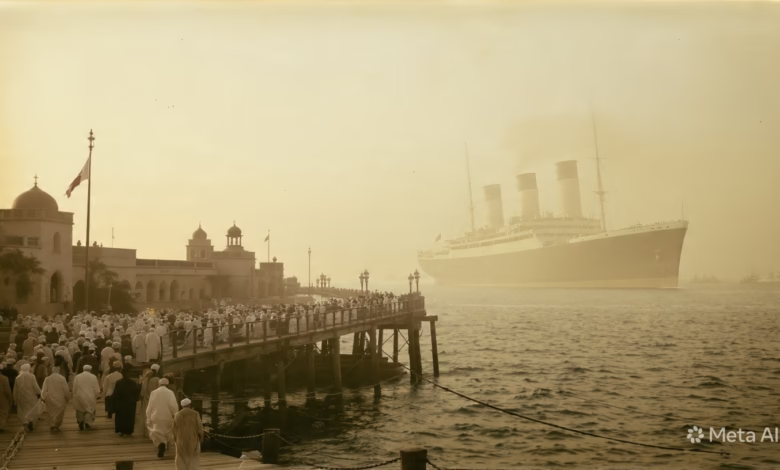
John Slight Reveals In This Chapter The Technological Component Of Colonialism; The Hajj In The Victorian Era Was Not Affected By British Laws Alone, But By Industrial Capitalism Which Changed The Face Of Maritime Transport. The Entry Of The “Steamship” Into Shipping Lines Eliminated The Long Distances That Used To Take Months And Years Via Overland Caravans; The Journey From Calcutta Or Singapore To Jeddah Came To Take Just A Few Weeks At Prices Within The Reach Of The Middle And Poor Classes In The Islamic World.
This “Logistical Liquefaction” Of The Hajj Led To An Explosion In The Number Of Pilgrims. However, Instead Of This Technological Leap Being A Blessing, It Transformed Into A Human Tragedy And Ugly Capitalist Exploitation Carefully Tracked By The Author Through British Archive Documents. Private British Shipping Companies (Such As The Peninsular And Oriental Company – P&O, And Other British And Indian Companies) Rushed To Achieve Enormous Profits By Shipping Pilgrims In Inhumane Conditions. Vessels Were Loaded Far Beyond Their Carrying Capacity, And Pilgrims Were Crammed Into The Lower Decks Of Ships Without Adequate Ventilation, Without Clean Drinking Water, Or Sanitary Facilities, Making These Steamships “Floating Incubators For Disease And Mortality.”
Faced With These Tragedies, And Fearing Political Unrest That Might Be Sparked By Islamic Anger In India Against British Capitalists, The Victorian Government Was Forced To Launch What Became Known As The “Native Passenger Ships Acts” In The 1870s And 1880s. These Laws Represented A Blatant Legislative Intervention From London To Regulate The Spaces Allocated To Each Passenger, The Quantities Of Water And Food, And The Presence Of Doctors Aboard Ships. Thereby, The Empire Transformed Into A “Logistical Monitor And Guardian” Of The Islamic Journey Of Worship.
3. Thomas Cook And Son: When Victorian Capitalism Manages The “Journey Of Faith”
Perhaps One Of The Most Exciting And Intriguing Chapters Of The Book Concerning The Victorian Era Is That Part In Which Slight Details The Astonishing Story Of The Involvement Of The Most Famous British Travel Agency, “Thomas Cook & Son,” In Organizing The Indian Hajj Between 1886 And 1893.
The Story Begins When The British Government In India Failed To Control The Greed Of Local Hajj Brokers And Shipping Companies, And Complaints From Hindu And Muslim Pilgrims Increased Regarding Operations Of Fraud, Extortion, And Homelessness In Jeddah And Mecca. Here, The Viceroy Of India, Lord Dufferin, Resorted To The Organized Victorian Capitalist Mentality, Appointing The “Thomas Cook” Company As The Official And Exclusive Agent To Manage And Operate Hajj Travels From The Entire Indian Subcontinent.
The Scene Was Surreal And Heavily Laden With Symbolic Meanings: A British Company Founded By An Evangelical Christian Man (Thomas Cook) Whose Primary Purpose Initially Was Organizing Christian Religious And Tourist Travels and Promoting Principles Of “Teetotalism” (Abstinence From Alcohol), Finds Itself Responsible For Booking Tickets, Providing Trains And Steamships, Securing Accommodation, And Ensuring The Safety Of Thousands Of Muslims Heading To Mecca!
Slight Explains That “Thomas Cook” Dealt With The Hajj As A “Modernizing Logistical Project”; Thus It Printed Guidebooks In Urdu, Persian, And Arabic, Established Fixed Offices In Bombay, Calcutta, And Jeddah, And Negotiated With Tribal Chiefs In The Hejaz To Secure Caravan Routes Between Jeddah And Mecca And Between Mecca And Medina Against Bedouin Raids. Although The Experiment Stopped After A Few Years (In 1893) Due To Financial Losses Incurred By The Company As A Result Of Its Inability To Absorb The Complexities Of The Ottoman And Hejazi Infrastructure, And The Rejection By Traditional Pilgrims Of “Christian” Custody Over Their Journey, This Era Proved—As The Author Sees It—That The British Empire Was Ready To “Privatize Religious Operations” And Entrust Them To Monopolistic Companies To Secure Its Political Stability.
4. The Jeddah Consulate: The Eye Of Whitehall In The Corridors Of The Hejaz
In This Hejazi Space Which Was Teeming With Transformations, The “British Consulate In Jeddah” (Which Was Established In The 1830s) Transformed From A Small Commercial Office Into One Of The Most Important Intelligence And Political Bases For Britain In The Middle East. The British Consul In Jeddah Was Not Merely A Diplomat Caring For The Affairs Of Subjects; Rather, He Was The “Supreme Imperial Monitor” Of The Hajj.
John Slight Reveals, Through The Letters Exchanged Between Consuls And The British Foreign Office, How The Consulate Building In Jeddah Transformed Into An Operations Center For Monitoring “Religious And Political Security.” Consuls Monitored The Numbers Of Pilgrims Arriving From Each Colony, And Managed The System Of “Compulsory Return Tickets” To Prevent The Phenomenon Of Widespread Poverty And Destitution Among Pilgrims Who Used To Sell Everything They Owned To Reach Mecca and Then Found Themselves Unable To Return, Becoming A Financial And Security Burden On The Consulate.
More Importantly, The Consuls Monitored “Ideas”; Mecca During The Hajj Seasons Transformed Into An “Open Marketplace For Anti-Colonial Ideas.” There, The Rebellious Indian Muslim Met The Sudanese Militant Loyal To The Mahdiyya, And The Malayan Resentful Of British Rule. The Consul Sent Muslim Spies And Informants (Who Worked For Account Of Britain) Into The Inside Of The Meccan Sanctuary—Where The Entry Of Non-Muslims Is Strictly Forbidden—To Overhear Friday Sermons, Monitor Political Pamphlets, And Write Detailed Reports About Any Signs Of “Pan-Islamism” Or Movements Opposing The British Crown. Thereby, The Consulate Served As An Intelligence Radar Monitoring The Pulse Of The Islamic World From Its Holiest Precincts.
The Edwardian Era And The Grand Confrontation In World War One (1901-1919)
1. The Edwardian Era And The Hejaz Railway: The Geopolitical Challenge Of Ottoman Modernization
With The Dawn Of The Twentieth Century, British-Ottoman Relations Entered A New Phase Of Tension, Reflected By The Logistical Transformations In The Arabian Peninsula. John Slight Traces In This Part What Could Be Termed The “Geopolitical War Of Sacred Transportation.” In The Year 1900, The Ottoman Sultan Abdul Hamid The Second Announced His Ambitious Project: The Hejaz Railway, Extending From Damascus To Medina. This Project Was Not, In The Eyes Of London, Merely A Logistical Modernization To Facilitate The Movement Of Pilgrims, But Was A Highly Dangerous Strategic Move Aiming To Enhance “Pan-Islamism” And Solidify Direct Ottoman Influence In The Depth Of The Arabian Peninsula, In Dangerous Proximity To Britain’s Protectorates In The Gulf, Egypt, And The Suez Canal.
The Author Analyzes The Edwardian British Dread Of This “Sacred” Train. The Ottoman State Could, Via This Line, Transport Its Armies And Forces Within A Few Days To The Hejaz Without Needing To Pass Through The Suez Canal Controlled By Britain, And Without Submitting To The British Quarantine System In Tor Or Kamaran. Here, The Hajj Transformed Into A Tool For Resisting Western Colonial Influence Through Competing Technology.
In Response, Britain Intensified Its Bureaucratic Monitoring; The Consulate In Jeddah And The Legation In Cairo Monitored Every Meter Built Of The Line, Entering Into An Undeclared Diplomatic Conflict To Convince Muslim Pilgrims Arriving From India And Egypt To Continue Using British Steamships Instead Of The Ottoman Train, Exploiting For This Purpose Health Propaganda Claiming That Trains Lacked Sanitary Conditions and Contributed To Spreading Epidemics Faster Than Biologically Isolated Ships.
2. The Earthquake Of 1914: When The Crown Confronted The “Sacred Jihad”
The Historical Plot In Slight’s Book Reaches Its Dramatic Climax With The Outbreak Of World War One In August 1914, And The Entry Of The Ottoman Empire Into The War On The Side Of The Central Powers (Germany And Austria) Against The Allies In November Of The Same Year. At That Defining Moment, The Shaykh Al-Islam In Constantinople, Under Guidance From The Sultan, Issued The Fatwa Of “Sacred Jihad” Against Britain, France, And Russia, Calling On Muslims All Over The World, Especially Soldiers In The British Indian Army And In North Africa, To Revolt Against Their Colonial Rulers.
Here, The British Empire Found Itself Facing An Existential Security Challenge It Had Never Experienced Before: How To Maintain The Loyalty Of Millions Of Muslim Subjects In India, Egypt, Sudan, And East Africa While The Muslim Caliph Was Declaring War Against It From His Capital? More Importantly: What Was The Fate Of The Hajj? For Mecca And Medina, The Two Destinations Longed For By Millions Of Subjects, Lay Under Direct Ottoman Sovereignty, And Any Pilgrim Going There In Time Of War Might Be Subjected To Political Brainwashing Or Recruited Into The Ranks Of The Ottoman Army.
Slight Reveals Through Secret Documents Of The India Office And The Foreign Office How The British Administration Was Divided Into Two Currents:
The Current Of Intelligence Security Hawks: Which Demanded Stopping The Hajj Entirely Throughout the War Period And Declaring The Arabian Peninsula A Closed Military Operations Zone, To Prevent Any Contact Between Its Subjects And The Turks.
The Current Of Political Pragmatism (Which Triumphed In The End): Which Was Led By The Astute Minds Of The “Arab Bureau” In Cairo (Such As Gilbert Clayton, Ronald Storrs, And Under Indirect Guidance From Lord Kitchener). This Current Argued That Preventing The Hajj Would Be A Free Gift To Ottoman Propaganda, And Would Prove The Lie Of The Turks That Britain Was An Enemy Of Islam and Was Fighting The Fifth Pillar Of The Religion.
3. “Logistics Of The Holy War”: The Hajj Under Protection Of The British Fleet
Based On The Pragmatic Vision Of The Arab Bureau, London Took A Bold Strategic Decision: The Continuation Of The Hajj And Its Financial And Military Securing By The British Crown In The Midst Of World War One. This Move Was Equivalent To A Complete Reformulation Of The Concept Of “Colonial Religious Sovereignty.”
John Slight Describes In Detail How Warships Belonging To The British Royal Navy In The Red Sea Transformed From Tools To Strike Enemies Into “Guardians Of Pilgrim Convoys.” Britain Issued Official Declarations, Distributing Millions Of Copies Of Them In India, Egypt, And Sudan, Asserting That Britain Was Not Fighting Islam, But Was Fighting The “Turanian Clique” That Had Hijacked The Ottoman Caliphate, Pledging To Guarantee The Safety Of Pilgrims And Freedom Of Worship, And Even Announcing The Exemption Of Pilgrim Ships From The Naval Blockade Imposed On Ottoman Ports.
London Did Not Stop At That, But Carried Out A “Financial Liquefaction” Of The Hajj; It Provided Enormous Financial Subsidies To Shipping Companies To Reduce Ticket Prices, And Provided Urgent Loans And Assistance To Poor Pilgrims. The Target Was Clear And Obvious: To Show Britain In The Appearance Of The “True And Sole Protector” Of Islamic Holy Sites, At A Time When The Turks Were—According To British Propaganda—Failing To Provide Security And Food To The People Of The Hejaz Due To The Conditions Of The War And The Blockade.
4. Manufacturing The Arab Revolt: Sharif Hussein And British Mediation For The Hajj
The British Logistical Facilities For The Hajj In The First War Years Were Nothing But A Prelude To The Greatest Geopolitical Maneuver In The History Of The Modern Middle East: The Great Arab Revolt Of 1916. John Slight Connects In An Enjoyable Analysis Between Managing The Hajj And The Birth Of The British Alliance With The Sharif Of Mecca, Hussein Bin Ali.
Britain Realized That Securing The Hajj Permanently And Overthrowing Ottoman Legitimacy Required The Presence Of A Allied Local Authority In The Hejaz That Would Separate The Holy Sites From Constantinople. The Arab Bureau In Cairo Found In The Ambitions Of Sharif Hussein A Golden Opportunity. When The Sharif Announced His Revolt In June 1916 With Financial, Military, And Intelligence Support From Britain (In Which Lawrence Of Arabia Played A Famous Role), The Hajj Transformed Immediately Into A Platform To Announce The Legitimacy Of The New Hashemite Regime.
The Author Observes How Britain Exploited The Hajj Season Of 1916 (Which Took Place A Few Weeks After The Launch Of The Revolt) As A Grand Global Propaganda Operation. The British Government Facilitated The Arrival Of Large Numbers Of Pilgrims From Egypt, Sudan, And Algeria (Subject To France, Britain’s Ally) To Mecca. For The First Time, Hajj Reports Were Printed In British And Egyptian Newspapers As Proof Of The “Liberation Of The Hejaz From The Turkish Yoke.” British Muslim Subjects Were Walking In The Streets Of Mecca Freely, Distributing British Money And Gold That Was Flowing As A Lifeline To Support The Economy Of Sharif Hussein And His Tribes.
However, This “Sacred Alliance” Between The Crown And The Hashemites In The Hejaz Was Not Devoid Of Obstacles; As Slight Explains That Sharif Hussein Soon Began To Behave As An Independent Ruler, Imposing Enormous Taxes On Pilgrims To Fund His War, And Clashed With The British Medical Bureaucracy Around Quarantine Conditions, Which Made London Realize That Manufacturing A “Muslim Ally In Mecca” Might Entail Political Burdens Exceeding Its Logistical Benefits, Which Would Pave The Way For Another Strategic Shift After The End Of The War.
The Retrospective Era And The Earthquake Of The Saudi Transformation (1920-1939)
1. The Cracking Of The Hashemite Dream And The “Caliphate” Crisis In Mecca
Hardly Had World War One Laid Down Its Burdens When British Promises To Sharif Hussein Bin Ali Began To Erode On The Rock Of The New Colonial Reality. John Slight Analyzes In This Chapter With Great Intuitiveness The Stage Of “The Hashemite Interregnum” Between 1919 And 1924. Sharif Hussein Thought That British Support For Him During The War Would Translate Into Full Recognition Of His Grand Arab Kingdom And His Installation As Caliph Of Muslims After The Official Overthrow Of The Ottoman Caliphate At The Hands Of Mustafa Kemal Ataturk In 1924.
However London, Which Was Rearranging Its Cards In The Middle East Via The Mandate System (In Palestine, Transjordan, And Iraq), Began To See In The Ambitions Of Sharif Hussein A Geopolitical Burden. This Tension Was Reflected Directly On The Management Of The Hajj; For The Hejaz Under The Rule Of King Hussein Transformed Into A Repellent And Unsafe Environment For Pilgrims. The Author Documents, Through Reports Of British Consuls In Jeddah, How Sharif Hussein Imposed Enormous Financial Fees And Arbitrary Taxes On Indian And Egyptian Pilgrims To Compensate For The Deficit In The Hashemite Treasury, And His Forces Failed To Protect Pilgrim Convoys From Raids By Bedouin Thieves Who Intercepted Routes Between Jeddah, Mecca, And Medina.
Faced With This Logistical And Security Chaos, The British Colonial Bureaucracy—Especially Within The Government Of India—Began To Lose Its Patience. Indian Pilgrims Were Returning To Their Country Laden With Feelings Of Anger And Resentment Not Against Sharif Hussein Alone, But Against Britain Which Had Installed And Protected Him. Here, Whitehall Took A Veiled Decision Of “Positive Neutrality” Toward Any Alternative Power That Could Impose Security In The Peninsula Of Arabs, Even If That Power Was Coming From Najd With Armies Of The Ikhwan (Those Who Obeyed God).
2. The Wahhabi Shock: Saudi Sovereignty And The Reformulation Of The Religious Ritual
In The Year 1924, The Forces Of Sultan Abdul Aziz Al Saud Marched Toward The Hejaz, And Taif Then Mecca Fell, and King Hussein Abdicated His Throne For The Hashemite Ambition In The Hejaz To End Forever, and Abdul Aziz Announced Himself King Of The Hejaz, Najd, And Its Dependencies. This Event Represented A Grand Cultural, Doctrinal, And Political Shock Within The Islamic World, And Within The Corridors Of The British Empire Alike.
John Slight Reveals With Unprecedented Brilliance How Britain Faced The Wahhabi “Doctrinal” Challenge. The Matter Was Not Merely A Change In The Ruling Elite, But Was A Confrontation With A Religious Revivalist Movement That Viewed Many Of The Traditional Practices Of Pilgrims (Such As Visiting Tombs, Building Shrines, Supplicating To The Righteous, And Celebrations Of The Mahmal) As “Innovations And Manifestations Of Polytheism” That Must Be Removed By The Power Of The Sword.
Saudi Forces Proceeded To Demolish Many Historical Domes And Shrines In The Al-Ma’la Cemetery In Mecca And The Al-Baqi Cemetery In Medina (Such As Domes Of The Prophet’s Family, Companions, And Wives). This Religious Behavior Sparked A Furious Wave Of Anger And Violent Protests Among Millions Of Shia Muslims And Traditional Sunnis In India And Egypt, Who Formed The Largest Expanse Of Subjects Of The British British Empire.
Here, Britain Found Itself In A Grand Diplomatic Dilemma: How To Defend The Freedom Of Religious Practices For Its Pilgrim Subjects Without Clashing With Emerging Saudi Sovereignty And Without Intervening In Islamic Theological Debates? London Adopted A Strategy Of “Strict Pragmatism”; As It Recognized Via The Treaty Of Jeddah (1927) The Full Sovereignty Of Ibn Saud Over The Hejaz, And In Return, Extracted From Him Strict Pledges To Protect Foreign Pilgrims, Secure Routes, And Facilitate Their Rituals, With Implicit Acceptance Of The New Doctrinal Laws Imposed By Saudi Rule Within The Holy Precincts.
3. The Battle Of The “Mahmal”: The Symbolic Egyptian-Saudi Clash
Among The Most Beautiful Analytical Chapters In This Part Of The Book Is Slight’s Deconstruction Of The Famous “Egyptian Mahmal” Crisis In 1926. The Mahmal (Which Was The Official Convoy Sent By Egypt Annually Carrying The Cover Of The Holy Kaaba Accompanied By A Military Garrison, Brass Music, And Loud Celebrations) Represented A Symbol Of Sovereignty And Regional Influence For Egypt In The Hejaz.
In The Hajj Season Of 1926, Which Was The First Under Full Saudi Sovereignty, The Military Garrison Of The Egyptian Mahmal Clashed With The Najdi “Ikhwan” Fighters In Mina. The Najdis Considered That The Military Music Accompanying The Mahmal Was A “Reprehensible Innovation” And A Violation Of The Sacredness Of The Rituals, And The Matter Developed From Verbal Altercations Into Stone-Throwing, and The Egyptian Garrison Responbed By Opening Fire, Resulting In Casualties And Wounded On Both Sides.
The Author Reveals How Britain Entered On The Line Of This Crisis As A “Hidden Colonial Mediator.” Egypt Was Under Direct British Protection Or Influence, And Ibn Saud Was An Ally Linked To Britain By Political Treaties. The Crisis Led To A Diplomatic Rupture Between Cairo And Riyadh, And Egypt Refrained From Sending The Cover And The Mahmal For Years. Slight Explains How Britain Managed This Symbolic Conflict; As It Advised King Fuad In Egypt To Exercise Restraint and Not Turn The Crisis Into A Military Confrontation, And Encouraged King Abdul Aziz To Establish The “Kaaba Cover Factory” Inside Mecca To Cut Off Logistical And Political Reliance On Egypt, And Thereby Britain Contributed With Full Awareness To Liquidating The Old Political Symbols Of The Hajj In Favor Of Concentrating Absolute Sovereignty In The Hand Of The Saudi State.
4. Logistical Infrastructure In The Interwar Period: The Era Of Order And Security
Despite The First Doctrinal Shock, John Slight Concedes That The Third And Fourth Decades Of The Twentieth Century (1920-1939) Witnessed An Unprecedented Qualitative Leap In The Security and Organization Of The Hajj, Thanks To The “Convergence Of Interests” Between The British Colonial Bureaucracy And The Strict Security Centralization Of King Abdul Aziz.
Ibn Saud Ended The Era Of Bedouin Raids Entirely Through Harsh Military Strikes and Ironclad Security Enforcement, Transforming The Hajj Route From A “Journey Fraught With Death And Extortion” Into A Completely Safe Path. Cars And Buses Entered Transport Lines Between Jeddah, Mecca, And Medina, For Camel Caravans To Begin Gradual Disappearance. At The Same Time, The British Consulate In Jeddah (Which Was Upgraded To The Rank Of A Full British Legation) Cooperated With Saudi Authorities To Establish An Advanced System For Registering Pilgrims, Issuing Official Passports, And Applying The System Of Compulsory Return Tickets With Strict Rigor To Prevent Overstaying.
On The Health Side, The Deadly Spectre Of Cholera Receded Thanks To Tremendous Development In British Quarantine Stations In Kamaran And Tor, And Thanks To The Introduction Of Compulsory Vaccinations For Pilgrims Before Leaving The Ports Of Bombay, Calcutta, Or Port Said. Slight Concludes That The Hajj In This Period Transformed Into An “International Bureaucratic Machine Powered By Capital,” Where The Desire Of The Empire For The Stability Of Its Subjects Met With The Desire Of The Saudi State To Legitimize Its International Rule and Collect Financial Revenues Of The Hajj Which Formed The Primary Backbone Of Its Economy Before The Eruption Of Oil In Commercial Quantities.
The Furnace Of The Second War And The Fading Of The Imperial Shadow Over Mecca (1939-1956)
1. The Great Depression And The War Of Radio Waves: Fascist And Nazi Competition For The “Soul Of Hajj”
Before The Earth Shook Under The Feet Of Cannons In September 1939, The 1930s Had Imposed Challenges Of Another Kind On The Machine Of The British Hajj. John Slight Explains That “The Great Depression” Which Struck The Global Economy Led To A Sharp Collapse In The Numbers Of Pilgrims Arriving From Major British Colonies Such As India, Malaya, And West Africa, Given The Inability Of Muslim Farmers And Workers To Secure The Costs Of The Journey. This Economic Collapse Prompted London To Provide Exceptional Logistical Facilities And Financial Subsidies To Maintain The Continuity Of The Hajj Movement, Not Only Out Of Habitual Political Pragmatism, But To Confront A New And Exceptional Ideological Threat: Fascist And Nazi Propaganda.
The Author Reveals, Through Precise Intelligence Documents, How The Hajj In The Thirties Transformed Into An Early Cold War Arena Between Britain And The Axis Powers. Fascist Italy Under Leadership Of Mussolini (Who Installed Himself As “Protector Of Islam” In Libya) And Nazi Germany Via “Berlin” Radio Directed In Arabic, Launched Fierce Propaganda Campaigns Targeting Muslim Subjects Of Britain Heading To The Hejaz. German And Italian Propaganda Accused London Of Starving Muslims In India, And Colluding With The Zionist Movement In Palestine To Strangle The Aspirations Of Arabs.
In Response, Britain Employed “Religious Logistics” As A Counter Tool; Thus It Launched The BBC Arabic Service In 1938 To Broadcast Regular Reports Praising British Facilities For Pilgrims, And Facilitated Channels Of Communication Between King Abdul Aziz and The House Of Saud To Ensure The Hejaz Was Not Affected By Axis Propaganda, And Indeed Britain Funded The Transport Of Pilgrims From Cyprus, Malta, And Its Areas Of Influence To Block The Path Ahead Of Fascist Infiltration.
2. The Second World War: The Hajj In Facing Submarines And The “Axis”
With The Outbreak Of World War Two In 1939, The Nightmare Of 1914 Recurred But With More Dangerous Technological And Military Complexities. The Danger Was No Longer Represented In An Ottoman Jihad Fatwa, But In An Imminent Danger Threatening The Bodies Of Pilgrims In The Open Sea: Axis Submarines and Aircraft. The Indian Ocean And The Red Sea Transformed Into Active Military Operations Zones, And Operating Pilgrim Ships Became Equivalent To Logistical Suicide Unless Supreme Military Protection Was Provided.
Slight Traces Brilliantly How “The British Government Of India” And The Colonial Office In London Took A Strategic Decision To Continue Organizing The Hajj Under Any Price, Considering That Closing The Door Of Hajj Would Represent A Tremendous Moral Victory For The Axis and Evidence Of Britain’s Inability To Protect Its Subjects. Pilgrims Were Organized In “Protected Maritime Convoys” Under Heavy Guard From Naval Units Belonging To The British Royal Destroyer.
Difficulties Were Not Limited To The Security Aspect; Rather, The Scarcity Of Foodstuffs And Global Inflation Resulting From The War Placed The Hejaz In A Suffocating Supply Crisis That Threatened Real Famine. Here, Britain Intervened Via Its “Middle East Supply Centre” Belonging To It In Cairo, Pumping Thousands Of Tons Of Wheat, Rice, Sugar, And Flour To Saudi Ports To Secure Food For Pilgrims and Residents Of Mecca And Medina. The Author Argues That This Food Logistical Intervention In The Years Of War Not Only Saved The Hajj, But Solidified The Foundations Of The Saudi State In Its Most Economically Critical Moments, Before American Oil Began To Flow In Abundance After The War.
3. The Earthquake Of 1947 And The Independence Of India: Eviscerating British Organs From The Body Of Hajj
The Post-World War Two Phase Witnessed The True Beginning Of The End Of The Empire. The Death Blow To The “British Islamic Empire” Did Not Come From The Middle East, But Came From South Asia In August 1947: The Independence And Partition Of The Indian Subcontinent Into The Two States Of India And Pakistan.
John Slight Analyzes This Event As An “Amputation Operation Bureaucratic” Of The Most Important Arteries Of The British Hajj. British India Was, Via The “Bombay Office” And The “India Office In London,” The Entity Providing The Largest Human Mass, The Greatest Financial Funding, And The Medical and Administrative Staff That Managed The Jeddah Consulate And Quarantine Stations In Kamaran. With The Departure Of The British From New Delhi And Karachi, Management Of Affairs Of These Pilgrims Transferred Immediately To The New National Governments In India And Pakistan.
The British Shadow Over The Hejaz Shrank Suddenly, And There Remained Under The British Crown Nothing Except Pilgrims Of Colonies Of Africa (Nigeria, Sudan Subject To Condominium Rule, Gambia, Sierra Leone) And Parts Of Malaya And Southeast Asia, In Addition To The Eroding Mandate In Palestine Which Ended With The Catastrophe Of 1948. Britain Transformed From “The Largest Islamic Power Managing The Hajj” Into A Second-Class Colonial Power Trying To Maintain What Remained Of Its Influence Via Managing Its Relations With Rising Regional Powers.
4. The Suez Station 1956: The Gravestone Documenting The Imperial Hajj
The Historical Journey Of The Book Reaches Its Inevitable Point Of Ending In The Autumn Of 1956. Slight Chooses The Suez Crisis (The Tripartite Aggression Against Egypt) To Be The Curtain That Falls Over A Century Of British Logistical Sovereignty Over The Hajj.
When Britain, France, And Israel Launched Their Aggression Against Egypt Following Jamal Abdel Nasser’s Nationalization Of The Suez Canal, The Arab And Islamic World Ignited With Furious Anger. The Kingdom Of Saudi Arabia Under Leadership Of King Saud Bin Abdul Aziz Rushed To Cut Off Diplomatic Relations Entirely With London, British Diplomats Were Expelled From Jeddah, And The British Embassy Closed Its Doors.
Here, The Surreal Scene Appears With Which The Article Initiated: The Suez Crisis Was Taking Place In November, The Month That Coincided With The Hajj Season For That Year. The War Caused The Closure Of The Suez Canal And Stopping Of Maritime Shipping Movement, And Britain Found Itself Unable To Deliver Thousands Of Pilgrims Among Its Subjects In West Africa (Nigeria In Particular) Who Were Flowing Via Land, Air, And Sea Routes. Because Of The Absence Of British Diplomats, London Was Forced To Rely On Local Pakistani Staff In Jeddah, And Under The Flag Of Pakistan (The Newly Independent State), To Manage Affairs Of Nigerian Pilgrims Who Were Still Carrying British Passports!
This Scene Was, As Slight Comments, Equivalent To The Official Announcement Of The Death Of The “British Hajj.” The Suez Crisis Proved That Rising Arab Nationalism, Independence Of Islamic States, And Full Saudi Sovereignty, No Longer Allowed The Presence Of Any Role For “The White Man” In Managing The Sacred Journey. The Hajj Transformed Entirely Into A Sovereign Affair Managed By Independent Islamic States Through Their National Institutions, And The Page Of The Empire That Used To Perform Hajj To Mecca Was Folded.