
Hollywood Diplomacy And Its False Endings
In World Cinema, Specifically In That Classical Structure That Hollywood Has Long Exported To The World, There Is A Comforting Ethical Pattern That Never Changes; The Heroine Finds Herself Under A Suffocating Siege, The Villain Clutches Her Neck, Her Weapon Is Flung Far Out Of Her Reach, And A Plane Packed With Explosives Is Heading At Breakneck Speed Toward The White House. The Audience Holds Their Breath, And The Drama Reaches Its Tragic Climax Where Despair Seems Absolute And The Deadlock Total. But, Suddenly, The Turning Point Arrives (The Twist); The Heroine Brilliantly Escapes From Her Captor’s Grip, Grabs The Weapon, Redirects The Plane Toward The Sky, And The Nightmare Clears Into A Happy Ending Applauded By Everyone.
This Narrative Is Not Merely An Entertaining Luxury, But Is Rather, As The German Thinker And Strategist Carlo Masala Argues In His Shocking And Urgent Book “If Russia Wins: A Scenario”, A Psychological Construct And A Deep Cognitive Distortion That Has Settled In The Modern Western Mind. The Western Individual, And The Decision-Maker In The Capitals Of The “Free World”, Have Become Accustomed To Thinking That Everything Will Ultimately Turn Out For The Better, And That History Is Conditioned By Arriving At The Inevitable “Happy Ending” In Which Democracy And Liberalism Triumph. This Was The Prevailing Conviction Following The Second World War In 1945, And This Is How Illusions Took Root After The Fall Of The Berlin Wall In 1989. Yes, Democracies May Go Through Moments Of Weakness, Ukraine May Face Setbacks, Populists May Advance In The Ballot Boxes, And Donald Trump May Return To Power In Washington; Nevertheless, The Liberal Mind Whispers To Itself: “In The End, Things Will Not Be That Bad, Russia Will Not Dare Attack Us, Our Democracies Will Maintain Their Resilience, The Aggressed Country Will Triumph, And The West Will Remain The Sole And Dominant Pole.”
But, What If History Marched In The Opposite Direction? What If There Were No Happy Ending? What If Russia Actually Won?
From This Critical And Terrifying Point, Carlo Masala, Professor Of International Politics At The Bundeswehr University Munich And Current Director Of The Centre For Intelligence And Security Studies, Proceeds To Draft A Highly Dangerous Geopolitical Document. In His Book, Masala Rejects Recourse To “Intellectual Laziness” And Short-Term Political Horizons That Govern Western Leaders Today. He Does Not Offer An Inevitable Prophecy, But Rather Designs A “Strategic Scenario” Based On Extrapolating Current Trends And Their Interactions. Scenarios, In Academic And Military Tradition, Are Not Random Guesswork, But Rather Tools To Expand The Range Of Possibilities In Our Minds, And A Training Method For Decision-Makers To Face The Worst-Case Scenario So That It Can Be Avoided And Prevented From Happening. In This Extended And Fascinating Work, Masala Blends Rigorous Analytical Deconstruction With Imagined Dialogues Inside Closed Decision-Making Rooms In Washington, Berlin, Moscow, Beijing, And Brussels, Granting The Reader A Taste Of The Bitterness Of Directly Experiencing The Oncoming Geopolitical Catastrophe.
The Underlying Philosophy Of The Scenario: Deconstructing The Russian “Victory”
Masala Begins By Assessing The Prevailing Concept Of “Victory” And “Defeat” In The Current Ukrainian War. He Believes That Many Political Elites And Western Societies Have Fallen Into The Trap Of Oversimplification; They Believe That A Russian Victory Necessarily Requires A Full Invasion Of Kyiv And A Total Overthrow Of The Ukrainian State. But The Author Proposes A Different And More Realistic Definition; Russian Victory, In Its Essence, Has Already Been Partially Achieved, And Structural Victory Occurs If Moscow Manages To Retain The Territories It Occupied And Illegally Annexed, Preventing Ukraine From Regaining Its Full Sovereignty.
The Book Observes A State Of Fatigue And Boredom Beginning To Creep Into Western Societies; Where Populist And Opportunistic Voices Rise Saying: “And Why Should We Care About Ukraine? Let Happen What May, The Important Thing Is For This War To End And For The Machine Of Economic Deprivation To Stop, So That Things Return To Normal, And Let Us Give Russia What It Wants From Territories To Buy Peace.” Here, Masala Delivers His First Intellectual Shock: The Issue Does Not Concern Ukraine Alone, But Rather That Offering Concessions To Russia Out Of Exhaustion Will Never Bring Peace, But Will Instead Be Akin To Giving A Green Light To Fully Destroy The European Security Architecture And Overthrow The Entire Liberal International Order. It Is The Beginning, Not The End, And The West In This Case Resembles An Ostrich Burying Its Head In The Sand In Front Of A Sweeping Storm.
The Breaking Point: Three Years Before The Catastrophe And The Geneva Surrender
In Order For The Reader To Understand How The Fabric Of The International Order Unraveled, Masala Takes Us Back In His Imagined Timeline To Three Years Before The Crucial Moment Of The Scenario (Specifically In The Palace Of Nations In Geneva). The Atmosphere Inside The Hall Is Stormy And Cold Like Siberian Frost; The Ukrainian And Russian Delegations Meet Face To Face, Each Delegation Comprising Five Representatives, With Signs Of Aging And Exhaustion Marked On Their Faces Despite Some Not Exceeding Thirty Years Of Age, Which Are The Wounds Of Long Years Of War That Started In 2022.
This Meeting Was Not A Negotiation Between Equals, But Was Rather A Stage For A Process Of “Dictating Dictates” Engineered Under Joint Sponsorship And Indirect Pressure From The United States And China. The Ukrainian Delegation Came To Geneva Fully Aware Of What Was Required Of Them, And What Awaited Them By Allies And Enemies Alike; They Came To Sign Their Document Of Surrender. The Document Was Not Publicly Named “An Instrument Of Surrender”, But Was Marketed Internationally Under The Title Of “The Geneva Peace Agreement”, Yet In Core Reality It Was A Total Fracture For The Ukrainian State And A Shameful Retreat For The Collective West.
In This Chapter, Masala Unveils The Curtain On The Political Dynamics That Led To This Moment; Where Ukraine No Longer Possessed Enough Human Elements (Manpower) Or Military Gear (Materiel), And More Importantly, It Lost Vital And Sustainable Support From Its Western Allies. In A Fiery Imagined Dialogue That Reveals The Transactional Mentality That Dominated The White House Under The Returned Trump Administration, The Author Recalls Details Of The Last Meeting That Brought The Ukrainian President Volodymyr Zelensky Together With His Western Partners On The Night Of The Signing. Zelensky Was Screaming, Warning Against The Catastrophic Consequences Of Abandoning His Country, Only To Receive A Shocking And Dismissive Response From Washington: “The Amount Of Money Allocated For Military Aid To Ukraine, If Exploited To Purchase Greenland, The Ratio Between Land And Dollar Would Have Been Much Better! I Do Not Broker Losing Deals.” And When The British Prime Minister Tried To Intervene To Save The Situation Saying: “Mr. President, The Security Of Europe…”, The American President Coldly Interrupted Him: “Europe Must Pay For Its Own Security.”
Conviction Prevailed In Washington And Major European Capitals That Russia Had Lost Enough Men And Materiel In The War Of Attrition, Consequently It Would Not Pose A Future Threat, And That The Time Had Come To End This International Headache. And As The British Press Reported From The French President That Night: “Zelensky Must Realize That The Game Is Over.” This Abandonment Did Not Come From Vacuum, But Was Rather A Reflection Of A Structural Incapacity And A Glaring Failure Of The European Union To Increase Production Of Military Equipment And Ammunition To A Level That Guarantees A Sustainable Flow To Compensate For The Absence Of Crucial American Support.
Terms Of The Tragedy: Torn Geography And Stripped Sovereignty
The Tragedy Of “The Geneva Peace” Resulted In Harsh And Humiliating Conditions That Excised A Vital Part From The Ukrainian Body; For It Was Not Restricted Only To Forcing Ukraine To Cede More Than 20% Of Its Sovereign Lands For The Benefit Of The Russian Federation, But It Was Obligated To Amend Its Constitution To Include A “Permanent Neutrality Clause”, Depriving It Finally And Categorically Of Any Future Hope Of Joining The North Atlantic Treaty Organization (NATO).
And As A Type Of False Moral Compensation And Diplomatic Sedatives, An Economic Rebuilding Program Was Agreed Upon, Financed By The World Bank, And The Glaring Irony Is That It Was Directed Not Only To Areas Under The Control Of The Ukrainian Government, But Also Included Territories Occupied And Annexed By Russia! To Monitor This Fragile Ceasefire, The United Nations Decided To Form An International Peacekeeping Force Comprising Forces From China, European Nations, And Other Countries. However, These Forces, As Masala Criticizes Thoroughly, Were Merely A “False Witness” Whose Mandate And Powers Were Restricted; As Their Mission Was Confined To Writing Reports And Raising Them To The United Nations Security Council Upon The Occurrence Of Any Breaches, Without Possessing Any Real Military Mandate Or Capacity For Immediate Military Deterrence To Prevent A New Russian Attack.
And Thus, The War Ground To A Halt, Ending The Largest Armed Conflict Witnessed By The European Continent Since The Second World War With A Resounding Defeat For Ukraine And A Symbolic Fracture For The West. And While Western Politicians Were Racing To Proclaim Success In “Preventing Bloodshed” And Avoiding Total Nuclear Confrontation, Cracks In The Wall Of European Security Were Widening Deeply, And Real Russian Intentions In The Kremlin Were Preparing To Move To The Next Stage Of The Plan, A Stage In Which Ukraine Was Nothing But The First Domino Piece.
Inside Closed Kremlin Rooms.. The Hero Of The Second Great Patriotic War
While Geneva Was Witnessing The Signing Of The Ukrainian Fracture Instrument, The Atmosphere In Moscow Was Experiencing A State Of Political Surrealism And Nationalist Euphoria Not Witnessed By The Country Since May 1945. Carlo Masala Takes Us In His Scenic Engineering Into The Great Hall Inside The Kremlin Palace, Where The Russian President Stands Surrounded By His Military And Security Elite (Siloviki), And Before Him A Crowd Of Correspondents And Army Generals Whose Chests Were Heavily Laden With Medals. The General Appearance Is Not That Of A President Executing A Exhausting War Of Attrition, But Rather The Appearance Of A “Modern Tsar” Who Reassembled Russian Lands, Challenged The Entire Western Empire, And Triumphed Over It.
Masala Analyzes The Speech Delivered By The Russian President On That Historic Night, Considering It The Foundational Document For The “Post-West” Era. The President Did Not Speak About Ukraine As A Neighboring State That Had Been Neutralized, But Spoke About It As A “Historic Russian Land” That Returned To The Bosom Of The Motherland After Decades Of Western Hijacking. In This Speech, The Narrative Was Completely Reframed; The Special Military Operation Was No Longer Merely A Defensive Procedure Against NATO Expansion, But Was Officially Proclaimed In Its Capacity As “The Second Great Patriotic War.”
The Message The Kremlin Wanted To Deliver To The Russian Interior And To The World Was Clear And Strict: Russia Was Not Fighting Ukraine, But Was Rather Fighting The Entire North Atlantic Treaty Organization, And Since Ukraine Had Surrendered And Had Its Limbs Amputated, Russia Had Effectively Defeated NATO On The Battlefield. This Conviction Embedded In The General Russian Consciousness The Idea Of The Inevitability Of Moscow’s Strategic Superiority, And Proved To The Regime That The Immense Economic And Human Sacrifices Offered Along The Years Of Conflict Did Not Go In Vain, But Were The Necessary Price To Regain The Status Of A Great Power That Cannot Be Bypassed In Shaping The Destiny Of The World.
The Economic Delusion And The Fall Of The “Deadly Sanctions” Theory
Masala Deconstructs In This Section One Of The Greatest Illusions Upon Which The West Had Lived Since 2022; Which Is The Theory Of “Comprehensive Economic Sanctions Capable Of Bringing Russia To Its Knees.” In The Imagined Scenario, The Author Explores How These Sanctions Transformed From A Siege Tool Into A Structural Catalyst To Restructure The Russian Economy. Instead Of Collapsing, Moscow Succeeded In Building What Masala Terms A “Fortress Economy” Via Two Parallel Tracks:
The First Track (Localization Of Military Industries): Russian Factories Transformed To Work Around The Clock, And Civil Technological Sectors Were Fully Integrated Into Serving The War Effort. This Transformation Created A Case Of “Military Keynesian Stimulation”, Where Unemployment Rates Dropped To Record Levels, And Vast Funds Were Pumped Into Poor Russian States And Regions From Which Soldiers Emerge, Creating A New Social Class Benefiting Materially From The Continuation of The Pattern Of A War State.
The Second Track (Migration Toward The East): Russia Succeeded In Redirecting Its Entire Exports Of Energy And Raw Materials Toward Asian Markets, Specifically China And India. This Strategic Shift Made Western Sanctions A Tool To Isolate The West From Russian Resources, Not To Isolate Russia From The World.
And When Sanctions Were Partially Lifted After “The Geneva Agreement” As Part Of De-escalation Terms, Russia Did Not Return To Previous Western Rules of The Game. Western Companies Entered A Frantic Race To Return To The Russian Market Fearing To Lose Their Influence Permanently For The Benefit Of Chinese Companies. This Shameful Return Of Western Capital Represented, In The View Of The Kremlin, Additional Evidence That The West Does Not Possess Any Long-Term Strategic Endurance, And That Its Narrow Commercial And Opportunistic Interests Will Always Lead It To Bow Down In Front Of Hard Power In The End.
Psychology Of The Western Fracture And The “Deterrence Domino” Effect
The Book “If Russia Wins” Transitions Us To The Other Side Of The Border, To Analyze The Destructive Psychological And Political Impact Created By The Russian Victory On The Western Collective Mind. Masala Believes That Defeat In Ukraine Was Not Merely A Geographical Loss, But Was An “Existential Crisis” That Caused The Collapse Of The Concept Of Strategic Deterrence Upon Which European Security Had Been Built Since The End Of The Cold War.
In Washington, Berlin, And Paris, A State of Losing Strategic Orientation Prevailed. NATO Member States, Especially Those Located On The Eastern Flank (Such As Poland And The Baltic States), Realized That The American Security Umbrella Was No Longer One Hundred Percent Guaranteed. The Discourse Repeated By Western Leaders That “NATO Will Defend Every Inch Of Its Territory” Became A Subject of Real Doubt. The Baltic Or Polish Individual Began Querying Himself: “If Washington Had Abandoned Ukraine After The War Cost It A Few Billion Dollars, Will It Risk A Full Nuclear War With Russia For The Sake of Defending Tallinn Or Vilnius?”
This Existential Doubt Led To The Erosion of Mutual Trust Inside The Alliance, And Signs Of Serious Fracture Began Showing Up. Masala Draws A Terrifying Scenario Of Nations Racing Toward Securing Themselves Individually; For From One Side, Nations Of The Eastern Flank Rushed Toward Frantic Armament And Building Small Regional Alliances Away From The Bureaucratic Architectures Of NATO And The European Union. From The Other Side, Other European Nations, Governed By Rising Populist Currents, Began Thinking About Opening Secret And Direct Contact Channels With Moscow To Reach “Dual Understandings” That Guarantee They Would Not Be Targeted, Meaning Effectively The Commencement Of A Comprehensive “Finlandization” Process Of The European Continent, Where Moscow Owns An Unproclaimed Veto Right On Foreign Policies Of European Nations.
Fourth: The Technological And Military Trap.. What Did Russia Learn From The War?
Among The Most Dangerous Dimensions Posed By Carlo Masala In This Context Is The Qualitative Development Of The Russian Military Machine Resulting From Years Of War. The Author Rejects The Western Imperialistic Outlook Which Characterizes The Russian Army As Primitive And Relying Blindly On Massive Human Density Only. In The Imagined Scenario, Russia Emerges From The War Possessing The Most Practiced And Experienced Army In Modern High-Intensity Warfare On Earth.
The Russian Army Tested In Ukraine All That The Western Arsenal Possesses From Smart Weapons, Air Defense Systems, And Electronic Warfare Gear, And Developed Tactical And Technological Solutions To Confront And Neutralize Them. Russian Factories Became Producers Of Vast Quantities of Suicide Drones, Electronic Jamming Systems, And Accurately Guided Shells, At A Cost Incomparable To Complex And Costly Western Military Industries.
Furthermore, Masala Clarifies That Russian Fighting Doctrine Underwent A Radical Modernization Process; Where Artificial Intelligence Was Integrated Into Battle Management, And Reconnaissance And Dealing With Targets Processes Transpired In Seconds. This Operational Superiority And Accumulated Fighting Experience Rendered Russian Armed Forces A Looming Threat Incomparable To What The Situation Was In 2022. On The Contrary, European Armies Remained Sunken In Ammunition Shortages, Bureaucratic Slowness, And Reliance On Old Fighting Theories Untested In Long Wars Of Attrition, Deepening The Strategic Power Gap For The Benefit Of Moscow.
Fifth: Settling Ukrainian Internal Accounts.. A Torn Homeland Devouring Itself
Masala Concludes This Part Of The Scenario By Looking At The Ukrainian Internal Scene After “The Geneva Agreement.” The Imagery There Is Not The Imagery of A Country Living In Peace, But Rather The Imagery Of A Society Seething With Bitterness And The Feeling Of Being Stabbed In The Back. Enforced Surrender And Loss Of One-Fifth Of Sovereign Lands Led To An Explosion Of Political And Societal Conflicts Which Were Restrained Due To The War Effort.
Ukraine Entered A Vortex of Political Instability; Where Military And Political Elites Exchanged Accusations Of Treason And Dereliction. Fighters Who Returned From Fronts Carrying Deep Physical And Psychological Wounds Felt That The Sacrifices Of Their Peers Had Been Sold In Shadowy International Deals. The Power Of Ultranationalist Currents That Rejected The Agreement Escalated, And Began Forming Armed Militias Outside State Control, Threatening The Outbreak Of An Internal Civil War.
This State Of Internal Disintegration And Severe Economic Weakness Rendered Ukraine Effectively A “Failed State”, Incapable Of Protecting What Remained Of Its Sovereignty, And Fully Vulnerable To Continuous Russian Intelligence And Political Penetration. Neutrality Enforced Upon It Was No Longer A Protection For It, But Transformed Into A Grand Geopolitical Prison Depriving It Of Any Horizon For Development Or Stability, Confirming Masala’s Grim Prediction: Russian Victory Did Not End The Tragedy, But Rendered It Permanent And Expanding.
The Chinese-Russian Axis And The Era Of Mutual Strategic Dependency
The Massive Joy That Dominated The Kremlin After The Geneva Agreement Was Not Disconnected From Cold And Accurate Calculations Taking Place In The Forbidden City In Beijing, For The Imagined Russian Victory In Carlo Masala’s Narrative Was Not Merely A Military Achievement For Moscow, But Was Akin To The Cornerstone Awaited By The Chinese Dragon To Officially Announce The Launch Of The Bipolar New World Order. Masala Analyzes With Great Depth And Political Dissection The Dramatic Shift In Relations Between Both Great Powers; As He Believes That The Ukrainian War Eliminated Any Chinese Doubts About The Extent Of Russia’s Capability And Desires To Go To The Ultimate Horizon In Its Confrontation With The West, And Transformed It From A Cautious Partner Into An Indispensable Strategic Ally In The Grand Battle For Global Dominance.
The Book Allocates A Tragic Chapter Discussing What He Terms “The Secret Beijing Treaty”, Which Is The Comprehensive Agreement Signed Directly Following The End Of The War, Which Was No Longer Merely Commercial Understandings But Transformed Into A Unified Military And Economic Formulation To Manage The Strategic Vacuum Left Behind By The Western Retreat. In This Imagined Treaty, Russia Conceded Its Traditional Historic Concerns Regarding Chinese Expansion In Siberia And Central Asia, And Accepted The Role of “The Highly Capable Junior Partner” In The Eurasian Alliance, In Exchange For An Absolute Chinese Commitment To Finance The Russian Military Machine And Secure High Technology Denied By The West Via Sanctions.
This New Axis, As Masala Characterizes It, Represents A Terrifying Geopolitical Nightmare For Decision-Makers In Washington And Brussels, Because It Connects For The First Time In Modern History Between The Most Massive Demographic, Economic, And Technological Bloc In The World Which Is China, And The Grandest Reservoir Of Natural Resources, Energy, Nuclear Power, And Fighting Experience Which Is Russia. This Merger Led To Building A Closed And Fully Fortified Eurasian Space Against Any Future Western Pressures Or Sanctions, And Shifted Land And Maritime Trade Lines Across The Northern Corridor And The New Silk Road Into Vital Arteries Flowing Wealth And Influence Away From The Eyes Of American Fleets, Making The West Look Like An Isolated Island Surrounded By A Unified Eurasian Continent Under Rigid Autocratic Leadership.
The Taiwan Earthquake And The Sequential Impact In East Asia
Carlo Masala Moves Across The Pages Of His Book To Observe The Direct And Immediate Impact Of The Russian Victory On The Most Dangerous Front In The Pacific Ocean, Which Is The Taiwan Front. Here, The Author Does Not Provide Merely Military Tracking, But Admits Us Into The Mind Of The Chinese Leadership Which Commenced To View The Geneva Surrender As A Model Replicable To Its Details In Taipei. Beijing Received The Ukrainian Lesson Clearly; For The Collective West Commences With Firm Rhetorical Stances And Severe Economic Sanctions, But Backs Down And Retretas Once The Horizon Of War Elongates And Economic And Human Costs Scale High And Risks Of Direct Nuclear Clash Loom On The Horizon.
In This Deep Scenario, Masala Draws Beijing’s Plan To Enforce A Gradual Maritime And Aerial Siege On Taiwan, Exploiting The State Of Strategic Exhaustion And Internal Division Experienced By The United States Following The Diplomatic Defeat In Europe. The Affair No Longer Required A Bloody And Massive Military Invasion, But Shifted Into Organized Economic And Technological Strangulation, Accompanied By Intensive Psychological Warfare And Intelligence Campaigns Informing The Taiwanese People That Washington Which Abandoned Zelensky In The Dark Of Night Will Not Hesitate To Abandon Taipei When Real Hardship Strikes And Chinese Missiles Become Capable Of Striking American Bases In Guam And Okinawa.
This Shift Caused A State Of Strategic Panic In Tokyo And Seoul; For Japan And South Korea, Which Long Relied On The American Security Umbrella For Protection, Found Themselves Suddenly Confronting A New And Terrifying Reality. Masala Describes How These Nations Commenced Revising Their Security Doctrines Radically, Where Japan Rushed Toward Absolute Relinquishment Of Its Historic Peaceful Constitution And Building A Massive Offensive Military Arsenal, While Secret and Public Discussions Escalated In South Korea Regarding The Necessity Of Possessing An Independent And Local Nuclear Program As A Sole and Ultimate Deterrence Tool After It Had Been Proven Irrefutably That American Promises To Defend Allies Evaporated Above The Hills Of The Ukrainian Donbas Region.
Reframing The Middle East And The American Power Vacuum
The Destructive Influence Of The Russian Victory Does Not Halt At The Frontiers Of The European Or Asian Continent, But Extends To Include The Middle East Region Which Represents The Cornerstone In Global Energy Lines. Masala Analyzes How The Western Breakage In Ukraine Led To Accelerating The Pace Of Withdrawing American Influence From The Region, Leaving Behind It A Massive Strategic Vacuum Which Moscow And Beijing Hurried To Fill Coordinated With Primary Regional Powers. Gulf States, Which Watched Accurately The Details Of American Abandonment Of Kyiv And The Transactional Experimental Mentality That Dominated Washington, Realized That Exclusive Reliance On Security Partnership With The United States Had Become An Unsafe Venture.
The Book Draws Imagery For A New Security And Political Equation In The Region, Where Moscow Has Become The Security Partner And Preferred Diplomatic Mediator Who Owns Balanced and Strict Relations With Everyone, While Beijing Shifted Into The Primary Buyer For Energy And Major Financier For Grand Infrastructure Schemes. This Transition Led To A Decisive Drop In Washington’s Capability To Force Its Political Will Or Use The Sanctions Weapon, And Regional States Became Managers Of Their Interets Directed Via A Compass Pointing East, Forfeiting The West Its Advantage Of Historic Control On Vital Maritime Trade Outlets In The Red Sea And The Arabian Gulf.
Furthermore, Masala Explains That Russian Victory Handed A Strong Impulsion For Regimes And Powers That Adopt Revisionist Agenda For The International System; For The Islamic Republic Of Iran, Which Was A Primary Partner For Moscow Via Supplying It With Drones And Ammunition During Conflict Years, Found Itself In A Superior Strategic Spot. Tehran Harvested Fruit Of Its Partnership With The Kremlin Via Accessing Advanced Russian Air Defense Systems Of The S-400 Model, And Modern Generation Fighter Jets, Rendering Any Western Or Israeli Intellect To Execute A Military Strike On Its Nuclear Installations Semi-Impossible, Shifting The Region Toward A New Reality Where Powers Backed By The Eurasian Axis Impose Their Terms Entirely.
The Retreat Of The Global South And The Death Of The Liberal Moral Narrative
In The Concluding Section Of This Fragment, Carlo Masala Highlights The Intellectual And Ideological Shift That Afflicted What Is Termed “The Global South.” The Author Believes That Western Defeat In Ukraine Represented The Merciful Bullet Shot At The Liberal Moral Narrative Long Utilized By The West To Impose Its Metrics Regarding Democracy, Human Rights, And International Rule Of Law. For Nations Of Africa, Latin America, And Asia, The Ultimate Product Of War Proved That Hard Power And Capacity For Endurance Are The True Regenerators For International Politics Maps, And That International Laws And United Nations Pacts Are Nothing But Tools Deployed By Big Powers To Protect Their Interests Then Relinquish Them Once They Fall Short From Defending Them Militarily.
Masala Tracks With Massive Bitterness How Dozens Of Nations Raced To Aggregate Into The “BRICS” Group And The Shanghai Cooperation Organisation, Scouting For A Political And Economic Umbrella Alternative To The Financial System Manifested In The Dollar And The World Bank. The Russian Victory Transformed Into An Inspiring Model For Every Leader Or System Recognizing In Western Dominance A Restriction On His Ambitions; And The Prevailing Message In Governance Corridors Across The Third World Shifted To: “If Besieged Russia Succeeded In Breaking The Military Will Of Thirty NATO States Combined, Why Should We Comply With Dictates From Washington And Brussels?”. This Moral And Political Erosion Cornered The West In A Tight Spot, Causing It To Forfeit Capacity For Building Vast International Coalitions, Paving History For An Era Centers Of Power Multiply Within And Any Legal Or Moral Reference Unified For Regulating Human Conflicts Disappears.
The Defeat Shock And The Explosion Of Western Societal Contradictions
Effects Of Diplomatic And Military Defeat In Geneva Were Not Confined Inside Closed Strategic Circles Of Western Capitals, But Soon Leaked Like Slow Poison Into The Core Of Western Societies Themselves, Producing A Case of Unprecedented Political And Social Disintegration. Carlo Masala Concentrates In This Crucial Portion Of His Scenario On Dissecting The Collective Psychology Of European And American Peoples Following Verification Of Russian Victory. These Societies Lived For Long Decades Under A Delusional Umbrella of Security And Prosperity, Convinced That Their Value And Economic Model Is The Apex Of Human Development, And That Wars And Existential Conflicts Are Events Occurring Always Across Oceans Or On Margins of Geography, And Cannot Strike The Center Of Western Civilization.
But The Surrender Moment In Geneva, And Accompanying Explicit Recognition Of Incapacity Fronting Rigid Russian Strength, Caused Full Collapse For This Psychological Trust, And Produced The Explosion Of What Masala Terms “Postponed Structural Contradictions.” Western Peoples Began Posing Burning Inquiries Regarding The Feasibility Of Immense Economic Sacrifices Borne Along Conflict Years; For High Inflation, Escalating Energy Prices, Retreating Living Levels, And Directing Billions Of Dollars And Euros To Support A Remote Battlefront That Terminated In Failure, All That Transformed Into Fuel For Raging Public Anger Against Ruling Elites. A State Of Uncertainty And Frustration Prevailed, And The Western Citizen Began Recognizing In His Traditional Leaders A Set of Incapable Deceivers Who Directed A Losing War, Exhausting Potentials Of Their Peoples For Idealistic Ideals That Evaporated Upon First Real Confrontation With Real Material Power of The Kremlin.
The Rise Of Populist Right And The Unholy Alliance With Moscow
This Social Soil Fertile With Bitterness And Fear Provided The Historical Opportunity Long Awaited By Right-Wing Extremist and Populist Currents In Europe And The United States To Fully Encroach Upon Power Centers. Masala Tracks With Extensive Strategic Critique How Geopolitical Defeat In Ukraine Shifted Into A Political Lever Sweeping Away Centrist And Liberal Governments. Populist Narrative Which Was Characterized Prior As Marginal Or Treasonous Transformed Suddenly Into The Dominant and Publicly Accepted Discourse; Where New Leaders In Berlin, Paris, Rome, And Washington Repeated A Unified Rhetoric Expressing: “We Warned You From Launching This Futile War, And Warned You From Complying With Globalization And Liberalism Delusions, And Now Time Matured To Care For Our Domestic Internal Contexts First, And Terminate Playing The Role Of The World’s Policeman Or Protector For False Democracies.”
The Shocking Matter In This Scenario, As Clarified By The Author, Is The Creation Of What Can Be Called “The Unholy Ideological Alliance” Between These Rising Populist Powers And The Kremlin. Russia Was No Longer In The Vision Of These Currents A Looming Threat That Must Be Deterred, But Transformed Into A Model To Be Emulated For The Strong National State Conserving Its Traditional Values And Challenging Cultural And Political Hegemony For Western Liberalism. Once These Parties Arrived At Power Seats In Multiple Major European Capitals, They Initiated Deconstructing Enmity Policies With Moscow, And Declared Intention For Engineering A New European Security Architecture Including Recognition Of Vital Interests For Russia and Merging It As A Fundamental Partner, Signifying In Essence Complete Capitulation For The Putin Project Aiming To Divide The European Continent Into Influence Sectors And Radical Extraction For American Influence There From Final Perpetuity.
Disintegration Of NATO And Its Shift Into A Paper Tiger
Under These Stormy Political Shifting Dynamics, Masala Commences Describing The Clinical Death Of The North Atlantic Treaty Organization (NATO), Which Served For Nearly Eight Decades As The Backbone For Western Security. The Alliance Did Not Conclude Via An Official Dissolution Or Withdrawal Announcement, But Unraveled From Within By Action Of Missing Trust And Clash Of Vital Interests Between Its Entities. Article Five Of The Collective Defense Pact, Dictating That Any Strike Against A Member Nation Constitutes A Strike Against All, Shifted In Absence Of Real Deterrence And American Strategic Withdrawal Into Ink On Paper Trusted By None.
The Book Draws A Grim Scene For Vertical Division Inside The Alliance; Where Antagonistic Camps Materialized Within Connected Via No Strategic Bond. From One Corner Stands Eastern Flank Nations, Like Poland, Romania, And The Baltic States, Experiencing A Case Of Existential Terror And Requesting Deployment of Hundreds Of Thousands Of Permanent Forces On Frontiers And Activation For Comprehensive Confrontation Doctrine. From The Other Corner Stands Western And Southern European Nations, Governed By New Populist and Transactional Leadership, Refusing Completely Any Escalation With Moscow, Discerning In Eastern Demands Merely Insanity and Historical Complexities Capable of Dragging The Continent Into Comprehensive Devastation For The Sake Of Minor Nations Void Of Substantial Strategic Value. This Bureaucratic And Political Paralysis Rendered NATO A Tiger Made Of Paper, Incapable Of Producing Any Unified Determination Or Formulating A Military Doctrine Fit For Confronting Upcoming Russian Ventures, Encouraging The Kremlin To Proceed Gnawing Margins And Experimenting Borders For This Western Disintegration Lacking Slightest Anxiety From Collective Reaction.
The Liberal Identity Crisis And The Collapse Of The “Collective West” Conception
Carlo Masala Concludes This Analytical Installment Halting At The Deepest Philosophical And Ideological Crisis Produced By These Shifts, Manifested In The Death Of The “Collective West” Conception As A Unified Value and Political System. For Long Decades, The West Conception Transpassed Geography Pointing To A Community Of Nations Subscribing To Belief In Democracy, Human Rights, Free Market Economics, And Rule Of Law. This Value Bond Operates As The Mightiest Weapon For The West To Confront Adversaries And Integrate Along Times of Crisis.
However, Russian Victory And Accompanying Ascendance For Autocratic and Populist Currents Domestically Evidenced That This Bond Was Fragile and Structured Over Temporary Historical Settings Rather Than Deep Foundations. Western Nations Abandoned Each Other Upon First Real Measurement For Strength And Endurance, And The Egoistic “Save Yourself First” Mentality Prevailed. Masala Discernd That The West Segmented Into Fragmented Geographical And Political Shards Hostile Toward One Another; Washington Enclosed Over Itself Under Isolational National Banner, Europe Fractured Between Fearful East And Surrendered West, While Supra-National Institutions Evaporated Like European Legal Systems And The Commission In Brussels Shifting Into Frameworks Stripped From Actual Authority. This Intellectual And Existential Erosion Proves That Western Civilization, As Comprehended Since The Age Of Enlightenment, Entered Historical Twilight Stage, Triggered Not Exclusively Via Hardness Of External Competitors, But By Force Of Its Vanishing Faith In Private Values and Retrograde From Defending Them At The Instant Of Absolute Truth.
The Return Of The New “Iron Curtain” And Re-Militarization Of The Old Continent
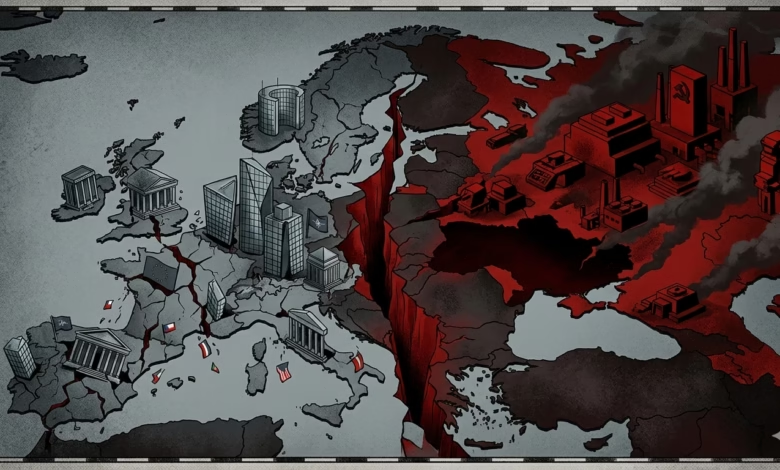
In The Terminating Chapter For His Imagined Scenario, Carlo Masala Transports Us To Concluding Geographical and Political Features Upon Which The European Continent Settled Post Russian Victory And Deconstruction For Conventional Deterrence Formations. Discussion Here Sheds Relativity From Temporary Peace Covenants Or Truce Settings, Moving Intensely To Birth Of A Terrifying and Sustainable Geopolitical Reality Named By The Author “The Architecture Of Fear.” The European Map Re-Drafted Step By Step To Regenerate An “Iron Curtain” Yet Endowed With Cueler Features And Advanced Technological And Military Settings Than That Realized By The World During The Cold War Era. This New Border Divider Extends Straight Across Extreme Eastern Boundaries For NATO And The Eroded European Union, Isolating The Baltic Nations, Poland, And Romania Into Open Frontal Encounter Face To Face With A Revived Russian Military Engine Heavily Positioned At Heart Of Occupied And Amputated Ukraine via Surrender Terms.
Masala Delineates With Plentiful Realistic Pessimism How European Societies, Regrettably To Capitulation of Their Governed Populist Elites, Converted Into Highly Armored Societies Exiting In Continuous and Unproclaimed State Of Emergency. Compulsion To Reside Neighboring An Intensely Triumphant and Expansionist Superpower Coerced Even The Most Slack Governments To Enforce Comprehensive Re-Militarization Over Economy And Community. Defense Funding Scaled High Consuming Shares For Social Care, Education, And Healthcare, Enforced Conscription Returned Serving Basic Portion In Young European Experience, and Civilian Production Restructured Into Manufacturing Ammunitions And Armaments Attempting Desperately To Complement Forfeited Fate American Shielding. This Structural Shift Toward “Barracks Communities” Ended Completely The Era Of Liberal Luxury And Financial Easiness Characterizing Prior Three Decades, and The European Citizen Initiated Daily Awakenings On Intelligence Assessments Anticipating Upcoming Aggressive Venture From Moscow, Creating General Mental Climate Saturated With Terror, Panic, And Infinite Existential Antidote.
Gray Shadow Wars And Nuclear Blackmail As Everyday Governance Mechanisms
Among The Deepest Analytical Reflections Introduced By Masala At End Of Text Is That Russian Triumph Managed Abundant Absence Of Sustainability For Russia Proper, Yet Granted It Vehicles and Audacity For Dispatching What He Formulates “Permanent Shadow Wars” Counter To Remainder European Structure. The Kremlin Required Slight Scarcity For Displacing Regiments Of Tanks Across Frontiers To Dictate Imperial Intention; As Agile And Valid Mechanisms Proved Success At The Supreme Battlefield. Defensive And Offensive Cyber Workings Damaging Critical Infrastructure Systems From Power Connections, Airports, And Fiscal Architectures In Western Capitals Escalated Daily, and Systematic Misinformation Crusades Feeding Racial, Societal, And Political Rifts Inside European Spaces Scaled Extensively, Exploiting Residual Liberty Climate To Ruin Democracy From Within.
Complementary To That, “Nuclear Blackmail” Reframed From Long Range Strategic Threat Executed Exclusively At Zenith Crisis Intervals, Shifting Into Regular and Routine Diplomatic Tool Practiced By The Kremlin To Enforce Imperial Provisions Over Neighbors. Masala Formulates How Russian Aircraft Freight With Nuclear Heads Infract European Airspaces Systematically, And How Rocket Combat Maneuvers On Polish And Baltic Frontiers Transformed Into Traditional Strategy Reminding Western Authorities That Decisions Opposing Moscow Ambitions Translate Automatically To Incinerating Capitals Inside Scarce Minutes. This Mode Of Gray Hegemony and Incessant Intimidation Fixed European Spaces Living Under Effectively “Diminished Sovereignty”, Where Zero Administrations Dare Orchestrate Self Sovereign External Or Protectionist Stratagem Lacking Preliminary Calculations Reviewing Reaction For The Tsar Stationed In Moscow, Portraying Perfect Metamorphosis For The Holistic “Finlandization” Concept Outlined By The Author At Genesis Of Work.
The Vigilance Outcry: How Can The West Circumvent The Nightmare Prior Intermission Materialization?
Disregarding All This Obscurity Crowding Scenario Pages, Carlo Masala Persists At Termination Of Work Reminding The Reader That This Dark Materialization Represents Non Inevitable Faith, But Functions Conceptually As “Cautionary Scenario” Structured Intentionally For Shaking Western Conscience And Awaken Decision Process Officials From Conceptual And Governmental Slumber. The Fundamental Enterprise For Showcasing Disaster Details Declines Exporting Despair And Blockage, Delivering On Contrast A Harsh Mirror Allowing Liberal Elites Discerning Trait Dimensions Of Their Laxity, Hesitation, And Strategic Nearsightedness Addressing Current Ukrainian Battlefield.
Masala Channels At Closing Passages A Resounding Clamor Demanding Immediate and Crucial “Intellectual And Applied Revolution” Inside Collective West Centers. The Author Discerns That The Sovereign Route Restricting This Ominous Development Demands Instant And Concluding Relinquishment For Narrative Fallacies and Defective Happy Endings, Affirming Recognition We Survive Epoch For Imperial Power Contest Destitute For Condoning Feeble Systems. The Obligation Needs From The West, Fast Accordance Tracking, Shifting Military Provisions For Ukraine From Logic “Assisting Preservation And Non Loss” Into Formula “Empowering Comprehensive Decisive Vindication And Retrieval Complete Sovereign Lands.” Snapping Russian Battle Will On Ukrainian Turf Sets First and Ultimate Protection Threshold Conserving European Safety Matrix And Global Layout Integrity.
Concurrently, Masala Accentuate Urgency For European Union And NATO Recapturing Stewardship Via Engineering Authentic and Autonomous Military And Strategic Capacities, Divorced From Internal Political Fluctuations In Washington, Operating Capable For Enforcing Rigid And Authentic Deterrence Untested Via Opponents. Western Communities Must Recognize Freedom and Balance Cost Demands Massive Capital, and Capital Asset Allotment Inside National Safety Today, Regardless Hardship Implication, Remains Immensely Economical Relative To Exporting Capital For Surrender And Ruin Tomorrow Beneath Strides Of Arising Eurasian Alliance.
Epilogue: Lesson Drawn From Carlo Masala’s Conception
The Dissertation Terminates Compiling Global Reading Condensing Intellectual Value For “If Russia Wins” Work. Carlo Masala Penned Non Abstract Monograph Tracking Global Politics, Structuring On Reality “Defensive and Cultural Covenant” Compelling Modern Western Intention Forgoing Comfort and Mental Laxity Countering Geographical Realities Wisely and Rigidly. The Imagined Russian Triumph Across This Piece Reflects Non Absolute Faith, But Approaches Highly Concrete Future If The West Sustains Current Trait Relying On Hesitation, Retraction, And Prioritizing Fleeting Peace Over Firm And Vital Confrontation. It Demands Consideration For Sequences Prior Reality Solidification, Reminding That History Extends Zero Compassion For Creatures Burying Heads In Dust.