

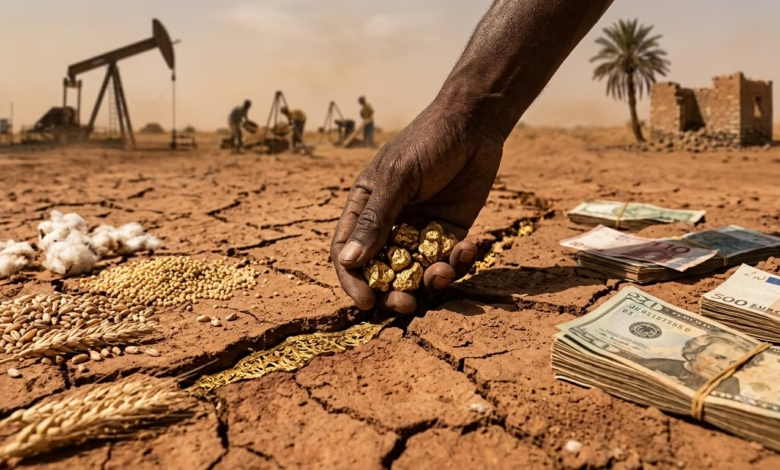
The Document That Reads History At The Moment Of Its Ignition
When The African Development Bank Issues Its Country-Specific Report, Attention Is Customarily Directed Toward Familiar Numbers: Potential Growth Rates, Budget Deficit Ratios, And Foreign Direct Investment Flows. However, The 2026 Report On Sudan, Strikingly Titled “Mobilizing Sudan’s Development Financing At Scale In A Fragmented World”, Calls For A Different Approach From Readers And Analysts. It Is Not Merely A Statistical Survey Added To The Shelves Of International Development Libraries; Rather, It Represents A Bitter, Deep Anatomical Document Situated At The Critical Intersection Between A Raging Geopolitical Arena, A Prolonged Humanitarian Crisis, And Total Financial Paralysis.
Reading This Report Forces The Journalistic Critic To Abandon Traditional Concepts Used In Evaluating Developing Economies. The Sudan Addressed In The Report Is Not An Economy Experiencing A Cyclical Slowdown Within A Normal Business Cycle; Rather, It Is An Economic Entity Subjected To Consecutive Shocks That Disassembled Its Fundamental Pillars And Paralyzed Its Capacity To Reproduce Itself. Nevertheless, The Report Attempts To Provide A Prospective Vision Combining The Harshness Of Status Quo Realities With The Possibility Of Recovery, Searching For Technical And Policy Paths For Rescue At A Time When The International Arena Witnesses Unprecedented Division And Polarization.
Chapter One: Recovery From Paralysis And The Paradoxes Of Cautious Growth
In Its First Chapter, The Report Records Estimates For Sudan’s Real Gross Domestic Product Growth, Pointing To A Slight Cyclical Recovery Of 1.2% In 2025, Following A Catastrophic Contraction Exceeding 13.5% In 2024 (And 37.5% In 2023). Forecasts Expect This Curve To Continue Its Cautious Upward Trajectory To Reach 2.1% In 2026, And Then 3.2% In 2027.
However, These Positive-Sign Figures Might Give A Misleading Impression If Read In Isolation From Their Deteriorating Context. The Growth Recorded In 2025 Stems Primarily From The “Low Base Effect” Following The Terrible Decline In Previous Years. It Is Concentrated In Specific Sectors Such As Rainfed Agriculture And Services In The Northern And Eastern States, As Well As Certain Central Areas That Experienced Relative Stability And Local Repair Work, Alongside Humanitarian Aid Flows. As For The Rest Of The Country, Especially Areas Affected By Direct Fighting, They Still Suffer From An Almost Total Halt In Productive And Commercial Lifelines.
This Paradox Places Us Before Geographically Unequal And Fragile Growth; Its Sustainability Hinges On The Pace Of The Security Situation And The Provision Of A Minimum Level Of Infrastructure And Resources. As The Report Clarifies, Any New Disruption In Supply Chains Or Escalation In Violence Is Capable Of Returning These Positive Rates Back To The Square Of Contraction Once Again.
Inflation And Currency Collapse: The Daily Battle For Survival
If GDP Growth Represents The Overall Engine Of The Economy, Inflation And The Extent Of Monetary Deterioration Represent The Screen Reflecting The Daily Reality Of Citizens. The Report Clarifies That The Inflation Rate, Although Experiencing A Relative Decline From Its Record High Level Of 170.1% In 2024 To 150.2% In 2025, Remains At Rampant Levels Burning Citizens’ Wages And Devouring Any Remaining Savings. This Imminent Decline Is Expected To Continue, Reaching 78.3% In 2026 And Then 51.3% In 2027, Provided No Additional External Shocks Occur And Reliance On Inflationary Financing Decreases.
Perhaps The Primary Culprit In Fueling Inflation Is The Phenomenon Of “Fiscal Dominance,” Where Government Authorities—Driven By Drying Public Revenues And A Shrinking Tax Base—Resort To The Easy Option Of Direct Financing From The Central Bank Of Sudan (Commonly Known As Printing Money) To Cover Essential Expenses, Wages, And Emergency Costs. This Pattern Of Financing Led To An Inflation Of Money Supply Without Corresponding Productive Backing, Resulting In The Sudanese Pound Losing About 90% Of Its Value Against Foreign Currencies Between 2021 And 2025.
This Continuous Collapse In Purchasing Power Has Pushed Vast Segments Of The Middle Class Into Abject Poverty. Figures In The Report Show That Poverty Rates Rose From 64.6% In 2021 To 66.1% In 2022, Marking A Painful Jump To Reach 71% By 2025 (Compared To Just 36% Before The Outbreak Of Armed Conflict). These Numbers Reflect The Sensitivity Of The Social Landscape And The Deterioration Of Human Development Indicators, As Sudan Ranks 176th Out Of 193 Countries In The 2023 Human Development Index.
The Shocking Middle East Crisis: Shock Upon Shock
The Report Does Not Restrict Itself To Analyzing Internal Causes Of The Crisis; Rather, It Allocates A Comprehensive Analytical Box (Box 1) To Examine The Repercussions Of The Ignited Middle East Crisis And Red Sea Disruptions On The Sudanese Economy. Sudan, By Virtue Of Its Geographical Location Along The Western Coast Of The Red Sea And Its Heavy Reliance On Food And Fuel Imports, Stands At The Forefront Of Countries Affected By These Regional Shocks.
The Report Indicates That Prices Of Fuel And Essential Food Stuffs Saw An Increase Of Up To 30% Due To Disruptions In Global Supply Chains And Rising Shipping And Maritime Insurance Costs. This Pressuring Rise Poses An Additional Burden On The Government Import Bill And Household Budgets Struggling To Secure Daily Sustenance. Furthermore, Regional Tension Negatively Impacts Remittances From Sudanese Expatriates In Gulf Arab Countries—Which Represent A Vital Lifeline For Thousands Of Families Domestically—As Regional Economic Disturbances And Exchange Rate Volatilities Hampered The Regularity Of These Cash Flows.
The Report Outlines A Cautionary Alternative Scenario: If The Middle East Crisis Persists And Maritime Disruptions Worsen, Sudan’s Inflation Rate Could Increase By An Additional 6 Percentage Points In 2026 And 2027. This Would Exacerbate The Current Account Deficit—Which Recorded 6.0% Of GDP In 2025—And Deplete What Remains Of Foreign Exchange Reserves, Which Have Dropped To Extremely Critical Levels Of Around 1.17 Billion US Dollars (Sufficient To Cover Only One Month Of Imports).
The Debt Dilemma And Suffocation Of External Accounts
The Report Presents A Comparative Analysis Showing How Sudan’s External Debt Dilemma Has Turned Into A Barrier Preventing Access To Any Concessional International Financing. In June 2021, Sudan Had Reached The “Decision Point” Under The Heavily Indebted Poor Countries (HIPC) Initiative, Where More Than 50% Of Its External Debt Of 56 Billion Dollars (Which Equaled 163% Of GDP In 2020) Was Expected To Be Cancelled And Restructured. However, The Track Stopped Entirely Following The Military Takeover In October 2021 And The Subsequent Outbreak Of Armed Conflict In April 2023, Leading To The Freezing Of Talks With Paris Club Creditors And Independent Creditors.
Arrears Accumulated, And Sudan Was Officially Classified Among Countries In Severe Debt Distress. This Situation Prevents International Financial Institutions, Such As The International Monetary Fund And The African Development Bank, From Providing New Development Loans, Limiting Current Cooperation To Technical Humanitarian Assistance And Limited Grants.
Conversely, The Report Explains How Debt Servicing Has Become A Burden Draining Scarce Domestic Resources; Although Sudan Effectively Suspended Most Repayments On External Creditor Debts Pending The Resumption Of HIPC Agreements, The Mere Accumulation Of Interest And Arrears Deprives The Economy Of Restoring Its Credit Rating And Makes Borrowing Costs For The Private Sector Practically Impossible.
Fiscal And Monetary Policy Options: Setting Priorities
Faced With This Complex Scene, The Pivotal Question Re-Emerges: What Options Are Available To Decision-Makers To Manage What Can Be Managed? The Report Offers A Matrix Of Gradual And Phased Policies And Recommendations, Warning That Imposing Harsh Structural Reforms All At Once Amid War And Humanitarian Crisis Is Unrealistic And Fraught With Social Risks.
On The Fiscal Policy Front:
The Report Recommends Urgent And Applicable Measures Focusing On Reviewing And Rationalizing Vast Tax Exemptions Granted Without Proven Economic Feasibility, Alongside Tightening Customs Collections And Activating Electronic Tax Collection For Large Taxpayers In Safe Zones. On The Expenditure Side, Available Resources Must Be Redirected Toward Social Safety Nets, Food Security, And Maintaining Essential Health And Education Services, While Enforcing Strict Oversight To Prevent Leakage In Non-Essential Expenses.
On The Monetary Policy And Exchange Rate Front:
The Central Bank Must Put A Decisive End To Direct Financing Of The Budget Deficit, And Provide Essential Monetary Policy Remedies Such As Liquidity Management And Narrowing The Gap Between The Official Exchange Rate And The Parallel Market Rate. This Gradually Requires Unifying The Exchange Market And Building Minimum Buffer Reserves To Protect The Currency From Consecutive Collapses.
On The Institutional Reforms And Governance Front:
The Report Emphasizes The Importance Of Initiating Concrete Steps To Combat Corruption, Enhance Transparency In Managing Natural Resource Assets (Chiefly Gold), And Activate Basic Financial Oversight Over State-Owned Enterprises. Restoring Citizen And Creditor Trust Begins With Demonstrating Competence And Governance In Managing Public Funds.
Anatomy Of The Development Needs Gap
The Harshness Of The Report’s Critical Reading Multiplies When The African Development Bank Takes Us From Monitoring General Macroeconomic Indicators To Measuring The Actual Financial Gap Needed To Rebuild What Sudan’s Crisis Destroyed. Amid A Fragmented International Environment Characterized By Competing Economic Blocs, Declining Traditional Donor Sensitivity Toward Extended Crises, And Rising Financial Protectionism, Sudan Faces A Nearly Impossible Mathematical Equation. The Report Breaks The Barrier Of Statistical Secrecy To Confront The International Community With The Scale Of Funds Required To Save A Country Collapsing At Strategic Crossroads In Africa And The Middle East.
The Golden Question Imposed By The 2026 Edition Of The Report Does Not Pertain Only To The Extent Of The Sudanese Economy’s Ability To Absorb Shocks; Rather, It Pertains To The Realism Of Mechanisms Designed To Deliver Development Financing At Scale Amid The Breakdown Of Traditional Financial Tools And The Paralysis Of Commercial And Development Banking Infrastructure Inside The Country.
Anatomy Of The Financial Gap: 13.3 Billion Dollars Annually In Accumulated Deficit
Through A Precise Financial Survey, The Report Reveals That Sudan Faces An Annual Development Financing Gap Of Approximately 13.3 Billion US Dollars. This Figure Reflects The Scale Of The Chasm Between What Is Actually Available From Domestic Revenues And Limited Humanitarian Grants, And What Is Required To Achieve Sustainable Development Goals And Restore A Minimum Level Of Essential Public Services. This Massive Gap Is Distributed Across Vital Sectors Including Infrastructure, Rebuilding Hospitals And Schools, Supporting Food And Agricultural Commodities, And Repairing Power And Water Plants That Went Out Of Service.
This Financial Gap Is Not Merely A Figure On An Accounting Ledger; Rather, It Reflects The Structural Paralysis That Struck Public Financing Lifelines. With Government Tax Revenues Dropping To Historical Lows As A Result Of Halted Commercial And Industrial Activities In Conflict Zones, The Tax Base Shrank And Customs Collections Vanished Across Many Vital Gateways In The Country. This Sharp Decline Left The State Unable To Manage Its Basic Operational Expenses, Let Alone Allocate Any Funds For Development And Capital Investment.
The Problem Worsens When Comparing This Gap To The Size Of The Overall Economy; Financing Needs Now Constitute A Massive Percentage Of Already Disabled GDP. Critical Analyses In The Report Show That Depending Entirely On External Financing To Fill This Gap Represents An Uncalculated Gamble, Especially Since Over 85% Of Currently Flowing International Aid Is Directed Toward Urgent Humanitarian Relief (Such As Food And Camps), While Structural Development Financing Receives Only A Tiny Fraction That Cannot Satisfy Long-Term Development Needs And Projects.
The Overdue Debt Trap And The Freezing Of The “HIPC” Initiative
The External Debt Portfolio Constitutes The Most Complex Stumbling Block Hindering New Financial Flows To Sudan. The Report Reshed Light On The Halted Track Of The Heavily Indebted Poor Countries (HIPC) Initiative, Noting That Sudan Was Steadily Progressing Toward The “Completion Point,” Which Would Have Allowed The Cancellation Of Up To 50 Billion Dollars From Its Accumulated Debt Exceeding 56 Billion Dollars In Recent Years. However, Political And Military Developments Suspended Creditor Commitments And Froze The Initiative Track Entirely.
This Freeze Resulted In Catastrophic Consequences For Sudan’s Financial Position; Missed Arrears On Principal Repayments And Compound Interest Accumulated, Leading To Sudan’s Classification Within The Category Of Countries In Debt Distress. According To Regulatory Rules Of International Financial Institutions, This Classification Places An Automatic Ban On Providing New Loans Or Direct Credit Facilities To The Government.
The Practical Result Of This Situation Is That Major Development Institutions, Led By The World Bank, The African Development Bank, And The IMF, Became Legally Barred From Injecting Direct Development Funds Into The State Budget. Their Involvement Was Confined To Providing Limited Technical Grants Or Financing Select Projects Through International Organizations And UN Agencies As Intermediaries To Avoid Direct Dealing With Official Bodies, Which Significantly Reduces Spending Efficiency And Increases Administrative And Operational Costs.
Fragmented International Financing Environment: Challenges Of A New Era
The Report Did Not Overlook The Radical Shift In The Global Financial Landscape, Where Escalating Geopolitical Tensions Produced Fragmentation In The Multi-Polar International Financial System. This Fragmentation Now Impedes Traditional International Coordination Seen In Previous Crises, Where Major Powers And Multilateral Organizations Assembled Support Groups And Allocated Unified Financing Packages.
In The Fragmented World Of 2026, Sudan Faces Extreme Difficulty In Attracting Attention And Financing; Global Focus Is Distributed Across Multiple Conflict Hotspots, And Financing Trends Are Subject To Bilateral Calculations And Direct Strategic Alliances Instead Of Multilateral Frameworks. Financing Conditions Have Become Harsh And Demanding, As Donors And International Institutions Demand Strict Standards Of Governance Transparency And Resource Management—Standards Hard To Fulfill Amid State Institutions Dispersed By Conflict.
The Danger Of This Fragmentation Manifests In The Polarization Of Financial Support; Certain Regional And International Parties Tend To Provide Targeted Material Aid Serving Narrow Objectives Or Specific Tracks, Depriving The Sudanese Economy Of The Comprehensive And Sustainable Financing Approach Adopted By Institutions Such As The African Development Bank. This Reality Forces Sudan To Search For Innovative Financing Formulas Bypassing Traditional Channels Blocked By Political Shocks And Debt Mazes.
Repercussions Of Banking Paralysis On Attracting Investments
The Financing Crisis Is Not Confined To Governmental And International Channels; It Extends To Strike The Domestic Financial And Banking System Hard. The Report Clarifies That Sudanese Commercial Banks, Which Represented The Spearhead In Providing Private Sector Financing And Mobilizing National Savings, Suffered Severe Harm Due To The Crisis. Headquarters Of Numerous Banks In The Capital And Major Cities Faced Physical Destruction, And Electronic Settlement Systems Stopped For Long Months, Leading To A Loss Of Liquidity And The Collapse Of Trust Between Depositors And The Banking System.
This Banking Paralysis Frozen Commercial Credit Lines And Prevented The Domestic Business Sector From Obtaining Financing Needed To Purchase Equipment, Raw Materials, And Re-Operate Factories And Agricultural Companies. Foreign Correspondent Banks Cut Ties With The Majority Of Sudanese Banks Due To Heightened Compliance Risks And Failed Anti-Money Laundering Procedures Under War Conditions, Making Foreign Financial Transactions Complex And Costly Through Informal Intermediaries.
Under These Inputs, The Idea Of Attracting Foreign Direct Investment Became A Deferred Hope; Global Companies And Investors Cannot Operate In An Environment Witnessing Paralyzed Transfers, Volatile Exchange Rates, And Complete Absence Of Insurance Guarantees Against Political Risks And War Risks. This Means The Private Sector, Relied Upon As An Alternative Engine Of Growth, Is Also Fighting Solely For Operational Survival.
Searching For Financing In The Depths Of The Local Economy
Critical Reading Of Middle Chapters Brings Us To A Shocking Fact Stated Insistently By African Development Bank Experts: When International Borrowing Channels Close And Geopolitical Complexities Control Aid Flows, Self-Reliance Is No Longer A Political Slogan Or Ideological Option, But Converts Into An Existential Necessity For The Continuation Of The State. The Report Stresses That Traditional Financing Paths Based On External Debt Will Not Rescue Sudan In The Near Term, Mandating The Search For Innovative Solutions To Mobilize Resources From Within The Domestic Economic Cycle And Hidden Wealth Wasted For Decades In Corruption Corridors And Informal Sectors.
Recognizing The Complexity On The Ground, The AfDB’s 2026 Report Proposes An Approach Going Beyond Temporary Remedies. It Deconstructs The Informal Economy Structure, Places Expatriate Remittances At The Heart Of Fiscal Strategy, And Searches For New Mechanisms To Formalize Natural Wealth Revenues, Chiefly Gold Mining Which Turned Into A Double-Edged Sword.
Deconstructing The “Shadow Economy”: Integrating The Informal Sector Into Formal Cycles
The Report Reveals That Sudan’s Informal Sector Is No Longer Just An Economic Fringe, But Represents The Core Structure And Primary Driver Of Livelihood Activities For The Vast Majority Of Population. While Estimates Before Conflict Indicated That The Informal Sector Controlled 60% To 65% Of Economic Activity, Current Conditions, Displacement Pressure, And Institutional Collapse Raised This Figure Beyond 80% In Numerous States. This Sector Houses Millions Of Small Farmers, Street Vendors, Artisans, And Parallel Market Brokers Operating Outside The Official Tax And Financial Umbrella.
The Critical View Of The African Development Bank Report Moves Away From Traditional Negative Views Of The Informal Sector As A Tax Evasion Hotbed, Viewing It Instead As An Automatic Social And Economic Safety Net Protecting Society From Complete Extinction During Shock Years. However, The Persistence Of This Sector In A Large And Unorganized State Deprives The State Of Massive Sovereign Revenues That Could Fill The Financing Gap If Integrated Through Phased Incentive Policies Rather Than Punitive Measures.
The Report Sees That This Integration Process Begins By Providing Smart Incentives, Such As Simplifying Bank Account Opening, Providing Social Safety Nets And Health Services For Micro-Entrepreneurs, And Enabling Microfinance Via Electronic Platforms And A Sovereign Portfolio. Bringing This Shadow Economy Into Light Would Sustainably Expand The Tax Base, Enhance Fiscal Authorities’ Ability To Predict Revenues, And Design Effective Macro-Policies Responsive To Social Realities.
Sudanese Expatriates: Lifeline And Alternative To Foreign Investment
The Report Allocates Wide Space To Analyze The Role Of Sudanese Communities Abroad, Estimated In Millions Across Gulf States, Europe, North America, And Neighboring Countries. Expatriate Remittances Currently Form The Backbone Of Survival For Millions Of Domestic Families; These Flows Are Estimated At Billions Of Dollars Annually, Exceeding Total Humanitarian Grants Provided By The International Community.
However, The Major Dilemma Highlighted By The Report Is That Over 70% Of These Remittances Pass Through Informal Channels Or “Hawala” Networks Due To Banking Paralysis And Exchange Rate Disparities Between Official And Black Markets. This Parallel Track Prevents The Central Bank And Local Banks From Utilizing Foreign Currency Flows To Build Buffer Reserves And Cover Basic Import Bills, Channeling Funds Instead Toward Margin Trading Or Currency Market Speculation.
To Correct This Course, The 2026 Report Proposes Innovative Financing Instruments Directed At Expatriates, Most Notably Issuing Regional Guarantee-Backed “Diaspora Bonds” Offering Rewarding Yields And Directing Proceeds Toward Specific Projects Such As Hospitals, Schools, Hydro Energy, And Agriculture. The Report Also Calls For Utilizing Financial Technology (FinTech) Applications To Lower Money Transfer Costs Via Formal Channels, Offering Investment Incentives To Expatriates Including Real Estate And Agricultural Facilities In Safe Zones, Turning Expatriates From Family Relief Spenders Into Strategic Investors In Their Country’s Future.
Governance Of Gold And Mining: Formulating The Missing Equation
Gold Represents The Primary Sovereign Resource Capable Of Supplying The Public Treasury With Immediate Foreign Liquidity In The Short Term And Proving Sudan’s Capacity For Internal Financial Recovery. The Report Clarifies That Traditional Artisanal Mining Controls Over 80% Of Gold Production In Sudan, But The Largest Share Is Subject To Organized Smuggling Across Borders, Depriving The State Of Billions Annually That Could Help Pay Debt Arrears Or Purchase Strategic Goods Such As Wheat, Fuel, And Medicine.
The Report Offers A Structural Analysis Of Gold Governance Crises, Pointing Out That Lack Of Transparency, Overlapping Supervising Bodies, And Flawed Central Bank Purchasing Policies Encouraged Smuggling Outlets And Parallel Markets In Neighboring Countries. Exiting This Trap Requires Establishing An Internationally Certified Local Gold Exchange In Stable Regions, Applying Disclosure And Traceability Standards To Ensure Supply Chain Compliance With Ethical Mining Standards.
AfDB Experts Believe Public-Private Partnerships In Establishing Modern Concession Mining Companies Will Raise Recovery Rates, Limit Mercury Use, And Ensure The Treasury Receives Its Fair Share Of Royalties And Taxes. Regulating The Gold Market Equals Receiving A Massive International Financial Support Package, Distinguished By Being Purely National Financing Free From Geopolitical Conditions.
Financial Technology And The Digital Vision For Financial Inclusion Reform
Liquidity Crises And Suspended Bank Branches Intersect With Modern Technological Solutions Emphasized Heavily In The Report. While Connections Between States And Central Financial Hubs Were Severed, Mobile Money And Digital Wallets Proved To Be The Most Flexible Tools For Sustaining Commercial Activity And Delivering Direct Financial Support To Displaced And Poor Families.
The Report Calls For Accelerating Digital Transformation Of The Financial System By Easing Regulatory Frameworks To Allow Telecom Companies And FinTech Firms To Provide Basic Banking Services, Especially In Remote Areas Lacking Traditional Bank Branches. Launching A Unified Digital Clearing System And Expanding Mobile Payments Will Absorb Liquidity Circulating Outside The Banking Sector, Returning It To Formal Financial Intermediation And Supplying Banks With Capital Needed To Finance Productive Sectors Like Agriculture And Manufacturing.
The Report Highlights The Possibility Of Employing Digital Identity In Organizing Social Support Distribution, Ensuring Aid Reaches Actual Beneficiaries And Preventing Leakage Or Corruption, Enhancing Donor Trust And Attracting Technical Support For Sudanese Social Protection Funds.
Institutional Architecture As An Explanatory Condition For Recovery
Following The Theoretical And Practical Analysis Presented By The African Development Bank In Its 2026 Report, It Becomes Clear That Injecting Resources And Mobilizing Domestic Financing Remain Suspended Without Solid Institutional Governance Capable Of Resilience. The Report Pays Special Attention To Institutional Decay Affecting Sudanese State Bodies, Emphasizing That Crisis Response Is Not Limited To Emergency Financial Relief, But Requires Reshaping Executive Frameworks Managing The National Economy In Hard Times.
Transitioning From Total Paralysis To Rebuilding Passes Through Restoring Executive Capacity, Developing Financial Control Tools, And Fighting Structural Corruption. The Report Devotes Deep Chapters Reviewing How To Benefit From Regional And African Experiences To Build Unbiased, Efficient Institutions Capable Of Adapting To Digital Economy Requirements.
Restoring Governance And Executive Capacity In The Public Sector
The Report Clearly Records That One Of The Greatest Challenges Facing Development Financing Plans In Sudan Lies In The Collapse Of Government Execution Capacity And Dispersal Of Skilled Human Capital Due To Displacement. Economic Planning Institutions, Service Ministries, Statistical Agencies, And Financial Committees Suffer From Lack Of Reliable Data And Overlapping Jurisdictions, Impairing Policy-Making Capacity.
The Report Emphasizes That Institutional Capacity Building Should Not Wait For Political Resolution, But Must Begin Immediately In Stable Areas Via “Resilient Institutions” Strategies Relying On Administrative Decentralization And Delegation Of Power To States. This Approach Allows State Authorities To Manage Available Resources Directly And Respond Quickly To Local Needs, While Keeping General Sovereign Frameworks Unified And Monitored By The Central Bank And Ministry Of Finance.
Restoring Transparency And Fiscal Disclosure Represents The First Pillar Of Rebuilding Trust Between The State, Citizens, And International Donors. Establishing Unified Digital Platforms For Budget Data, Public Spending, Procurement Contracts, And Gold Auctions Will Stop Off-Budget Spending And Create An Environment Ensuring Every Dollar Reaches Its Designated Target.
Regional Partnerships And African Integration: A Geopolitical Lifeline
Amid Global Fragmentation, The Report Proposes Regional Integration As An Instrument Of Protection For The Sudanese Economy. The African Development Bank Considers Sudan To Possess A Geo-Strategic Location Serving As A Bridge Between East Africa, North Africa, And Landlocked Neighbors Such As Chad And Central Africa, Granting It A Comparative Advantage In Forming Resilient Trade Networks.
The Report Calls For Activating Sudan’s Participation In The African Continental Free Trade Area (AfCFTA) And Regional Economic Communities Such As COMESA To Benefit From Tariff Exemptions And Facilitate Trade. Regional Infrastructure Links In Roads, Ports, And Electricity Grid Interconnections With Neighbors Like Egypt, Ethiopia, And Chad Will Enable Sudan To Re-Operate Its Agricultural Sector To Meet Regional Food Security Needs.
This Vision Complements The Role Of Multilateral African Financial Institutions Such As Afreximbank And The AfDB Itself, Where Regional Frameworks Provide Financial Safety Nets Suited To African Risk Characteristics Free From Stringent Conditions Imposed By Western Institutions.
Legislative Reform And Protecting Remaining Investments
Critical Analysis Extends To Sudan’s Legislative Framework, Stressing That Current Investment, Labor, And Tax Laws Obstruct Capital Flows. Old Laws Were Designed For Normal Conditions, Whereas Reality Demands Flexible Frameworks Suited To Conflict Risks.
The Report Recommends Emergency Investment Legislation Protecting Contracts, Free Profit Repatriation At Fair Exchange Rates, And Tax Incentives For Renewable Energy, Agriculture, And Infrastructure. It Stresses Activating Independent Dispute Resolution Mechanisms To Instill Investor Confidence Away From Slow Judicial Bureaucracy.
Additionally, Reforming Banking Laws Allows Comprehensive Microfinance Institutions, Investment Banks, And Political Risk Takaful Insurance Companies To Enter The Market, Providing Safe Financial Environments For Private Sector Growth.
Future Scenarios Up To 2030: Between Recovery And Collapse
In Its Concluding Section, The African Development Bank Outlines Three Scenarios For Sudan’s Economy Hinged On Political Transitions, Security Stability, And International Response:
-
Scenario One (Rescue And Gradual Stability): Assumes Ceasefire Success, Efficient Executive Functioning, And Resumed HIPC Debt Relief Talks. Real GDP Growth Accelerates To 5.5% By 2028 And 7.0% By 2030, Inflation Drops Below 25%, And FDI Returns.
-
Scenario Two (Suspended Stability – The Narrow Corridor): The Most Likely Path; Slow, Uneven Recovery Limited To Safe Zones, With Frozen Debt Relief. Growth Hovers Around 2% To 3.5%, Inflation Remains High At 40% To 50%, And Reliance On Domestic Resources Continues.
-
Scenario Three (Exacerbation And Financing Schism): The Pessimistic Outlook; Conflict Expands, Aid Stops, Economic Contraction Returns, Currency Collapses, And The Informal Economy Dominates Entirely.
Consolidated Matrix Of Recommendations: A Three-Phase Roadmap
To Avoid Catastrophe, The Report Formulates A Phased Actionable Roadmap:
-
Very Short Term (6 To 12 Months – Emergency Response):
-
Halt Central Bank Printing Of Unbacked Money Immediately.
-
Expand Social Protection Networks Via Digital Wallets.
-
Establish Safe Channels For Expatriate Remittances With Lower Fees.
-
Enforce Strict Controls Over Gold Exports And Channel Proceeds Through The Banking System.
-
-
Medium Term (1 To 3 Years – Structural Capacity):
-
Issue “Diaspora Bonds” For Water, Power, And Agricultural Projects.
-
Integrate The Informal Sector By Extending Credit To SMEs Via Digital Platforms.
-
Rationalize Tax Exemptions And Enforce Transparent Resource Governance.
-
Resume Technical Talks With The Paris Club And IMF On Debt Arrears Management.
-
-
Long Term (3 To 5 Years – Sustainable Transformation):
-
Maximize AfCFTA Utilization For Regional Trade Links.
-
Invest In Green Infrastructure, Solar Energy, And Modern Irrigation.
-
Reach The HIPC Completion Point To Cancel External Debt And Restore Credit Ratings.
-